Gary Saretzky Photo Books
World War II. The Russian War: 1941-1945. Military history, illustrated.
World War II. The Russian War: 1941-1945. Military history, illustrated.
Couldn't load pickup availability
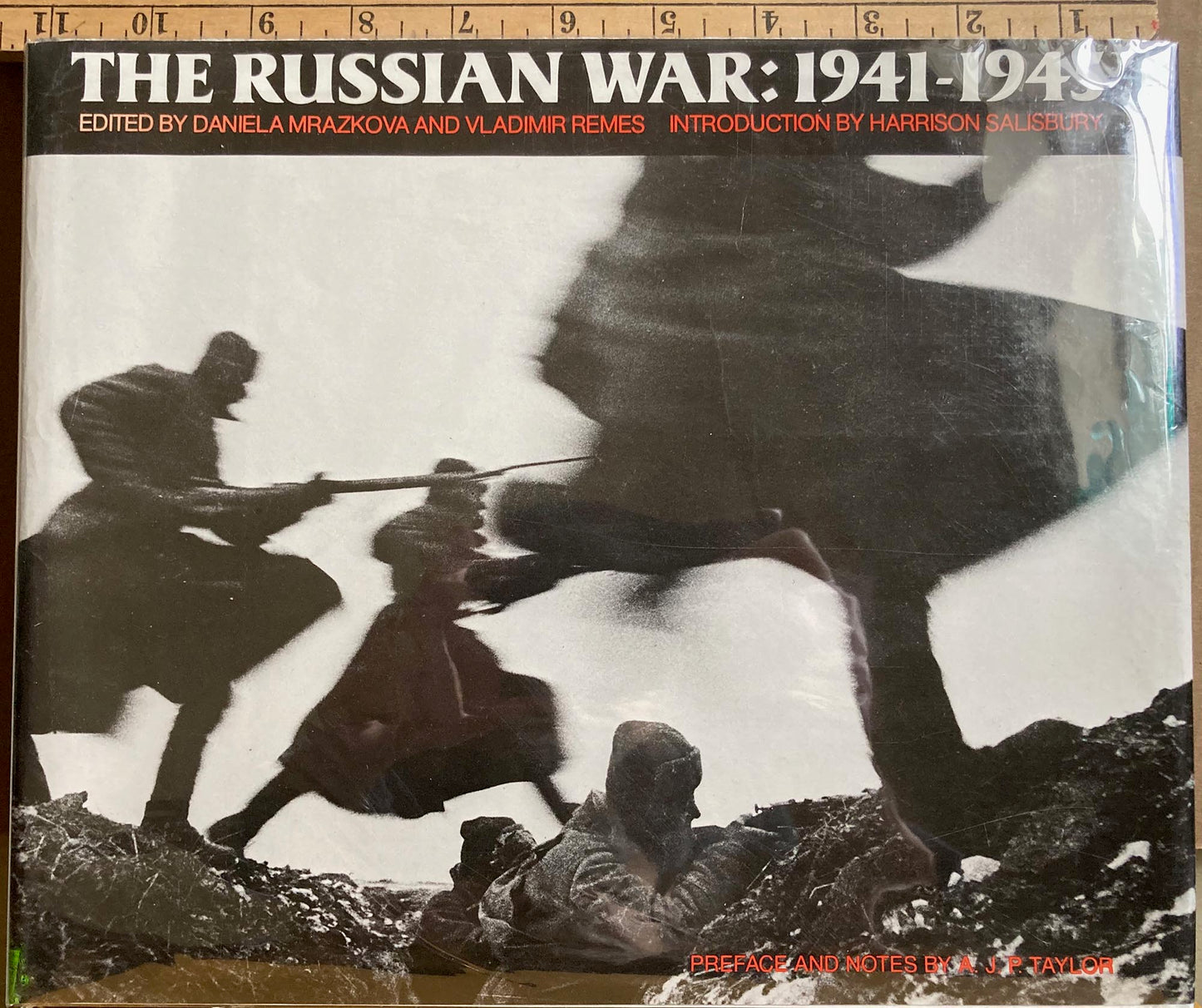
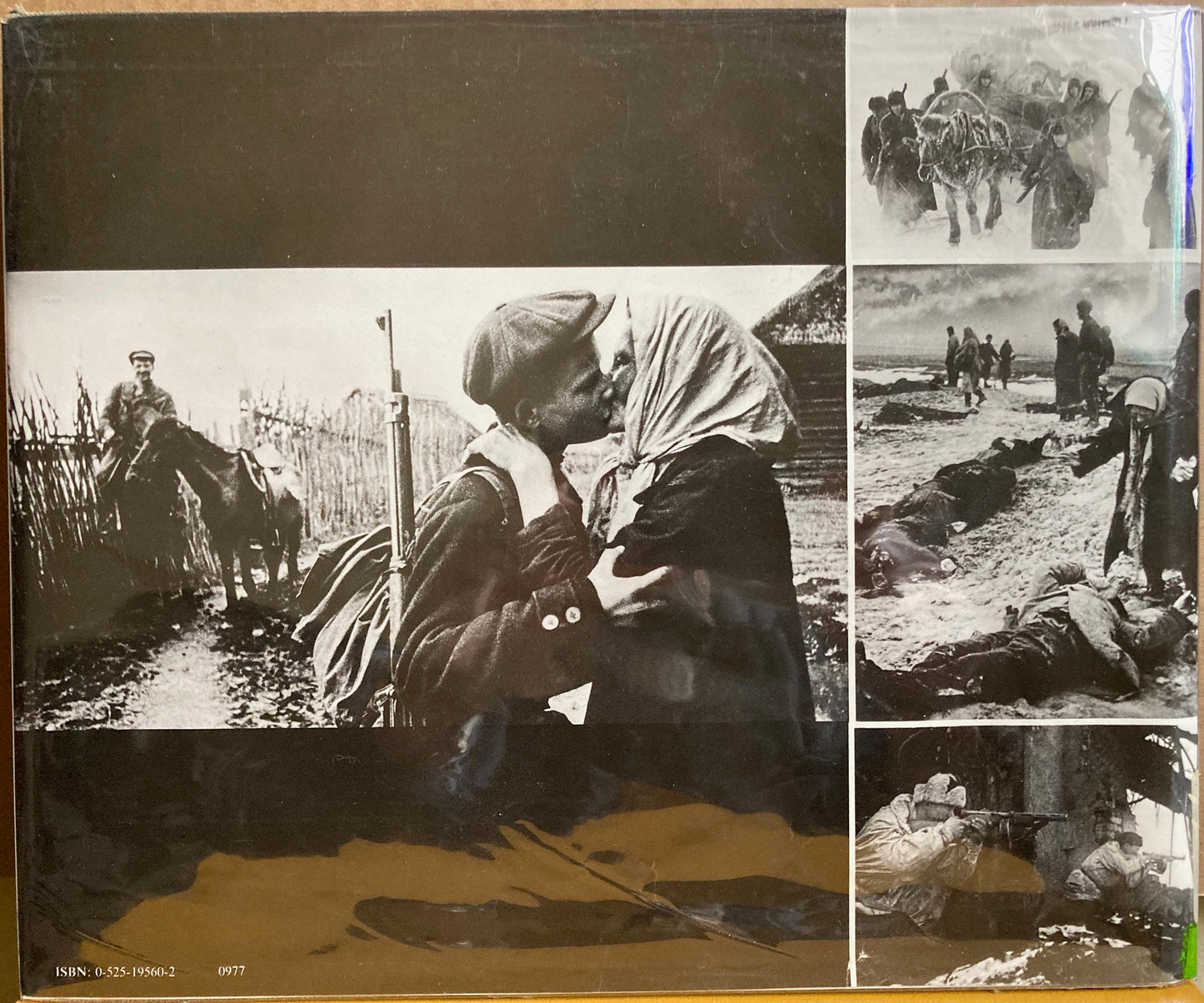
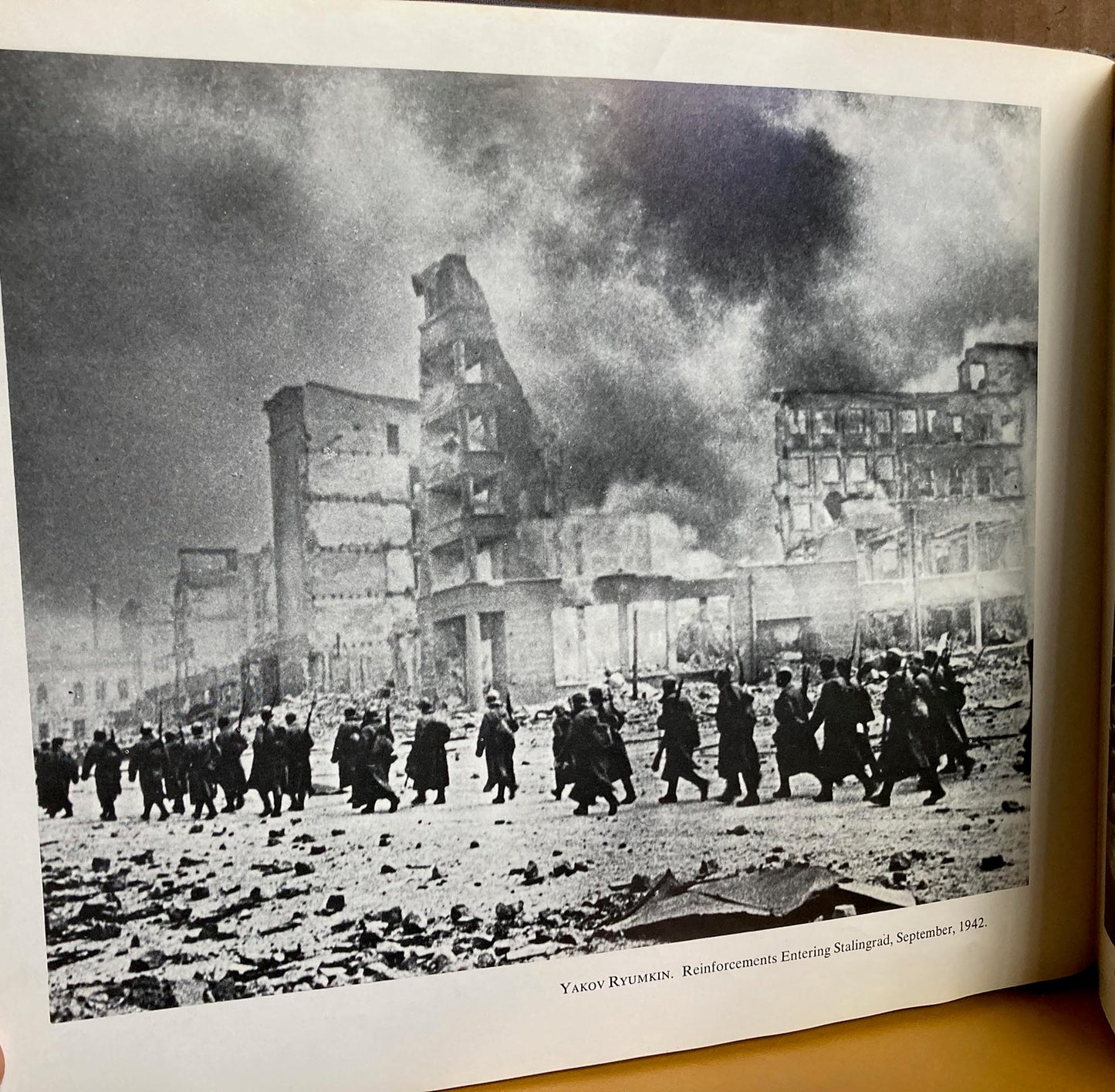
E.P. Dutton, 1975, 1977. First U.S. edition. Ex-library hardcover with protected dust jacket. 152 pages. Edited by Daniela Mrazkova and Vladimir Remes. Introduction by Harrison Salisbury. Preface and Notes by A.J.P. Taylor. Reading copy, fair, usual library evidence, well worn on bottom edge, dust jacket very good with small chip at top of spine and spine label. Lacks rear flyleaf. Thorough history of the war between Nazi Germany and the Soviet Union, profusely illustrated with black and white photographs. Brief biographies of the photographers at the back of the book. Photographers include: M. Trakhman; A. Ustinov; M. Alpert; M. & A. Ananin; D. Baltermants; R. Diament; I. Shagin; A. Shaykhet; A. Garanin; V. Grebnev; Y. Khaldei; B. Kudoyarov; G. Lipskerov; M. Redkin; Y. Ryumkin; G. Sankova; I. Savin, et al. Summary:
The Russian War: 1941-1945 is a photo-documentary history of the Soviet Union’s experience during World War II, originally published in Czech as Fotografovali válku: sovětská válečná reportáž and later translated into English in a 1977 edition. The book combines concise historical narrative with extensive black-and-white photography to chronicle the brutal conflict between the USSR and Nazi Germany on the Eastern Front.
• Structure & Scope: The volume traces the arc of the war from the German invasion in June 1941 (Operation Barbarossa) through key phases of the struggle—defense, siege and battlefront campaigns, and eventual Soviet advances toward Berlin in 1945. It blends written sections (preface, introduction, chapter texts) with compelling visual documentation of battles, cities under siege, soldiers, civilians, and the landscape of wartime Russia.
• Photographic Documentation: Central to the book are photographs taken by nineteen Soviet war photojournalists, including some whose work has become iconic. These images capture both the catastrophe and resilience of the Soviet people: from frontline combat scenes, destruction in cities like Leningrad, and mass mobilization to quiet moments of daily life under extreme strain.
• Historical Commentary: The editors frame the visual material with contextual text that situates the images within broader military and social developments of the war on the Eastern Front. The introduction by Harrison Salisbury—a noted foreign correspondent—and annotative contributions by historian A.J.P. Taylor help bridge photo reportage with narrative history, highlighting strategic turning points and the staggering cost of the conflict.
• Biographical & Technical Notes: The book often includes brief notes on the photographers themselves, underscoring that many were embedded with Red Army units or civilian fronts, and that their work not only documented events but served as wartime reportage for Soviet publications.
Overall, The Russian War: 1941-1945 functions both as a visual record and interpretive account of what the Soviets called the Great Patriotic War, conveying the scale of destruction, human endurance, and decisive historical events that defined the Soviet struggle and ultimate victory over Nazi Germany.