Gary Saretzky Photo Books
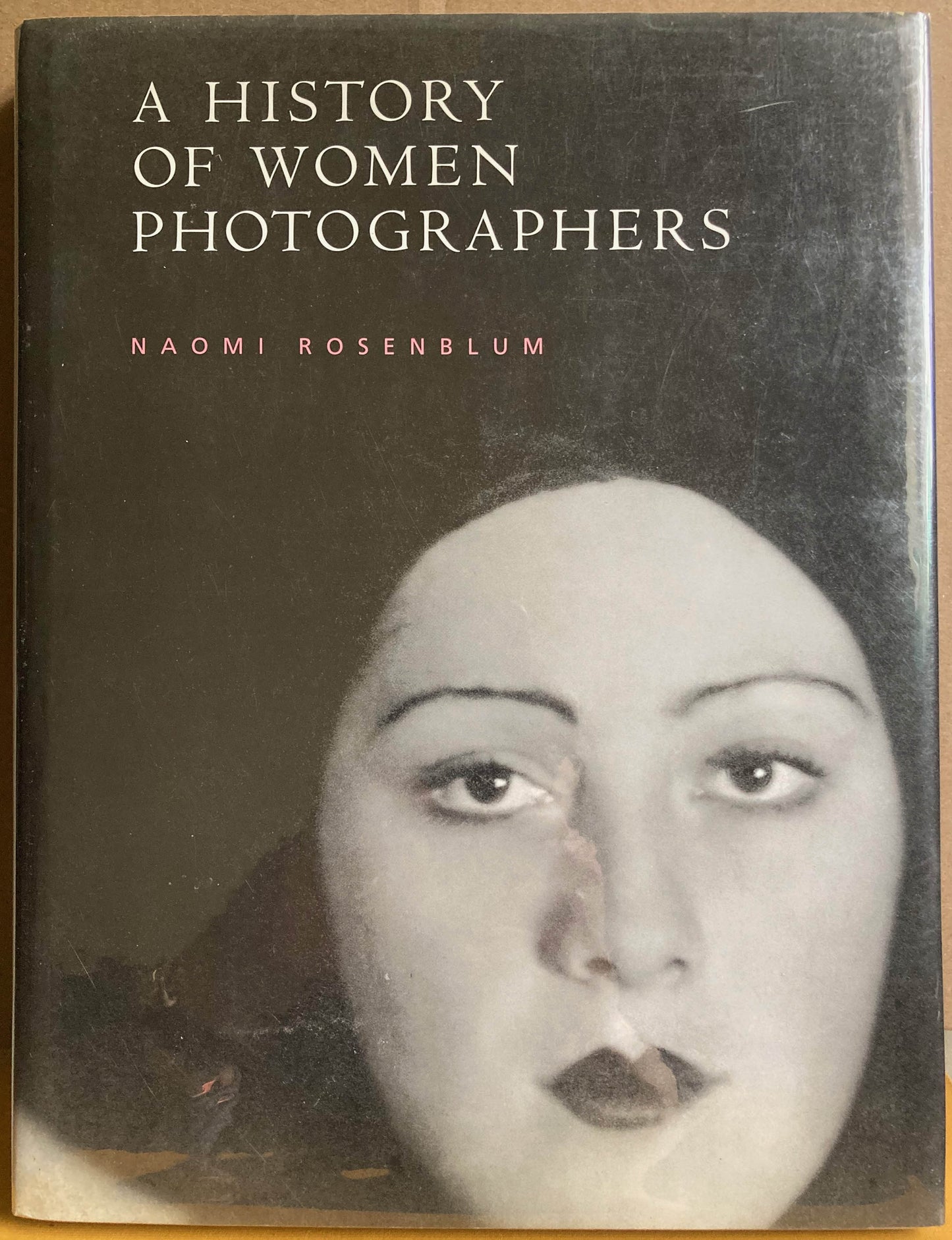
Women Photographers. A History of Women Photographers by Naomi Rosenblum.
Women Photographers. A History of Women Photographers by Naomi Rosenblum.
Couldn't load pickup availability
Abbeville Press, 1994. First edition, hardcover, fine with protected dust jacket that has slight shelf wear. An important reference. 356 pages. Includes 240 photographers, some much better known than others, among them: Margaret Bourke-White; Clara Sipprell; Lotte Jacobi; Frances Benjamin Johnston; Berenice Abbott; Consuela Kanaga; Ilse Bing; Germaine Krull; Gisele Freund; Aenne Biermann; Elizabeth Sunday; Marsha Burns; Dorothea Lange; Marion Post Wolcott; Madame Yvonne; Yang Ling; Dorothy Wilding; Barbara Norfleet; Bea Nettles; Ruth Orkin; Marion Palfi; Starr Ockenga; Lucia Moholy; Inge Morath; Joyce Neimanas; Joan Murray; Barbara Morgan; Sally Mann; Tina Modotti; Susan Meiselas; Rose Mandel; Lisette Model; Annie Leibovitz; Wendy Snyder MacNeil; Frances McLaughlin; Alma Lavenson; Gertrude Käsebier; Julia Margaret Cameron; Marie Cosindas; Barbara Crane; Imogen Cunningham; Marjorie Content; Marilyn Bridges; Ruth Bernhard; Zaida Ben-Yusuf; Barbara Blonde; Diane Arbus; Claudia Andujar; Jesse Tarbox Beals; Hilla Becher, and many others. Well-illustrated. By the author of the history of the photography textbook, A World History of Photography. Summary:
A History of Women Photographers (originally published in 1994) by Naomi Rosenblum is the definitive scholarly survey that recovers and celebrates the essential role women have played in the development of photography since its inception. Rosenblum argues that women were not merely peripheral participants but were foundational to every major movement, from the 19th-century "amateur" era to contemporary digital practices.
Core Themes and Historical Reclamation
-
The "Hidden" Pioneers: Rosenblum identifies hundreds of women whose contributions were historically overshadowed by their male contemporaries. She tracks their presence from the earliest daguerreotypes and cyanotypes (including Anna Atkins) through the rise of professional portrait studios.
-
The Social Lens: A major theme is the unique "entry point" photography provided for women. Because it was a new technology without the centuries-old "guild" restrictions of painting or sculpture, photography became a vital tool for women’s economic independence and social activism.
-
Navigating the "Gaze": The book explores how women photographers—ranging from Julia Margaret Cameron to Cindy Sherman—have both utilized and subverted the male-dominated "gaze," creating new visual languages for the female body, domestic life, and the political sphere.
Artistic and Professional Scope
-
Movement Integration: The book is organized by genre and era, demonstrating women’s leadership in:
-
Pictorialism: (e.g., Gertrude Käsebier)
-
Social Reform/FSA: (e.g., Dorothea Lange, Margaret Bourke-White)
-
Modernism & Abstraction: (e.g., Imogen Cunningham, Berenice Abbott)
-
Fashion and Avant-Garde: (e.g., Louise Dahl-Wolfe, Diane Arbus)
-
-
Technical Mastery: Rosenblum emphasizes that women were often at the forefront of technical innovation, from darkroom chemical experimentation to the mastery of complex lighting systems in commercial studios.