Gary Saretzky Photo Books
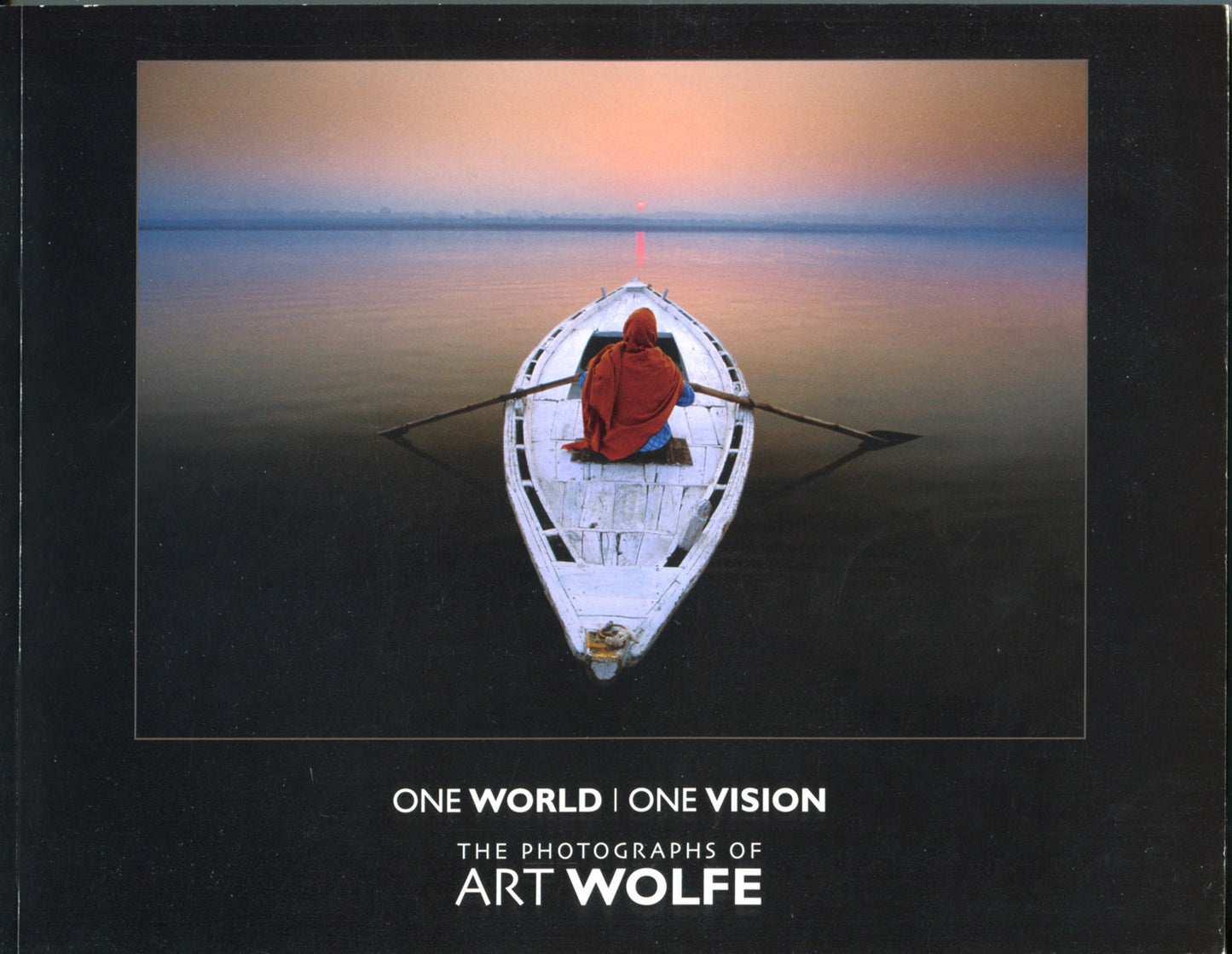
Wolfe, Art. One World, One Vision. The Photographs of Art Wolfe.
Wolfe, Art. One World, One Vision. The Photographs of Art Wolfe.
Couldn't load pickup availability
Frye Art Museum, 2003. Introduction by Lewis Blackwell. Wraps, like new. 121 pages, Issued in conjunction with an exhibition at Frye Art Museum in Seattle. Remarkable color photographs taken all over the world by Art Wolfe, 1998 Outstanding Nature Photographer of the Year selected by the North American Nature Photography Association, and winner of the 2000 Alfred Eisenstaedt Magazine Photography Award. Subjects include people, animals, birds, and landscape. Wolfe's work has been published in more than sixty other books, including Vanishing Act, The High Himalaya, Water: Worlds between Heaven & Earth, Tribes, Rainforests of the World, and The Art of Photographing Nature. He is also well known as an educator and environmental activist. Summary:
Published by Lanning Aldrich in 2006, One World, One Vision is a retrospective that encapsulates the prolific career of Art Wolfe, one of the world’s preeminent nature and conservation photographers. The book serves as a visual testament to Wolfe’s philosophy of "the interconnectedness of all things."
Core Philosophy and Scope
The title reflects Wolfe’s overarching goal: to show that while the world is culturally and biologically diverse, it is united by universal patterns of beauty and the fragile necessity of conservation. The collection spans forty years of work across all seven continents.
-
Breadth of Subject: Unlike photographers who specialize in a single niche, Wolfe covers wildlife, remote landscapes, and indigenous cultures with equal technical mastery.
-
The "Art" in Art Wolfe: The book highlights his transition from pure documentary photography to a more painterly, abstract style, often referred to as "photo-artism."
Major Themes
-
Vanishing Worlds: A significant portion of the book focuses on disappearing habitats and "threatened" cultures, aiming to inspire environmental and cultural stewardship.
-
Patterns in Nature: Wolfe emphasizes geometry and rhythm in the natural world—such as the texture of a zebra’s stripes or the curves of a sand dune—treating the Earth as a living canvas.
-
Global Unity: By placing images of a Himalayan peak next to an African savannah, the book reinforces the idea of a singular, fragile planet.
Structural Highlights
-
Visual Narrative: The book is organized to create a flow between different ecosystems, moving from the poles to the tropics to show the transition of light and life.
-
Technical Insight: While primarily a coffee-table art book, it offers glimpses into Wolfe’s mastery of composition and lighting, showing how he uses a telephoto lens to compress landscapes or slow shutter speeds to capture the "spirit" of movement.
"I've tried to create a body of work that shows the beauty that still exists on our planet, in the hopes that we can find the will to protect it." — Art Wolfe
Significance and Bio
One World, One Vision is widely considered a "best-of" compilation that defines Wolfe's legacy. It bridges the gap between fine art photography and environmental activism, proving that a single lens can indeed capture the vastness of the human and natural experience.
Art Wolfe (born 1951) is a renowned American photographer and conservationist celebrated for his mastery of nature, wildlife, and indigenous culture photography. Born in Seattle, Washington, to commercial artist parents, Wolfe earned degrees in fine arts and art education from the University of Washington, a background that heavily influences his painterly approach to composition, color, and perspective. Over a career spanning more than five decades, he has traveled to every continent to document threatened ecosystems and vanishing traditional cultures, producing over 100 books—including The Living Wild (2000) and Vanishing Act (2014)—and hosting the public television series Travels to the Edge with Art Wolfe. A staunch advocate for environmental conservation, Wolfe’s work merges artistic composition with environmental activism, earning him honorary fellowships from the Royal Photographic Society, the Rachel Carson Award from the Audubon Society, and widespread recognition as one of the world's foremost visual chroniclers of the natural world.