Gary Saretzky Photo Books
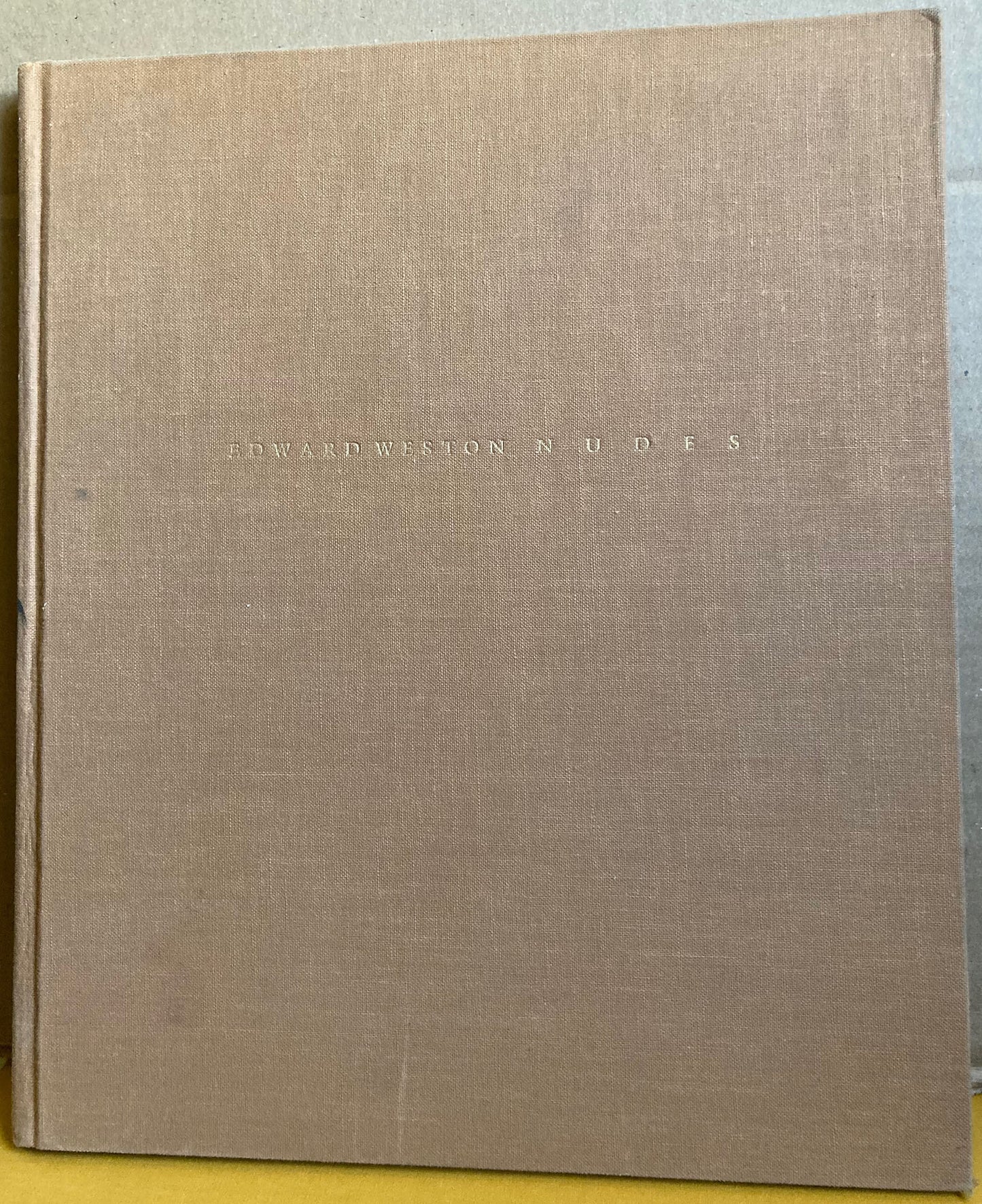
Weston, Edward. Edward Weston Nudes. Remembrance by Charis Wilson. His Photographs Accompanied by Excerpts From the Daybooks and Letters.
Weston, Edward. Edward Weston Nudes. Remembrance by Charis Wilson. His Photographs Accompanied by Excerpts From the Daybooks and Letters.
Couldn't load pickup availability
Aperture, 1977. Hardbound, good in brown cloth with some scuffs and spots. Lacks dust jacket. 116 pages with black and white female nudes by Weston. Memoir by Charis Wilson, Weston’s model, who became his second wife. The photos include photos of Charis as well as other women such as Margrethe Mather, Tina Modotti, and Bertha Wardell. For adults. Summary:
Edward Weston Nudes: Remembrance by Charis Wilson is a photographic monograph first published in 1977 that brings together the celebrated female nude photographs by Edward Weston with personal writings from his daybooks and letters, alongside reminiscences by Charis Wilson, who was both his muse and partner. The book spans roughly 116 pages and presents a carefully curated selection of Weston’s nude work—one of the most important and largest categories in his oeuvre—printed in striking black-and-white reproductions.
What makes this volume distinctive is the dual perspective it offers: the images themselves—ranging from formal studies of the human body as sculptural form to intimate portraits of friends and models such as Wilson, Margrethe Mather, and Tina Modotti—are paired with excerpts from Weston’s own daybooks and letters that illuminate his artistic intentions and creative process. Wilson’s accompanying text serves as a remembrance and commentary, shaped by her firsthand experience as a model, collaborator, and eventually Weston’s wife. She reflects on how Weston saw the nude as both a formal challenge and a poetic expression of elemental form, and how his rigorous attention to tone, shape, and light gave his nudes their strength and grace.
The result is more than a simple photo collection: it’s a thoughtful tribute that combines visual and written records to explore Weston’s enduring vision of the human body, his artistic aspirations, and his deep personal connections to the subjects he photographed.
Edward Weston (1886–1958) was a quintessential figure in 20th-century American photography, revered for pioneering a sharply focused, quintessentially "straight" photographic style that championed the medium as an independent art form. Born in Highland Park, Illinois, Weston began his career in soft-focus Pictorialism before abandoning pictorial sentimentality in the early 1920s following a transformative trip to Mexico, where he associated with modernists like Diego Rivera and Tina Modotti. Operating primarily out of California, he co-founded Group f/64 in 1932 alongside Ansel Adams and Imogen Cunningham, advocating for maximum depth of field, unmanipulated contact prints, and precise formal composition using large-format view cameras. His revolutionary body of work—spanning sensual nudes, sweeping California landscapes, dramatic sand dunes, and striking, sculptural close-ups of organic forms like shells and peppers (most famously Pepper No. 30)—became a cornerstone of modern art. In 1937, Weston became the first photographer awarded a Guggenheim Fellowship, cementing his legacy as a master craftsman whose rigorous discipline, keen eye for form and texture, and extensive published journals (The Daybooks) reshaped the trajectory of American photography.