Gary Saretzky Photo Books
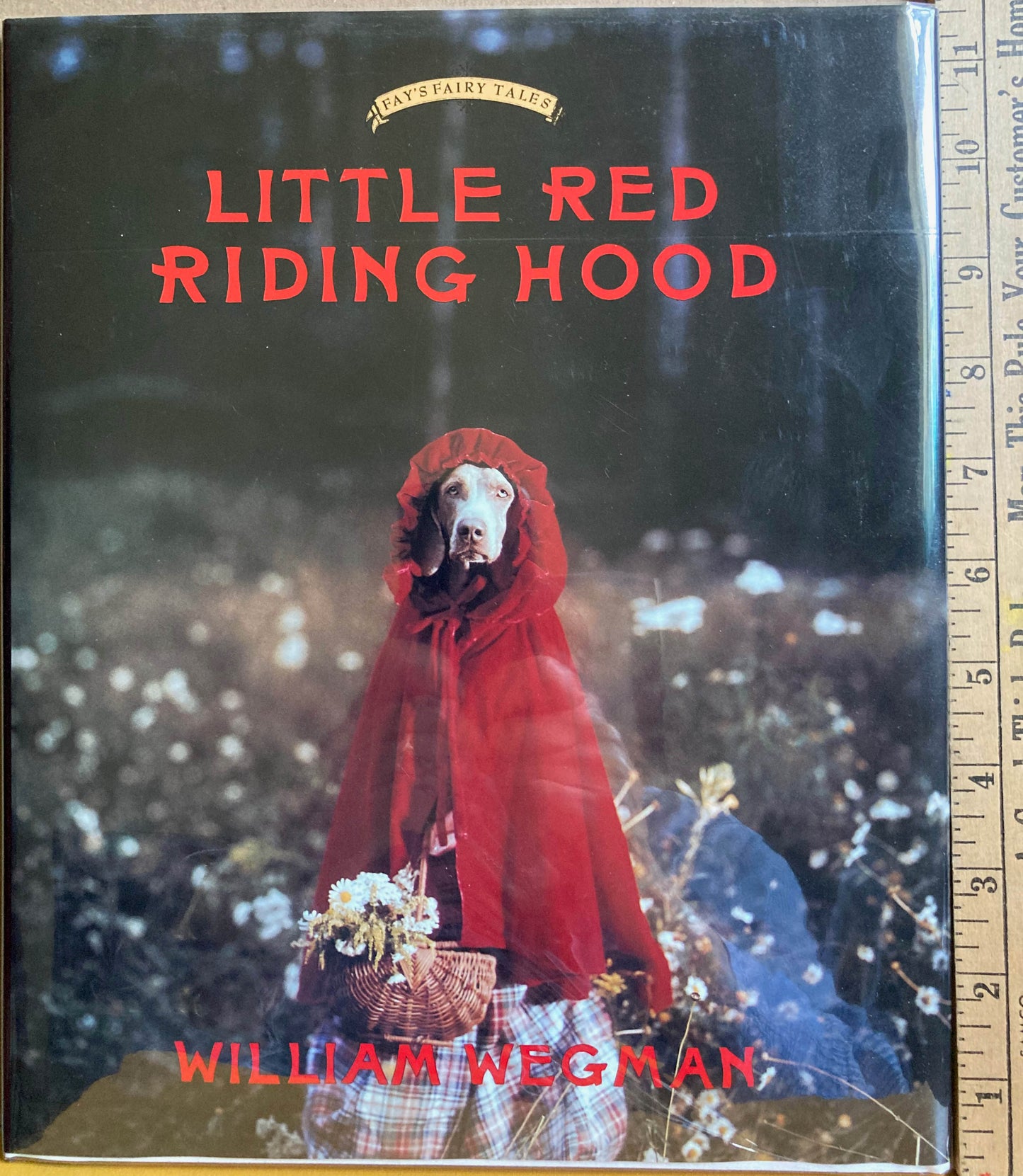
Wegman, William. Little Red Riding Hood. Fay's Fairy Tales. By William Wegman with Carole Kismaric and Marvin Heiferman.
Wegman, William. Little Red Riding Hood. Fay's Fairy Tales. By William Wegman with Carole Kismaric and Marvin Heiferman.
Couldn't load pickup availability
Hyperion, 1993. First edition, 1st printing, hardcover, fine with price-clipped otherwise fine protected dust jacket. Like new, gift quality. The well-known fairy tale accompanied by Wegman's photographs of his weimeraner dogs, Fay Ray, Battina, and Chundo, dressed in character. Summary:
Little Red Riding Hood, published in 1993 as part of the Fay’s Fairy Tales series, is a whimsical and visually surreal retelling of the classic Brothers Grimm story. Created by artist William Wegman in collaboration with Carole Kismaricand Marvin Heiferman, the book replaces traditional human characters with Wegman’s iconic Weimaraners.
The Visual Concept
The book is famous for its elaborate staging and the deadpan expressions of Wegman's dogs, who "act" out the roles:
-
The Cast: Wegman’s dog Battina stars as Little Red Riding Hood, while the legendary Fay Ray plays the grandmother. Chundo takes on the role of the Wolf (dressed in a tuxedo or grandmotherly nightgown).
-
The Production: Utilizing large-format Polaroid photography, Wegman creates rich, painterly tableaus. The dogs are outfitted in custom-made costumes and set against handcrafted backdrops, blending high-art photography with kitsch.
Narrative Style
-
Faithful yet Funny: While the text remains relatively true to the traditional plot, the humor is derived from the absurdity of the imagery. Seeing a dog in a blonde wig and red velvet cape—or a "wolf" tucked into bed with reading glasses—provides a sophisticated, ironic layer to the childhood story.
-
Anthropomorphism: The book explores the human-like qualities of animals, a hallmark of Wegman’s career, making the familiar moral tale feel both uncanny and endearing.
Significance
This volume transitioned Wegman’s work from the elite galleries of contemporary art to the mainstream, appealing equally to children and art collectors. It is praised for its technical craftsmanship and its ability to modernize folklore through a playful, canine lens.
William Wegman (born 1943) is an American conceptual artist, painter, and photographer world-renowned for his humorous, surreal portraiture featuring his long line of Weimaraner dogs dressed in costumes and posed in humanlike situations. Born in Holyoke, Massachusetts, Wegman earned a Bachelor of Fine Arts in painting from the Massachusetts College of Art and a Master of Fine Arts from the University of Illinois at Urbana-Champaign before emerging as a key figure in the 1970s California conceptual art scene with performance videos, drawings, and experimental photography. His artistic trajectory shifted permanently when he acquired Man Ray, a Weimaraner who became his central muse, collaborator, and subject in deadpan video skits and black-and-white portraits. Following Man Ray's death, Wegman continued his signature motif using his second Weimaraner, Fay Ray, and her descendants, utilizing a large-format 20x24 Polaroid camera to produce brilliantly saturated, highly detailed color prints that depict the elegant, grey-coated hounds as haute couture fashion models, historical figures, and domestic suburbanites. Widely exhibited at major institutions including the Museum of Modern Art, the Whitney Museum of American Art, and the Centre Pompidou, Wegman’s extensive oeuvre—spanning photobooks, children's literature, and short films for Sesame Street and Saturday Night Live—seamlessly bridges high conceptualism with popular accessibility, establishing a unique legacy in contemporary fine-art portraiture.