Gary Saretzky Photo Books
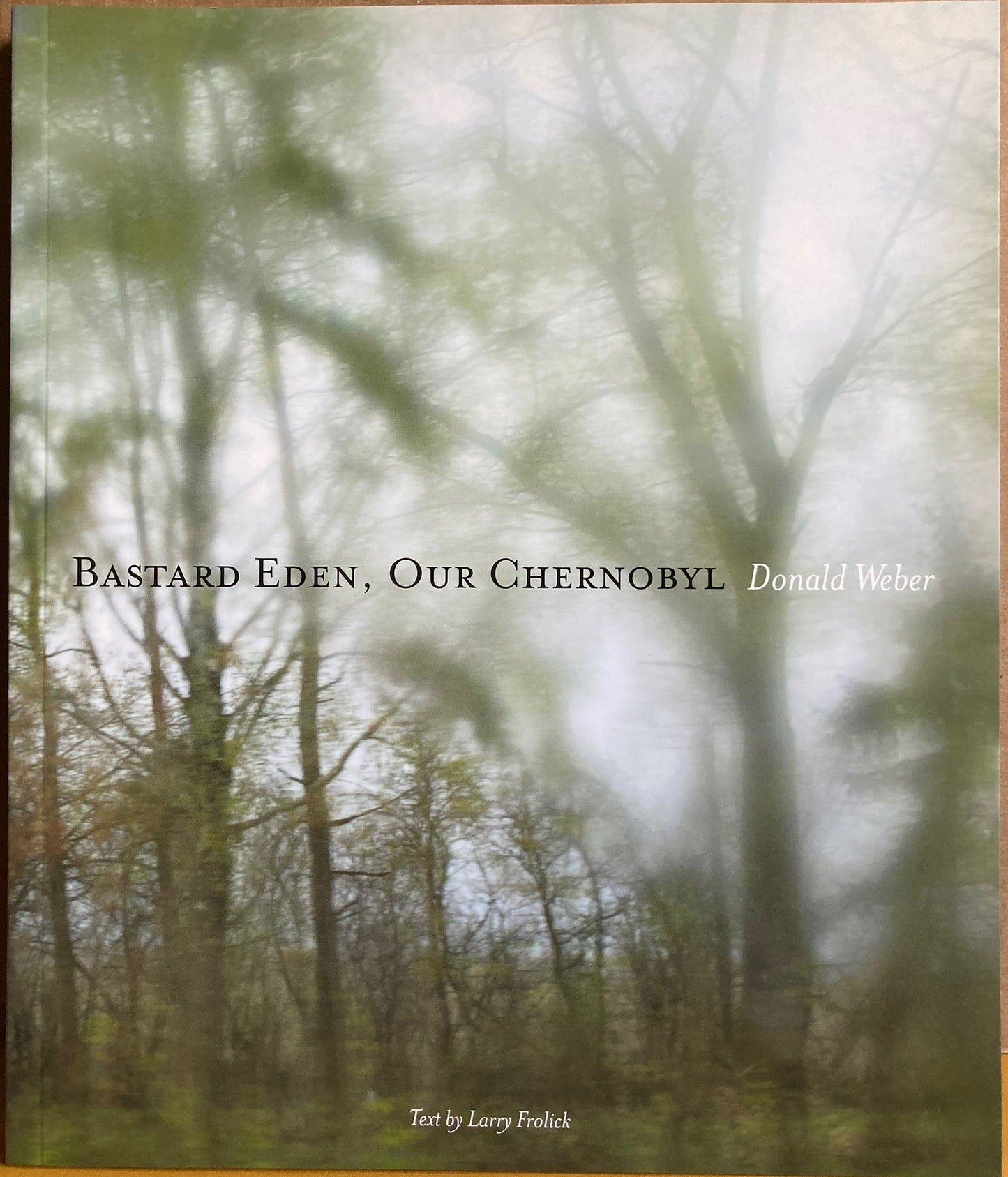
Weber, Donald. Bastard Eden: Our Chernobyl by Donald Weber. Photolucida, 2008.
Weber, Donald. Bastard Eden: Our Chernobyl by Donald Weber. Photolucida, 2008.
Couldn't load pickup availability
Wraps, as issued. Like new. 64 pages. Color photos taken by Weber in 2005–2007 in the Exclusion Zone and Region of Chernobyl, Ukraine. Black and white photos collected as negatives found on a shelf in an empty apartment in the abandoned city of Pripyat, Ukraine. Weber found a scattering if residents there, all exiles from other places who preferred the isolation of Chernobyl despite the risks from radiation. A deeply affecting documentary photography book with text by Larry Frolick. Summary:
Bastard Eden: Our Chernobyl (2008) is a haunting photographic monograph by Canadian photographer Donald Weber. The book is the result of Weber’s seven-month immersion in the Chernobyl Exclusion Zone, focusing not on the ruins of the power plant, but on the "settlers" and survivors who refused to leave the contaminated landscape.
Core Themes and Content
-
The Living Dead: Weber bypasses the typical "ruin porn" of abandoned schools and ferris wheels. Instead, he captures the daily lives of the samosely (self-settlers)—mostly elderly residents who returned to their ancestral villages to live off the toxic land, preferring the invisible threat of radiation to the grief of displacement.
-
A New Reality: The title Bastard Eden refers to the strange, paradoxical beauty of the Zone. In the absence of modern human industry, nature has reclaimed the area with a ferocity that is both lush and lethal. Weber explores this "post-human" garden where life persists in a broken state.
-
Atmospheric Grittiness: The photography is characterized by a dark, heavy aesthetic. Using a grainy, low-light approach, Weber creates a sense of claustrophobia and unease, reflecting the psychological weight of living in a place that has been "deleted" from the map.
Artistic and Social Significance
The book is a stark departure from traditional photojournalism. Weber uses a subjective, interpretive style to convey the "slow violence" of radiation. He treats the landscape and its inhabitants as part of a single, mutated ecosystem, questioning the long-term consequences of human technological hubris.
Donald Weber (b. 1973) is an acclaimed Canadian documentary photographer whose work centers on the invisible machinery of state power, geopolitical conflict, and human survival on the margins of history. Originally trained as an architect, working with urban theorist Rem Koolhaas’s Office for Metropolitan Architecture, Weber shifted to photography in the early 2000s to investigate the real-world effects of state authority. He spent nearly a decade exploring the post-Soviet landscape, leading to his seminal photobook Bastard Eden, Our Chernobyl (2008), which documented the squatters and marginalized communities carved out of the radiation-tainted Exclusion Zone surrounding the Chernobyl nuclear disaster. A member of the prestigious VII Photo Agency, Weber expanded this critique of authority with Interrogations (2011)—a stark series capturing secret police interrogations in Ukraine and Russia—and has earned numerous accolades for his work, including a Guggenheim Fellowship, the Dorothea Lange-Paul Taylor Prize, and multiple World Press Photo awards.