Gary Saretzky Photo Books
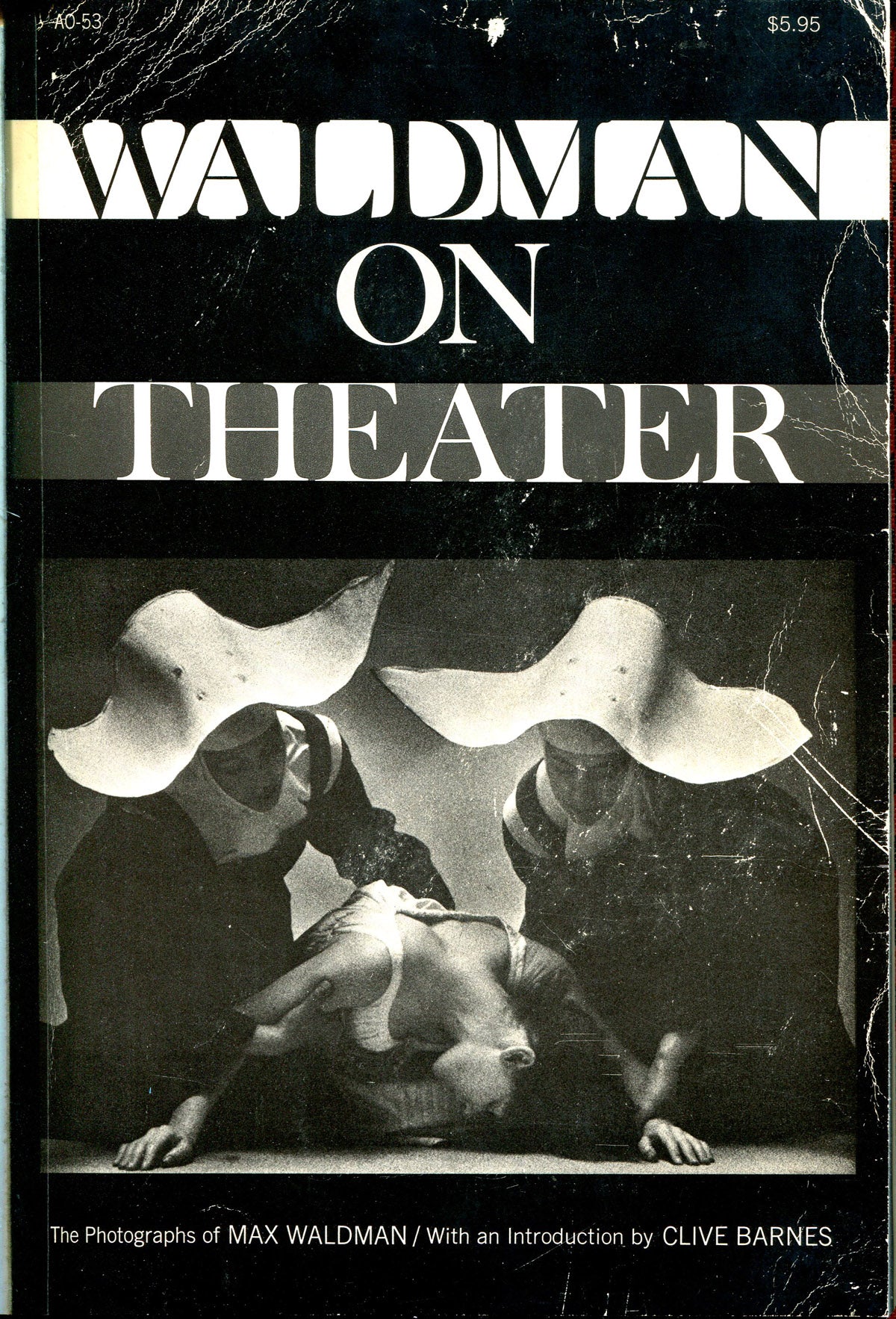
Waldman, Max. Waldman on Theater by Max Waldman.
Waldman, Max. Waldman on Theater by Max Waldman.
Couldn't load pickup availability
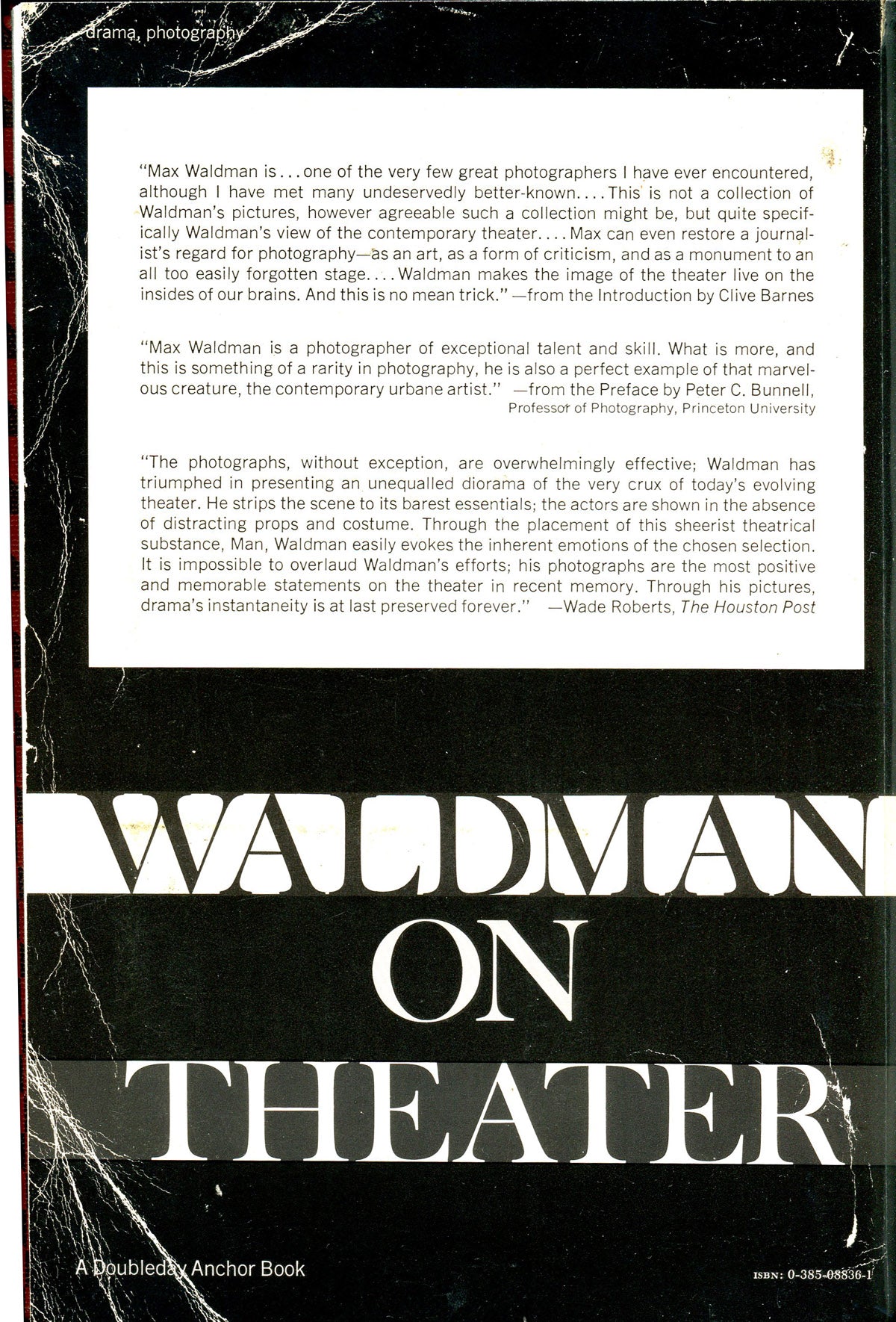
Introduction by Clive Barnes. Preface by Peter C. Bunnell, who states that Waldman “is one of the very few great photographers I have ever encountered.” 183 pages. Photographs of the following productions: The Persecution and Assassination of Jean-Paul Marat as Performed by the Inmates of the Asylum of Charenton Under the Direction of the Marquis de Sade; The Living Theatre; A Moon for the Misbegotten; King Lear; Dionysus in 69; The Homecoming; The Constant Prince, War and Peace, Iphegeni in Aulis; The Mercant of Venice; A Midsummer Night’s Dream, Ulysses in Nighttown; Bluebeard; and Fiddler on the Roof. Includes some nude actors. Wraps in orange library cloth binding, reprint of 1971 hard cover edition, ex-library with very little evidence, paperback is good, binding is like new. Summary:
Waldman on Theater (1971), published by Doubleday & Company, is a seminal photography monograph by Max Waldman, featuring an introduction by prominent theater critic Clive Barnes and a preface by photography curator Peter Bunnell. The book stands as a groundbreaking masterwork of performing arts documentation, capturing the gritty, revolutionary energy of the late 1960s avant-garde theater scene.
The Radical Philosophy: Recreating the Stage
The defining characteristic of Waldman on Theater is that it is fundamentally not a book of literal production credits or stage records. Waldman rejected the traditional role of a production photographer who snapped pictures from the audience during a live show.
-
The Method: Freed from a live audience, Waldman had performers isolate and aggressively reenact key emotional beats, choreography, and dramatic gestures specifically for his camera. This allowed him absolute mastery over close-up proximity, angle, and harsh studio lighting.
Key Theatrical Portfolios
The book serves as a definitive visual archive of the era's most radical, Dionysian, and politically charged off-Broadway and avant-garde productions:
-
Marat/Sade: The core of Waldman's early renown, featuring the Royal Shakespeare Company’s performance of Peter Brook's staging of The Persecution and Assassination of Jean-Paul Marat.... Waldman's images brilliantly interpret the madness, claustrophobia, and raw existential horror of the asylum setting.
-
The Living Theatre: Captures the radical, counter-culture company led by Judith Malina and Julian Beck. The imagery highlights their visceral, body-centric, and often boundary-pushing physical style.
-
Performance Group’s Dionysus in 69: Documents Richard Schechner's highly interactive, ritualistic adaptation of Euripides' The Bacchae, emphasizing raw human form, sweat, and primal release.
-
Iconic Character Studies: The volume also features deeply expressive portraits of singular artists caught in character, including legendary comic actor Zero Mostel and stage icons like Glenda Jackson (who graces the book's dust jacket).
Aesthetic and Visual Style
Waldman's distinct visual vocabulary mirrors the psychological intensity of the plays he selected:
-
Chiaroscuro & Grain: Shot strictly in black-and-white, the images are highly stylized, utilizing heavy, high-contrast shadows and a coarse, moody grain that obscures literal detail to highlight spiritual essence.
-
The Illusion of Motion: Rather than statically freezing a pose, Waldman masterfully utilized slight motion blur and tight framing to capture the ongoing, kinetic trajectory of the actors' movements, making the pages feel alive with performance.
Significance
Waldman on Theater is note worthy because it elevated theatrical photography from passive journalism into an act of artistic criticism and interpretation. As Clive Barnes stated in the introduction, Waldman did not use his camera to record, but to comment. The book remains a vital document of the 20th-century avant-garde, capturing a fleeting, transient art form and translating it into a permanent, hauntingly poetic visual language.
Biographical Summary
Max Waldman (1919–1981) was a distinguished American photographer celebrated for his dramatic, highly atmospheric portraits of theater and dance performers. Born in Brooklyn, Waldman spent part of his childhood in an orphanage following his father's death before discovering photography during his service with the Civilian Conservation Corps in the late 1930s. After earning a Master of Arts in Fine Arts from Columbia University and establishing a successful commercial photography career, he transitioned in the mid-1960s to studio-based visual arts. Working in black-and-white, he developed a signature style characterized by painterly compositions, deep chiaroscuro lighting, and heavy grain to capture the physical intensity and emotion of performative motion. His quiet studio sessions produced iconic photographs of stage legends and dance stars—including Mikhail Baryshnikov, Natalia Makarova, and Suzanne Farrell—and yielded acclaimed monographs such as Waldman on Theater (1971) and Waldman on Dance (1977), earning his work a permanent place in the collections of the Metropolitan Museum of Art and the Museum of Modern Art.