Gary Saretzky Photo Books
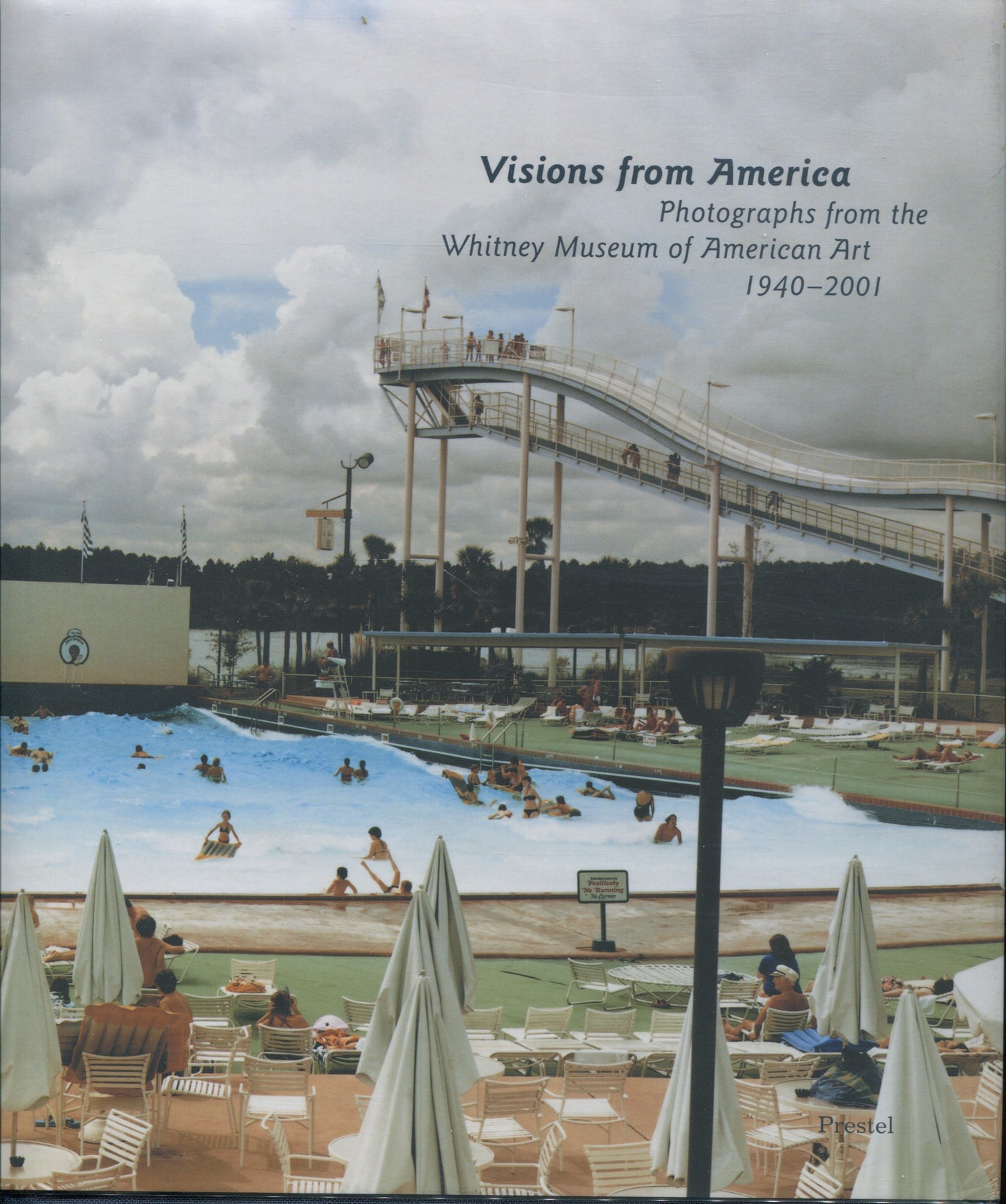
Visions from America: Photographs from the Whitney Museum of American Art, 1940–2001.
Visions from America: Photographs from the Whitney Museum of American Art, 1940–2001.
Couldn't load pickup availability
Prestel, 2002. By Sylvia Wolf with an essay by Andy Grundberg. Preface by Sandra Gilman Gonzalez-Falla. Hardcover in black cloth with protected dust jacket. Like new, with no defects. Issued at $45. 240 pages. Reproductions in color and black-and-white. Photographers: Berenice Abbott; Edward Steichen; Robert Heinecken; Bruce Naumann; Robert Frank; Ed Ruscha; Lisette Model; Weegee; Helen Levitt; Saul Leiter; Andreas Feininger; Louis Stettner; David Vestal; William Klein; Sid Grossman; Jerry Dantzic; Louis Faurer; Peter Hujar; Gordon Parks; Bruce Davidson; Frederick Sommer; Ralph Eugene Meatyard; Wynn Bullock; Minor White; Aaron Siskind; Harry Callahan; Marvin E. Newman; Kenneth Josephson; Ray Metzker; Jerry Uelsmann; Lucas Samaras; Billy Name; Andy Warhol; Diane Arbus; Lee Friedlander; Joel Meyerowitz; Vito Acconci; Duane Michals; John Baldessari; Mel Bochner; Larry Clark; Danny Lyon; Susan Meiselas; Garry Winogrand; Ralph Gibson; Jeanne Moutoussamy-Ashe; Leon Levinstein; Larry Fink; Stephen Shore; William Eggleston; William Christenberry; Lewis Baltz; Bill Owens; Robert Adams; Steve Fitch; Dan Graham; Martha Rosler; Alexis Smith; William Wegman; Dennis Oppenheim; Gordon Matta-Clark; Robert Cumming; Sandy Skoaglund; Arthur Tress; Adrian Piper; Emmet Gowin; Nan Goldin; Mary Ellen Mark; JoAnn Verburg; Chris Verene; David Vestal; Weegee; Carrie May Weems; Joel-Peter Witkin; David Wojnarowicz; Shirin Neshat; Barbara Kruger; Louise Lawler; Sol LeWitt; Saul Leiter; et al. Summary:
Visions from America: Photographs from the Whitney Museum of American Art, 1940–2001 (2002) is a comprehensive catalog published to accompany the Whitney’s first major exhibition drawn exclusively from its permanent photography collection. Curated by Sylvia Wolf, the book chronicles the evolution of the American photographic "vision" during a period of radical artistic and social transformation.
Core Narrative and Scope
The volume serves as a celebratory milestone for the Whitney, marking its commitment to photography which began in earnest in 1991. It traces the medium's journey from traditional documentary to postmodern experimentation:
-
Historical Range: Beginning with the post-WWII era, the book follows the shift from the gritty "street photography" of the 1950s to the identity politics and digital innovations of the late 20th century.
-
Themes of Identity: A significant portion of the work explores what it means to be "American," using portraits, landscapes, and "street-scapes" to reflect the country's diverse and often fractured social landscape.
-
The "American Sensibility": The book highlights photography's unique role as the primary medium for portraying American culture, particularly after the 1959 publication of Robert Frank’s The Americans.
Artistic Diversity
The catalog features over 160 photographs (presented in color and duotone) by more than 40 influential artists, including:
-
Modern Masters: Diane Arbus, Robert Frank, Harry Callahan, and William Eggleston.
-
Postmodern Icons: Cindy Sherman, Nan Goldin, and Richard Avedon.
-
Conceptual/Contemporary Voices: Chuck Close, Matthew Barney, and Sarah Charlesworth.
Technical and Scholarly Features
-
Essays: Includes insightful text by curator Sylvia Wolf and esteemed critic Andy Grundberg, contextualizing the collection within the broader history of 20th-century art.
-
Format: A 240-page scholarly volume published by Prestel, noted for its high-quality reproductions that honor the specific textures of different photographic processes, from gelatin silver prints to large-scale color works.
Key Information
-
Published: 2002 by Prestel/Whitney Museum of American Art.
-
Context: The publication followed a decade of aggressive acquisitions led by the Whitney’s Photography Committee, turning the museum into a premier repository for the medium.
Summary: Visions from America is an essential survey of the "American Century" in photography. It positions the camera not just as a tool for documentation, but as a primary engine of artistic innovation that has continually redefined the nation's visual and cultural identity.