Gary Saretzky Photo Books
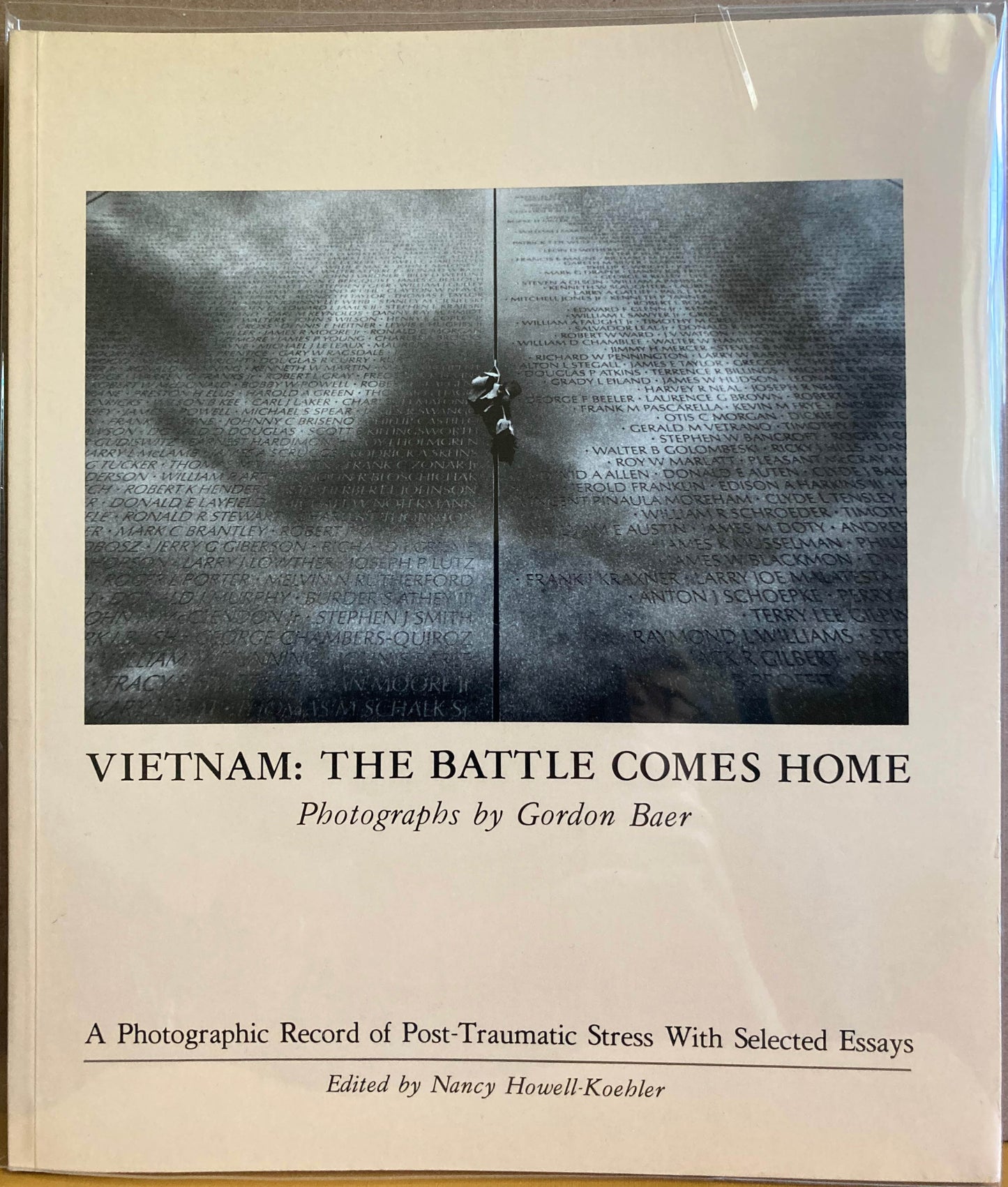
Vietnam: The Battle Comes Home. A Photographic Record of Post-Traumatic Stress With Selected Essays. Photographs by Gordon Baer.
Vietnam: The Battle Comes Home. A Photographic Record of Post-Traumatic Stress With Selected Essays. Photographs by Gordon Baer.
Couldn't load pickup availability
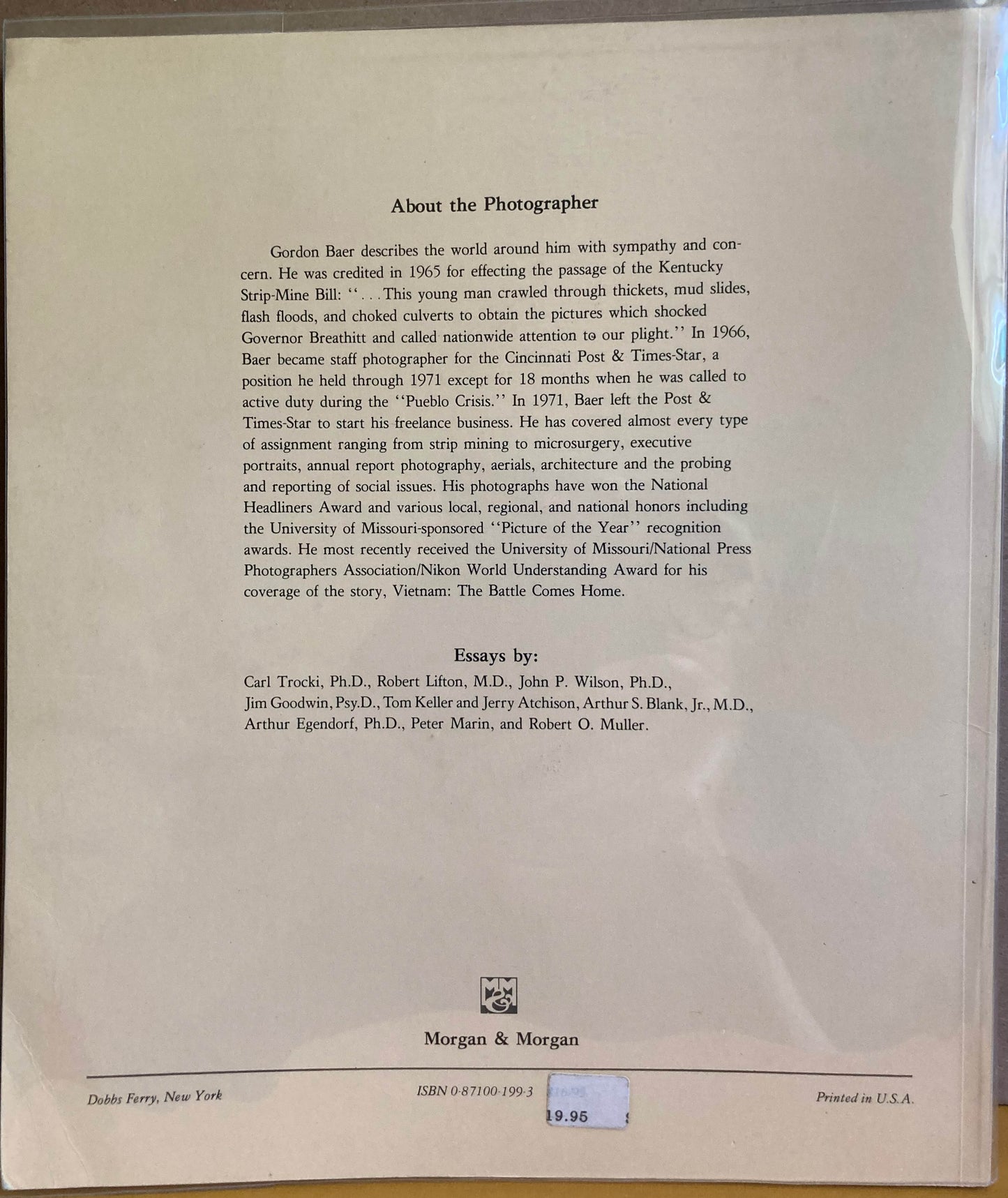
Morgan & Morgan, 1984. Edited by Nancy Howell-Koebler. Wraps, very good with corner crimps. Custom made 4-mil polyester jacket. 112 pages. First 40 pages consists of nine essays by doctors and other PTSD experts: Carl Trocki, Robert J. Lifton, John P. Wilson, Jim Goodwin, Tom Keller and Jerry Atchison, Arthur S. Blank, Jr., Arthur Egendorf, Peter Marin, and Robert O. Mulle. Includes explanation of PTSD symptoms such as alienation, isolation, anxiety, et al., and discussions of the importance of recognizing this problem and society supporting the Vietnam veterans. This section is followed by Baer’s sensitive black-and-white photographs of vets with captions about their individual situations. Back of the book provides a list of many places to get help for PTSD in the U.S. and bibliography. Summary:
Published in 1984 by Morgan & Morgan, Vietnam: The Battle Comes Home is a powerful documentary work that examines the enduring psychological toll of the Vietnam War. Featuring photography by Gordon Baer and edited by Nancy Howell-Koehler, the book was one of the first major visual records to confront Post-Traumatic Stress Disorder (PTSD)—a term that had only been officially recognized by the medical community a few years prior in 1980.
Core Concept & Recognition
The book originated from a photographic project that earned Baer the prestigious Nikon World Understanding Award in 1982. It shifts the focus away from the battlefield of Southeast Asia to the "internal battlefield" veterans faced upon returning to civilian life in the United States.
Thematic Structure
The book is divided into two distinct but complementary sections:
-
The Essays: The first 40 pages consist of nine scholarly and clinical essays by experts, including the renowned psychiatrist Robert J. Lifton. These texts provide a scientific and sociological framework for understanding PTSD symptoms such as alienation, isolation, survivor's guilt, and anxiety.
-
The Photographs: The remainder of the book features Baer’s sensitive, black-and-white portraits of veterans.These images are often accompanied by captions or brief narratives detailing the individuals' specific struggles with homecoming, family life, and mental health.
Key Objectives
-
De-stigmatization: By pairing clinical explanations with raw, humanizing portraits, the book sought to educate the public and de-stigmatize the "invisible wounds" of war.
-
Social Support: The book emphasizes the necessity of societal recognition and institutional support for veterans, rather than viewing their trauma as a personal or private failure.
-
Practical Resources: Reflecting its mission as an advocacy tool, the back of the book includes a directory of outreach programs and bibliography for veterans and their families seeking help.
Significance
Vietnam: The Battle Comes Home is regarded as a milestone in humanist photojournalism. It captured a pivotal moment in American history when the nation was just beginning to grapple with the long-term consequences of the war. Gordon Baer’s work is praised for its lack of sentimentality; instead, it offers a stark, honest, and profoundly empathetic look at men and women attempting to navigate a world that had fundamentally changed for them.
Gordon Baer (1940–2019), born Charles Gordon Baer, was an American photojournalist and documentary photographer acclaimed for his compassionate portraits, socially conscious photo essays, and candid visual accounts of human vulnerability and resilience. Born in Louisville, Kentucky, Baer studied fine arts at the University of Louisville before beginning his professional career as a staff photographer for the Cincinnati Post & Times Star (1966–1971), eventually establishing a decades-long freelance practice that saw his work published in major national periodicals such as Life, Time, Newsweek, Fortune, and National Geographic. Throughout his career, Baer focused his lens on individuals often overlooked by society, producing influential photographic studies on the Civil Rights Movement, the strip mining of eastern Kentucky, the lives of aging individuals in nursing homes, and intimate domestic chronicles such as Aunt Beck: Intimate Portrait of Death. His most celebrated achievement came in 1982 when he received the World Understanding Award from the National Press Photographers Association and the University of Missouri for his powerful visual documentation of post-traumatic stress among returning servicemen, culminating in the landmark photobook Vietnam: The Battle Comes Home (1984). Known for his mastery of available-light photography and warm humanism, Baer’s legacy endures through his permanent archival collections and retrospective monographs like Available Light: The Photographs of Gordon Baer (2021).