Gary Saretzky Photo Books
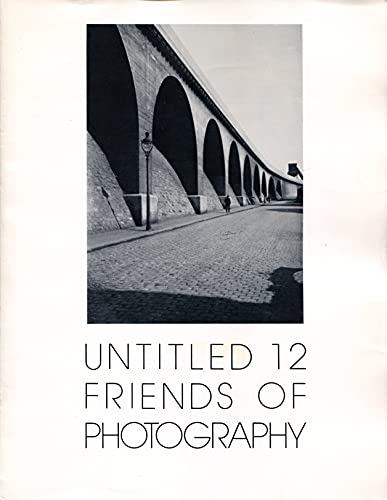
Renger-Patzsch, Albert. Untitled 12. Albert Renger-Patzsch 1897 – 1966.
Renger-Patzsch, Albert. Untitled 12. Albert Renger-Patzsch 1897 – 1966.
Couldn't load pickup availability
The Albert Renger-Patzsch Collection at the Friends of Photography, which issued this softcover book in 1977. 28 plates by Renger-Patzsch, mostly landscapes with one portrait. Other photos include portrait of Renger-Patzsch and one with Ansel Adams and Rosario Mazzeo by Beaumont Newhall. Also includes essay, "Picking Winners," by Henry Holmes Smith and a chronology of exhibits at the Friends, 1967–1977, which reads like a who's who in photography. A few loose pages as common with this perfect bound book. Slight shelf wear. Not issued with ISBN number. Summary:
Untitled 12: Albert Renger-Patzsch 1897–1966 (1977) is a significant monograph published by the Friends of Photography as part of their influential "Untitled" series. This volume serves as a critical re-examination of the German photographer who was the leading figure of the New Objectivity (Neue Sachlichkeit) movement in the 1920s and 30s.
Core Philosophy: The New Objectivity
The book explores Renger-Patzsch’s unwavering commitment to "straight" photography. He rejected the soft-focus, painterly style of Pictorialism in favor of:
-
Technical Precision: Using the camera to reveal the essence of an object through sharp focus and extreme clarity.
-
Materiality: A fascination with the surface textures of the world—whether the skin of a cactus, the weave of a fabric, or the cold steel of a machine.
-
Democratic Vision: The belief that a common household item was as worthy of photographic study as a grand cathedral.
Key Themes and Imagery
1. The Intersection of Nature and Industry
The monograph highlights Renger-Patzsch’s ability to find similar geometric patterns in both the natural and man-made worlds.
-
Botanical Studies: Close-ups of plants that emphasize their structural, almost architectural, rigidity.
-
Industrial Landscapes: Images of factories, smokestacks, and mass-produced glass jars that treat industrial subjects with the same reverence usually reserved for nature.
2. "The World is Beautiful" (Die Welt ist schön)
The book references his seminal 1928 work, illustrating his "archival" approach to the world. By stripping away sentimentalism and human narrative, Renger-Patzsch allowed the objects to speak for themselves through their own formal properties.
Editorial Context: The "Untitled" Series
As the twelfth installment in the Untitled series, this volume was instrumental in introducing (or re-introducing) American audiences to the rigors of European modernism. It includes a scholarly essay that places Renger-Patzsch’s work in the context of the Weimar Republic’s intellectual climate and his lasting influence on the "New Topographics" and industrial photographers who followed.
Summary Takeaway
Untitled 12 is a concise tribute to the "logic of the eye." It presents Renger-Patzsch not merely as a documentarian, but as a philosopher-craftsman who used the camera to prove that the modern world—in all its mechanical and organic complexity—possesses an inherent, structural beauty that only the lens can fully uncover.
