Gary Saretzky Photo Books
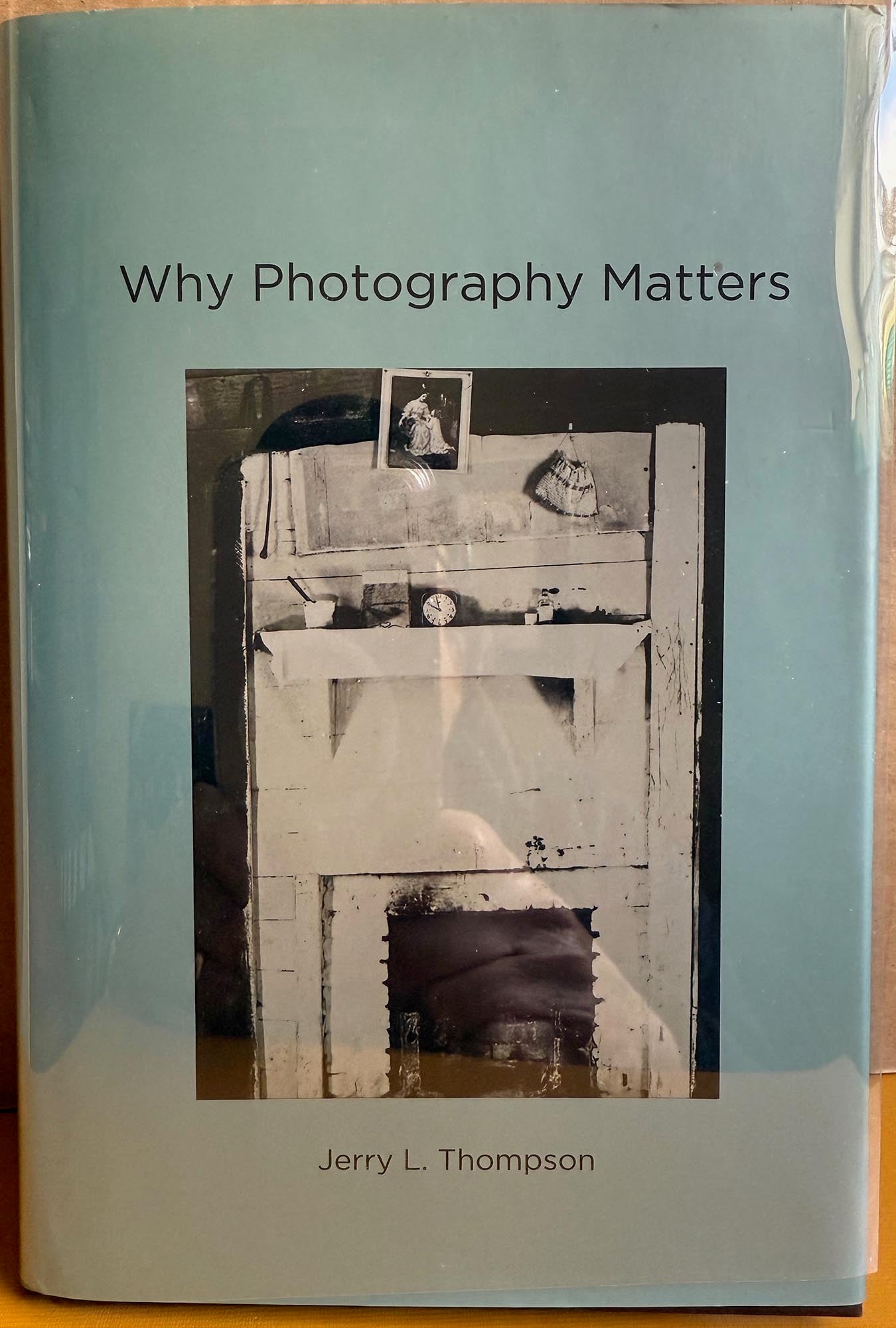
Thompson, Jerry L. Why Photography Matters by Jerry L. Thompson.
Thompson, Jerry L. Why Photography Matters by Jerry L. Thompson.
Couldn't load pickup availability
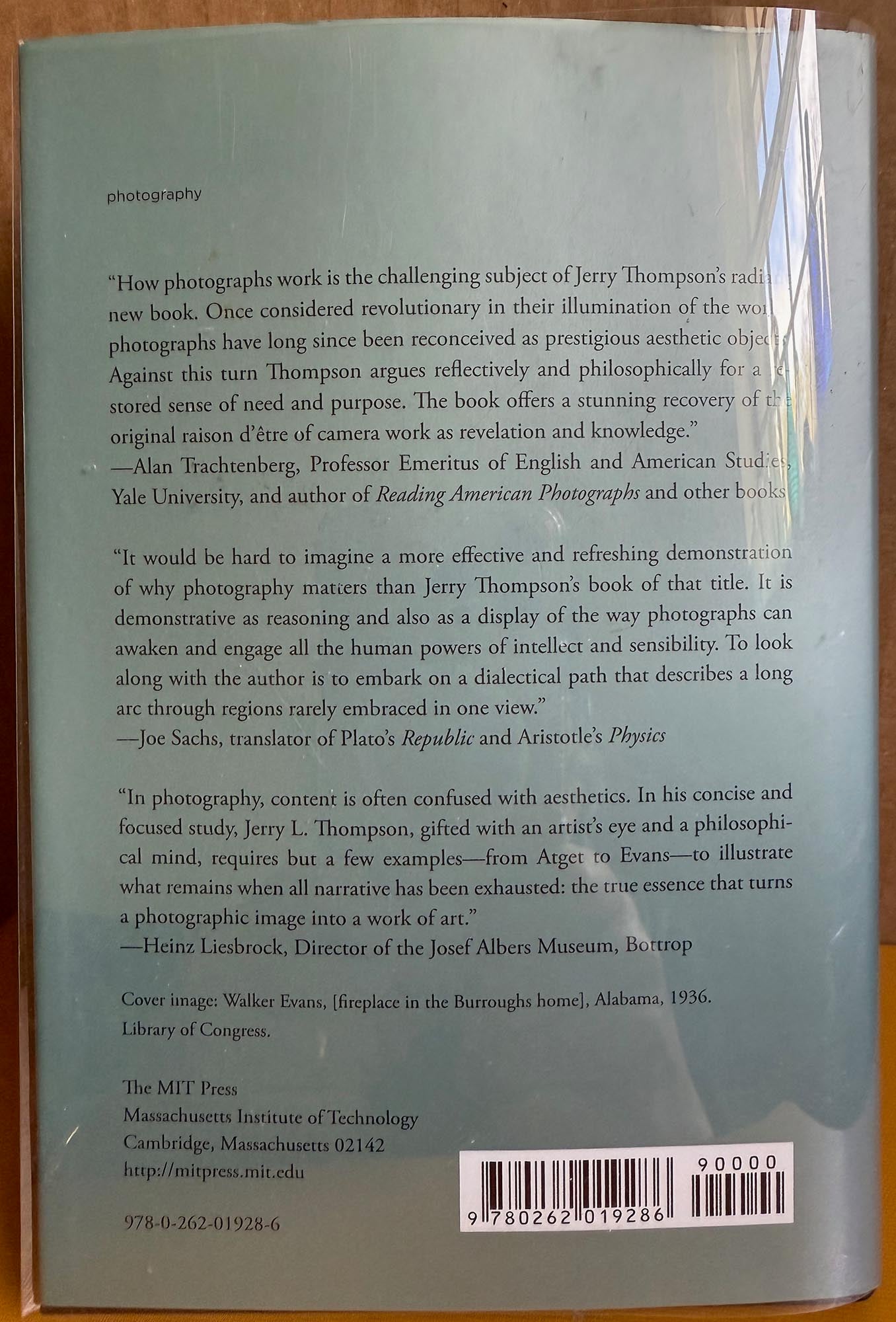
M.I.T. Press, 2013. First edition, first printing, fine small hardcover in custom made 4-mil polyester protected fine dust jacket. Like new in all respects. About the book: Photography matters, writes Jerry Thompson, because of how it works -- not only as an artistic medium but also as a way of knowing. With this provocative observation, Thompson begins a wide-ranging and lucid meditation on why photography is unique among the picture-making arts. He constructs an argument that moves with natural logic from Thomas Pynchon (and why we read him for his vision and not his command of miscellaneous facts) to Jonathan Swift to Plato to Emily Dickinson (who wrote "Tell all the Truth but tell it slant") to detailed readings of photographs by Eugène Atget, Garry Winogrand, Marcia Due, Walker Evans, and Robert Frank. Forcefully and persuasively, he argues for photography as a medium whose business is not constructing fantasies pleasing to the eye or imagination, but describing the world in the toughest and deepest way. Rather uncommon in the first printing. Please ignore reflections in the photos of covers accompanying this listing. Summary:
Why Photography Matters by Jerry L. Thompson is a concise, thoughtful meditation on the nature and significance of photography as both an art form and a distinct way of knowing the world. At just under 100 pages, the book doesn’t offer a history of photography so much as a philosophical argument about why the medium matters and what makes it uniquely powerful.
Core Thesis
Thompson argues that photography matters not primarily because it can please the eye or construct visual fantasies, but because of how it works—the way a camera engages with reality—making photography a compelling means of understanding the world. He emphasizes that the medium inherently blends educated understanding with chance discovery: a photograph can reveal more about the world than even the photographer intended, because the lens indiscriminately captures detail and unforeseen aspects of a scene.
Photography as a Way of Knowing
Arguing against some prevailing critical views (notably Susan Sontag’s skepticism about the transcendence of photographs), Thompson proposes that photography can go beyond superficial aesthetics to show “things as they are” by engaging both the photographer’s intellect and their openness to what emerges in the image. In his view, this dialectic between the photographer’s intentional craft and the unexpected revelations in the photograph is central to the medium’s epistemological value.
Literary and Visual Examples
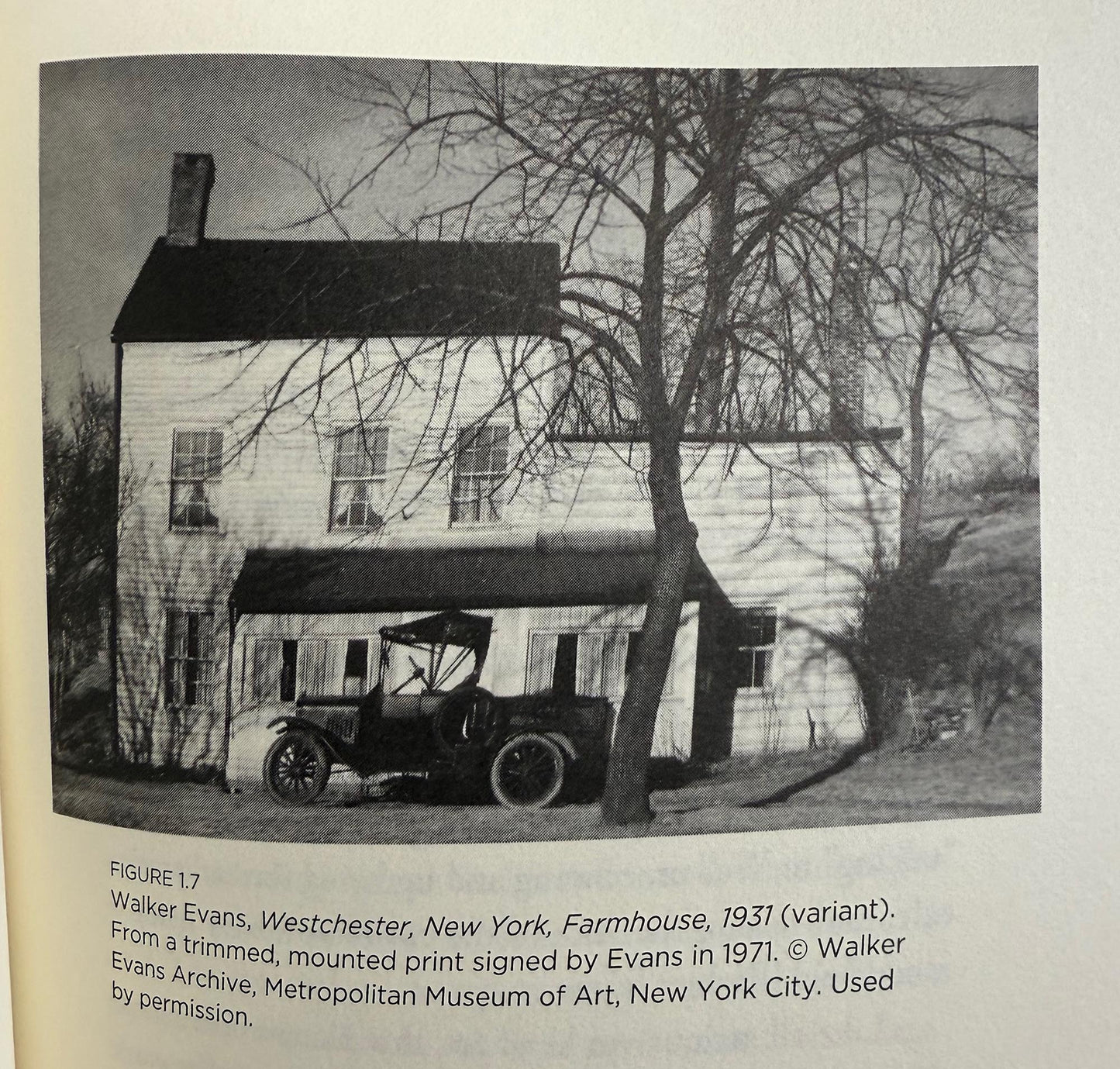
To support his case, Thompson draws on a wide array of sources—from Plato and Emily Dickinson to Thomas Pynchon—as well as readings of photographs by key figures like Eugène Atget, Garry Winogrand, Marcia Due, Walker Evans, and Robert Frank. These examples illustrate his idea of photography as a medium that can deepen our understanding of reality rather than simply decorate or interpret it.
Style and Impact
The book’s style is reflective and often philosophical, pulling from literature, aesthetics, and the author’s own experience as a photographer (including his work with Walker Evans). While some critics have noted that Thompson’s focus on certain traditional notions of “serious” photography may feel limiting, his passion for the craft and his defense of photography’s intellectual and perceptual depth make Why Photography Matters a thought-provoking read for photographers, critics, and anyone interested in what makes images meaningful.