Gary Saretzky Photo Books
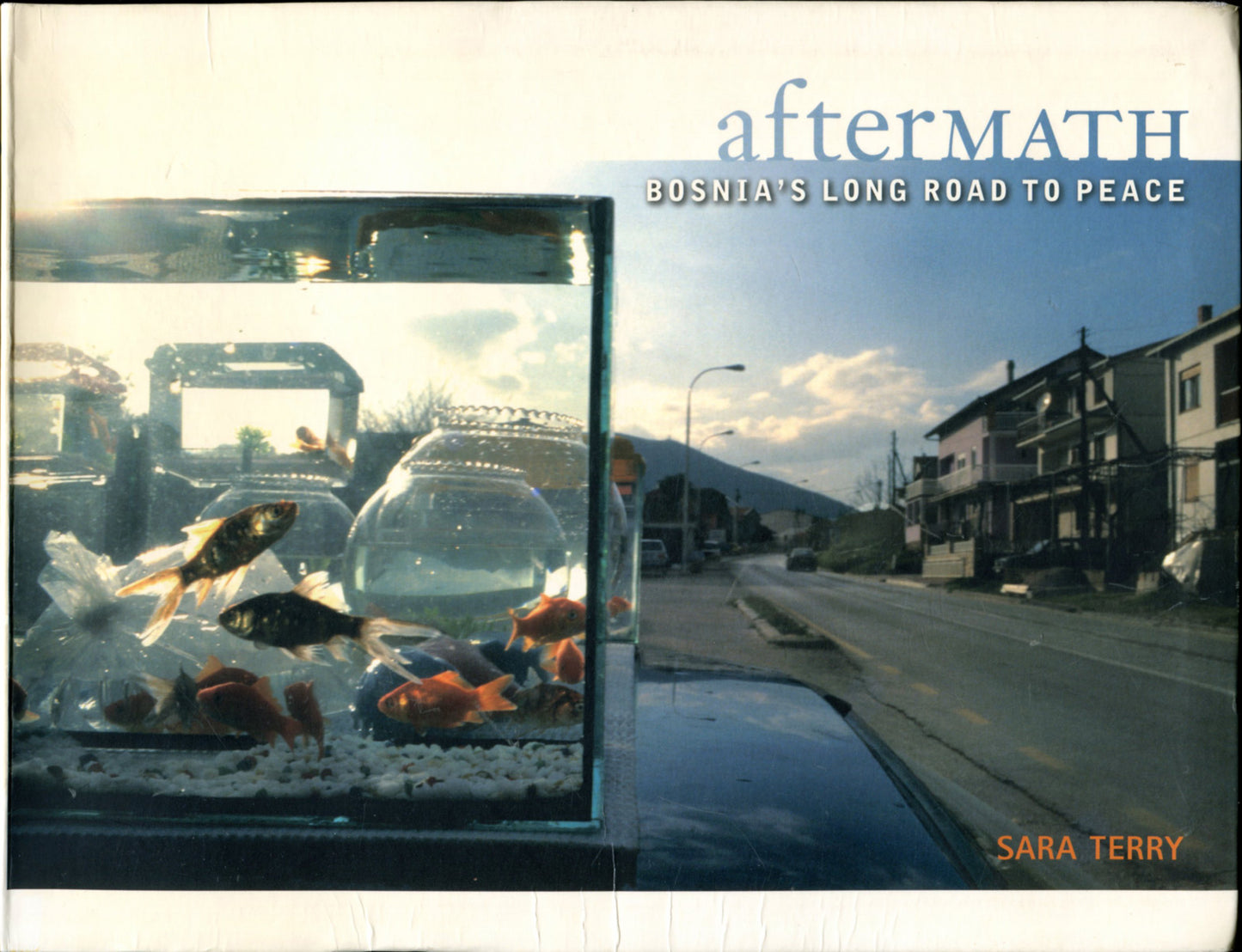
Terry, Sara. Aftermath: Bosnia’s Long Road to Peace. Photographs by Sara Terry.
Terry, Sara. Aftermath: Bosnia’s Long Road to Peace. Photographs by Sara Terry.
Couldn't load pickup availability
Channel Photographics, 2005. 1st edition, stiff wraps, as issued, ex-library, spine labels removed, with card pocket in back and library label on back cover. 207 pages, 193 photographs. Very good with slight crimps on front cover and moderate shelf wear. Impressively conceived and sequenced color photographs taken after the war in Bosnia by Sara Terry. The photos are of people and places that convey the photographer’s feelings and do not include war damage. Afterword by Lawrence Wechsler. Summary:
Aftermath: Bosnia’s Long Road to Peace (2005), featuring photographs by Sara Terry and text contributions from essayist Lawrence Weschler, is a foundational work of post-conflict documentary photography. Created from Terry’s five-year journey (2000–2005) through Bosnia and Herzegovina, the book operates on a core thesis that became Terry's career-defining mantra: "War is only half the story."
Shifting the Lens from War to Recovery
While the international press flooded Bosnia during the 1992–1995 war, journalists largely moved on once the Dayton Peace Accords were signed. Terry’s book enters the narrative at this point of abandonment, documenting the agonizingly slow, unglamorous process of rebuilding a civil society in the wake of ethnic cleansing and the worst genocide in Europe since World War II.
Key Thematic Pillars
-
The Reality of Forensic Grief: A prominent and devastating thread in the book follows the exhumation and DNA identification of roughly 20,000 victims of ethnic cleansing. Terry’s images capture the widows of the 1995 Srebrenica massacre standing over rows of freshly exhumed body bags, confronting the forensic reality of their losses years after the guns fell silent.
-
The Defiance of Return: The book highlights the staggering resilience of refugees—particularly Bosnian Muslims—who insisted on returning to the very villages from which their neighbors had violently expelled them, determined to rebuild their homes from literal rubble.
-
Parallel Societies: Terry explores the deep-seated psychological fractures remaining in the country. Her portraits of the youth of Sarajevo and surrounding towns show a generation stuck between parallel worlds—officially sharing a country, but divided by lingering distrust, corrupt political structures, and segregated memories.
-
The Return of Everyday Life: To capture the true texture of aftermath, Terry actively searched for signs of normalization and enduring humanity. The book includes quiet, bittersweet, and surreal moments of daily survival, such as a roadside vendor selling goldfish or local divers reclaiming the tradition of jumping from the newly rebuilt Mostar Bridge.
Visual Style and Methodology
Terry, a former print journalist who transitioned to documentary photography, employs a deeply empathetic visual language. Rather than looking for the jarring, chaotic compositions of conflict photography, her style relies on patience, shadow, reflection, and fragmented forms. Her images focus heavily on the human face and the physical landscape as repositories of memory, giving the viewer space to sit with the lingering sorrow and tenuous hope of her subjects.
Significance
Aftermath is widely celebrated for redefining the boundaries of photojournalism. It directly challenged the media’s systemic "Bosnia fatigue" by arguing that the real work of peacekeeping and human redefinition only begins after the violence stops. The emotional weight and success of this project ultimately inspired Terry to found The Aftermath Project, a renowned non-profit organization that awards grants to photographers worldwide who commit to covering the long, untold aftermath of global conflicts.
Biographical Summary
Sara Terry is an acclaimed American documentary photographer, filmmaker, and photojournalist recognized for her long-term visual studies on post-conflict reconciliation and human rights. Originally building a career as a written journalist and foreign correspondent for major news outlets like The Christian Science Monitor, Terry transitioned into photojournalism in the late 1990s to visually explore the nuanced aftermath of war. Her seminal project, Aftermath: Bosnia's Long Road to Peace (2005), examined the quiet struggles of reconstruction following the Bosnian War and inspired her to found The Aftermath Project in 2003, a non-profit organization that awards grants to photographers covering the visual narratives of post-conflict recovery. A member of the prestigious VII Photo Agency, a Guggenheim Fellow, and an accomplished documentary director—known for films such as Fabled Enemies and FADED: The Story of a Town—Terry has consistently challenged traditional war photography by focusing on peacebuilding, societal memory, and resilience in places like Liberia, Rwanda, and the American West.