Gary Saretzky Photo Books
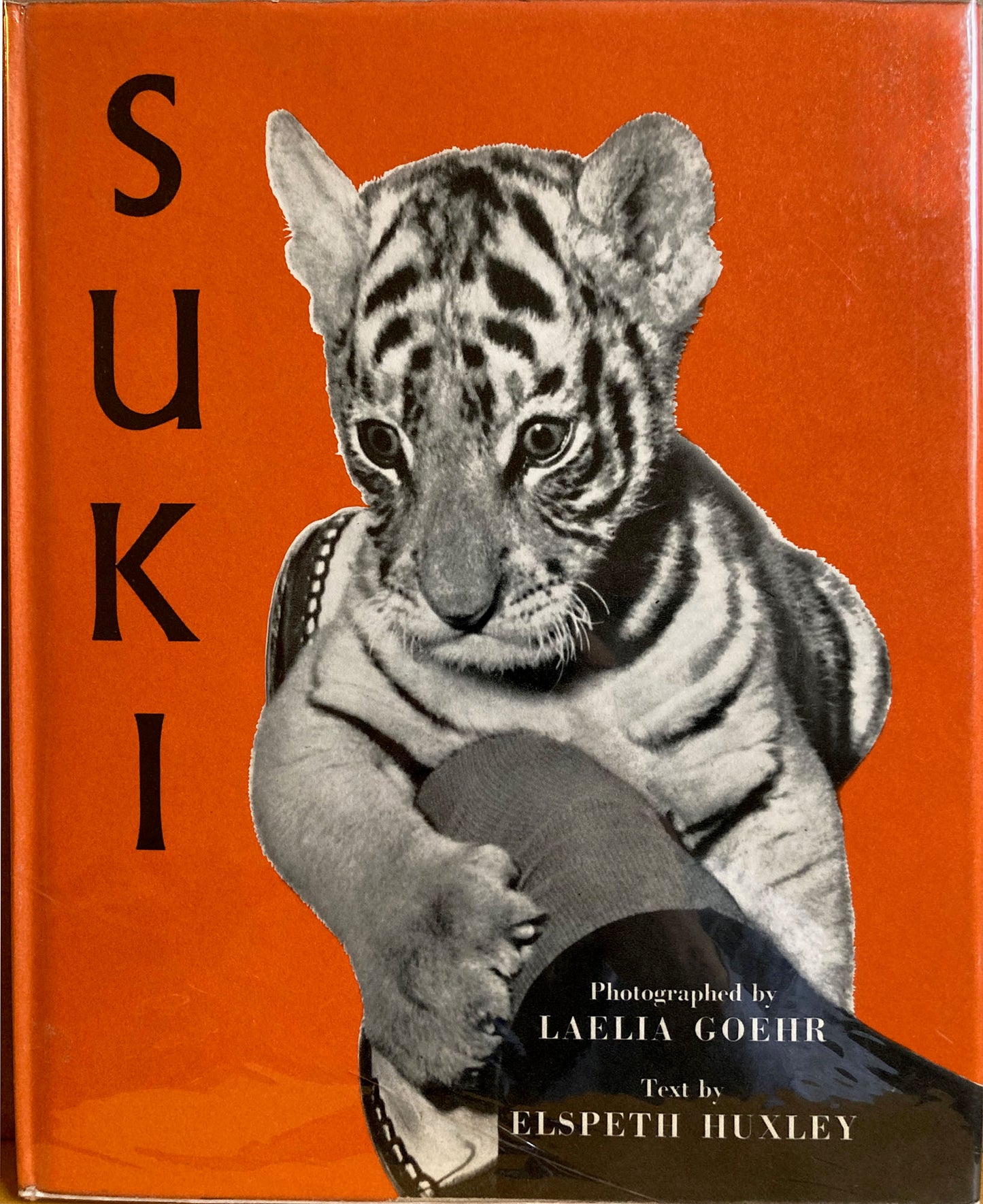
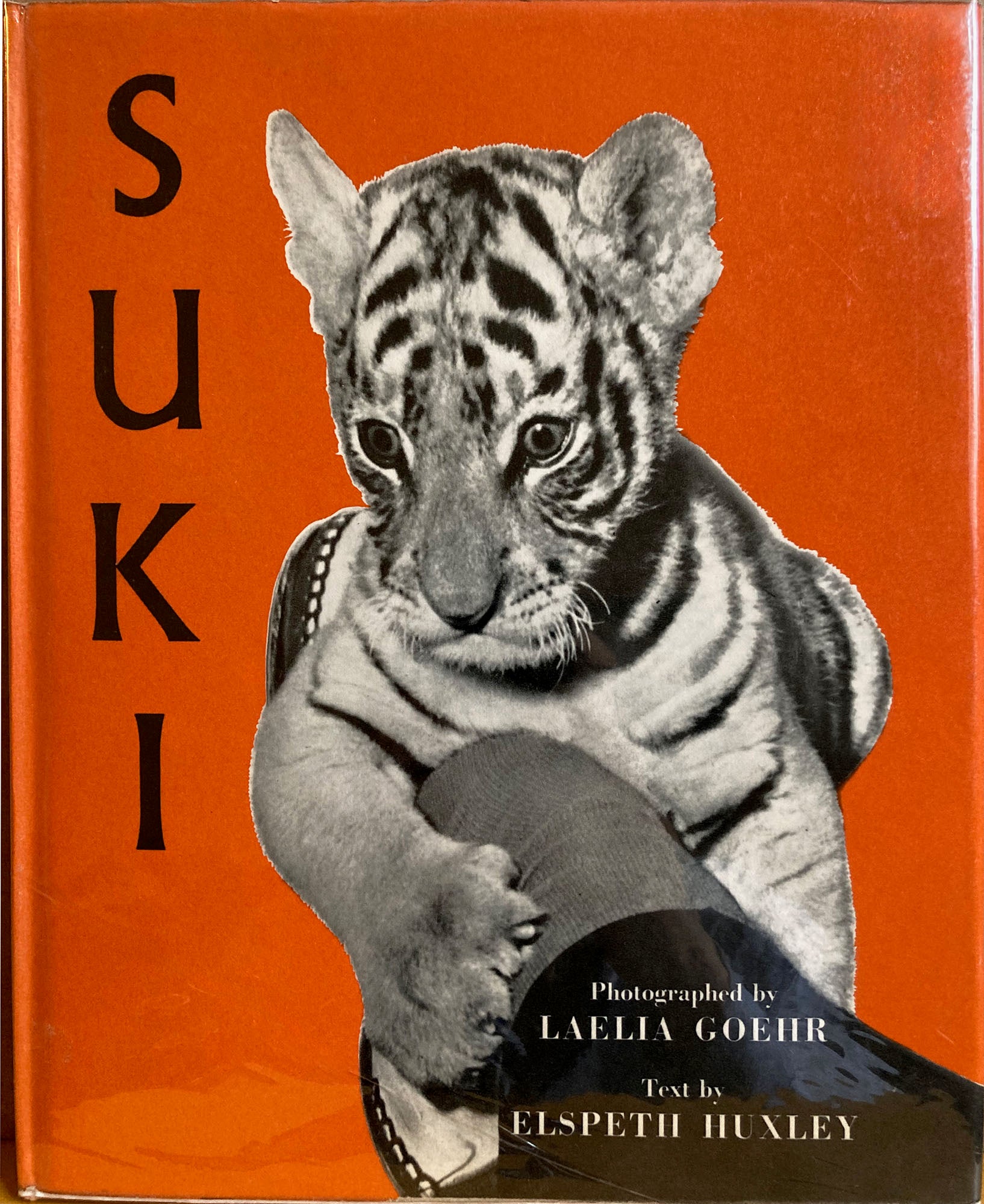
Suki: A Little Tiger photographed by Laelia Goehr, text by Elspeth Huxley.
Suki: A Little Tiger photographed by Laelia Goehr, text by Elspeth Huxley.
Couldn't load pickup availability
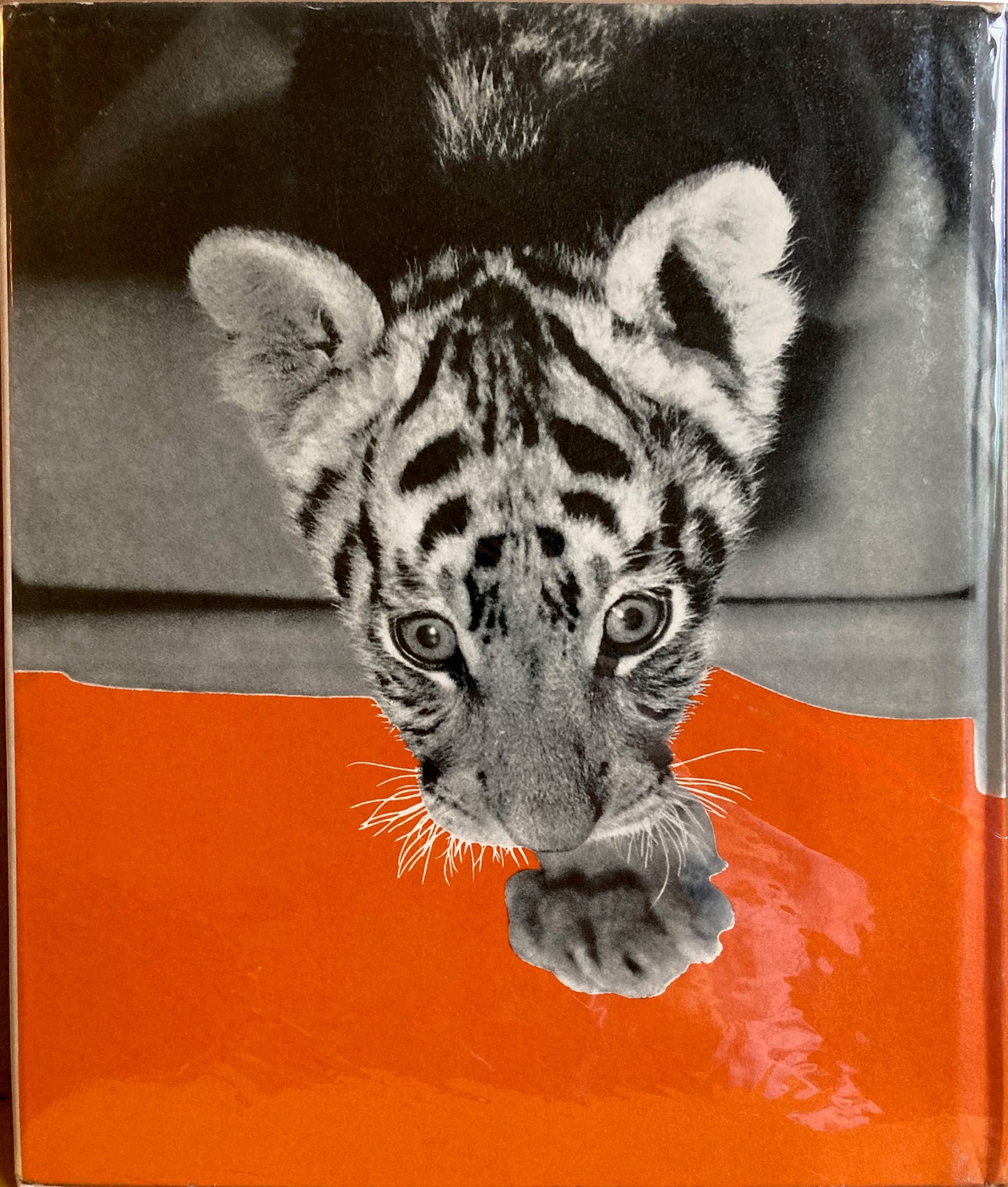
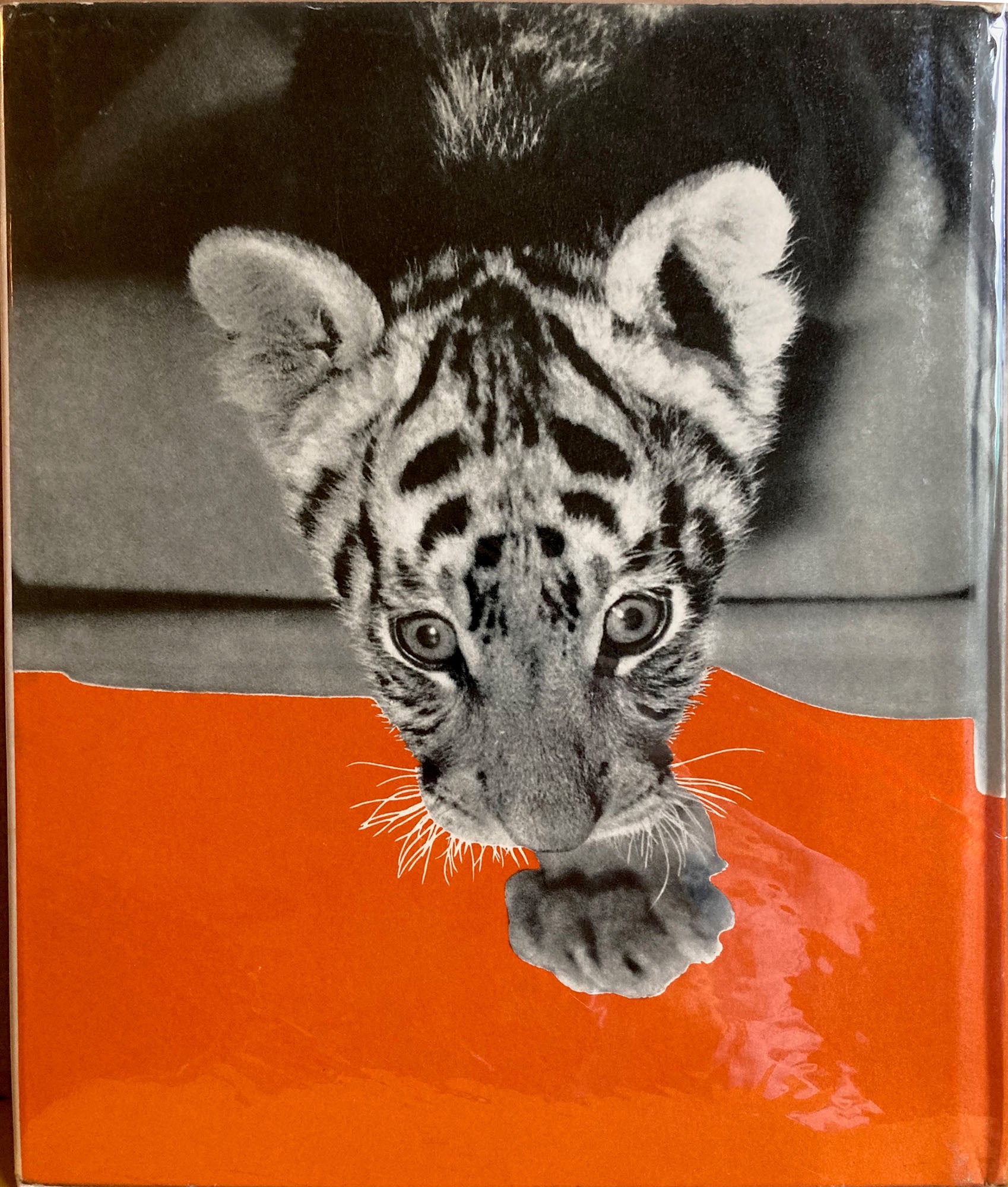
William Morrow, 1964. Hard cover, fine with protected fine dust jacket. Story of a baby tiger born on March 27, 1963, in London. Since its mother paid no attention to the kitten after birth, the cub was bottle fed by zoo personnel. Good story to read to children, illustrated with endearing black-and-white photographs of the young cat by Laelia Goehr. Book is reminiscent of those by Ylla (Camilla Koffler), who died tragically in 1955 while photographing a bullock cart race in India. Uncommon in hardcover, especially in this condition. Note: photos accompanying this listing were taken with the dust jacket protector in place, causing some reflections. Summary:
Suki: A Little Tiger (1964) is a charming and visually intimate collaboration between the renowned photographer Laelia Goehr and the celebrated novelist and colonial historian Elspeth Huxley. The book documents the first few months in the life of a tiger cub named Suki, born at the London Zoo, capturing her development from a vulnerable infant into a predatory, yet playful, adolescent.
Core Themes and Content
-
The "Portrait" of a Predator: Laelia Goehr, known for her ability to capture the "soul" of her subjects (including famous musicians and animals), uses a close-up, high-contrast style. She treats Suki not as a zoo attraction, but as an individual with a range of expressions—curiosity, aggression, and exhaustion.
-
Huxley’s Narrative: Elspeth Huxley provides a text that is both informative and lyrical. She balances the biological facts of tiger development with a sensitive narrative about the bond between the cub and her human keepers, as well as the inherent tragedy of a wild animal confined to an urban environment.
-
Texture and Form: The photography emphasizes the physical details of the tiger—the velvet texture of the ears, the razor-sharp milk teeth, and the iconic "extra finish" of the striped pelt.
Artistic and Technical Style
-
Mid-Century Documentary: The book follows the mid-century tradition of the "photographic essay," where the images tell a sequential story. Goehr’s use of available light in the zoo enclosures creates a moody, atmospheric "finish" that avoids the flat, clinical look of standard nature photography.
-
The "Gaze": Much like Eve Arnold’s The Unretouched Woman, Goehr’s lens is patient. She waits for the "unposed" moment, capturing Suki in mid-leap or deep sleep, providing a level of intimacy that was rare for wildlife books of the early 1960s.