Gary Saretzky Photo Books
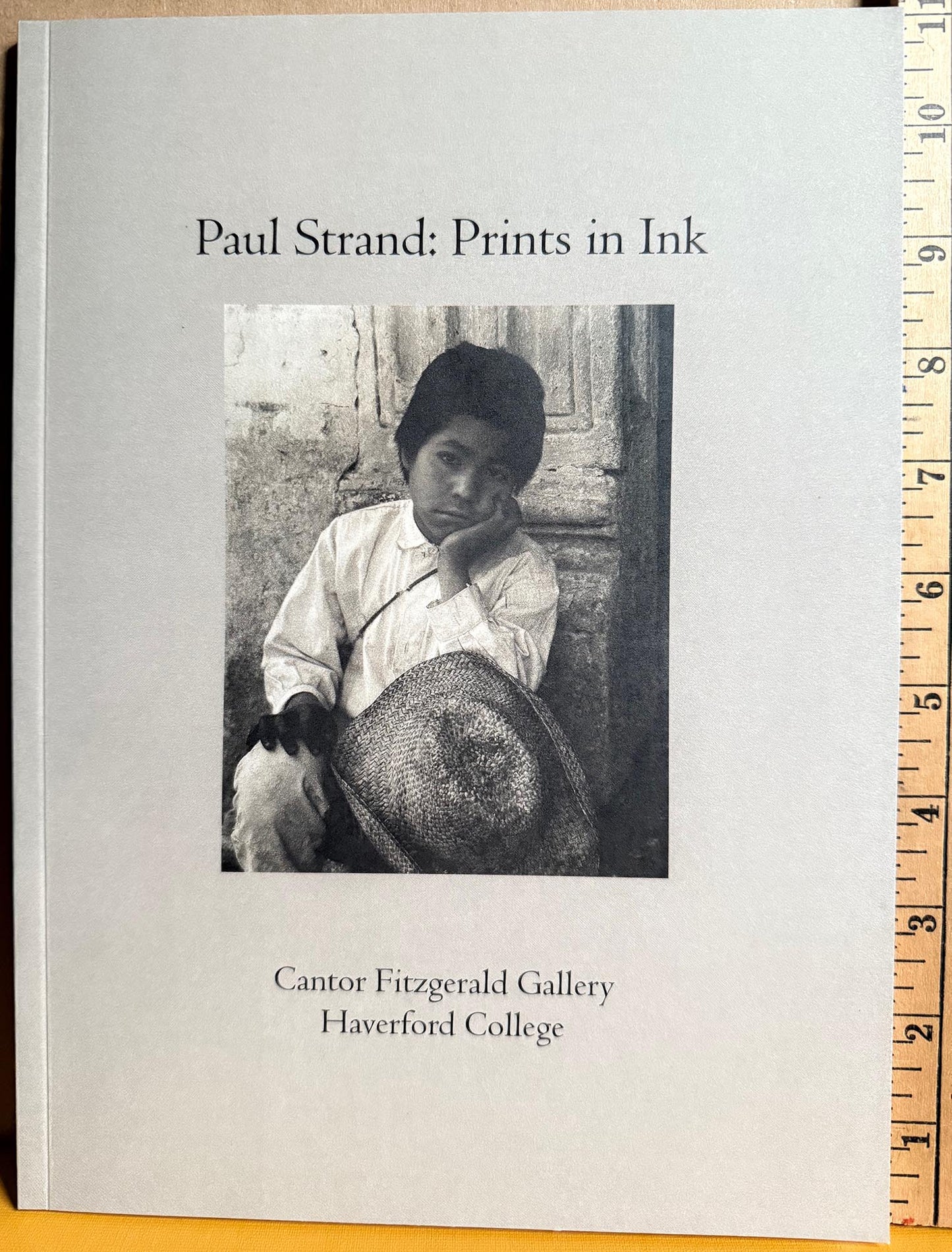
Strand, Paul. Paul Strand: Prints in Ink. October 27–December 30, 2000. Exhibit catalog. Cantor Fitzgerald Gallery, Haverford College.
Strand, Paul. Paul Strand: Prints in Ink. October 27–December 30, 2000. Exhibit catalog. Cantor Fitzgerald Gallery, Haverford College.
Couldn't load pickup availability
Haverford College, 2010. By William Earle Williams with an essay by James Krippner. Wraps, 60 pages. Edition of 1,000 copies. Like new. Catalog for exhibition that occurred in 2000. Includes several series of Strand's work, including street photography in New York, Mexico Portfolio, et al. Summary:
Paul Strand: Prints in Ink is the official catalog for the 2000 exhibition at Haverford College’s Cantor Fitzgerald Gallery that showcased a focused selection of Paul Strand’s photographic work — emphasizing the artist’s mastery of photographic printing and his development as a modernist photographer. The catalog was published by Haverford College Press (authored by William Earle Williams with an essay by James Krippner) and spans about 60–66 pages of reproductions and commentary.
Purpose and Structure
-
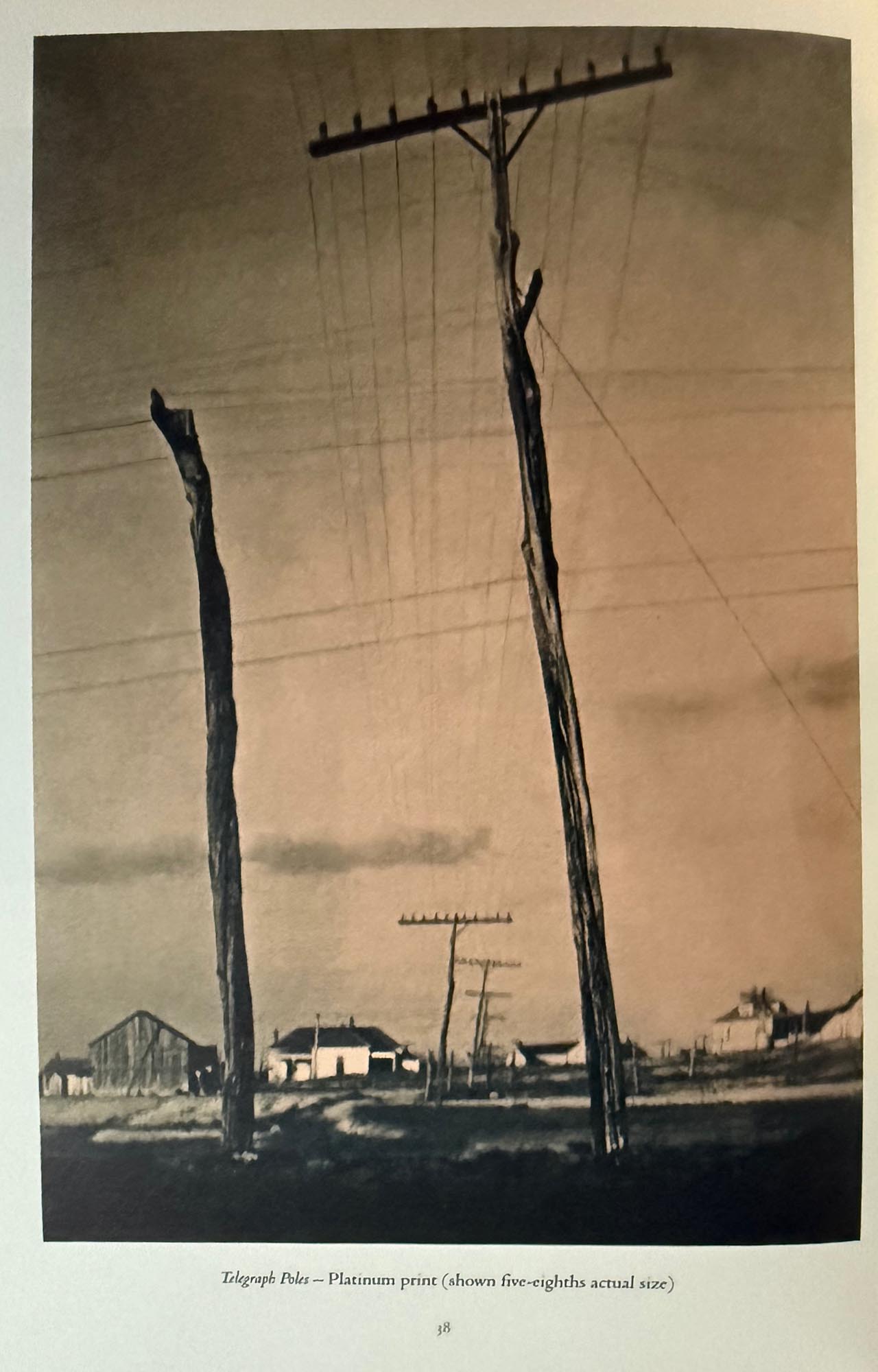
The catalog accompanied the gallery’s retrospective of Strand’s prints, offering a visual and historical survey of key works from his long career. It features photographs printed in ink and metal processes, demonstrating the range of Strand’s technical and aesthetic achievements.
-
Sections of the book trace distinct phases of Strand’s photographic practice, including:
-
Early modernist and straight photography (circa 1910–1917), when Strand helped define photography as an art form.
-
Signature photographic prints from 1914–1916 and 1915–1931, which include formal breakthroughs in composition, clarity, and emotional resonance.
-
Strand’s Mexico project, reflecting his socially conscious documentary work during his time in Mexico.
-
Post‑war publications and later printing practices, illustrating how Strand’s work evolved into the mid‑20th century.
-
Content Highlights
-
The catalog includes reproductions of Strand’s most influential prints, illustrating his transition from pictorialist influences into straight photography — a mode emphasizing clarity, tonal richness, and formal precision that deeply influenced the course of 20th‑century photography.
-
An essay by James Krippner provides scholarly interpretation and context, helping readers understand both Strand’s artistic intentions and the historical significance of his prints.
Overall Significance
Paul Strand: Prints in Ink serves not just as a record of the exhibition but as a compact critical overview of Strand’s contributions to modern photography. It highlights his technical mastery of printmaking and his evolving visual concerns — from early modernism to socially engaged documentary work and beyond — reinforcing his role as one of the most important photographers of the 20th century.Paul Strand (1890–1976) was an influential American photographer and filmmaker whose pioneering work helped define photography as a distinct, modern fine art form. Born in New York City, he studied under Lewis Hine at the Ethical Culture Fieldston School before being mentored by Alfred Stieglitz, who featured Strand's groundbreaking abstract and geometric street imagery—such as Wall Street (1915)—in the final issues of Camera Work and at his 291 Gallery. A champion of "straight photography," Strand rejected painterly soft-focus styles in favor of sharp focus, high contrast, and direct realism, creating iconic candids like Blind Woman (1916). In the 1920s and 1930s, he expanded into documentary filmmaking, co-directing the avant-garde silent film Manhatta (1921) and directing Redes (1936) in Mexico. Deeply committed to social reform, Strand left the United States during the Red Scare in 1950 and settled in Orgeval, France, spending his later years producing intimate photographic portraits and community studies across Europe, Africa, and the Caribbean until his death.