Gary Saretzky Photo Books
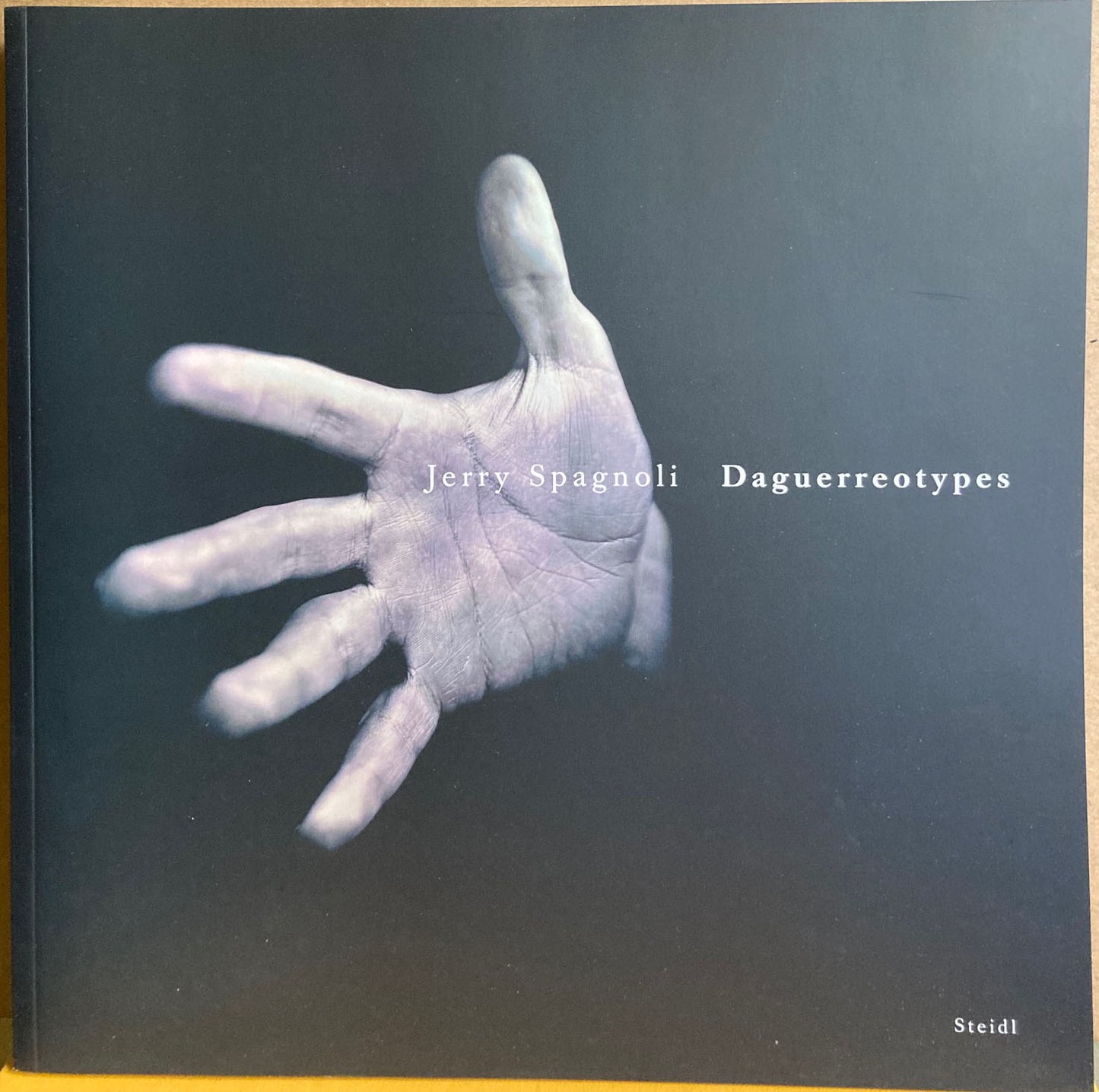
Spagnoli, Jerry. Daguerreotypes, 1990–2004 by Jerry Spagnoli.
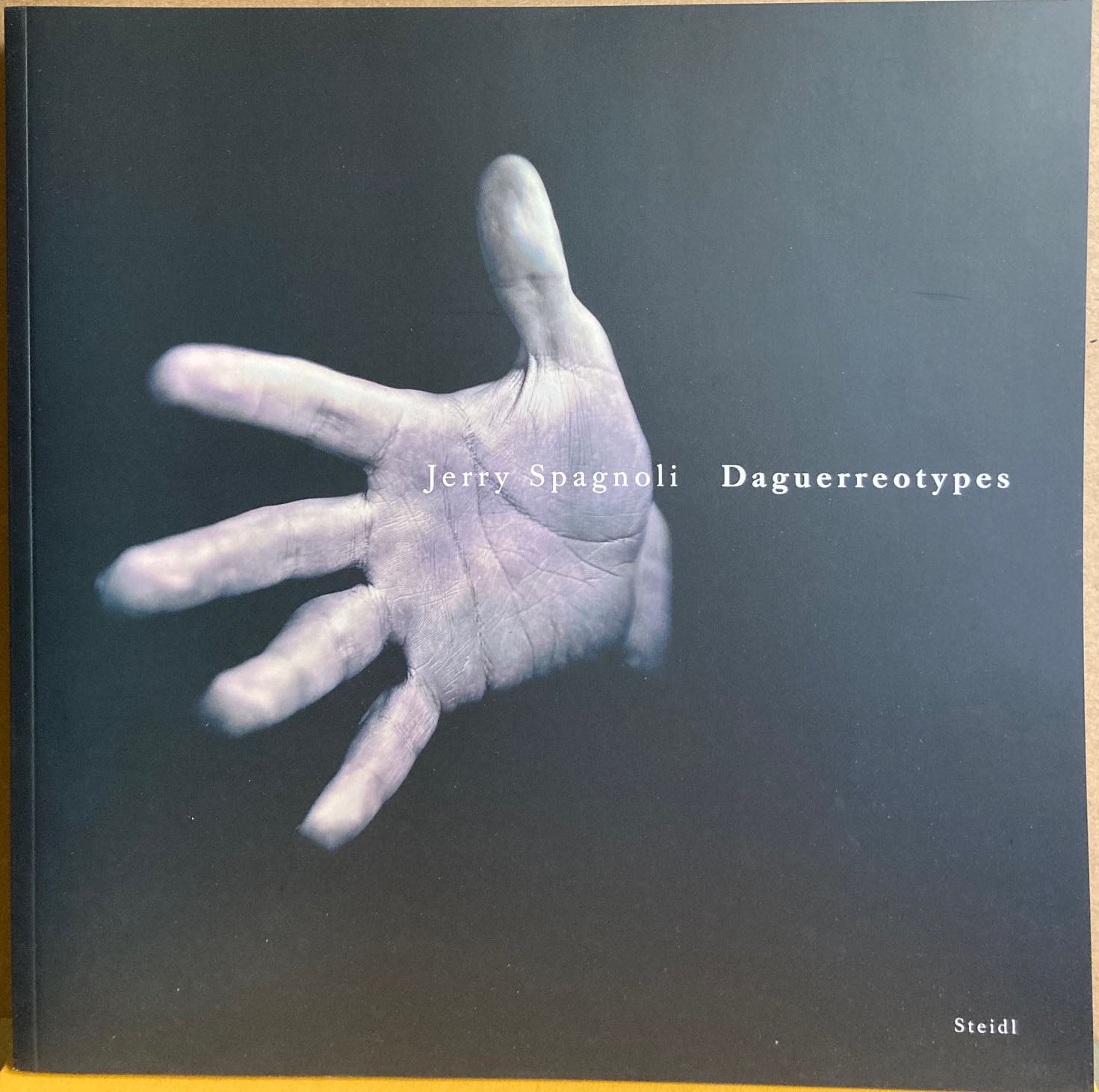
Spagnoli, Jerry. Daguerreotypes, 1990–2004 by Jerry Spagnoli.
Couldn't load pickup availability
Steidl, 2006. First edition in wraps. Unpaginated. Like new with minute signs of shelf wear. A large collection of daguerreotypes by one of the foremost contemporary practitioners. Essay in English by the daguerreotypist. Summary:
Daguerreotypes, 1990–2004, published in 2006 by Steidl, is the definitive monograph of Jerry Spagnoli, a central figure in the modern revival of the world’s oldest photographic process. The book chronicles fifteen years of Spagnoli’s experimentation with the complex, labor-intensive method invented by Louis Daguerre in 1839.
The Modern Daguerreotype
Spagnoli’s work is not a nostalgic recreation of the past; instead, he uses the 19th-century medium to document the 21st-century world. The book showcases his technical mastery in creating "the mirror with a memory"—highly polished silver plates that produce images of extreme resolution and depth.
Key Series and Themes
-
The "Historical" Series: Spagnoli treats contemporary scenes as future history. By using a medium traditionally associated with the 1800s to capture modern skyscrapers, crowds, and technology, he forces the viewer to consider the passage of time and the permanence of the image.
-
The "Photomicrographs": The book includes his extreme close-ups of the human body (eyes, skin, hair). On a daguerreotype plate, these biological details take on a cosmic, topographical quality, revealing textures invisible to the naked eye.
-
Urban Landscapes: Spagnoli often focuses on New York City, capturing the light and architecture with a level of clarity that modern film or digital sensors struggle to replicate.
-
9/11 Documentation: Notably, the book includes his haunting images of the World Trade Center attacks. Captured on daguerreotype, these moments are rendered with a stark, archival permanence that contrasts with the fleeting nature of digital news media.
Visual and Material Quality
-
Reflective Nature: The book attempts to translate the unique physical property of the daguerreotype—the way the image shifts from positive to negative depending on the angle of light—into a printed format.
-
Extreme Detail: The plates are famous for their lack of "grain," and the monograph highlights Spagnoli's ability to capture infinite detail, from individual leaves on a tree to threads in a garment.
Significance
Spagnoli’s Daguerreotypes, 1990–2004 is a landmark in contemporary alternative process photography. It proves that the daguerreotype is not a dead relic, but a vital, high-resolution tool capable of capturing the complexity and "visual noise" of modern life with a physical presence that digital media cannot match.
"The daguerreotype is a medium of the present tense, even though we associate it with the past." — Jerry Spagnoli
Jerry Spagnoli (born 1956) is an American fine-art photographer and master printer widely recognized as a central figure in the contemporary revival of the 19th-century daguerreotype process. Born in New York City, Spagnoli initially studied filmmaking and photography at San Francisco State University before dedicating himself in the late 1980s to researching historical photographic chemistry, mastering the intricate, mirror-like, direct-positive medium of iodized silver plates. Combining archaic techniques with a modern conceptual sensibility, he is best known for his long-term series The Last Days of the 20th Century, which documents urban street life, public events, and architectural vistas in New York City—including his famous series capturing the events of September 11, 2001, as they unfolded from his studio roof. His technical virtuosity also led to a high-profile collaboration with artist Chuck Close from 1996 to 2004, where Spagnoli served as the master daguerreotypist producing monumental portrait plates of artists, actors, and nudes. Author of influential publications such as Daguerreotypes (2006) and American Photographers (2019), Spagnoli's unique body of work bridges pre-industrial craft with contemporary urban commentary, earning placement in major permanent collections including the Whitney Museum of American Art, the Museum of Modern Art, the Metropolitan Museum of Art, and the National Gallery of Art.