Gary Saretzky Photo Books
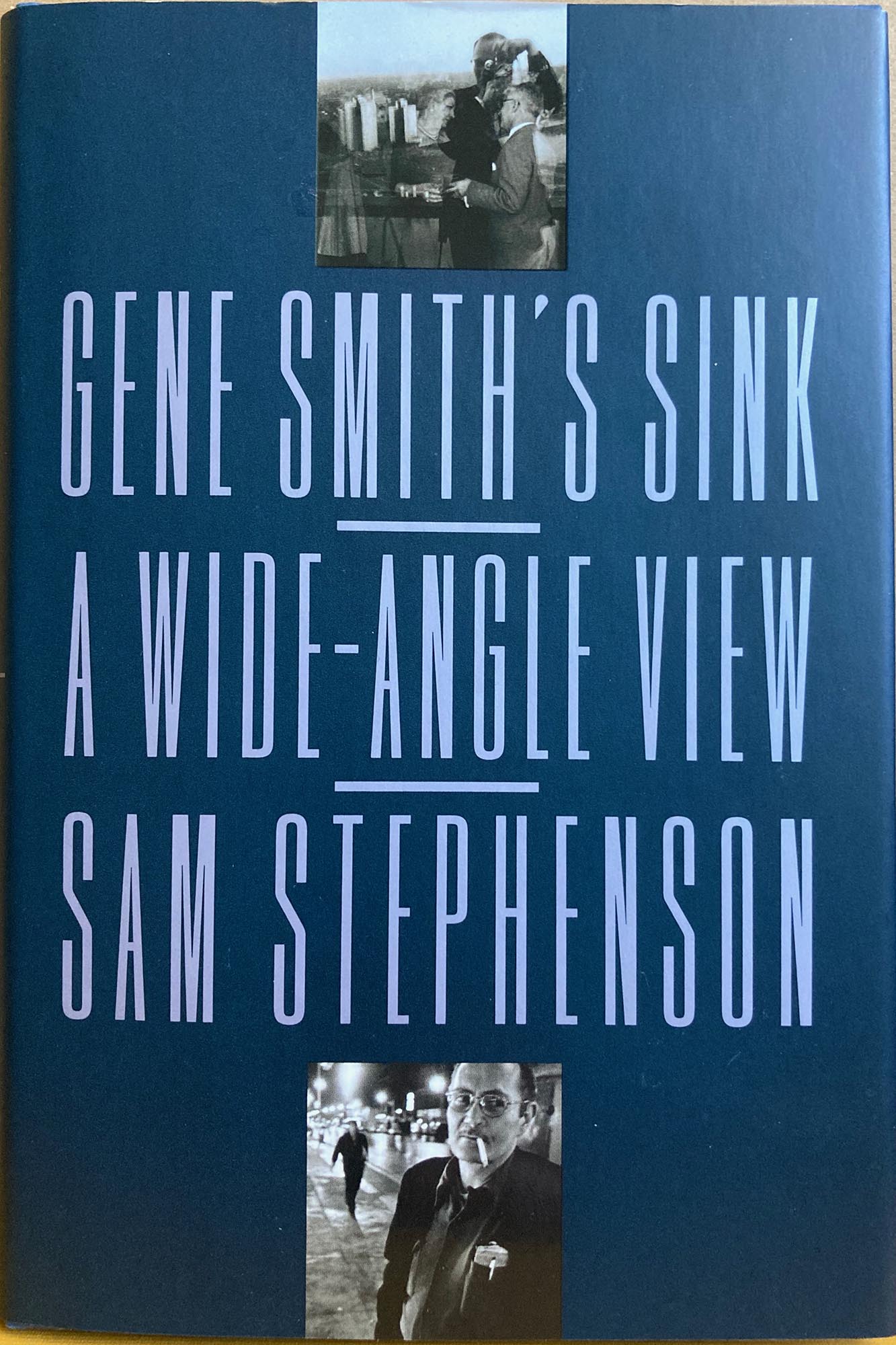
Smith, W. Eugene. Gene Smith's Sink: A Wide-Angle View by Sam Stephenson.
Smith, W. Eugene. Gene Smith's Sink: A Wide-Angle View by Sam Stephenson.
Couldn't load pickup availability
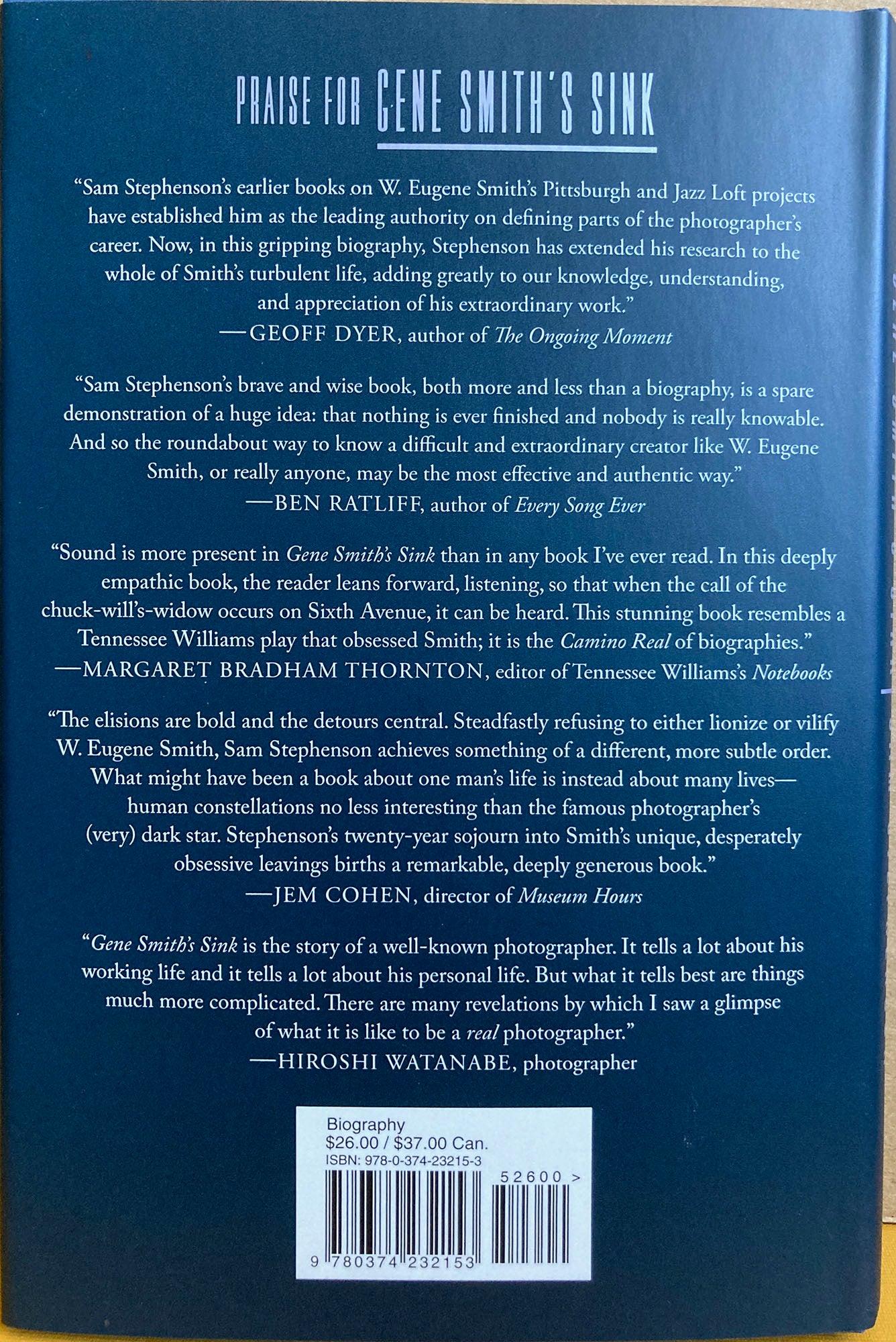
Farrar, Straus & Giroux, 2017. First edition, first printing, hardcover with dust jacket, as new. 207 pages. Stephenson here describes his research on W. Eugene Smith, especially during the years he lived in New York at what became known as “The Jazz Loft” and Smith’s work in Minamata, Japan, where he was severely injured. Based on numerous interviews, this book also involves other photographers such as Aileen Mioko Smith, Harold Feinstein, Larry Clark, and Jim Karales, and musicians such as Hal Overton, Thelonious Monk, and Ronnie Free. Not illustrated. This book is a kind of sequel to Stephenson’s The Jazz Loft Project (2009), which was made into a feature film starring Johnny Depp in 2015. Stephenson is also the author of Dream Street: W. Eugene Smith’s Pittsburgh Project (2001). Issued at $26. Summary:
Gene Smith’s Sink: A Wide-Angle View is an unconventional, deeply researched biography of the legendary American photo-essayist W. Eugene Smith (1918–1978), written by author and documentarian Sam Stephenson. Rather than offering a straight chronological life story, the book uses what Stephenson calls a “wide-angle view” to explore not only Smith’s life and work but also the many people, places, and experiences that shaped him and that he in turn impacted.
Smith is presented as one of photography’s most influential humanist artists — famed for his work at Life magazine in the 1940s and 1950s, where his powerful photo essays on war, communities, doctors, and social issues helped redefine visual journalism. Yet his personal life was marked by struggle: obsessive work habits, emotional volatility, addiction, and financial instability. At the time of his death he was nearly destitute and worn out from decades of uncompromising creative intensity.
Stephenson’s narrative is shaped by more than 20 years of research, including extensive work in Smith’s massive archives at the Center for Creative Photography and more than 500 interviews with friends, collaborators, partners, assistants, and even peripheral figures connected to Smith’s orbit. Through these varied voices and stories — from jazz musicians and filmmakers to caregivers and acquaintances — the book creates a multi-faceted portrait of a fiercely driven artist and the cultural worlds he inhabited.
Rather than simply recount milestones, Gene Smith’s Sink uses rich digressions and evocative vignettes to illuminate Smith’s psychology, creative obsessions, and the often chaotic life behind some of the 20th century’s most iconic photography.
W. Eugene Smith (1918–1978) was a legendary American photojournalist celebrated for his mastery of the photographic essay, unyielding humanism, and uncompromising artistic integrity. Born in Wichita, Kansas, Smith began his professional career taking news photos for local papers before moving to New York to attend Notre Dame and later shoot for Newsweek and Life magazine. As a World War II correspondent embedded with U.S. forces in the Pacific, he produced harrowing, visceral images of combat before suffering severe injuries on Okinawa that sidelined him for two years. Returning to Life in 1947, Smith revolutionized picture journalism through deeply emotional, meticulously crafted photo-essays—including Country Doctor (1948), Spanish Village (1951), and Nurse Midwife (1951)—spending weeks developing intense personal relationships with his subjects and spending grueling hours in the darkroom to achieve dramatic, chiaroscuro contrast prints. Renowned for his fierce clashes with editors over layout and thematic control, he resigned from Life in 1955 to join Magnum Photos, embarking on an obsessive, three-year documentation of Pittsburgh. In his final major project alongside his wife Aileen, he spent years in Japan documenting victims of mercury poisoning for his landmark 1975 book Minamata (featuring the iconic Tomoko and Mother in the Bath), cementing his legacy as a titan of social documentary photography whose passionate, ethical vision reshaped 20th-century photojournalism.
