Gary Saretzky Photo Books
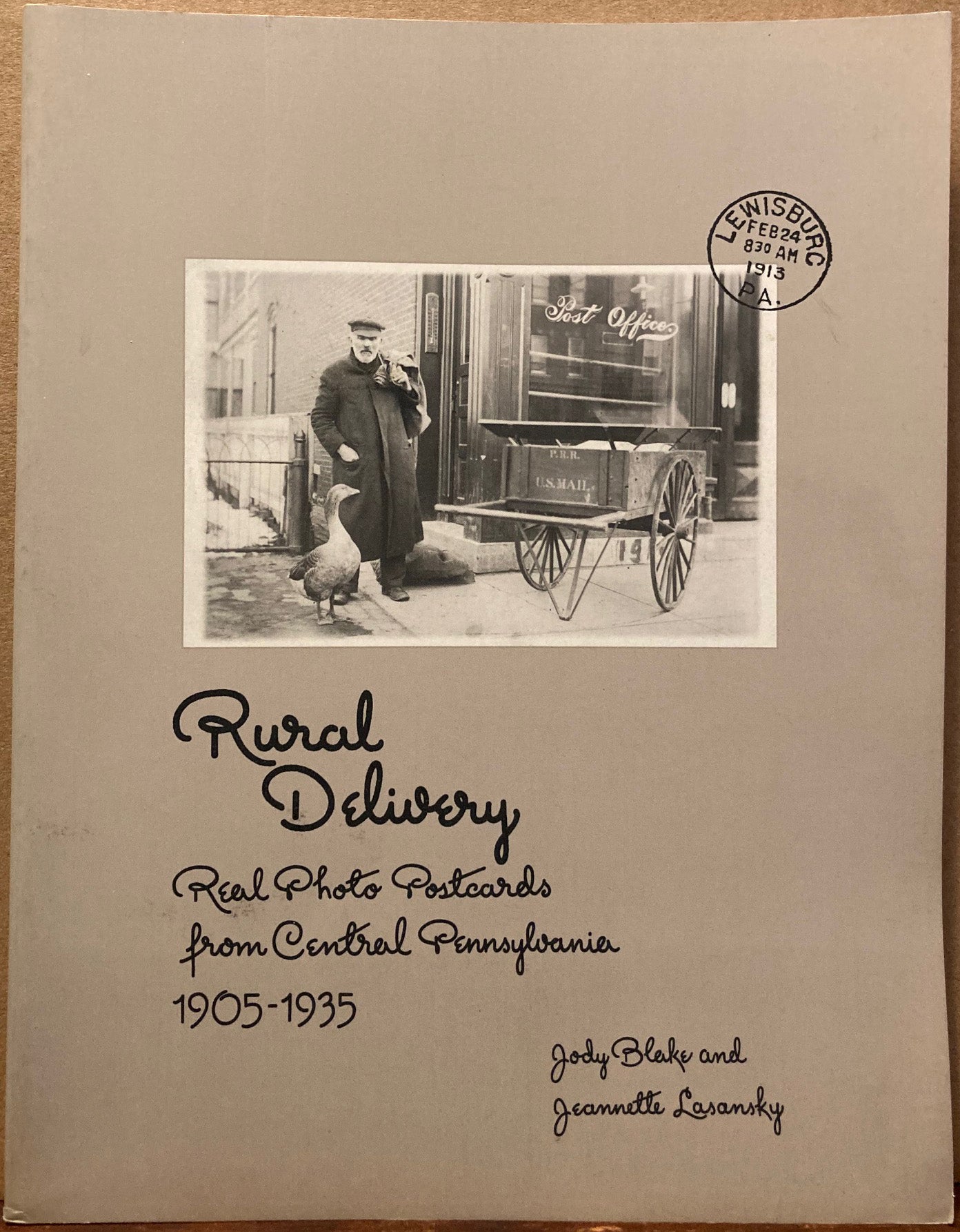
Postcards. Rural Delivery: Real Photo Postcards from Central Pennsylvania, 1905-1935 by Jody Blake and Jeannette Lasansky.
Postcards. Rural Delivery: Real Photo Postcards from Central Pennsylvania, 1905-1935 by Jody Blake and Jeannette Lasansky.
Couldn't load pickup availability
Union County Historical Society, 1996. Wraps, near fine. 136 pages. Postcards from Union County, Pennsylvania, including scenes of Allenwood, Bucknell University, and Mifflinburg, among others. Includes appendix with biographical information about the photographers including William “Grover” Brierly, Urs H. Eisenhauer, Edwin S. Heiser, Stephen B. Horton, Ellen H. Shields, John D. Swanger, et al. Summary:
Rural Delivery: Real Photo Postcards from Central Pennsylvania, 1905–1935 (1996) is a specialized study of the "Real Photo" postcard (RPPC) phenomenon in a specific American region. Published by the Pennsylvania State University Press, the book examines how local, amateur, and itinerant photographers documented the mundane and monumental aspects of rural life during the medium’s peak.
The Concept of the "Real Photo"
The book distinguishes between mass-produced lithographic postcards and Real Photo postcards, which were actual photographs printed directly onto cardstock with a "postcard" back. This technology allowed:
-
Hyper-local Documentation: Scenes that were too specific for commercial printers (a family reunion, a prize-winning cow, a specific barn fire) could be immortalized.
-
Democratization of the Image: Ordinary citizens became the subjects and creators of their own visual history.
Core Content and Themes
1. Daily Life and Labor
The collection focuses on the hard-working communities of Central Pennsylvania. Key images include:
-
Agricultural Traditions: Harvest scenes, livestock auctions, and early mechanized farming.
-
Industry and Infrastructure: Small-town blacksmith shops, coal mining patches, and the construction of local bridges and grist mills.
-
Rural Commerce: The "Rural Delivery" of the title refers to the mail carriers and general stores that served as the lifelines of these isolated communities.
2. Social Rituals and "Main Street"
Blake and Lasansky curate images that show the social fabric of the region:
-
Community Events: Parades, church socials, and local baseball teams.
-
Disasters and Oddities: It was common for RPPCs to document "incidents"—train wrecks, floods, or particularly heavy snowfalls—serving as a precursor to modern citizen journalism.
3. The Human Portrait
Unlike studio portraits, these postcards often show people in their natural environments—on their porches, in their work clothes, or standing proudly in front of their new homes or "horseless carriages."
Scholarly Contribution
The authors provide a deep dive into the technical and social history of the postcard era. They discuss:
-
The Kodak Influence: How the introduction of the "3A Folding Pocket Kodak" (which took negatives the exact size of a postcard) fueled the boom.
-
The Post Office Act of 1907: Which allowed messages to be written on the back of the card, sparking a global communication craze.
-
Identification and Rarity: The book serves as a guide for collectors and historians to identify the specific photographers and studios that operated in the Central PA region.
Summary Takeaway
Rural Delivery is an intimate visual archive of the Pennsylvania Heartland. It argues that these postcards are not just "ephemera," but essential primary documents that capture the transition of rural America into the modern age. It is a vital resource for local historians, genealogists, and lovers of vernacular photography.