Gary Saretzky Photo Books
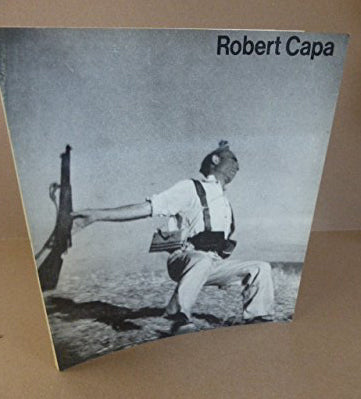
Capa, Robert. Robert Capa, 1913–1954 by John Hersey.
Capa, Robert. Robert Capa, 1913–1954 by John Hersey.
Couldn't load pickup availability
Volume 1, ICP Library of Photographers. Grossman, 1974. Wraps, slight wear at extremities. Presumed 1st edition, no later printings indicated. Original price $6.95. Summary:
Robert Capa, 1913–1954, published by Grossman in 1974, is a slim, reverent tribute to the man often called the "greatest war photographer in the world." The book is unique because it is written by the Pulitzer Prize-winning novelist and journalist John Hersey, who was a close friend and colleague of Capa during World War II.
The Narrative Focus: The Man vs. The Myth
Rather than a traditional, exhaustive biography, Hersey provides a poignant, character-driven portrait of Capa. He explores the tension between Capa's invented persona and the reality of his life:
-
The Invention of "Robert Capa": Hersey recounts how Endre Friedmann, a struggling Hungarian refugee in Paris, invented "Robert Capa"—a famous, wealthy American photographer—to sell his work for higher prices.
-
The Professional Gambler: Hersey paints Capa as a man who treated life, love, and war as a high-stakes game of poker. He highlights Capa’s fatalistic courage and his refusal to be anything other than a witness to the "big" events of his time.
Key Themes
1. "If your pictures aren't good enough, you aren't close enough."
Hersey uses this famous Capa mantra as the backbone of the book. He describes Capa's physical presence on the front lines—from the Spanish Civil War to the D-Day landings at Omaha Beach—emphasizing that Capa’s greatness came from his profound empathy for the soldier and the civilian.
2. The Burden of Witness
A significant portion of the text reflects on the psychological toll that witnessing five wars took on Capa. Hersey explores Capa’s restlessness and his struggle to adapt to "peace," which ultimately led him to accept the assignment in Indochina where he was killed by a landmine.
3. The Visual Legacy
While the text is the primary focus, the book includes a curated selection of Capa’s most iconic images, including:
-
The Falling Soldier (Spain).
-
The blurred, frantic images of the D-Day invasion.
-
Intimate portraits of his friends, such as Ernest Hemingway and Pablo Picasso.
The "Greatest War Photographer"
Hersey’s writing elevates Capa from a mere journalist to a folk hero. He argues that Capa’s work was not just about the "scoop" or the action, but about the human face of conflict. Hersey’s prose captures the charm, the humor, and the deep-seated melancholy that defined Capa’s personality.
Summary Takeaway
Robert Capa, 1913–1954 is an intimate eulogy in book form. It remains one of the most evocative windows into Capa’s life because it was written by someone who shared the trenches with him. Hersey successfully captures the "Capa legend" while reminding the reader of the immense personal cost required to capture the most important images of the 20th century.
