Gary Saretzky Photo Books
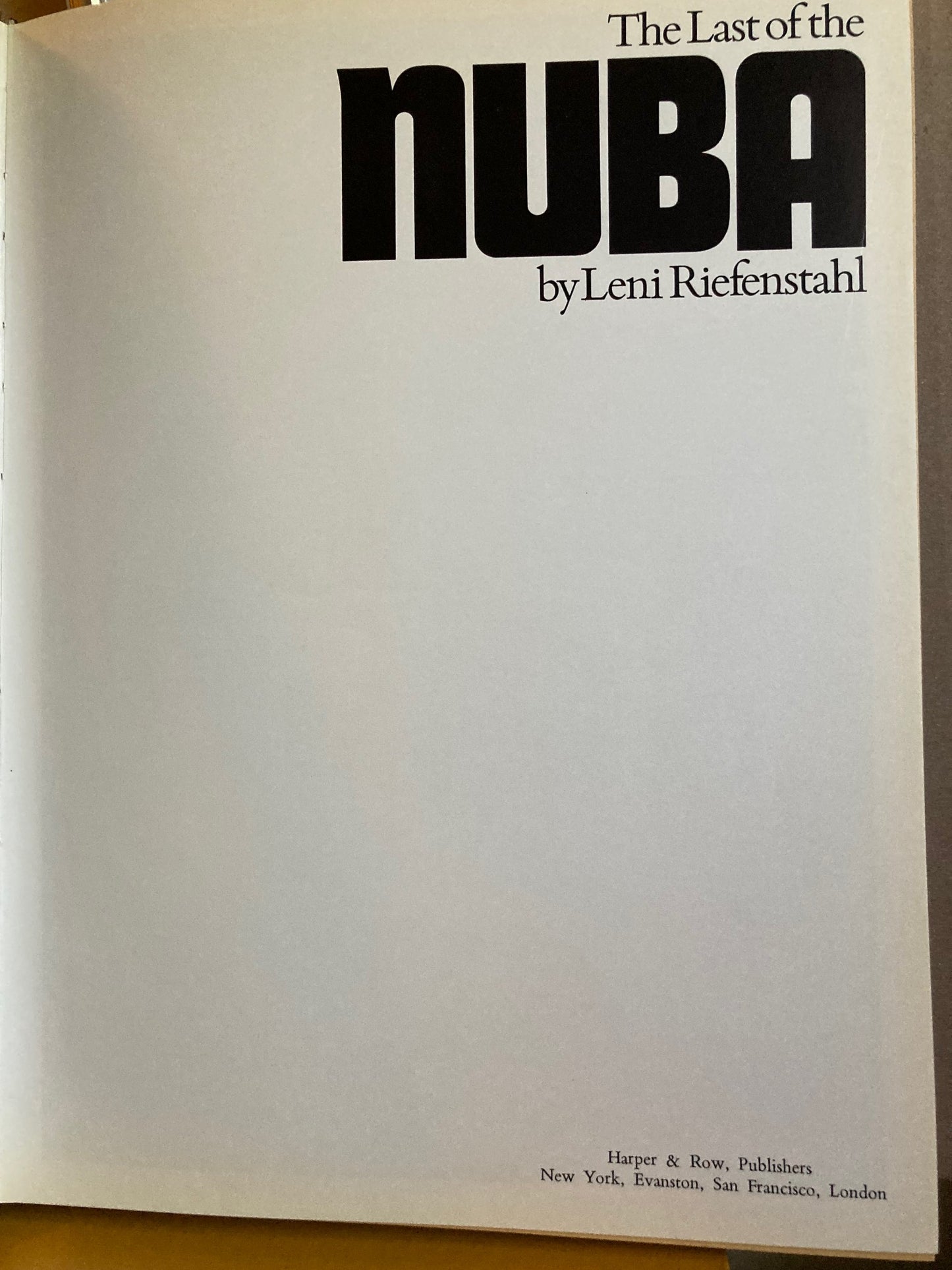
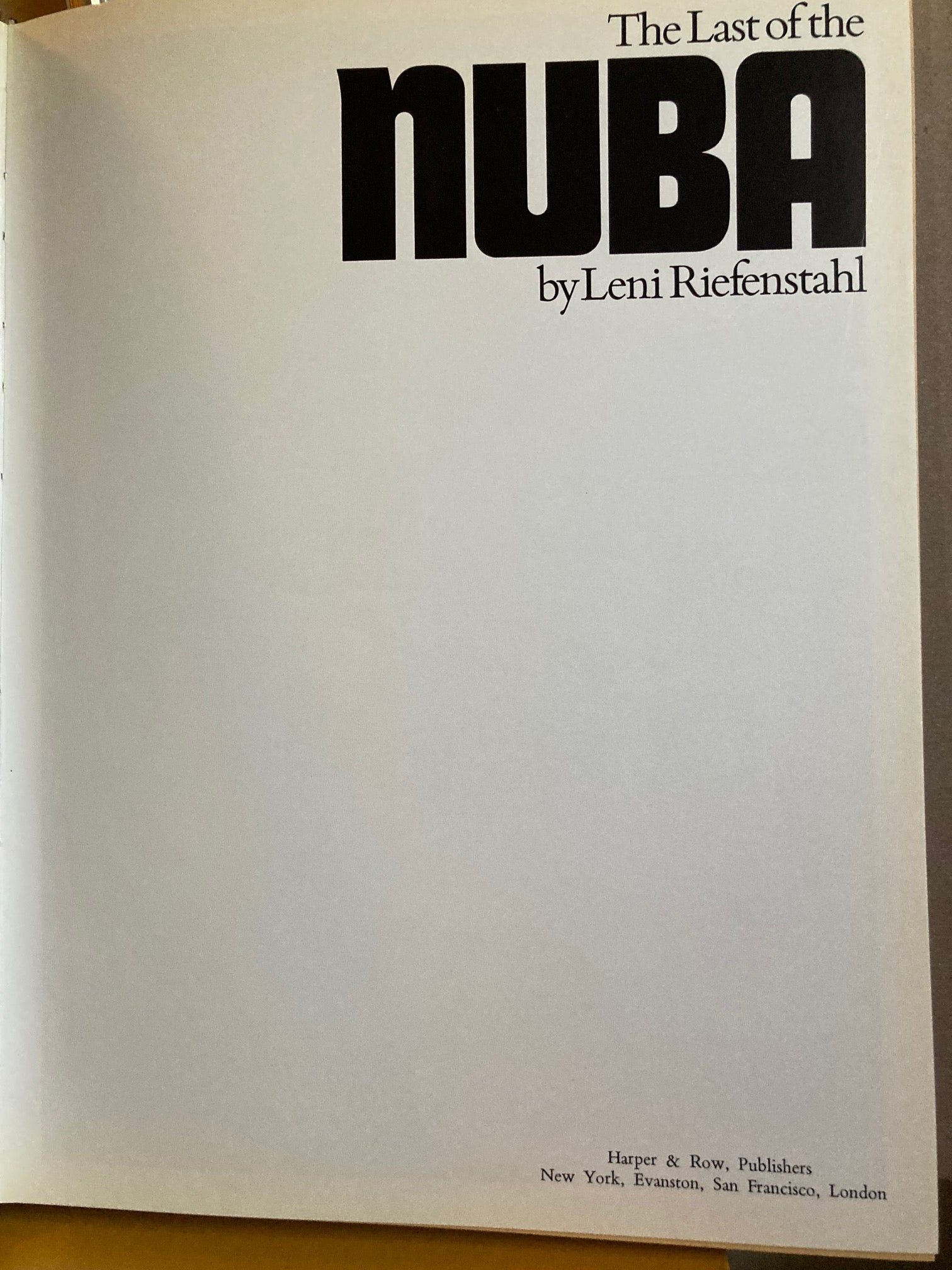
Riefenstahl, Leni. The Last of the Nuba by Leni Riefenstahl. First U.S. Edition.
Riefenstahl, Leni. The Last of the Nuba by Leni Riefenstahl. First U.S. Edition.
Couldn't load pickup availability
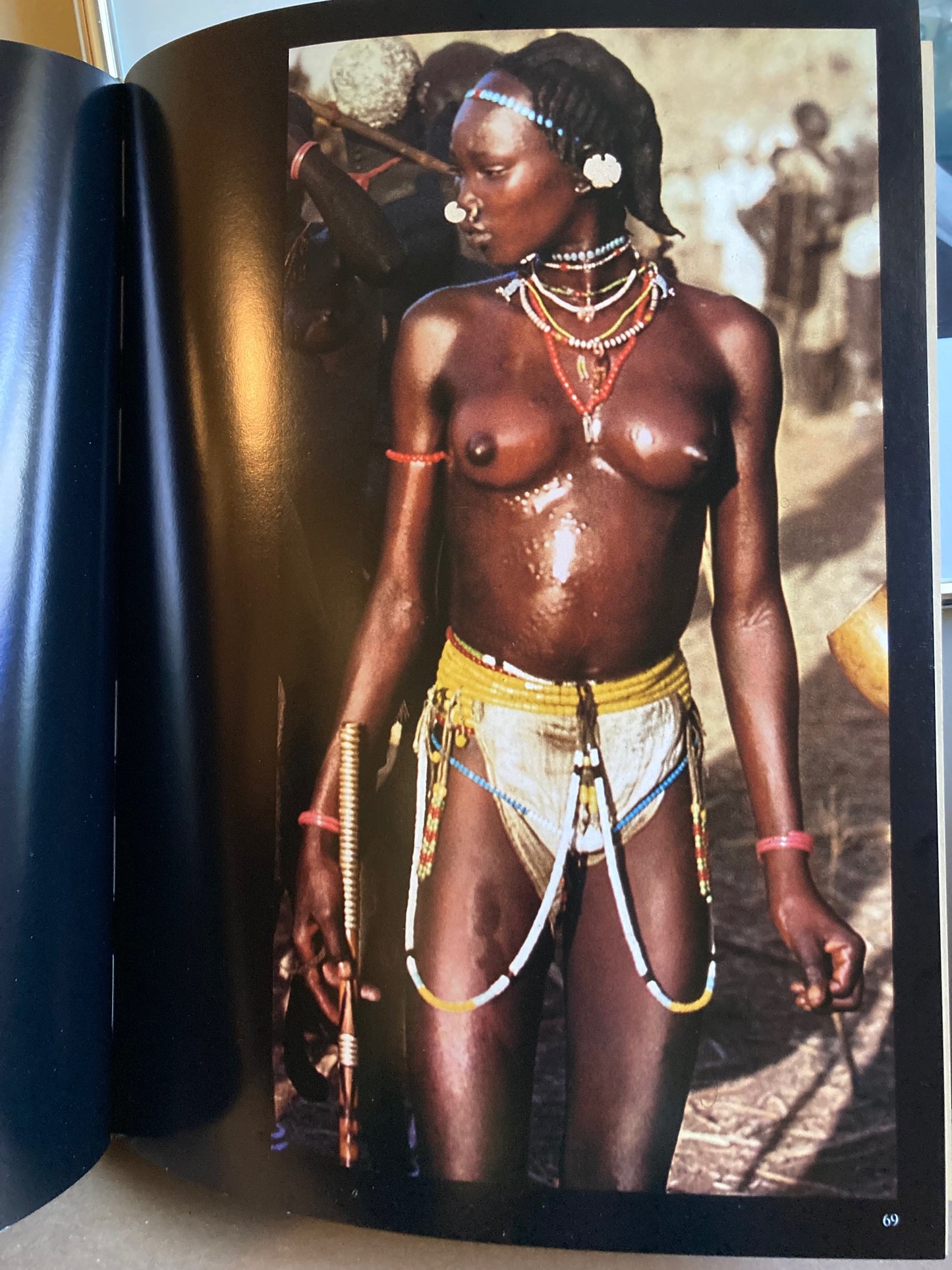
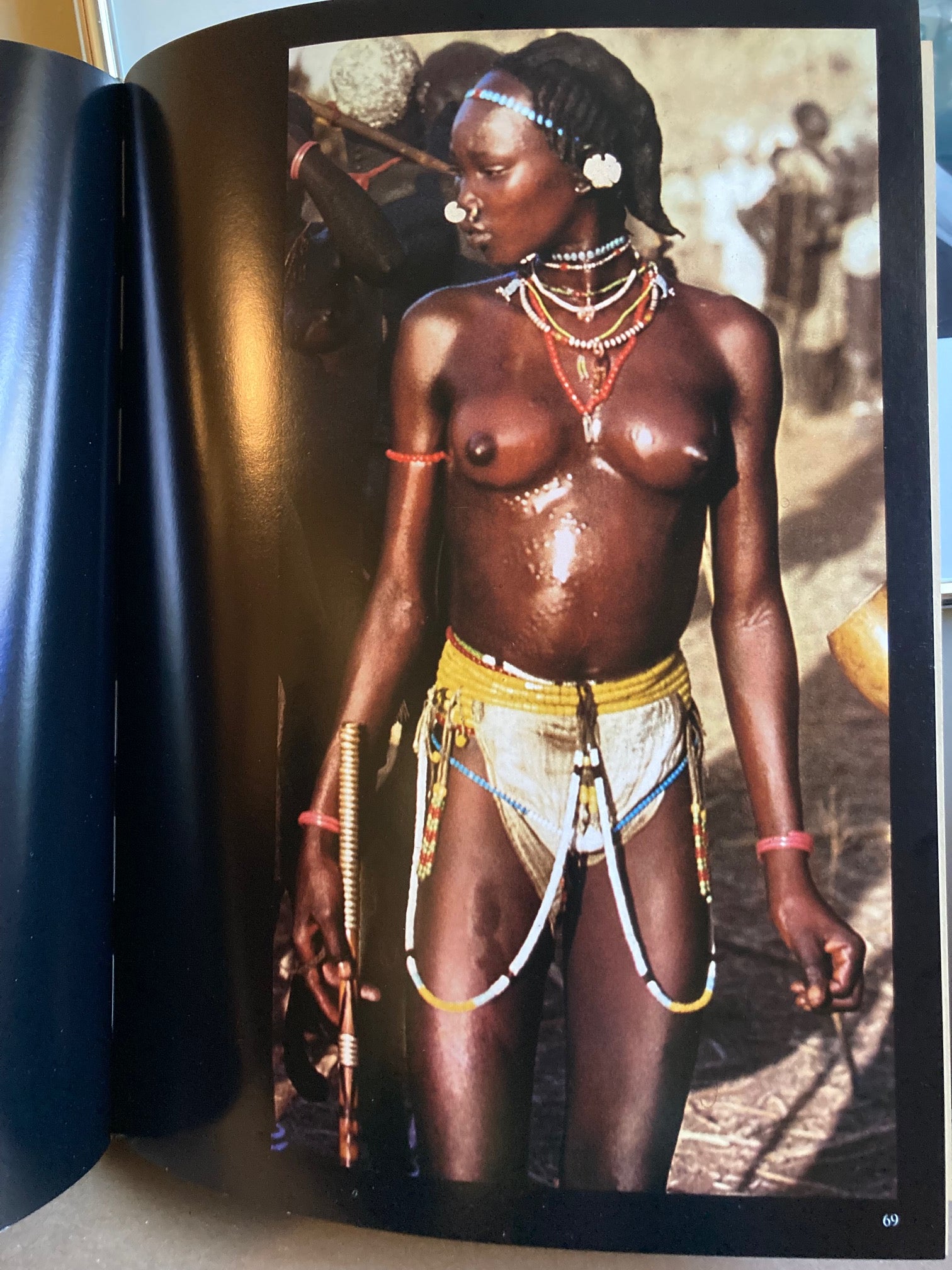
Harper & Row, 1974. Hardcover in cloth with custom made 4-mil polyester jacket, lacks original dust jacket. Photographs taken by Riefenstahl between 1962 and 1969 of mostly the Mesakin and some of the Korongo, Nuba tribes in the southwest corner of the Nuba mountains in Kordofan of the Sudan in East Africa. At the time, there was no all-season road through the region and the Nuba men and women, who generally went out and about without many clothes, lived close to nature with little contact with the outside world. According to the photographer, most of the Mesakin Nuba had never before seen a white woman. The book begins with an essay by Riefenstahl about the social life of the Nuba. Whatever one may think about Riefenstahl's notorious life in the 1930s, this is an excellently designed and printed book with fascinating photographs in color and black-and-white. Summary:
The Last of the Nuba (1974) is a world-renowned and controversial photographic study of the Nuba tribes in the Kordofan region of Sudan. Published as a First U.S. Edition by Harper & Row, it represents Leni Riefenstahl’s attempt to reinvent her artistic legacy following her role as a propagandist for the Third Reich.
Core Content and Vision
Riefenstahl lived among the Mesakin and Korongo Nuba periodically throughout the 1960s. The book is a lush, vibrant record of a society she viewed as "pristine" and untouched by modern civilization.
-
Athleticism and Ritual: The book focuses heavily on the Nuba’s ceremonial wrestling matches and ritualistic dances, emphasizing the physical perfection and strength of the tribal warriors.
-
Daily Life: Beyond the rituals, Riefenstahl documents the Nuba’s unique architecture (grain-filled huts), their complex funeral rites, and their intricate methods of body scarification and painting.
-
A "Lost" Paradise: Riefenstahl presented the Nuba as a "people from another planet," framing her work as an urgent act of salvage ethnography before their culture was altered by outside Islamic and Western influences.
Photographic Style
The book is noted for its saturated color palette and its highly stylized, monumental approach to the human form.
-
Heroic Idealism: Riefenstahl applied the same cinematic techniques she used in Olympia—low-angle shots, dramatic lighting, and a focus on muscularity—to the African landscape and its people.
-
Intense Detail: Using Leica and Linhof cameras, she captured extraordinary textures, from the dust of the wrestling pits to the patterns of ritual ash on skin.
Critical Controversy
While the book was a massive international bestseller and won critical acclaim for its visual beauty, it remains a subject of intense debate:
-
The "Fascinating Fascism" Critique: Renowned critic Susan Sontag famously argued in her 1975 essay that the book’s obsession with physical perfection and "primitive" purity was a continuation of Riefenstahl’s earlier Nazi aesthetic.
-
Ethical Concerns: Anthropologists have criticized the work for "exoticizing" the Nuba and ignoring the complex political and social realities they faced in Sudan at the time.
Key Information
-
Published: 1974 (First U.S. Edition) by Harper & Row.
-
Format: Large-format hardcover with over 100 color plates and detailed ethnographic notes.
-
Significance: Regardless of the controversy, the book remains one of the most influential (and visually stunning) photography books of the 20th century, sparking a global fascination with "tribal" aesthetics.
Summary: The Last of the Nuba is a visually arresting, deeply polarizing masterpiece. It is a work where extreme beauty meets complex political baggage, documenting a culture through a lens that was as much a reflection of the photographer's own ideals as it was of her subjects.
Leni Riefenstahl (1902–2003) was a German filmmaker, photographer, and dancer whose aesthetic mastery and pioneering technical innovations were permanently overshadowed by her role as the preeminent visual artist of Nazi propaganda. Born in Berlin, Riefenstahl gained early fame as an actress in expressionist "mountain films" before directing groundbreaking cinematic works such as Triumph of the Will (1935) and Olympia (1938), which utilized pioneering camera movement, telephoto lenses, and dynamic editing that transformed documentary cinema. Following World War II and her denazification proceedings, Riefenstahl was largely ostracized from mainstream feature filmmaking, prompting her in the 1960s to transition to still photojournalism. Utilizing medium-format cameras and saturated color film, she spent years embedded in East Africa documenting the indigenous customs, body painting, and athletic rituals of the Nuba people of Sudan—culminating in the acclaimed yet controversial photobooks The Last of the Nuba (1973) and The People of Kau (1976), which critics both praised for their visual beauty and scrutinized for reproducing her lifelong fascination with physical idealization. In her seventies, she earned a scuba certification to pioneer underwater color photography, publishing Coral Gardens (1978) and continuing her photographic career well into her nineties.