
Gary Saretzky Photo Books
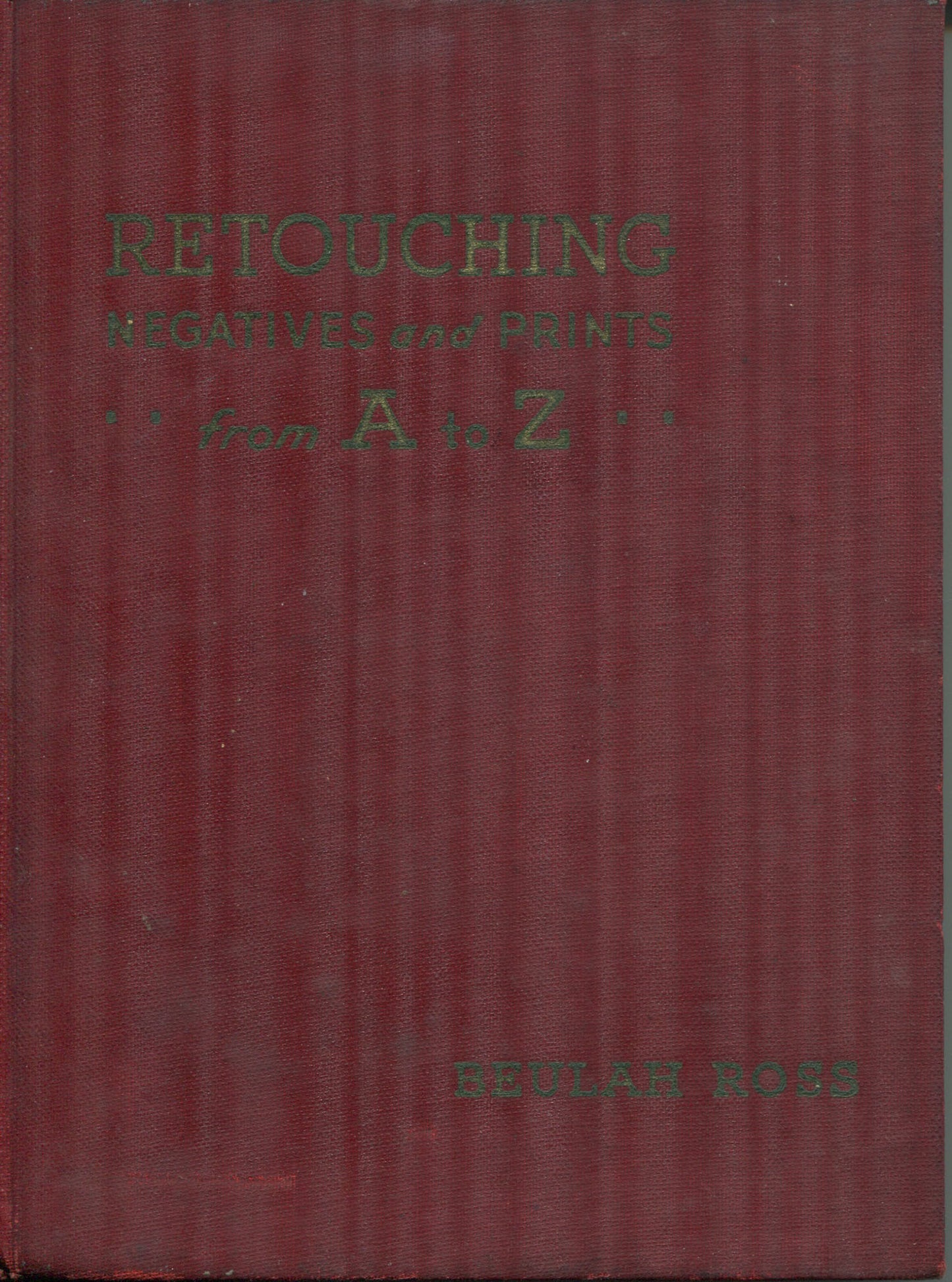
Retouching Negatives and Prints from A to Z by Beulah Ross.
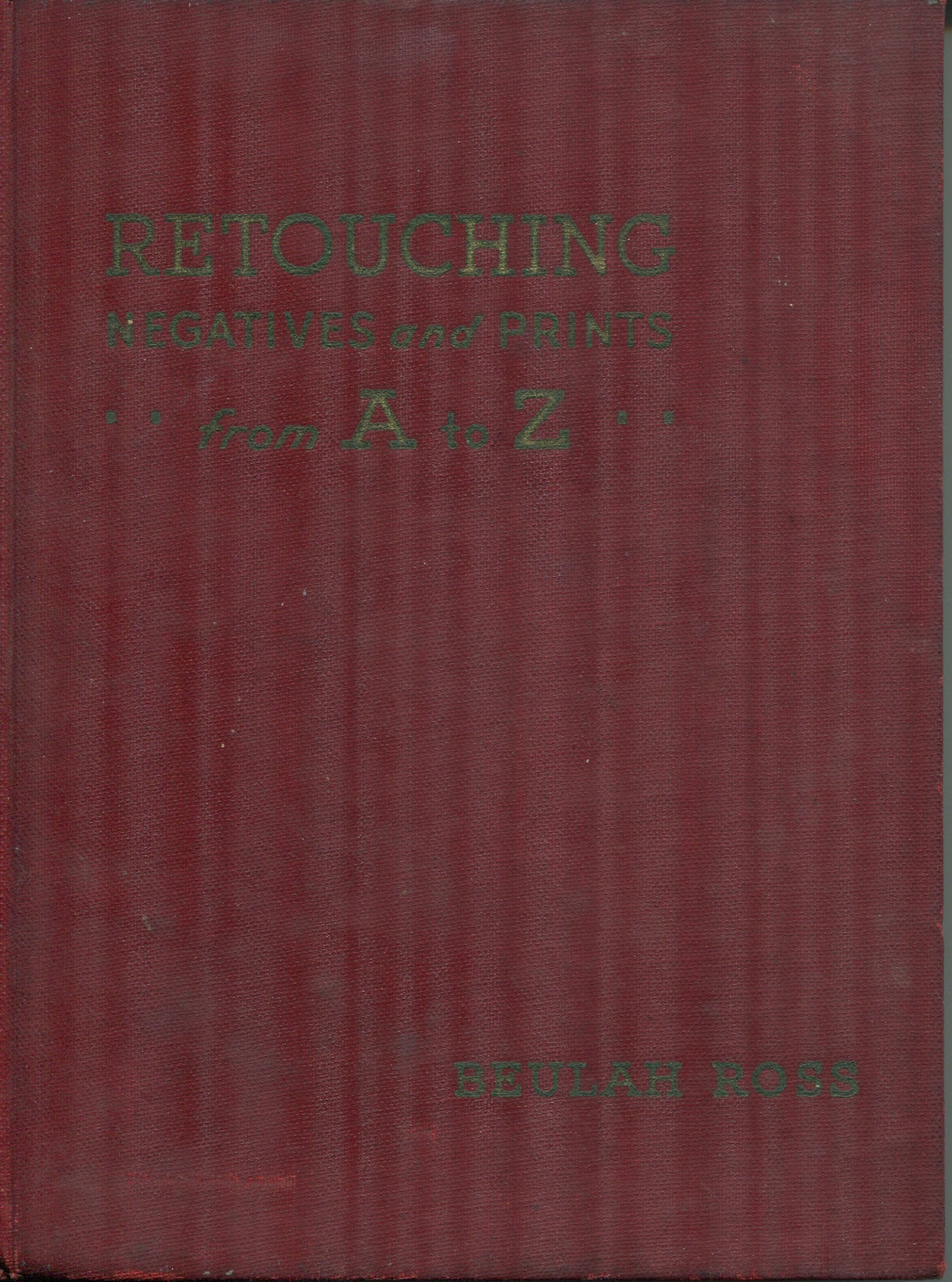
Retouching Negatives and Prints from A to Z by Beulah Ross.
Couldn't load pickup availability
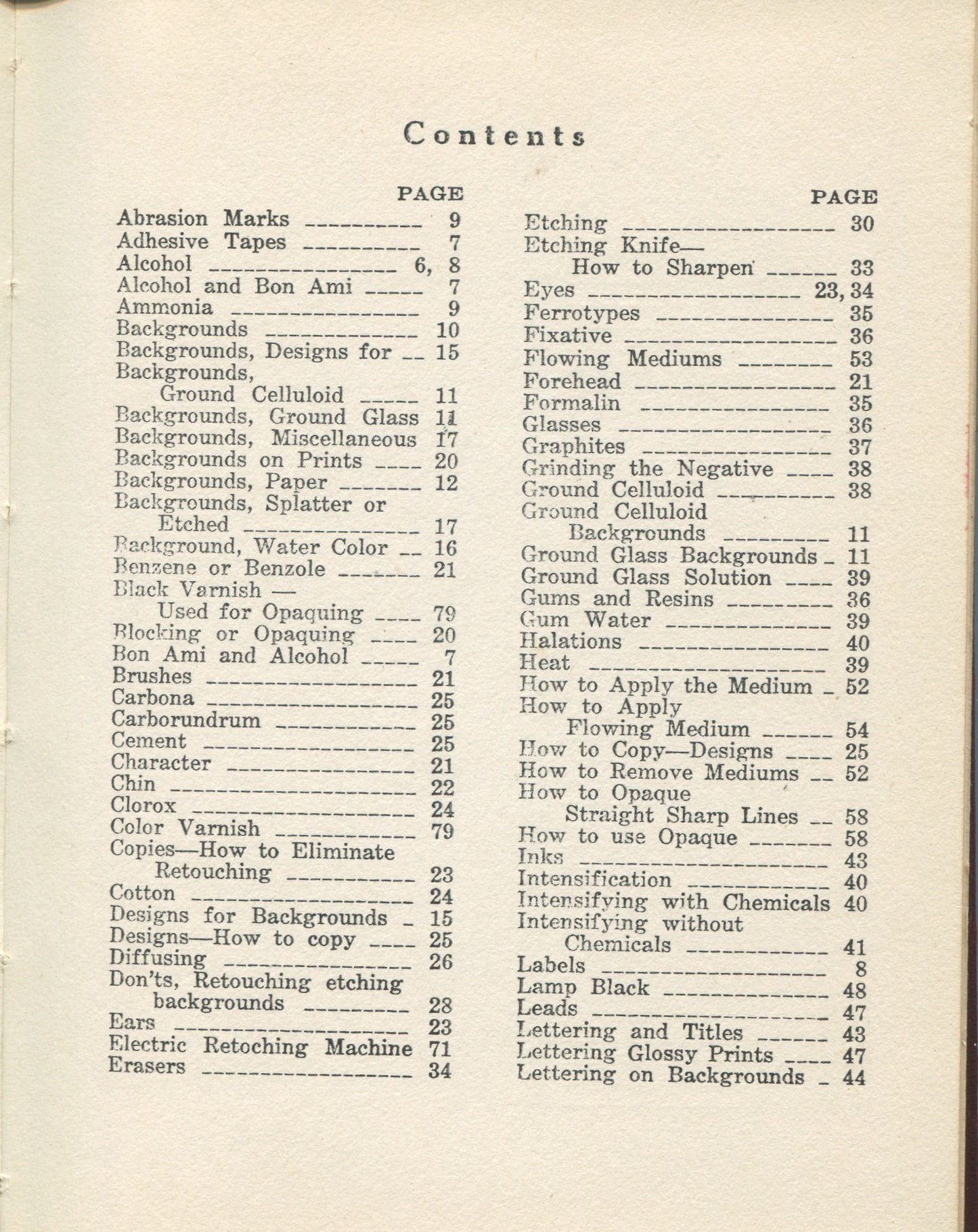
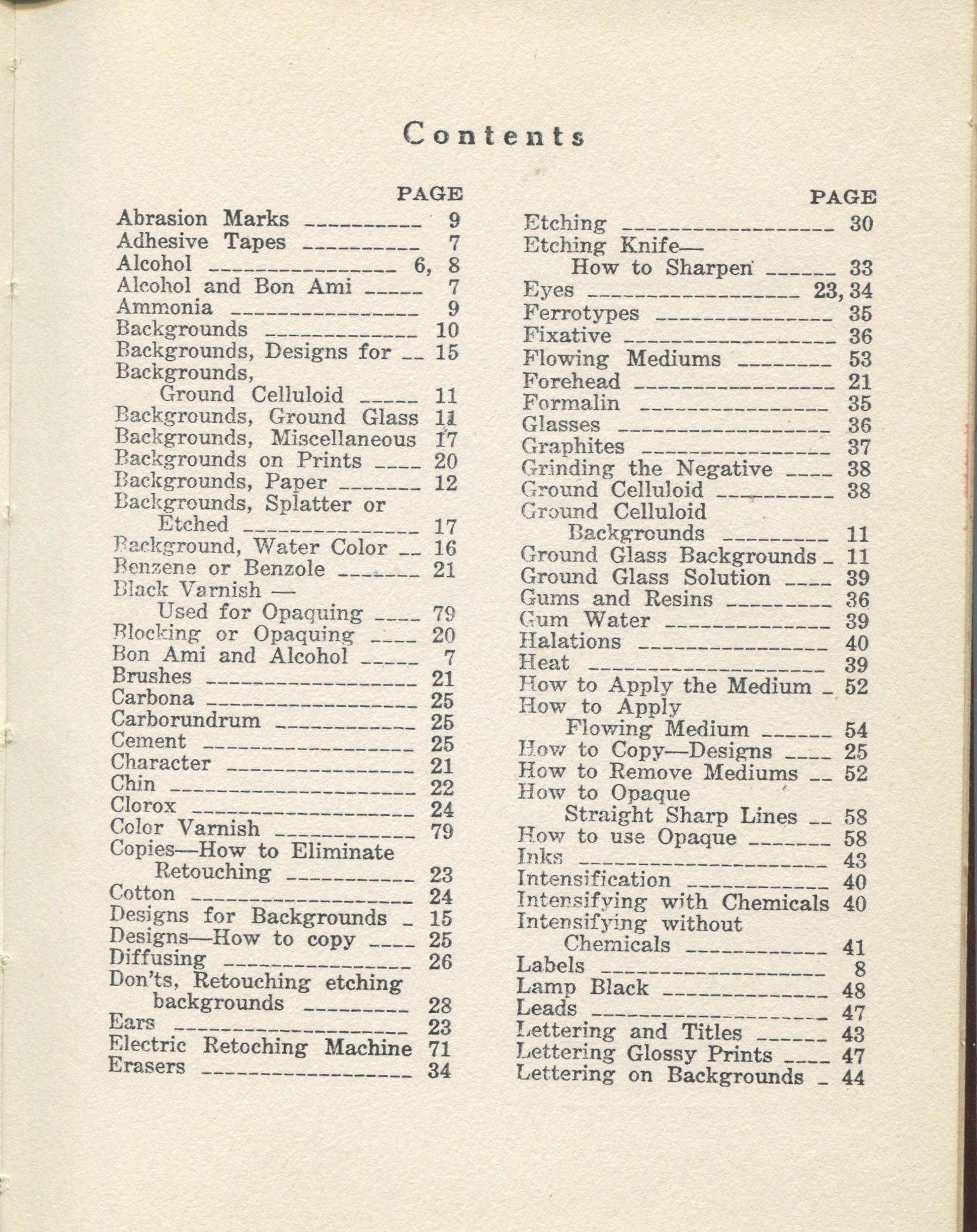
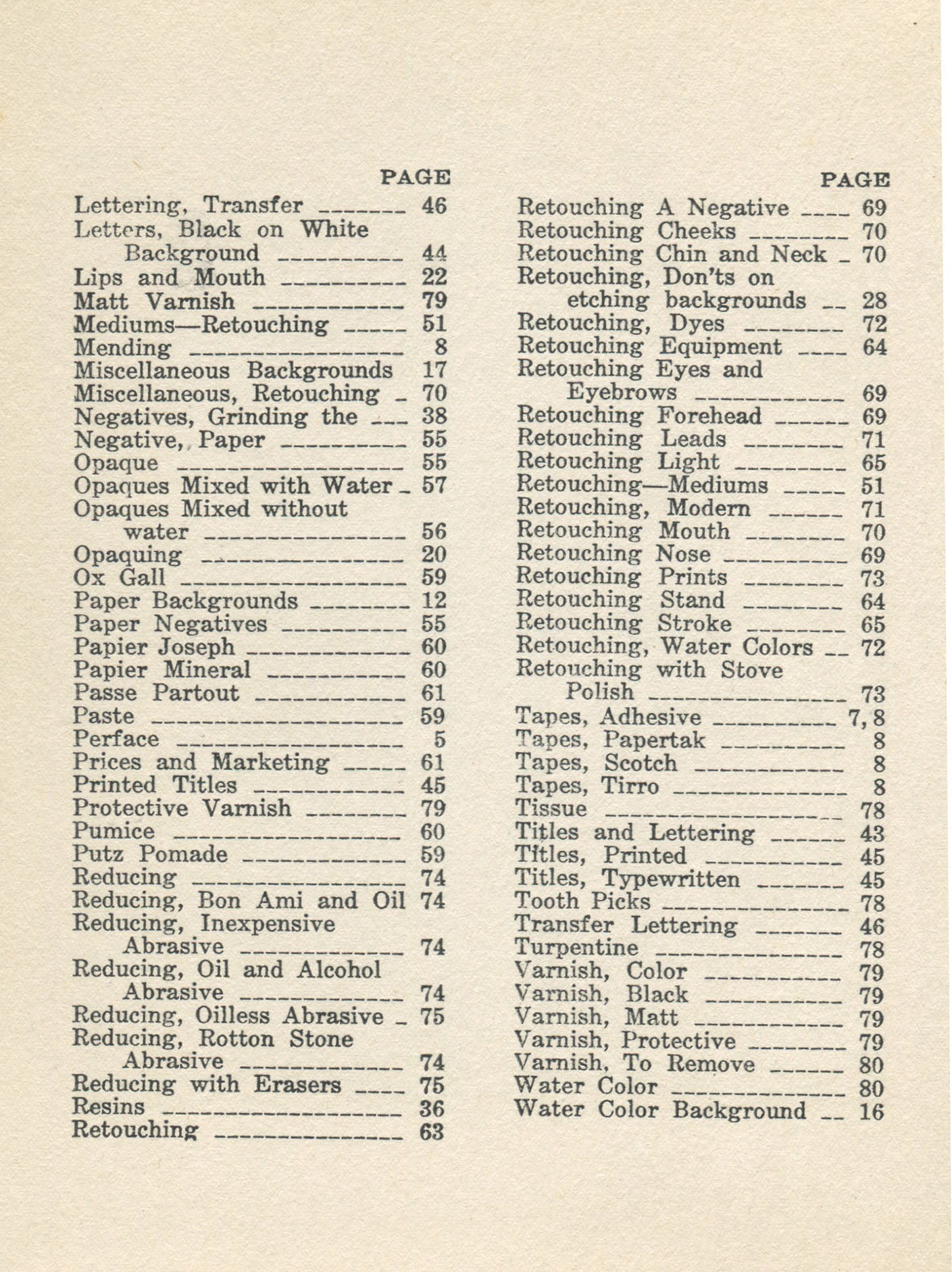
Fomo Publishing, 1937. Near very good without dust jacket in red cloth. Covers the subject alphabetically, from Abrasion Marks to Water Color Background. See table of contents in the pictures accompanying this listing. Author had 25 years experience doing retouching. Includes illustrations. 80 pages. Summary:
Retouching Negatives and Prints from A to Z by Beulah Ross is a practical, "Industrial-Era" manual designed to transition the complex art of photographic manipulation from a fine-art mystery into a streamlined, professional trade. Published during the approaching mid-century boom of commercial portraiture, Ross’s book is celebrated for its clear, alphabetical organization and its focus on efficiency without sacrificing the "High-Performance" quality required by professional studios.
Core Themes and Narrative
-
The "Democratization" of the Finish: Unlike earlier manuals that treated retouching as a guarded secret of "Old World" masters, Ross presents the craft as a logical, step-by-step system. It was intended for the working photographer and the studio assistant who needed to produce "flawless" results at scale.
-
The "Total Correction" System: From "A" (Abrasives) to "Z" (Zinc), the book covers every conceivable correction. Ross focuses on emphasizing the removal of double chins, the straightening of noses, and the "clearing" of skin to meet the high standards of 1950s social status.
-
The Art of the "Etch": A significant portion of the book is dedicated to the delicate use of the etching knife to remove unwanted density from the negative—essentially "shaving" the film to create highlights or alter shapes before the print is made.
Visual and Technical "Finish"
-
The "Seamless" Aesthetic: Ross’s goal was the "Invisible Finish." She taught retouchers how to match the grain and texture of the film so perfectly that the human eye could not detect where the camera ended and the pencil began.
-
Chemical and Mechanical Tools: The manual provides specific directions on using "Retouching Fluid" (to create tooth), "Opaque" (to block out light), and various grades of graphite. It emphasizes the "Mechanical Precision" of the tools, treating the retouching desk as a calibrated workstation.