Gary Saretzky Photo Books
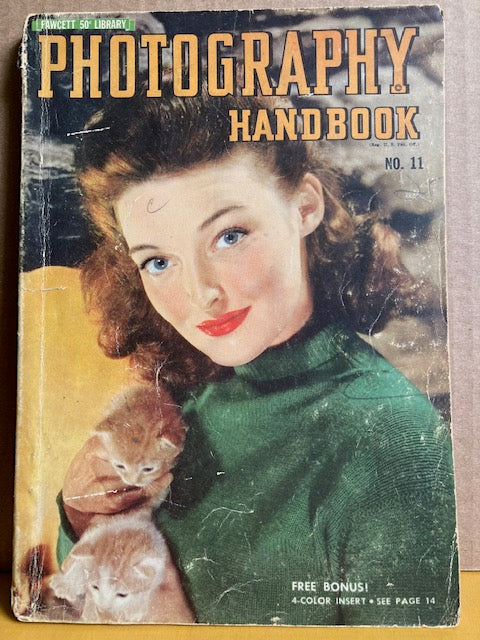
Photography Handbook No. 11. Fawcett, 1942. Edited by Norman C. Lipton.
Photography Handbook No. 11. Fawcett, 1942. Edited by Norman C. Lipton.
Couldn't load pickup availability
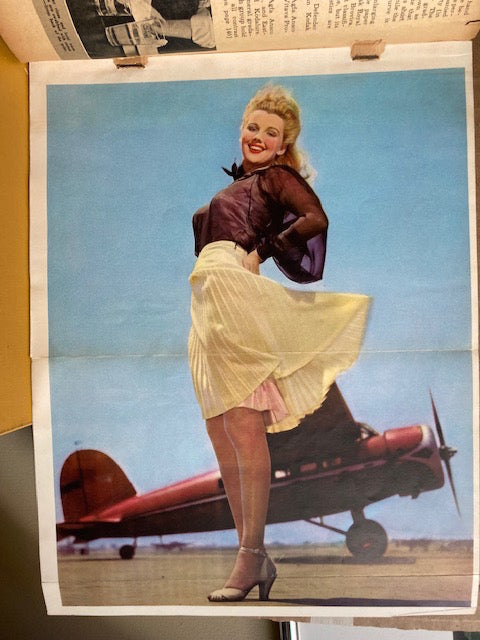
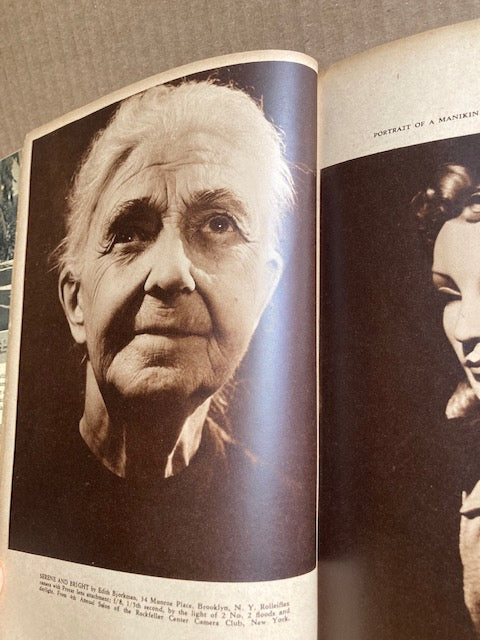
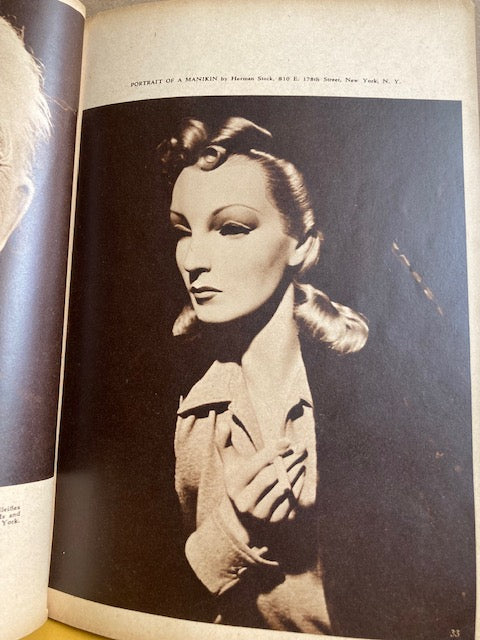
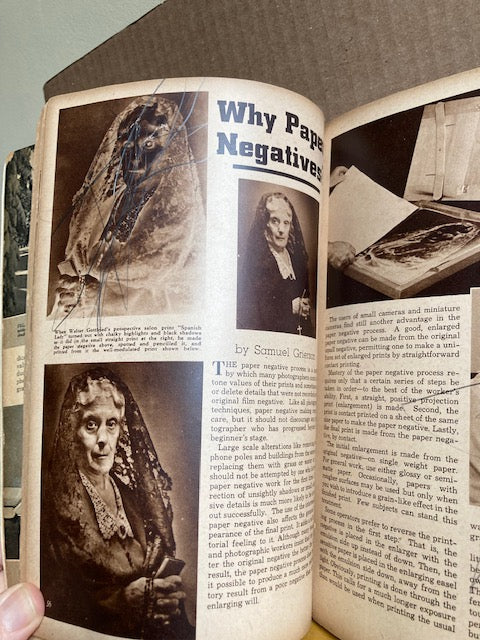
Good with cover wear and small losses on spine, some page corners chipped, pages age toned and fragile. 146 pages. Includes color photo foldout of an attractive woman in front of a small airplane. Numerous articles in chapters, For Better Pictures, Technique, Foto Projects (including article on Paper Negatives marred with pencil scrawls), Build It Yourself, Photography in Brief, and Salon Section with photos by Stratford Enright (marred with blue ball point ink scrawls), Major M.J. Burelbach, Hazel Wiley, Yale Joel (when he was with the U.S. Signal Corps), A. Eriss (photo taken from a military glider), Edith Bjorkman, Herman Stock, Arthur G. Macaulay, Charles N. Tigrett, John I. Yastrop, John Makar, Elizabeth H. Hibbs, Ruth Canaday, Bill Regan, Stokely Webster, and Fenno Jacobs (tear on edge; Jacobs former member of Edward Steichen’s team of WWII Navy photographers). Some of the photos were exhibited at the 4th Annual Salon of the Rockefeller Center Camera Club, New York. Summary:
Photography Handbook No. 11 (1942) is a historic wartime technical manual edited by Norman C. Lipton and published by Fawcett Publications as part of its popular Mechanix Illustrated book series.
Overview & Context
-
Wartime Resourcefulness: Published during the height of World War II, the handbook served as a practical guide for amateur and home-studio photographers navigating wartime material shortages, encouraging DIY techniques and equipment customization.
-
Format & Content: The manual compiles dozens of step-by-step instructional articles, photographic hacks, darkroom recipes, and illustrated build-it-yourself projects.
Key Themes & Features
-
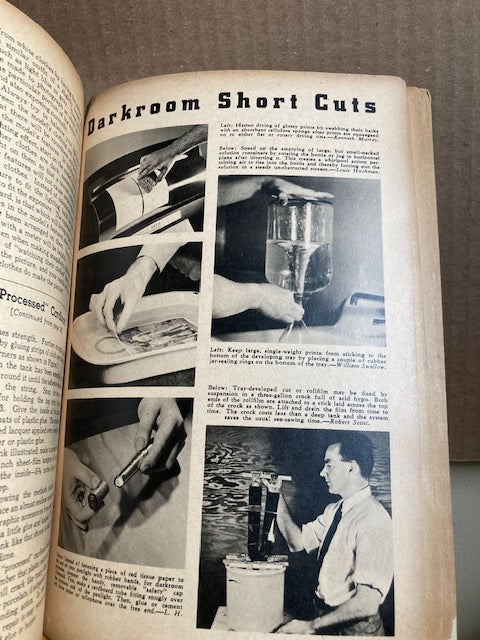
DIY Equipment & Darkroom Projects: Detailed instructions on how to build essential darkroom equipment—such as enlargers, print washers, darkroom timers, flash guns, and copy stands—using readily available household tools and materials.
-
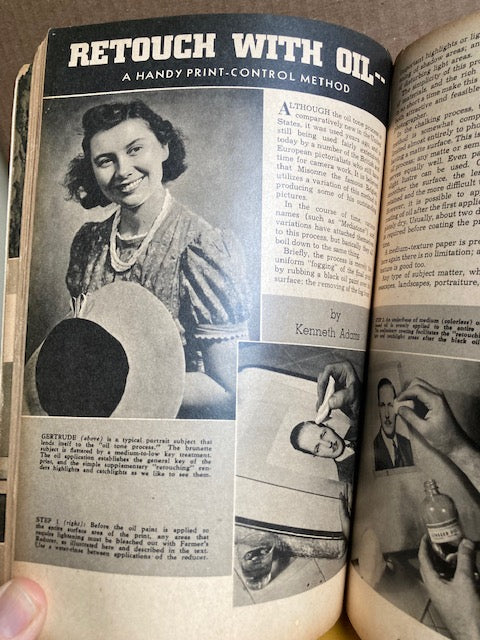
Technical Craft & Chemistry: Offers practical guides on exposure control, table-top photography, retouching techniques, light setup strategies, and custom chemical formula mixing for film development and print toning.
-
Midcentury Aesthetics: Highlights classic mid-20th-century photo aesthetics, focusing on tabletop still life, dramatic portrait lighting, action photography, and experimental tricks of the era.