Gary Saretzky Photo Books
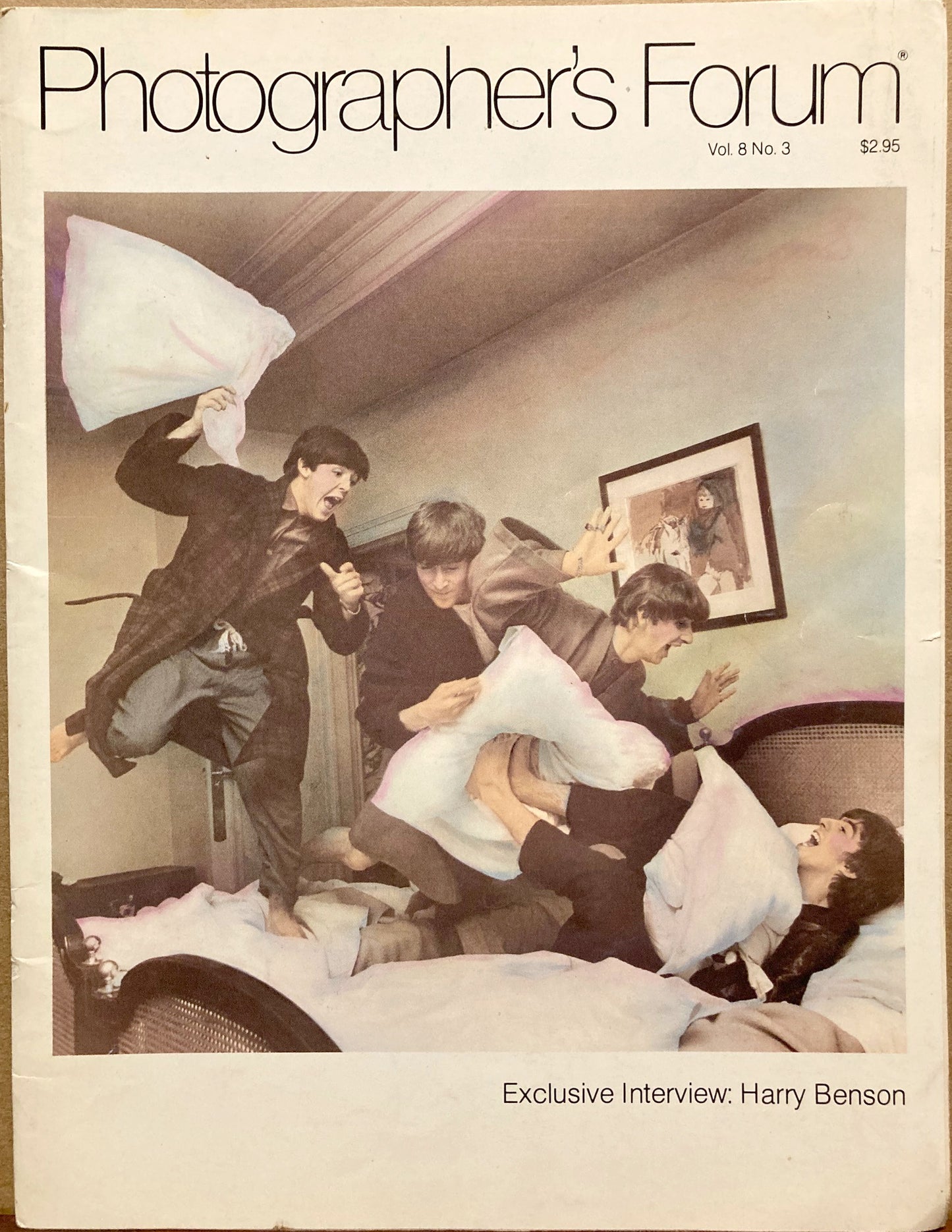
Photographer's Forum, Vol. 8, No. 3, 1986. Featuring Harry Benson interview and photos.
Photographer's Forum, Vol. 8, No. 3, 1986. Featuring Harry Benson interview and photos.
Couldn't load pickup availability
Entire issue, 64 pages, featuring interview with Harry Benson and his photographs of The Beatles (including cover), F. Lee Bailey, Martin Luther King, Jr., Alexander Solzhenitsyn, Roman Polanski, et al. Other articles include interview with "Celebrity Photojournalist" Linda Solomon, illustrated with her photographs of Diana Ross, Kenny Rogers, John Forsythe, Boy George, and Walter Mondale. Good with some edge wear on back cover and corner of one page missing that had a contest entry form. Summary:
Photographer's Forum, Vol. 8, No. 3 (May 1986), published by Serbin Communications and edited by Glen R. Serbin, is a significant mid-1980s issue of the respected quarterly journal dedicated to emerging and professional photographers. This specific edition focuses heavily on the art and mechanics of celebrity and editorial photojournalism, examining how photographers navigate power, fame, and historical moments.
The Cover Feature: Harry Benson
The centerpiece of the issue is an in-depth interview with legendary Scottish photojournalist Harry Benson, who also provides the magazine's cover image.
-
The Beatles: The feature looks back at Benson’s career-defining work documenting The Beatles during their 1964 arrival in America, including his iconic, candid photographs of their high-energy pillow fight at the George V Hotel in Paris.
-
The Architecture of Power and Fame: The portfolio and interview explore Benson’s unique ability to gain the trust of highly guarded figures. It showcases his psychologically revealing portraits of high-profile personalities, including defense attorney F. Lee Bailey, civil rights leader Martin Luther King, Jr., exiled Russian author Alexander Solzhenitsyn, and controversial filmmaker Roman Polanski.
-
Benson's Philosophy: In the interview, Benson discusses his aggressive, fleet-of-foot approach to photojournalism, emphasizing that a great photograph requires proximity, anticipation, and an refusal to compromise with handlers or public relations barriers.
The Celebrity Eye: Linda Solomon
A secondary major feature interviews Linda Solomon, who was then carving out a unique niche as a premier "Celebrity Photojournalist."
-
The Red Carpet and Beyond: Solomon discusses the transition of celebrity photography from standard, static paparazzi snapshots into an art form that blends high fashion with honest, behind-the-scenes narrative.
-
The Portfolio: The article is heavily illustrated with her distinct photographs of major 1980s entertainment and political icons, including pop divas Diana Ross and Boy George, country star Kenny Rogers, television actor John Forsythe (Dynasty), and presidential candidate Walter Mondale. Solomon details her methodology for capturing the human element beneath the polished veneer of Hollywood and Washington stardom.
Educational and Academic Framework
True to the mission of Photographer's Forum, which traditionally served as a bridge between photography students and the professional industry, the issue features regular departments targeted at the craft:
-
The Student Awards Announcement: This issue highlights the results and standout entries from the magazine's annual Spring photography contests, showcasing emerging talent from universities across the United States.
-
Technical Insights: Interspersed among the high-profile interviews are column reviews of new camera systems and darkroom technologies arriving in 1986, balancing artistic inspiration with practical application.
Significance
This 1986 issue of Photographer's Forum serves as an excellent time capsule of pre-digital media culture. By pairing a hard-nosed, historical photojournalist like Harry Benson with a modern celebrity chronicler like Linda Solomon, the editors mapped the evolving nature of fame. It illustrates a specific era when access to the world's most famous figures was granted not through publicists' social media accounts, but through the patience, lenses, and distinct personalities of independent photographers.