Gary Saretzky Photo Books
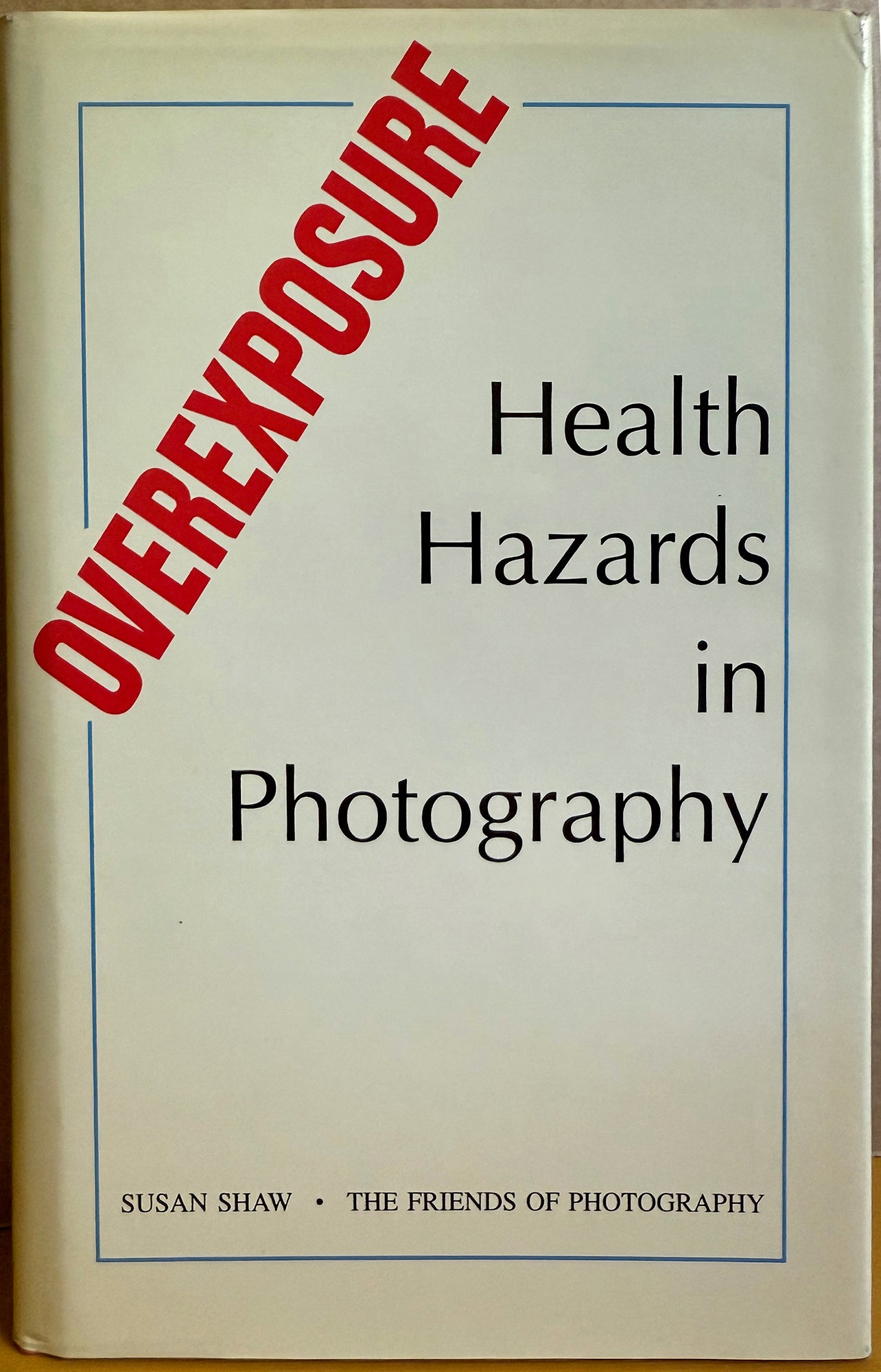
Overexposure: Health Hazards in Photography by Susan Shaw.
Overexposure: Health Hazards in Photography by Susan Shaw.
Couldn't load pickup availability
Friends of Photography, 1983. First edition in red cloth, fine with very good protected dust jacket that has minor imperfections on rear panel and slight fading of red printing on spine. 329 pages. Chapters on harmful chemicals and health hazards during processing in black and white photography; color photography; historical silver processes, non-silver processes, and photomechanical printmaking, and during conservation and restoration. With literature from the Conservations Hazard Project of the Center for Occupational Hazards laid in. A scarce book in hardcover; also issued simultaneously in paperback. Summary:
Overexposure: Health Hazards in Photography by Susan D. Shaw (first published in 1983) is a landmark darkroom safety manual that was the first book to thoroughly document the health risks associated with photographic chemicals and darkroom procedures. Originally commissioned by the photographer Ansel Adams’ organization, the Friends of Photography, it was published as a guide to protect photographers and lab workers from the often-overlooked dangers of chemical exposure in traditional photographic processes.
📘 Purpose
The book’s main goal is to inform and educate photographers, darkroom technicians, educators, and students about the toxicological hazards present in darkroom chemistry and related activities. At a time when many practitioners were unaware of the risks, Shaw combined scientific research with practical advice to promote safer practices in photographic workspaces.
📖 Content Overview
-
Chemical Hazards: Detailed explanations of the health risks posed by common darkroom chemicals, including solvents, developers, fixers, toners, and other processing agents. The book identifies not only acute effects like skin irritation and respiratory issues, but also more serious long-term risks from chronic exposure.
-
Safety Principles: Clear guidelines on how to minimize exposure, including recommendations for proper ventilation, the use of personal protective equipment (PPE), and safe handling practices to reduce skin contact or inhalation.
-
Workplace Setup: Practical advice on organizing a darkroom or lab to be inherently safer, covering layout, storage of chemicals, emergency procedures, and maintenance of clean working conditions.
-
Regulatory Context: Although focused on photography, the text places health practices in the context of broader occupational safety concerns, helping readers understand their rights and responsibilities regarding hazardous substances.
🧠 Impact and Legacy
Overexposure was pioneering in bringing health and safety to the forefront of photographic practice rather than leaving it as an afterthought. It influenced how photography courses, labs, and hobbyists approached darkroom work and contributed to a broader movement toward safer studio environments. Experts have noted that the book helped shift some photographers toward digital processes in part because of the reduced chemical risks, though it also served as an essential reference for those who continued to work in analog media.
In summary, Overexposure: Health Hazards in Photography is a comprehensive safety handbook that combines scientific analysis of darkroom hazards with actionable recommendations for safer photographic practice—a resource still referenced in discussions of darkroom health and safety decades after its publication.
