Gary Saretzky Photo Books
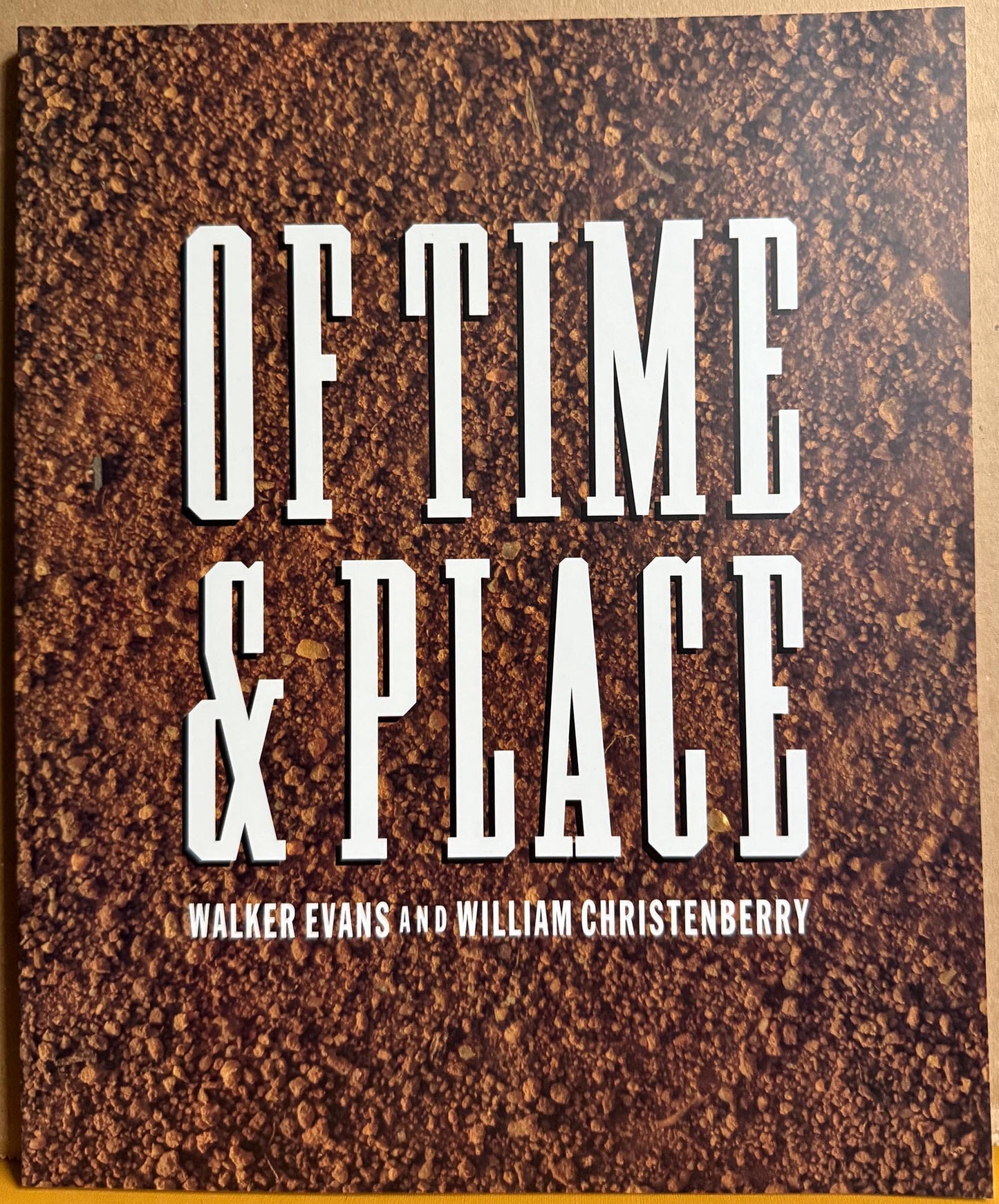
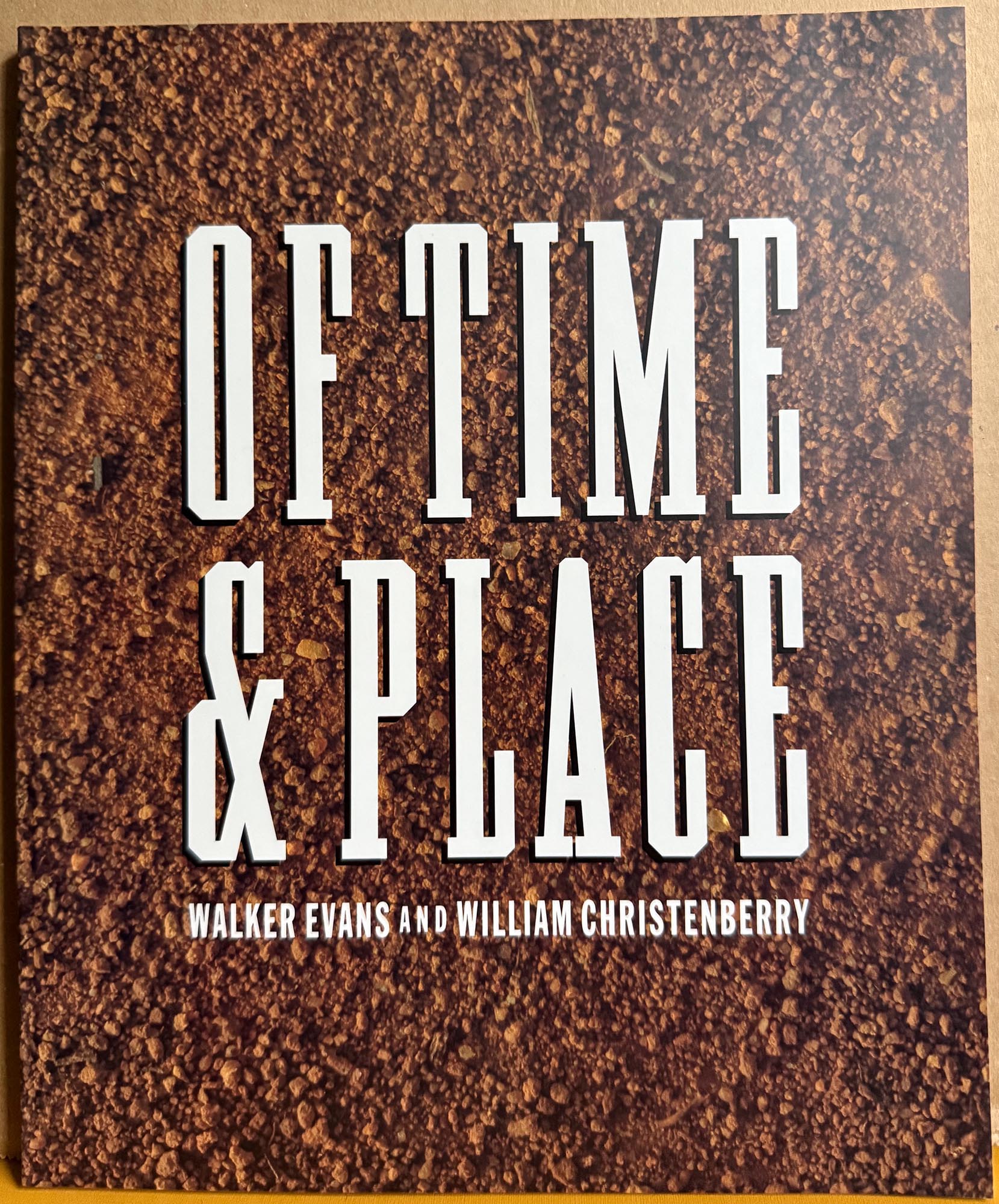
Of Time and Place: Walker Evans and William Christenberry, by Thomas W. Southall.
Of Time and Place: Walker Evans and William Christenberry, by Thomas W. Southall.
Couldn't load pickup availability
Friends of Photography, 1990, issued as Untitled 51. Wraps, like new. 88 pages. This book is a collaboration between The Friends of Photography, San Francisco, and The Amon Carter Museum, Fort Worth, Texas, in association with The University of New Mexico Press. With text by Thomas W. Southall, stories by William Christenberry, and excerpts from the writing of James Agee, it presents black and white photos taken by Walker Evans in the Depression South and color photos taken recently by painter and photographer William Christenberry of many of the places Evans visited, especially in Hale County, Alabama, places that Christenberry knows intimately, having been born and raised there or nearby. As well known, Evans made his photographs in 1936 while on leave from the Resettlement Administration (RA) to work on what became the book, Let Us Now Praise Famous Men, with text by James Agee. The RA was under the direction of Roy Stryker, who gave him permission to do the project with the understanding that the negatives would become part of the federal agency’s file. The following year, the Resettlement Administration was reorganized as the Farm Security Administration and its very large photo collection is now at the Library of Congress. While Evans’ photographs were in black and white, Christenberry shot in color and his photographs include some of the same places from the same point of view, comprising a re-photography project. Thomas Southall, who conceived the project and wrote the informative introductory essay, worked closely with Christenberry in putting together the exhibit and book. Summary:
Overview:
Of Time and Place: Walker Evans and William Christenberry is a richly illustrated exhibition catalogue and comparative study that pairs the work of two American photographers — Walker Evans (1903–1975), a major figure of 20th-century documentary photography, and William Christenberry (1936–2016), a later artist deeply influenced by Evans’s work. The book was published in conjunction with a traveling exhibition organized by the Amon Carter Museum and The Friends of Photography that toured major U.S. museums in 1990–1991.
Content and Structure:
-
The book includes black-and-white and color photographs by both Evans and Christenberry, alongside texts by Southall, excerpts from James Agee, and stories by Christenberry. It alternates between the two artists’ work to trace both aesthetic affinities and differences across generations.
-
Evans’s images in the volume include some of his most celebrated work from the Depression era and beyond, documenting American life with clarity and restraint — particularly scenes of rural poverty and vernacular architecture.
-
Christenberry’s work, often in vivid color, reflects his lifelong engagement with his native Alabama landscape, capturing abandoned buildings, roadside signs, and the effects of time on place and memory.
Themes and Interpretation:
A central theme of the book is the relationship between time, place, and photographic vision. Southall draws out how both photographers respond to specific American landscapes, yet in markedly different ways:
-
Evans’s photography is rooted in the documentary impulse — often portraying a culture in economic and social crisis with clear, unsentimental observation. His work is associated with an objective, almost journalistic clarity that nonetheless conveys deep human and cultural resonance.
-
Christenberry’s work, while drawing on similar subject matter, is more meditative and personal — emphasizing the passage of time, decay, and memory embedded in place. His repeated visits and photographs of the same locations over years make his images feel like traces of time rather than static records.
Significance:
The book doesn’t just celebrate two photographers; it frames a dialogue across generations about how photography expresses and shapes our understanding of environment, history, and identity. By juxtaposing Evans’s and Christenberry’s work, Southall reveals how shared landscapes can yield profoundly different artistic approaches — one rooted in documentary force, the other in poetic reflection.Audience:
This volume will be especially meaningful to readers and students of photography, American cultural history, and visual art who want to see how individual artists interpret place and time within the medium and how one generation’s work can inspire another’s creative vision.