Gary Saretzky Photo Books
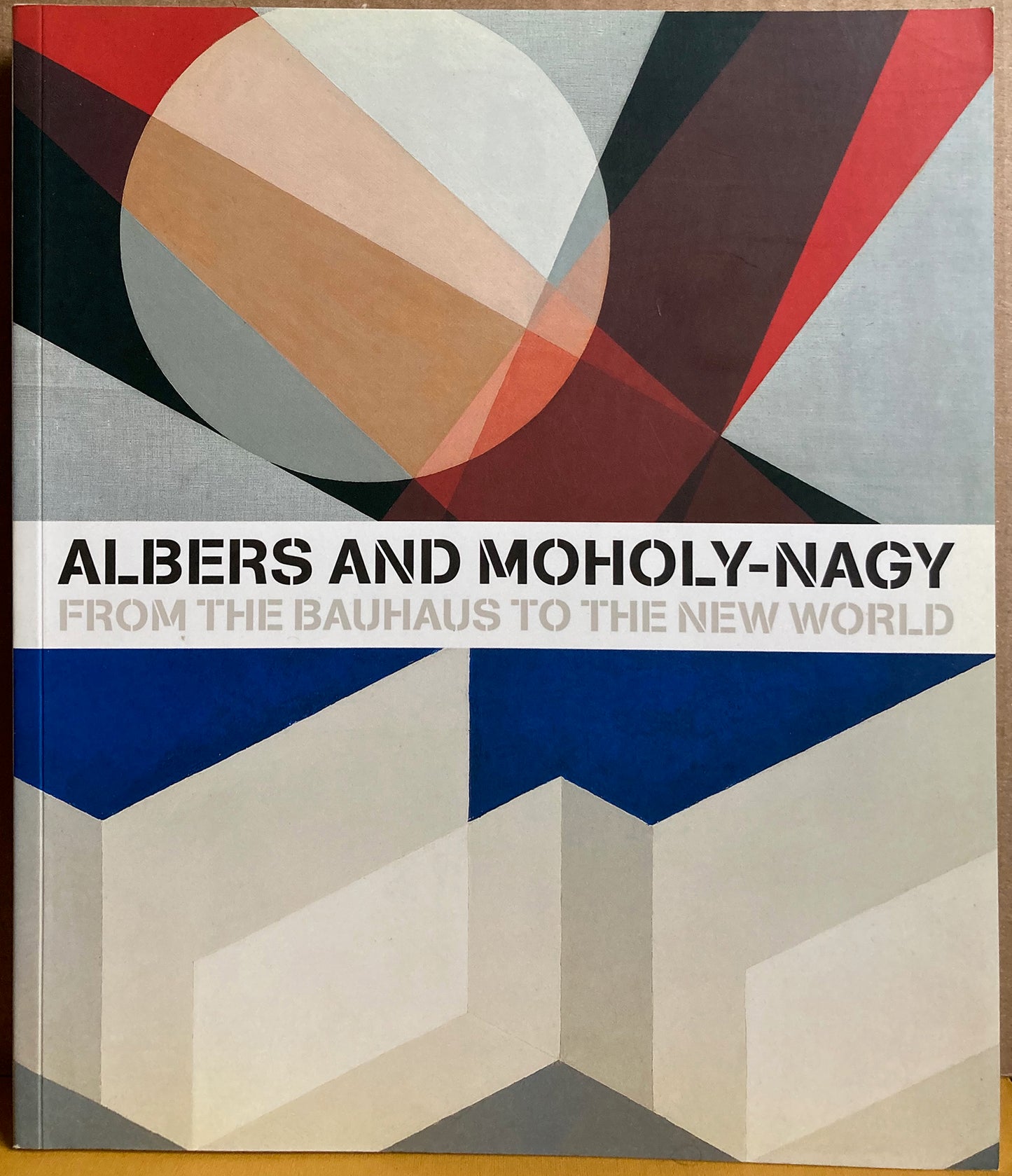
Moholy-Nagy. Albers and Moholy-Nagy: From the Bauhaus to the New World, edited by Achim Borchardt-Hume.
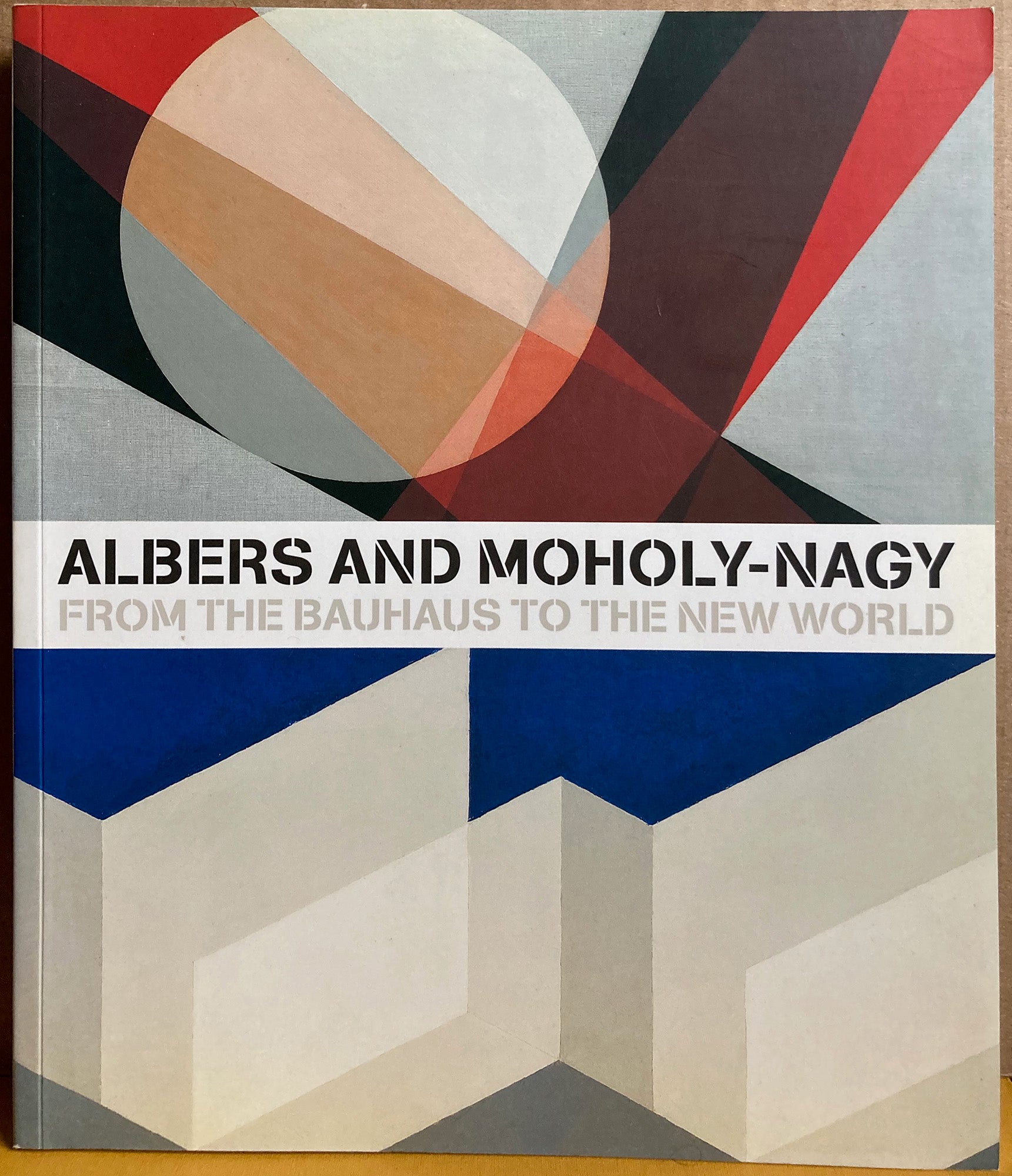
Moholy-Nagy. Albers and Moholy-Nagy: From the Bauhaus to the New World, edited by Achim Borchardt-Hume.
Couldn't load pickup availability
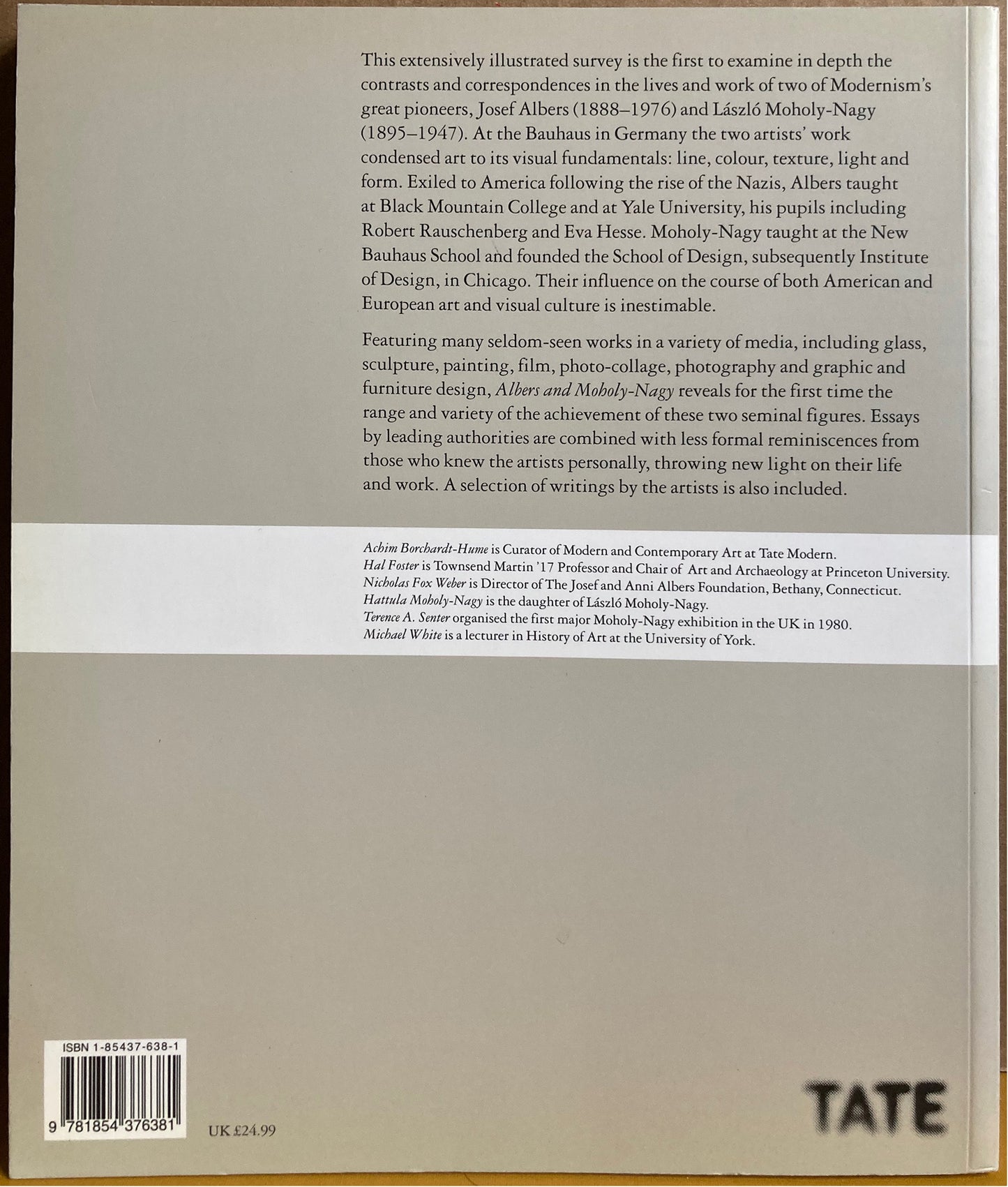
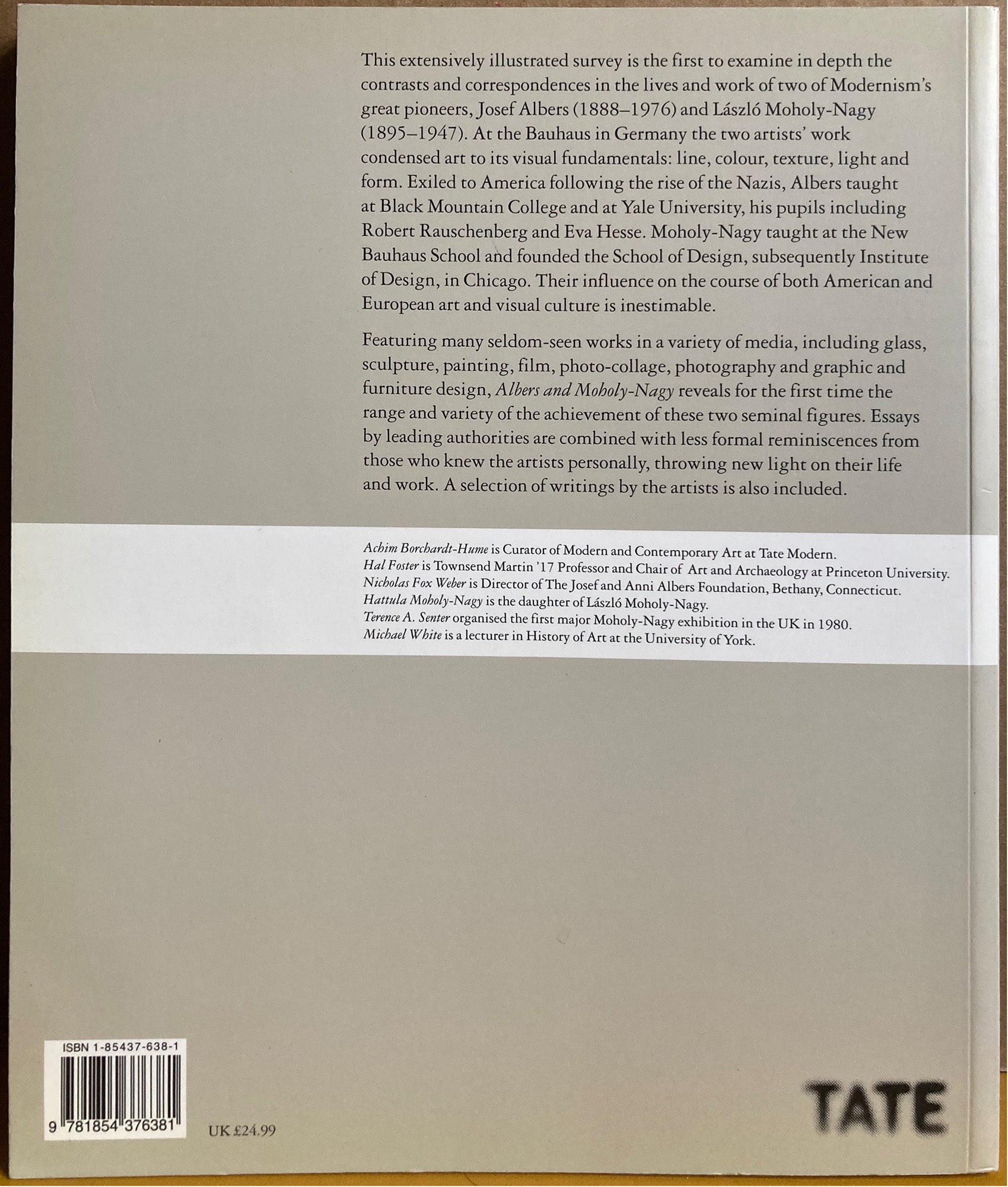
Tate, 2006. Texts by the editor and Michael White, Terence A. Senter, Hal Foster, Nicholas Fox Weber, and Hattula Moholy-Nagy. Traces the career of the two artists, Josef Albers and Laszlo Moholy-Nagy from Europe to the United States. With a selection of writings by the artists, chronology, bibliography, and list of works in the exhibit for which this book served as the catalog. Wraps, fine with gift inscription on preliminary title page. 190 pages, well-illustrated. The exhibit opened in 2006 at the Tate Modern and traveled, ending at the Whitney Museum in 2007. Summary:
Albers and Moholy-Nagy: From the Bauhaus to the New World (2006), edited by Achim Borchardt-Hume, is a comprehensive comparative study of two titans of Modernism: Josef Albers and László Moholy-Nagy. The book chronicles their parallel trajectories from the revolutionary Bauhaus in Germany to their influential roles in America—Albers at Black Mountain College and Yale, and Moholy-Nagy at the New Bauhaus in Chicago.
Core Themes and Narrative
-
The Bridge to Modernity: The book explores how both artists acted as conduits for European avant-garde ideas (Constructivism, Minimalism) into the American educational and artistic landscape.
-
Form vs. Light: While both were associated with the aesthetics of the Machine Age, the book contrasts their approaches. Albers focused on the logic of color and the discipline of the square, while Moholy-Nagy championed the primacy of light, motion, and the experimental use of new materials like plastics and metals.
-
Art as Education: A central theme is their shared belief that art was not merely a decorative pursuit but a "way of seeing" that was essential for navigating a modern, industrial society.
Visual and Technical Notes
-
The "Structural" Finish: Albers’s work is characterized by a "Hard-Edge" precision. His "finish" is flat, untextured, and clinical, designed to eliminate the hand of the artist in favor of the interaction of color.
-
The "Experimental": Moholy-Nagy’s photography (photograms) and "Light-Space Modulators" celebrate the blurred boundary between the mechanical and the ethereal, often featuring reflections, transparency, and high-contrast shadows.
- László Moholy-Nagy (1895–1946), born László Weisz, was a Hungarian-born painter, sculptor, photographer, and visionary educator who became one of the central theorists of the Bauhaus and a leading figure of the European avant-garde. Born in Bácsborsód, Hungary, Moholy-Nagy initially studied law before turning to fine art, co-founding the avant-garde MA group in Budapest before moving to Berlin in 1920. Recruited by Walter Gropius to join the Bauhaus faculty in Weimar and Dessau in 1923, he headed the Preliminary Course and the metal workshop, championing the integration of art, technology, and industrial design. Rejecting traditional pictorial rules, Moholy-Nagy pioneered the concept of "New Vision" (Neues Sehen), viewing light itself as a raw plastic medium; he produced camera-less "photograms" alongside his first wife Lucia Moholy, experimented with radical camera angles, double exposures, and industrial photomontages ("photoplastics"), and created kinetic kinetic light sculptures such as the Light-Space Modulator (1930). Fleeing Nazi Germany in the late 1930s, he settled in Chicago in 1937, where he founded the New Bauhaus (later the Institute of Design at Illinois Institute of Technology), transplanting European modernist pedagogy to America and leaving a monumental legacy that permanently redefined photography as a dynamic, constructive art form.
- Josef Albers (1888–1976) was a German-born American artist, theorist, and educator whose pioneering investigations into color theory, geometric abstraction, and visual perception made him one of the most influential figures in modern art and design pedagogy. Born in Bottrop, Germany, Albers trained as a schoolteacher before enrolling at the Bauhaus in Weimar in 1920, where he quickly rose to master, directing the stained glass workshop and co-leading the legendary preliminary course alongside László Moholy-Nagy. Forced to emigrate following the Nazi closure of the Bauhaus in 1933, Albers moved to the United States to head the art department at the experimental Black Mountain College in North Carolina, where he taught until 1949 before serving as chairman of the Department of Design at Yale University (1950–1958). In 1950, he embarked on his monumental, career-defining series Homage to the Square, producing hundreds of paintings and prints composed of nested colored squares that demonstrated how colors dynamically mutate based on their adjacent relationships. A gifted photographer who also produced extensive photo collages, graphic prints, and glass works, Albers published his theoretical masterpiece Interaction of Color in 1963, establishing a landmark framework for optical art, minimalism, and modern color theory that continues to shape art education worldwide.