Gary Saretzky Photo Books
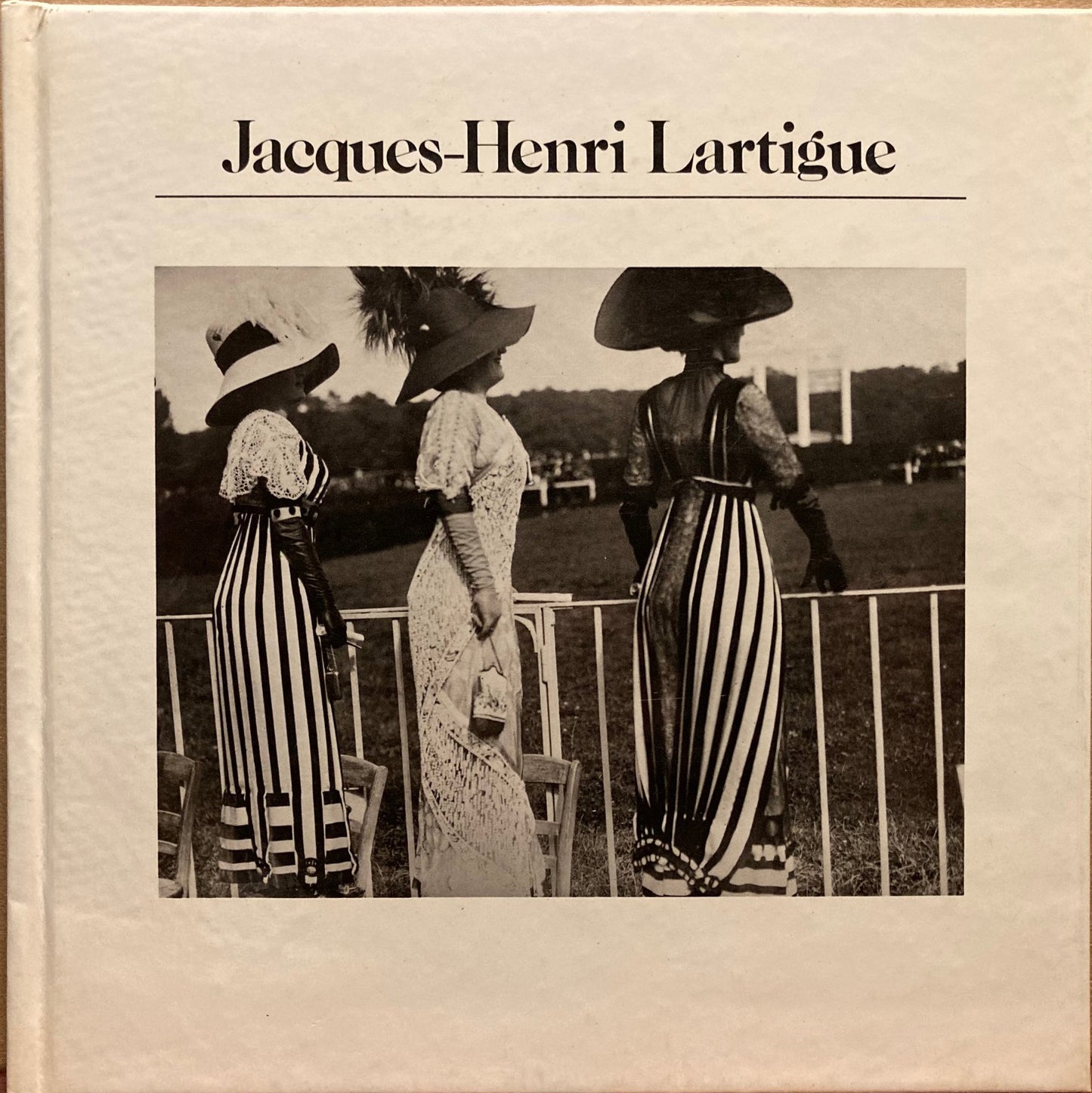
Lartigue. Jacques-Henri Lartigue. (Aperture History of Photography Series No. 5)
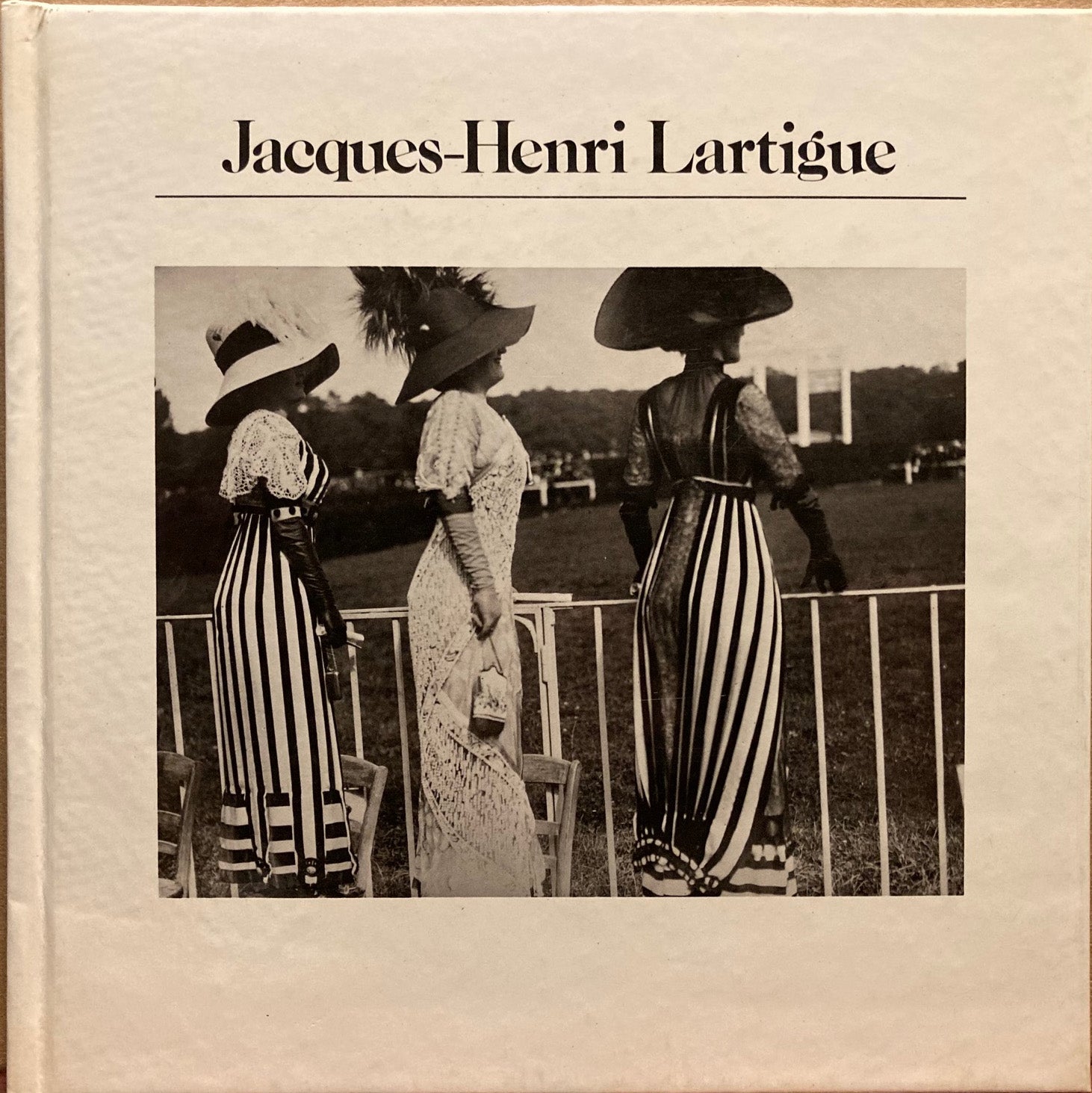
Lartigue. Jacques-Henri Lartigue. (Aperture History of Photography Series No. 5)
Couldn't load pickup availability
Aperture, 1976. Essay by Ezra Bowen. Includes Lartigue's remarkable stop action photos taken as a youth. Features: France; Snapshots; Child Photographers; Sports; and Photography of Motion. Hardcover, VG+. Summary:
Jacques-Henri Lartigue (1976), the fifth volume in the prestigious Aperture History of Photography Series, serves as a foundational introduction to the work of the "greatest amateur" of the 20th century. With an introduction by Ezra Bowen, the book distills Lartigue’s massive personal archive into a narrative of pure, uninhibited visual joy.
Bowen’s introduction provides critical narrative structure to Lartigue’s life. He emphasizes that Lartigue was a "catcher of moments" who used the camera as a magical tool to stop time. Bowen helps the reader understand that Lartigue wasn't trying to be an "artist"—he was simply trying to prevent his happiest memories from evaporating.
Core Focus and Historical Context
1. The Child Prodigy
The book focuses heavily on Lartigue’s early work (1900–1920), produced while he was a young boy in a wealthy French family. It illustrates a unique moment in photographic history where a child, gifted with a camera, captured the world without the burden of artistic "rules" or commercial pressure.
2. The Belle Époque in Motion
Lartigue was obsessed with the newness of the 20th century. The volume highlights his fascination with speed and flight, featuring:
-
Early Aviation: Clunky, experimental gliders and biplanes taking flight.
-
Automobile Racing: Famous shots of race cars with distorted wheels (a result of the camera's focal-plane shutter).
-
The "Beautiful People": Elegant women walking in the Bois de Boulogne, captured with a candid, "snapshot" energy that predated modern street photography.
3. The "Discovery" of Lartigue
The book provides context on how Lartigue remained unknown to the art world until 1963, when John Szarkowski curated a show of his work at MoMA. This Aperture volume solidifies his transition from a private hobbyist to a recognized master of spontaneity.
Technical and Aesthetic Style
-
Frozen Moments: Unlike the stiff, posed portraits of the era, Lartigue’s images are full of people jumping, running, and falling. The book emphasizes his ability to "stop time" during the peak of an action.
-
Informality: The photographs feel surprisingly modern. Because Lartigue was photographing his family and friends, there is an intimacy and playfulness—such as his famous shots of his brother "Zissou" testing home-made flying machines.
-
The Diary Aesthetic: The collection reflects Lartigue’s lifelong habit of keeping a visual diary, emphasizing that for him, photography was a way to preserve the happiness of the present moment.
Summary Takeaway
This Aperture monograph is a celebration of the "Leica spirit" before the Leica existed. It presents Lartigue not as a professional documentarian, but as an artist of intuition who captured the exuberance of a vanishing French aristocracy. It remains an essential volume for understanding the roots of candid photography and the beauty of the "uncomplicated" gaze.
Biographical Summary
Jacques-Henri Lartigue (1894–1986) was a celebrated French photographer and painter renowned for his exuberant, candid documentation of early 20th-century upper-class life and the dawn of modern technology. Born into a wealthy family in Courbevoie, France, Lartigue received his first camera at age seven from his father and began keeping an extensive, lifelong visual diary filled with buoyant photographs of fast cars, early aviation experiments, sporting events, and fashionable Parisian women. Primarily considering himself a painter, he pursued photography purely as an amateur hobby for over six decades, capturing dynamic, fleeting moments with unusual compositional freedom, high shutter speeds, and an intuitive sense of speed and playfulness. His vast photographic archive remained largely unknown to the international art world until 1963, when, at the age of 69, he was given a landmark solo exhibition at the Museum of Modern Art in New York curated by John Szarkowski, which immediately established him as a master pioneer of candid street photography. In 1979, Lartigue donated his complete photographic collection—encompassing over 100,000 prints and negatives along with his voluminous written diaries—to the French nation, leaving behind an immortal, joyful portrait of La Belle Époque and the roaring twenties.