Gary Saretzky Photo Books
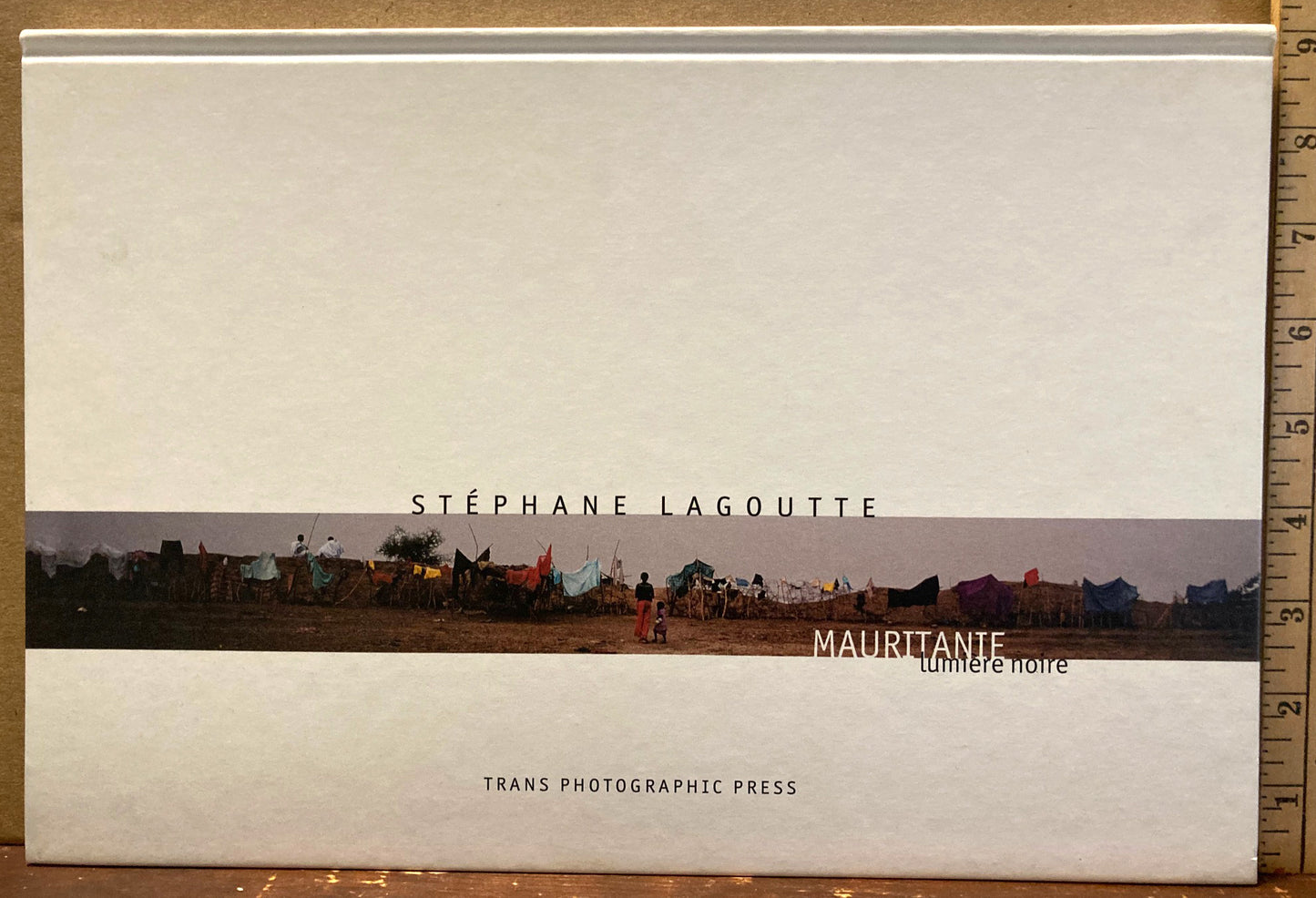
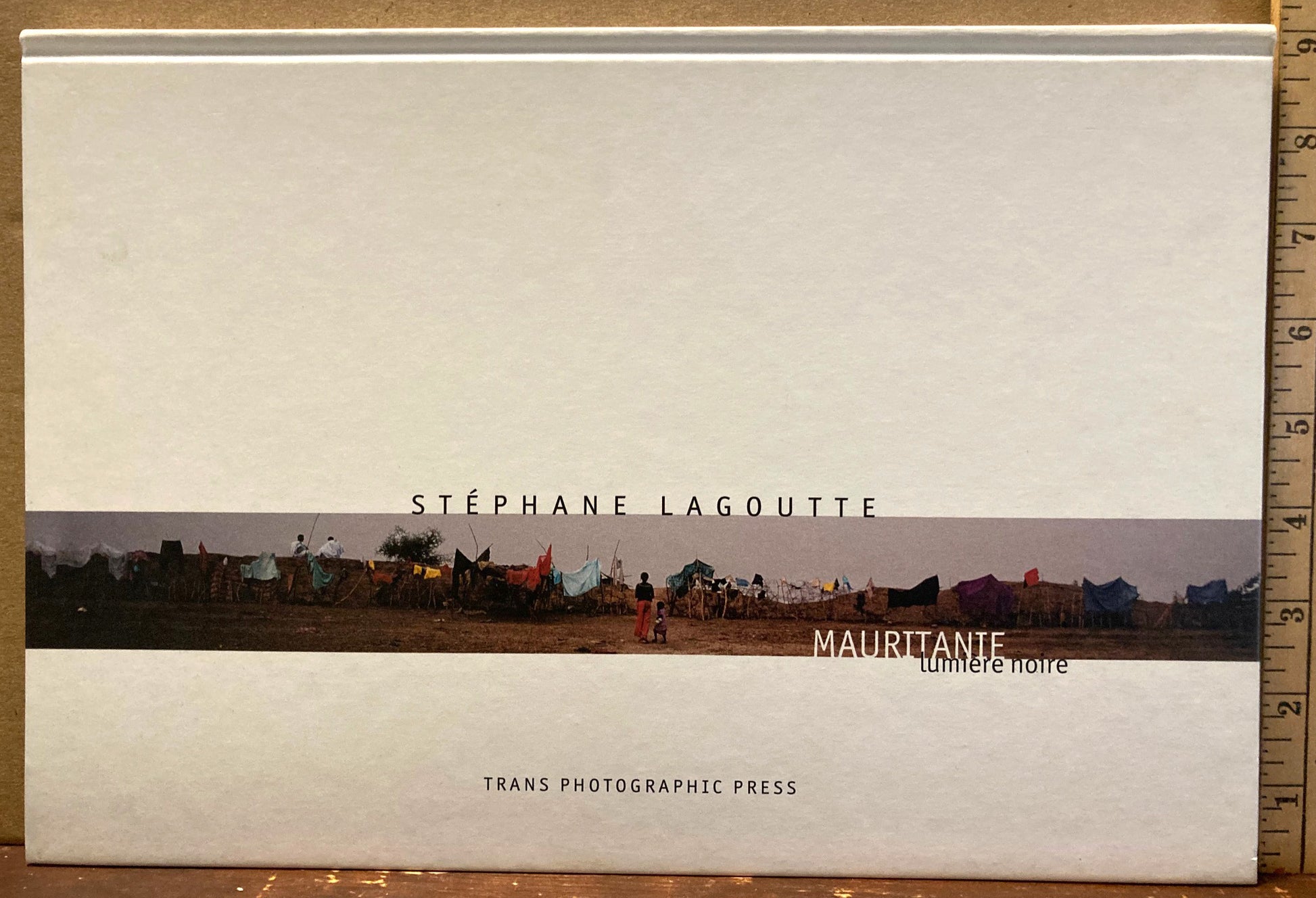
Lagoutte, Stéphane. Mauritanie, Lumière Noire by Stéphane Lagoutte.
Lagoutte, Stéphane. Mauritanie, Lumière Noire by Stéphane Lagoutte.
Couldn't load pickup availability
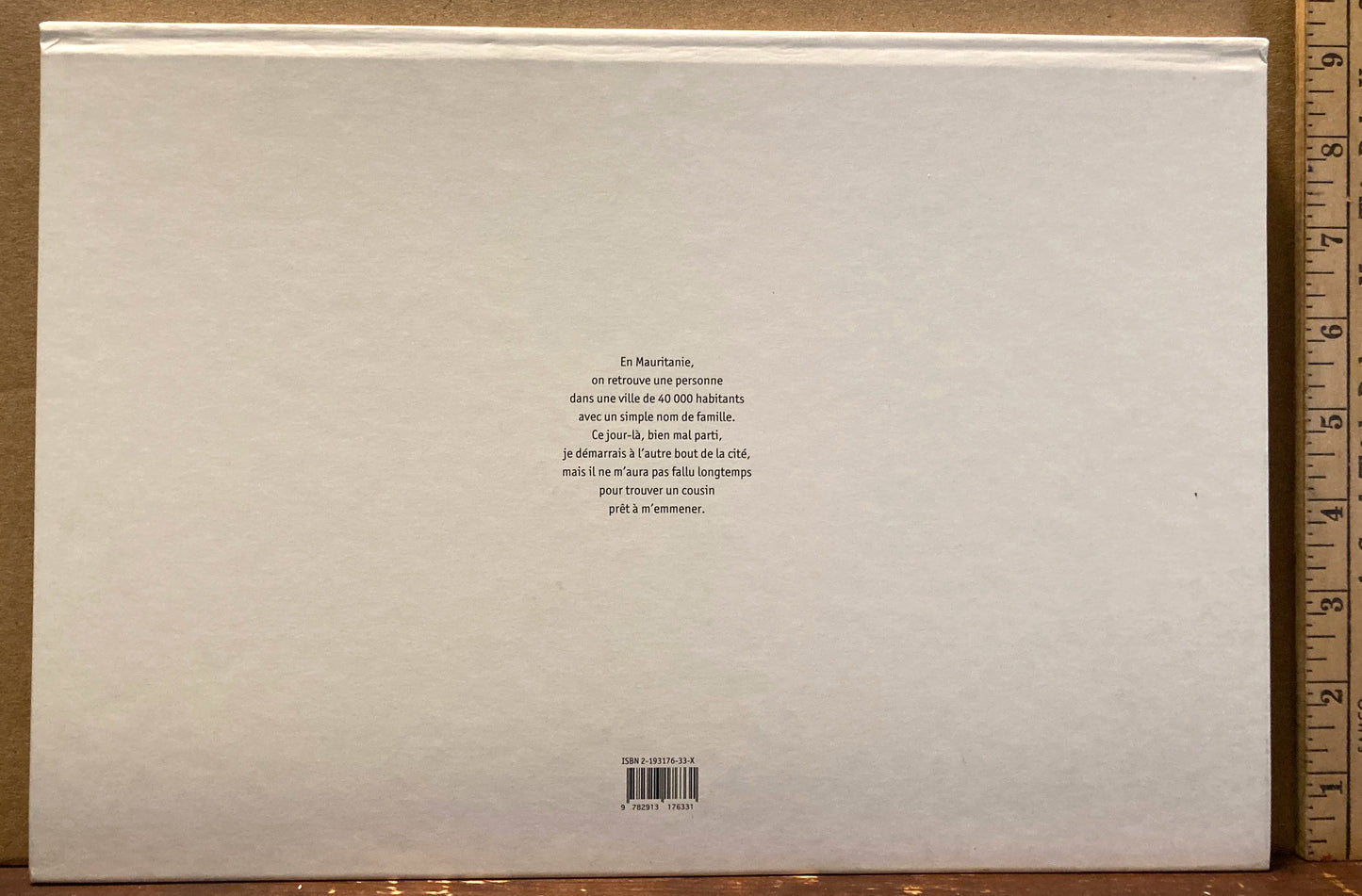
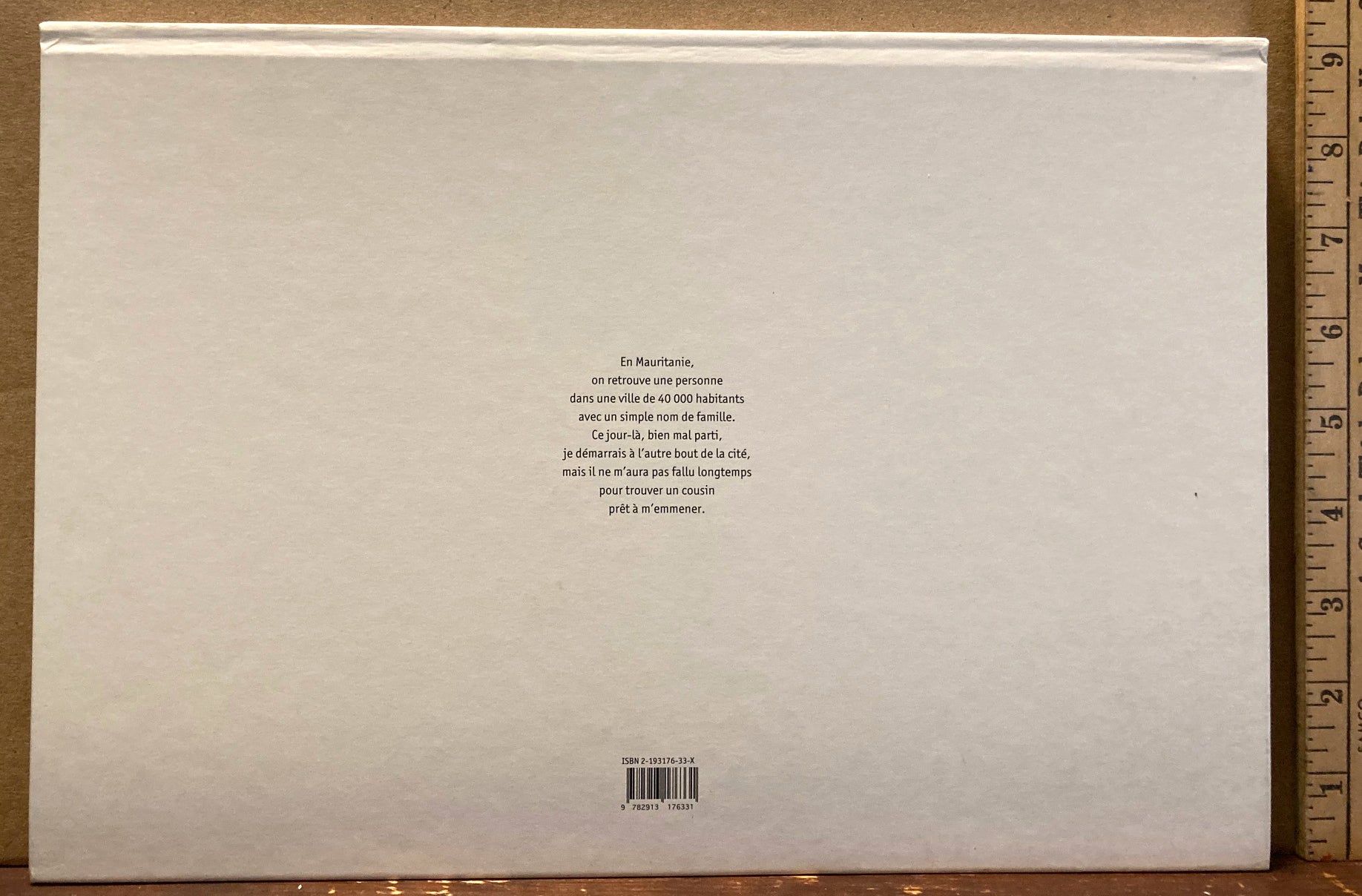
Trans Photographic Press, 2005. Hardcover, panoramic illustration on front cover, not issued with dust jacket, with custom-made 4-mil archival polyester jacket. On his website, it is stated, “Laureate of the Hachette Foundation in 2002, he began work on the frontier between the Maghreb and west Africa in Mauritania from which he produced a book: Mauritanie – Lumière Noire (Trans Photographic Press). This work was exhibited at the Rencontres Internationales de la Photographie in Arles in 2006.” A very uncommon book, especially in hardcover. Fine with blind stamp of previous owner on f.f.e.p. 9 x 13 inches with full page color illustrations. Notes with small reproductions of the photos at the end. Text in French. Summary:
Mauritanie, Lumière Noire (Mauritania, Black Light), published by Trans Photographic Press in 2005, is a haunting and visceral photographic monograph by French photojournalist Stéphane Lagoutte. This book, in the very uncommon hardcover edition, is noted for its high-contrast aesthetic and its rejection of traditional, postcard-style travel photography.
Artistic Vision: The Concept of "Black Light"
The title serves as a perfect descriptor for Lagoutte’s visual approach. Rather than focusing on the blinding yellow sands of the Sahara, Lagoutte uses a high-contrast, almost "noir" style to capture the country.
-
Chiaroscuro in the Desert: Lagoutte utilizes deep shadows and piercing highlights to create a sense of mystery and density. This "Black Light" approach emphasizes the silhouettes of the Mauritanian people and the stark geometry of the landscape.
-
Atmospheric Texture: The graininess of the film and the play of wind-blown sand are used to create a tactile experience, making the desert feel like a living, breathing entity rather than a static background.
Core Subject Matter
The book documents Lagoutte’s journey through Mauritania, focusing on the tension between ancient tradition and a harsh, changing environment.
-
The Iron Ore Train: Some of the most iconic imagery in the book features the Train du Désert, the legendary iron-ore transport that is one of the longest in the world. Lagoutte captures the grit, the heat, and the sheer scale of this industrial lifeline crossing the dunes.
-
Nomadic Life and Urbanization: The photographs explore the lives of the Moorish people, capturing the stillness of desert encampments and the encroaching modernization of cities like Nouakchott.
-
The Human Form: People are often captured in mid-movement, draped in traditional boubous, their forms partially obscured by shadow or fabric, which adds a layer of anonymity and timelessness to the portraits.
Design and Production
As a product of Trans Photographic Press, the book is a "photographer’s book."
-
Printing Quality: The edition is praised for its deep blacks and rich tonal range, essential for preserving the nuances of Lagoutte’s dark exposure style.
-
Narrative Flow: The book is largely wordless, allowing the sequence of images to create a rhythmic, almost cinematic experience of traveling through the Mauritanian night and day.
Significance
Mauritanie, Lumière Noire is considered an uncommon but essential work for fans of contemporary French documentary photography. It sits in a similar space to the work of photographers like Antoine d'Agata or Michael Ackerman, where the emotional "feeling" of a place takes precedence over literal reportage. It remains one of the most stylistically unique explorations of the West African landscape ever published.
Biographical Summary
Stéphane Lagoutte (born 1973) is a French documentary photographer and photojournalist whose work blends traditional news reporting with reflective, conceptual visual storytelling. After studying fine arts, he turned his focus to documentary photography, exploring human relationships with their environments and examining societal margins both within France and internationally. A member of the prominent French photographic collective Agence MYOP since 2009—and serving as its director beginning in 2016—Lagoutte has produced notable long-term documentary projects, including Mauritanie – Lumière Noire and his acclaimed series Beirut 75-15, which used archival and contemporary visual layers to explore memory and history in Lebanon. His work regularly features in leading publications such as Libération, Le Monde, Geo, and Time, and has been exhibited widely at international venues and festivals, including the Rencontres d'Arles and the Bibliothèque nationale de France.