Gary Saretzky Photo Books
Jukeboxes. Jukeboxes: The Golden Age by Vincent Lynch and Bill Henkin.
Jukeboxes. Jukeboxes: The Golden Age by Vincent Lynch and Bill Henkin.
Couldn't load pickup availability
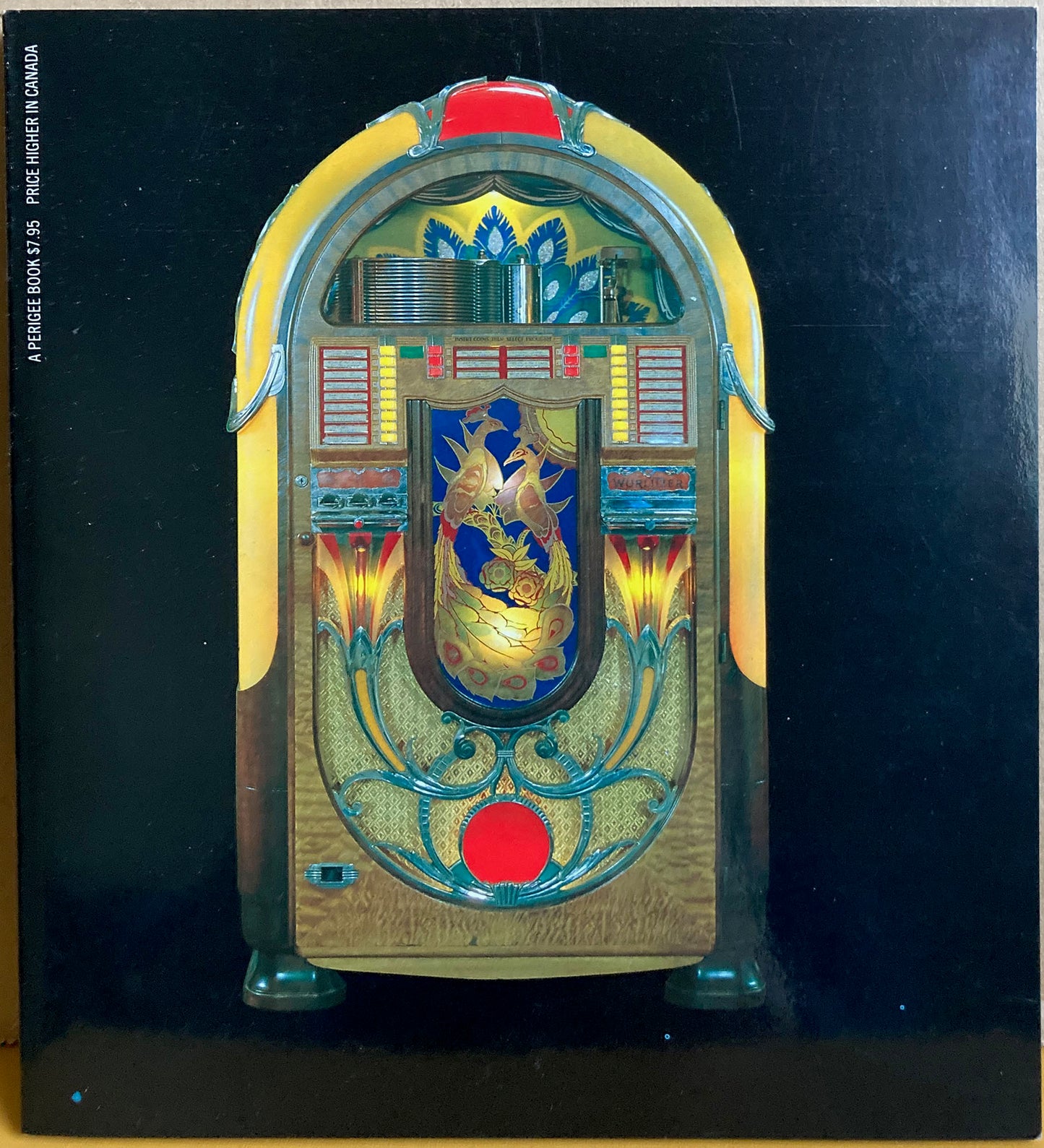
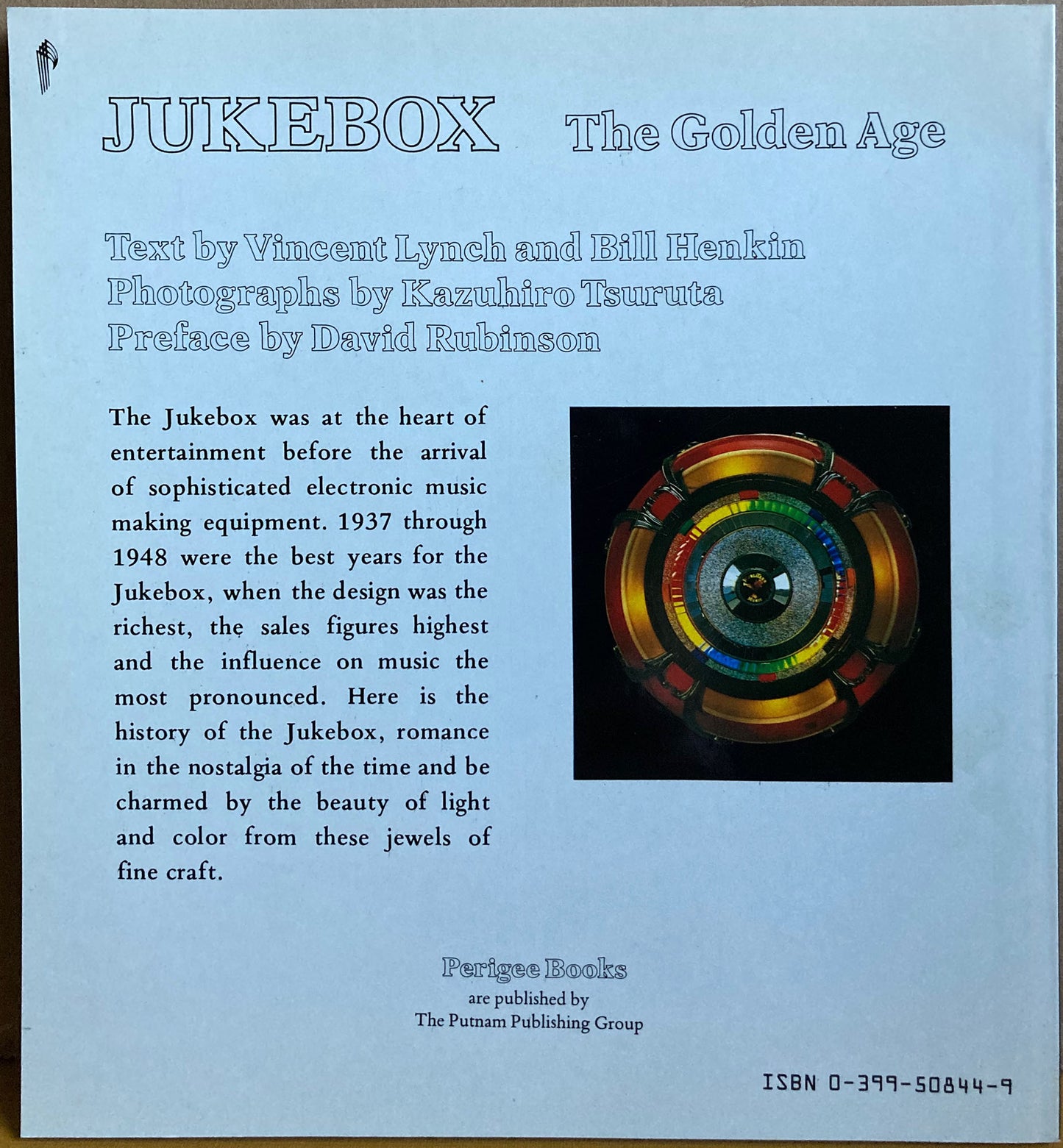
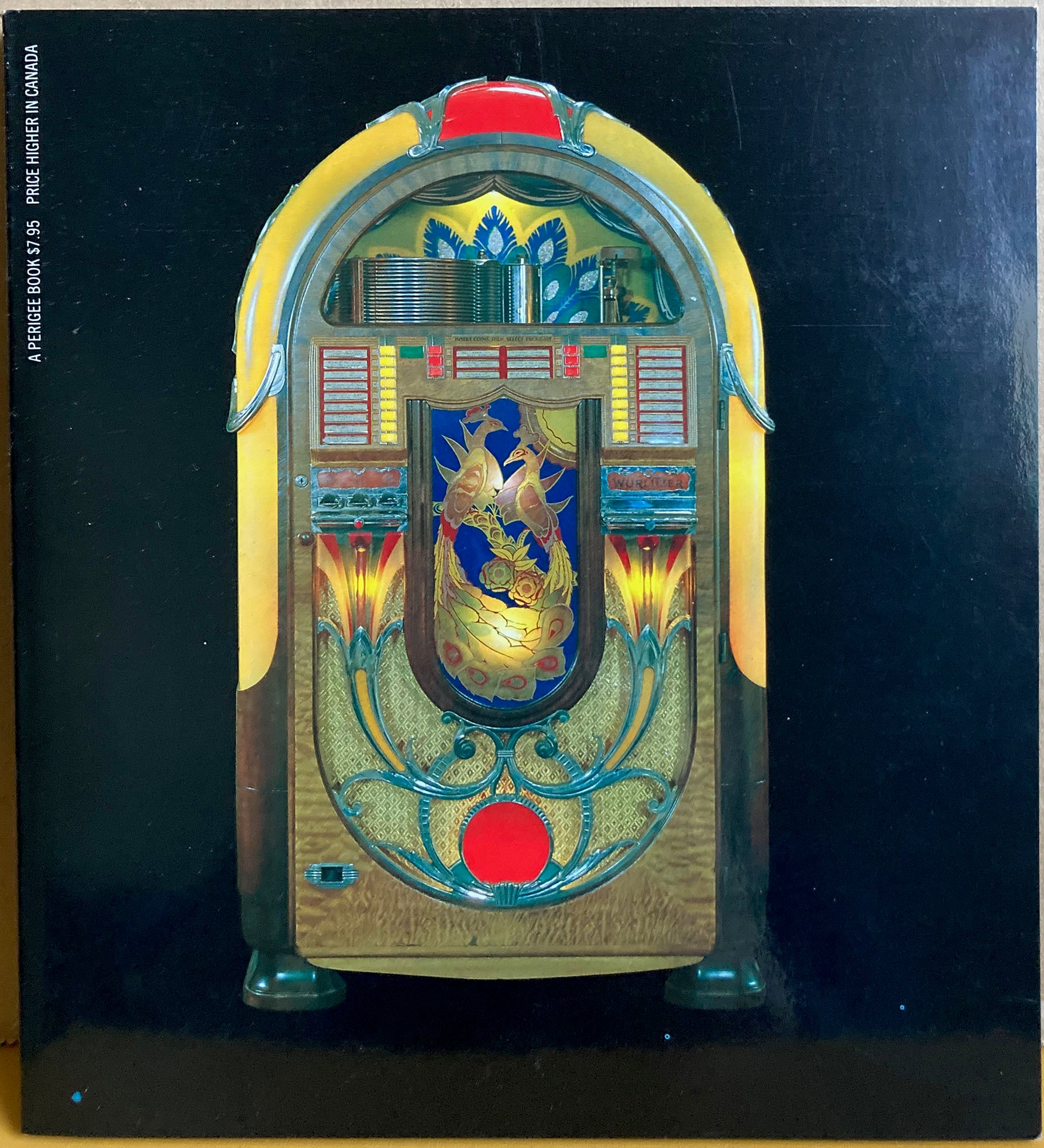
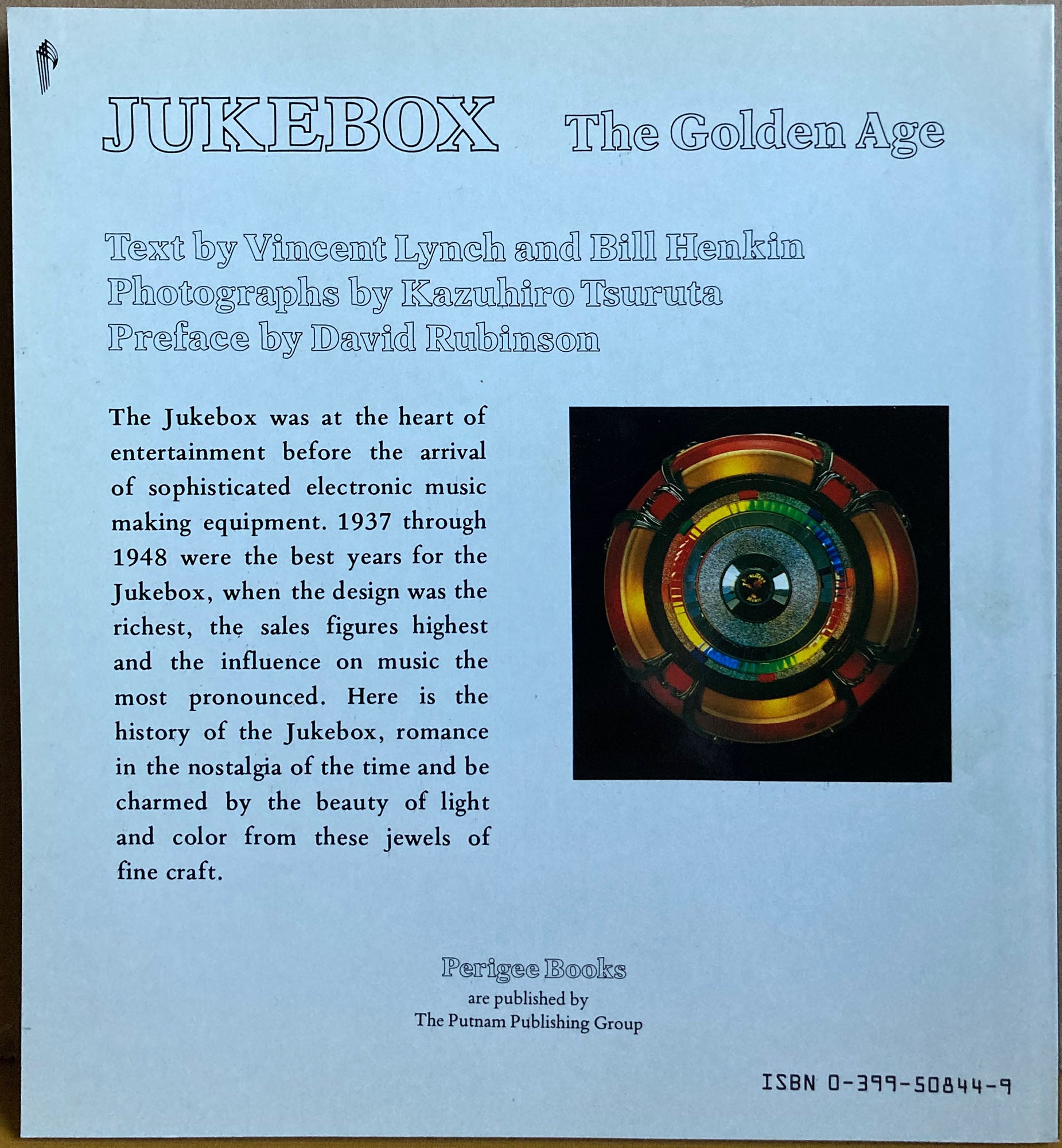
Perigree, 1981, 1983. First printing thus. Wraps, like new. 110 pages. Text by Vincent Lynch and Bill Henkin provides history of jukeboxes. Excellent photos of jukeboxes made by Wurlitzer, Seeburg, Rock-Ola, Packard, and AMI in color by Kazuhiro Tsuruta. Summary:
Published in 1981, Jukeboxes: The Golden Age by Vincent Lynch and Bill Henkin is a seminal visual history that chronicles the design evolution of the American coin-operated phonograph during its most flamboyant era (roughly 1937 to 1948).
Core Focus: The "Light-Up" Era
The book serves primarily as a high-quality photographic survey of the "Big Four" manufacturers: Wurlitzer, Rock-Ola, Seeburg, and AMI. It captures the transition from plain wooden cabinets to the iconic "Light-Up" models characterized by:
-
Art Deco and Streamline Moderne Aesthetics: The use of sweeping curves, chrome accents, and mirrored glass.
-
Catalin and Bubbler Technology: The introduction of colorful, translucent plastics and the famous Wurlitzer "bubble tubes."
-
Animated Lighting: The shift toward rotating color cylinders that gave the machines a vibrant, "living" glow in darkened bars and diners.
Key Contributions
-
Cultural Context: Lynch and Henkin provide a brief but insightful narrative on how the jukebox became the "poor man's orchestra" during the Great Depression and a symbol of American teenage culture in the post-war years.
-
The Paul Fuller Influence: The book highlights the work of legendary designer Paul Fuller, the man behind the Wurlitzer 1015 (the most successful jukebox in history), explaining how his designs saved the industry during periods of material shortages.
-
Collector’s Resource: At the time of its release, it was one of the first major publications to treat jukeboxes as legitimate industrial art, sparking a surge in "Golden Age" machine collecting and restoration.
Significance
While later books offer more technical repair data, The Golden Age remains the gold standard for aesthetic appreciation. It is widely credited with romanticizing the "glory days" of the nickelodeon for a modern audience.