Gary Saretzky Photo Books
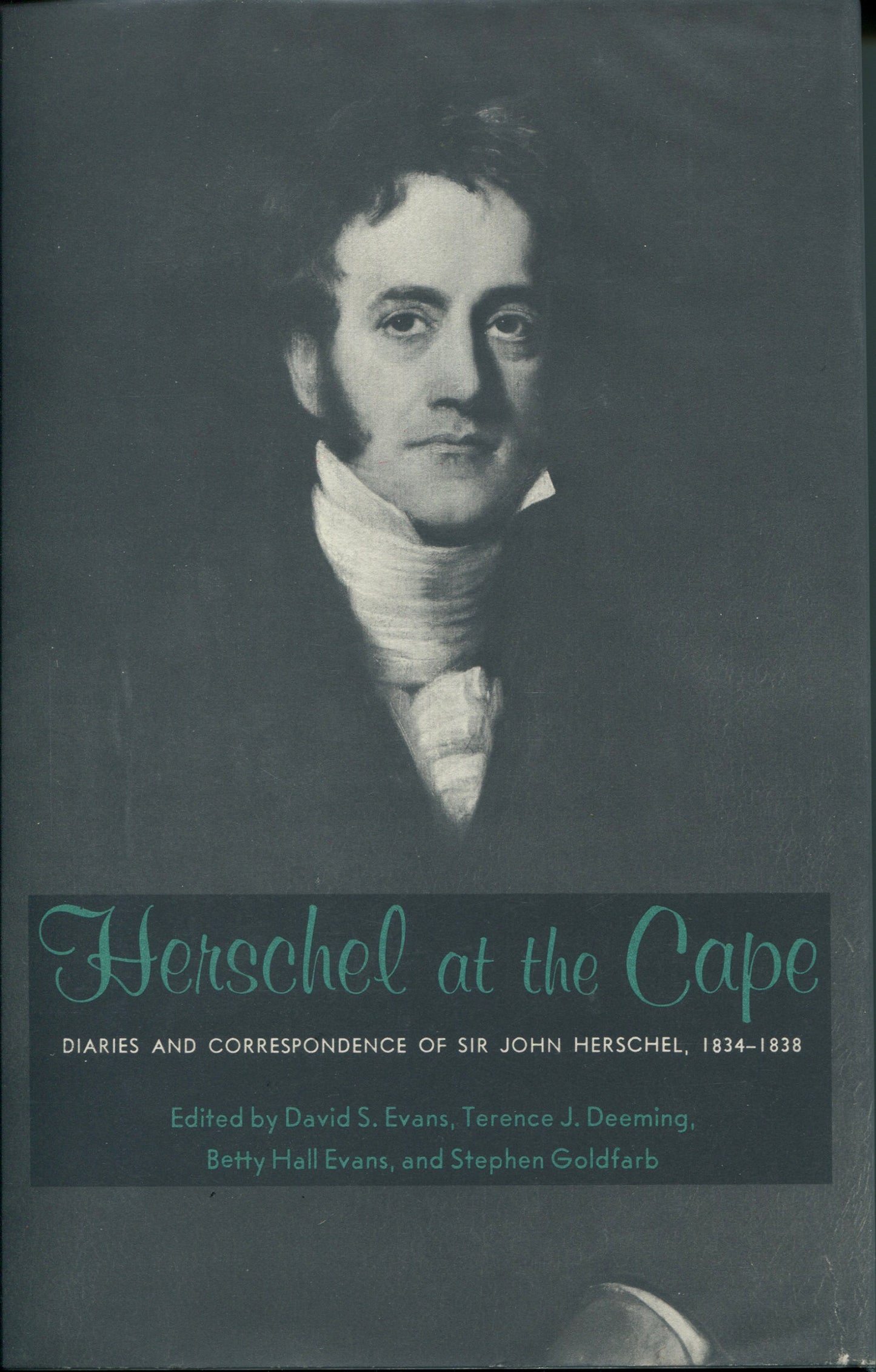
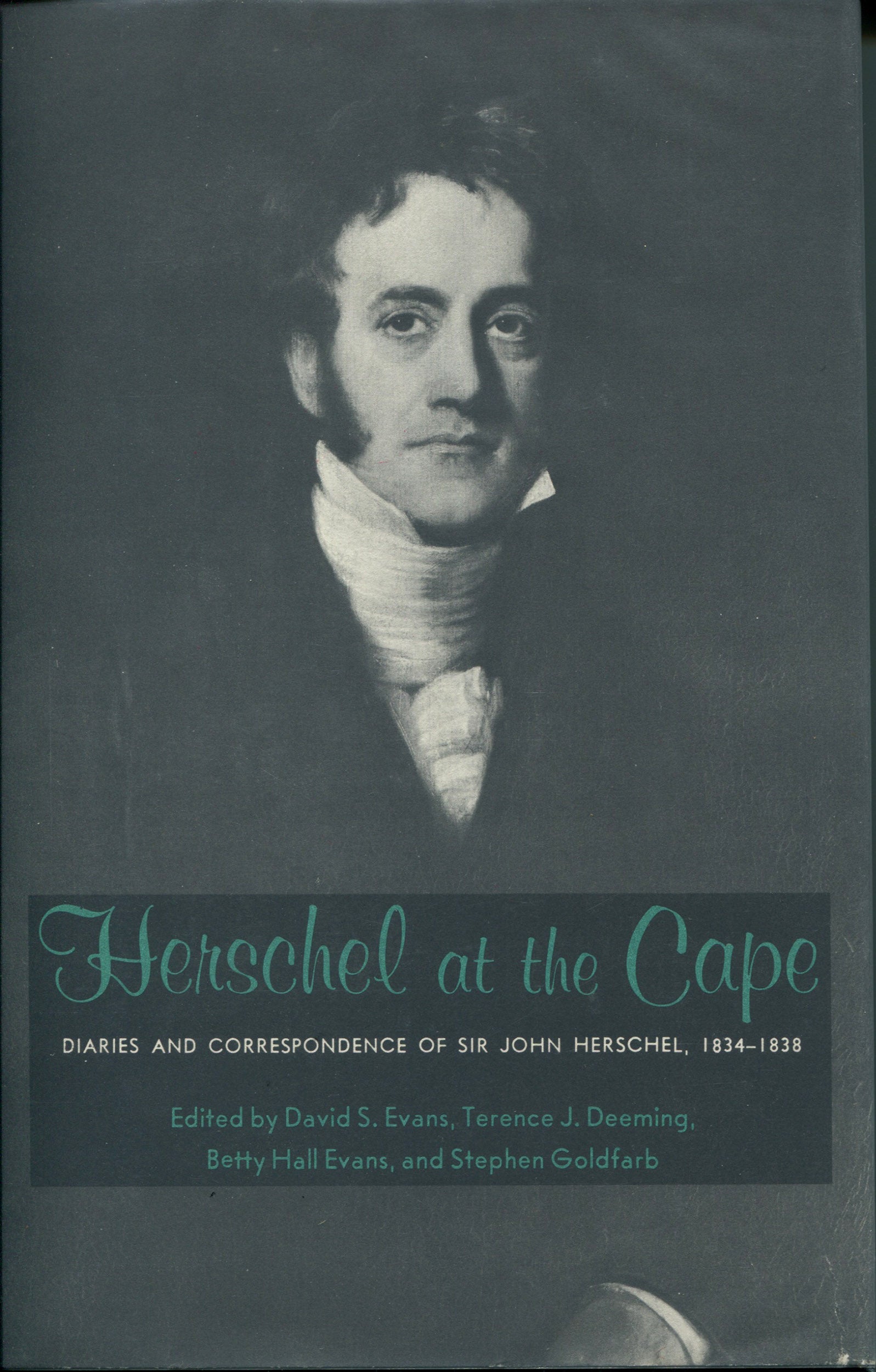
Herschel, Sir John. Herschel at the Cape. Diaries and Correspondence of Sir John Herschel, 1834–1838.
Herschel, Sir John. Herschel at the Cape. Diaries and Correspondence of Sir John Herschel, 1834–1838.
Couldn't load pickup availability
Edited by David S. Evans, Terence J. Deeming, Betty Hall Evans, and Stephen Goldfarb. University of Texas Press, 1969. Hardcover, fine with near fine protected price-clipped dust jacket. 398 pages. Two maps, twenty plates, one frontispiece and thirteen figures. Illustrations include camera lucida sketches by Herschel. Covers period 1834–1838, just before Herschel returned to England from South Africa, where he was involved in astronomy. After his return, he became involved in the early development of photography, along with William Henry Fox Talbot, whom Herschel mentions once in this diary. Among other contributions to photography, Herschel suggested the use of sodium thiosulfate as fixer, invented the cyanotype, and suggested the use of the hunting term snapshot to describe stop action photography. Summary:
Herschel at the Cape: Diaries and Correspondence of Sir John Herschel, 1834–1838 (1969), edited by David S. Evans, Terence J. Deeming, Betty Hall Evans, and Stephen Goldfarb, is a vital scholarly compilation documenting one of the most ambitious scientific expeditions of the 19th century. The book provides a day-by-day account of Sir John Herschel’s four-year residency in South Africa, where he sought to complete his father William’s survey of the heavens by mapping the stars of the Southern Hemisphere.
Core Themes and Scientific Scope
-
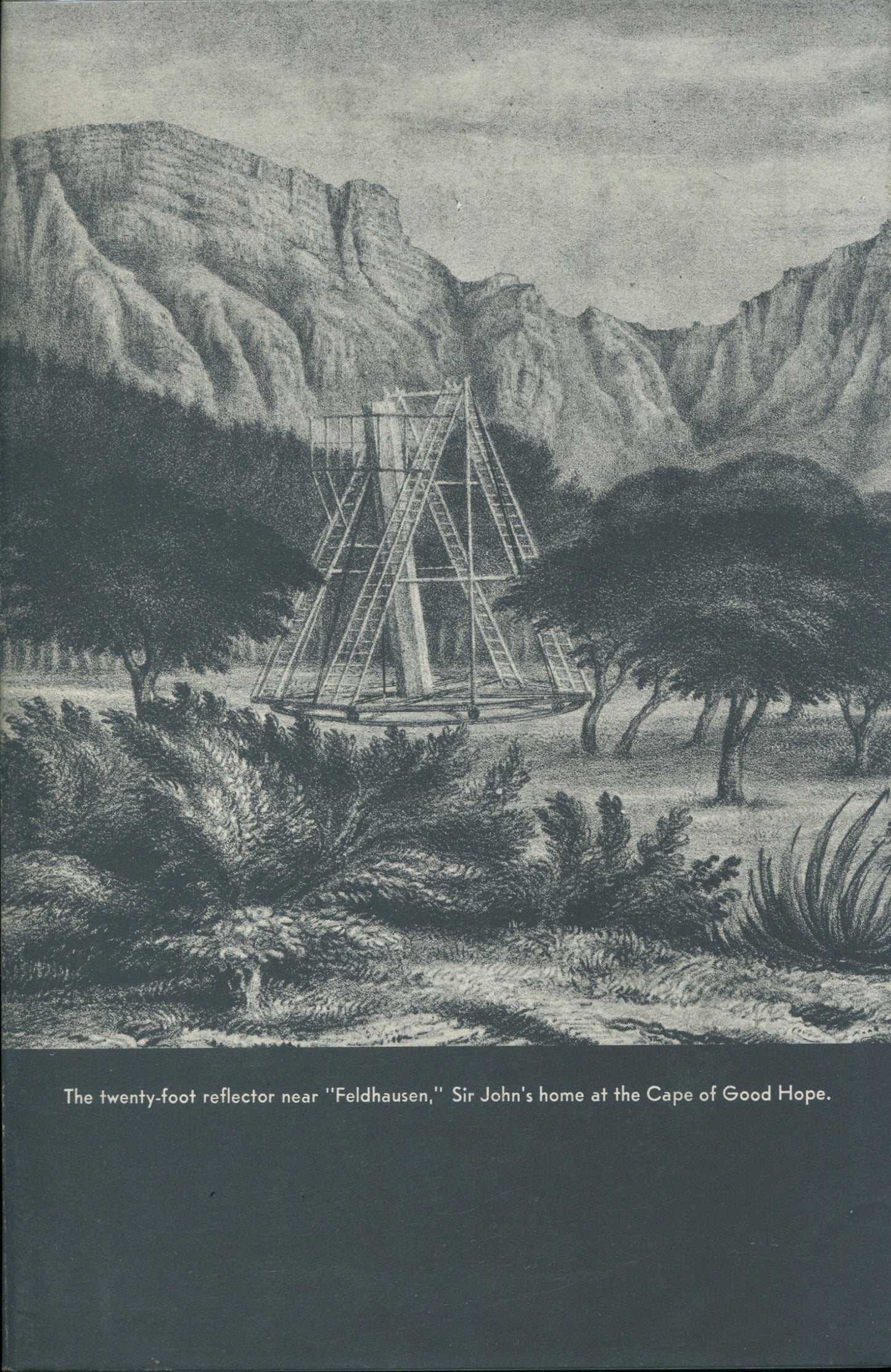
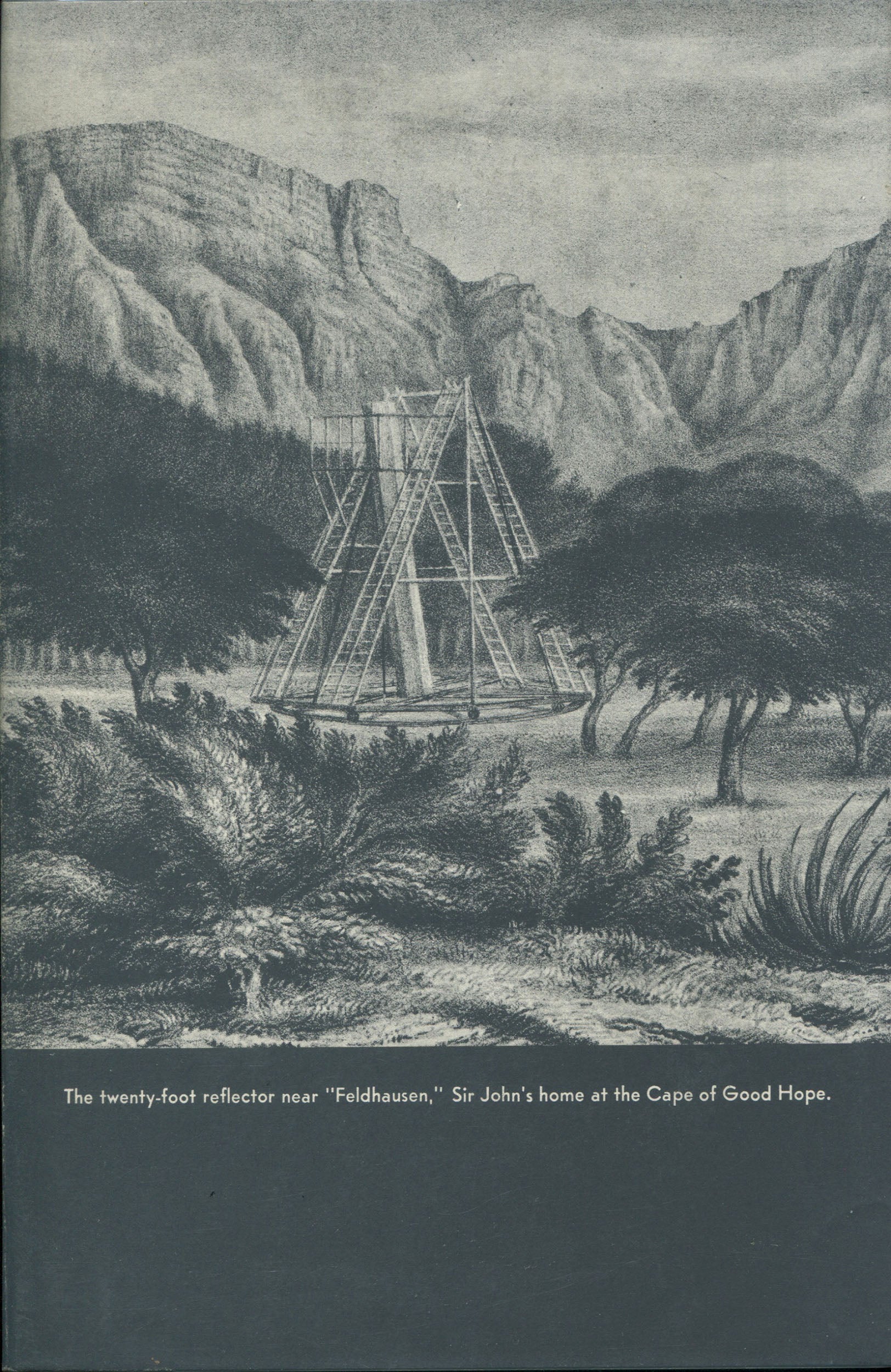
The "Grand Survey": Herschel’s primary mission was a systematic telescopic sweep of the southern skies. Using his massive 20-foot reflector telescope, he cataloged thousands of nebulae and double stars, effectively "finishing" the celestial map for the British Empire.
-
Polymathic Inquiry: The diaries reveal that Herschel was far more than an astronomer. While at the Cape, he conducted pioneering research in botany (documenting Cape flora), meteorology (devising early weather monitoring systems), and terrestrial magnetism.
-
The Invention of Photography: This period marks the "pre-dawn" of photography. Herschel was corresponding about the chemical properties of light, experiments that would soon lead to his invention of the cyanotype (blueprints) and his coining of the very terms "photography," "negative," and "positive."
Visual and Narrative Style
-
Intimate Observation: The text captures the domestic and professional life of the Herschel family at their estate, Feldhausen. It balances high-level scientific data with the mundane challenges of 1830s colonial life—from equipment failures to the social politics of the Cape.
-
The "Camera Lucida" Sketches: The volume often references Herschel's use of the Camera Lucida, a precursor to the photographic camera. He used this optical device to create incredibly precise drawings of the landscape and flora, demonstrating his obsession with "forensic" visual accuracy.
- Sir John Herschel (1792–1871) was a legendary English polymath, astronomer, mathematician, and chemist whose pioneering scientific research laid foundational chemical and conceptual groundwork for the birth of photography. The son of renowned astronomer William Herschel, he studied at St John's College, Cambridge, and made major contributions to astronomy by cataloging double stars and nebulae across both Northern and Southern hemispheres. In 1819, Herschel discovered that sodium thiosulfate ("hypo") dissolved silver halides, a discovery he generously shared in 1839 with William Henry Fox Talbot and Louis Daguerre, providing the essential "fixing" agent that rendered early photographic images permanent. Coining the terms "photography," "negative," "positive," and "snapshot," Herschel experimented extensively with photochemistry, inventing the cyanotype process (blueprints) in 1842, discovering photocyanite, and conducting groundbreaking research on color sensitivity in light-sensitive emulsions, cementing his status as one of photography’s most critical intellectual architects.