Gary Saretzky Photo Books
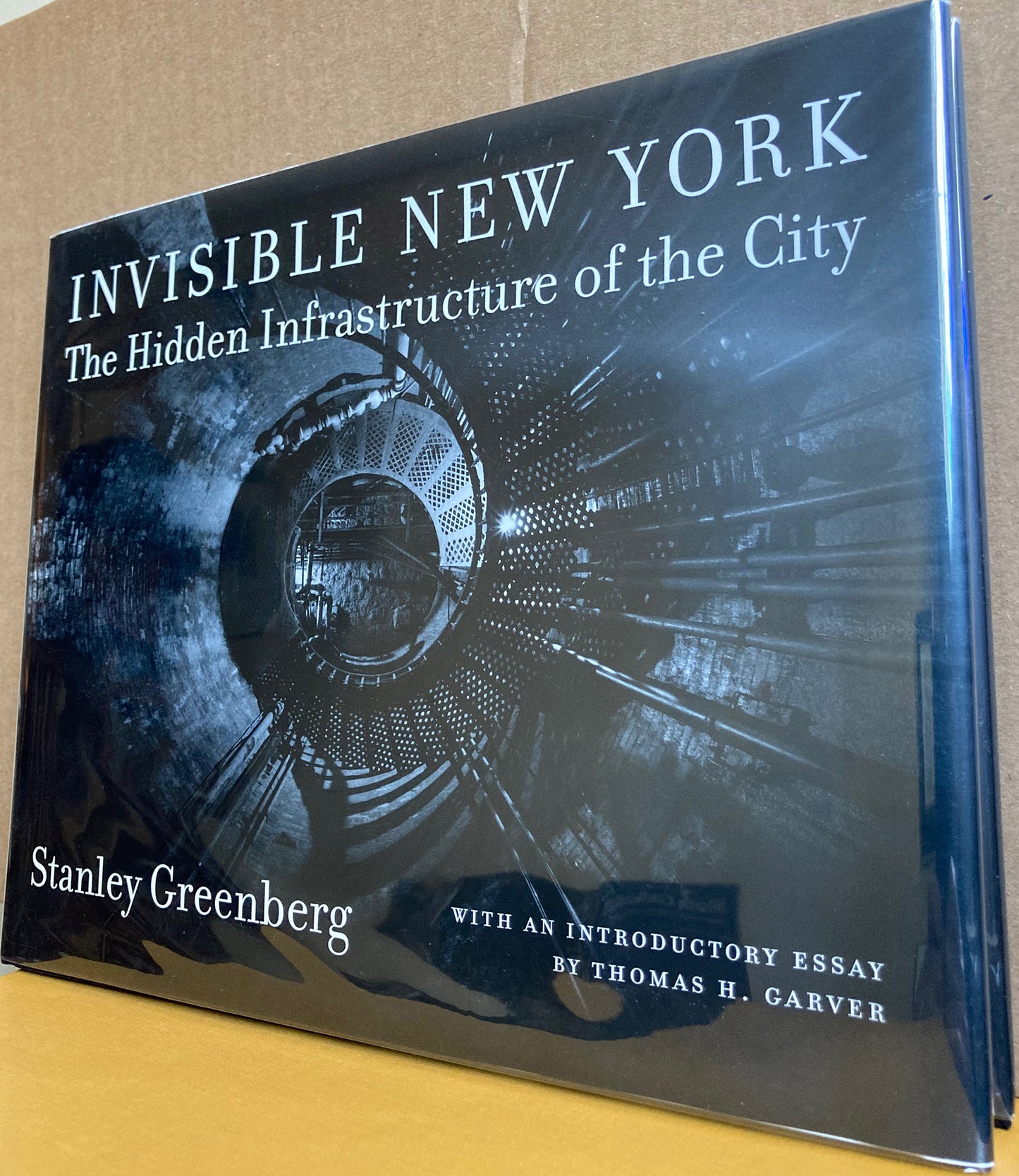
Greenberg, Stanley. Invisible New York: The Hidden Infrastructure of the City. Photographs by Stanley Greenberg.
Greenberg, Stanley. Invisible New York: The Hidden Infrastructure of the City. Photographs by Stanley Greenberg.
Couldn't load pickup availability
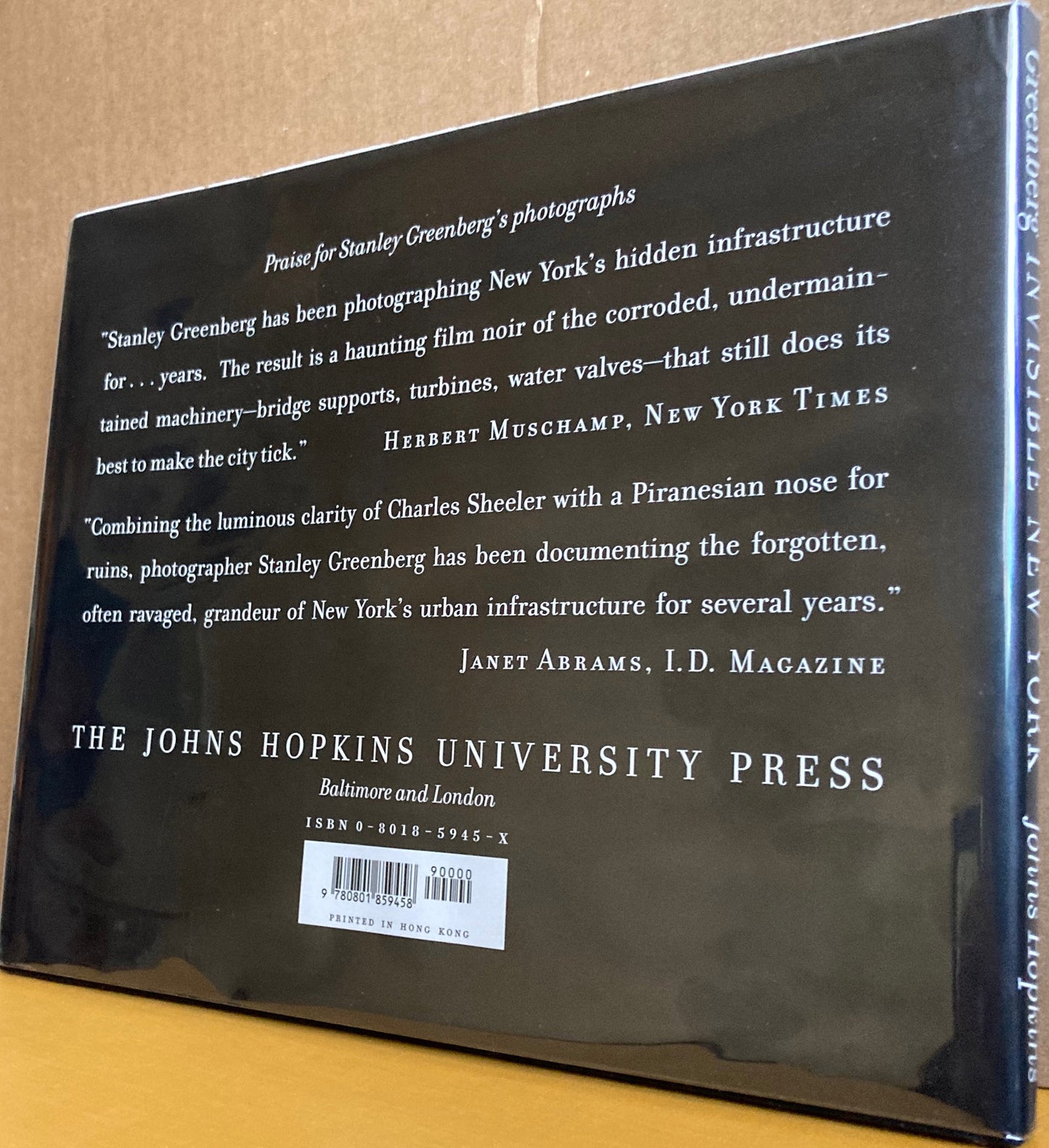
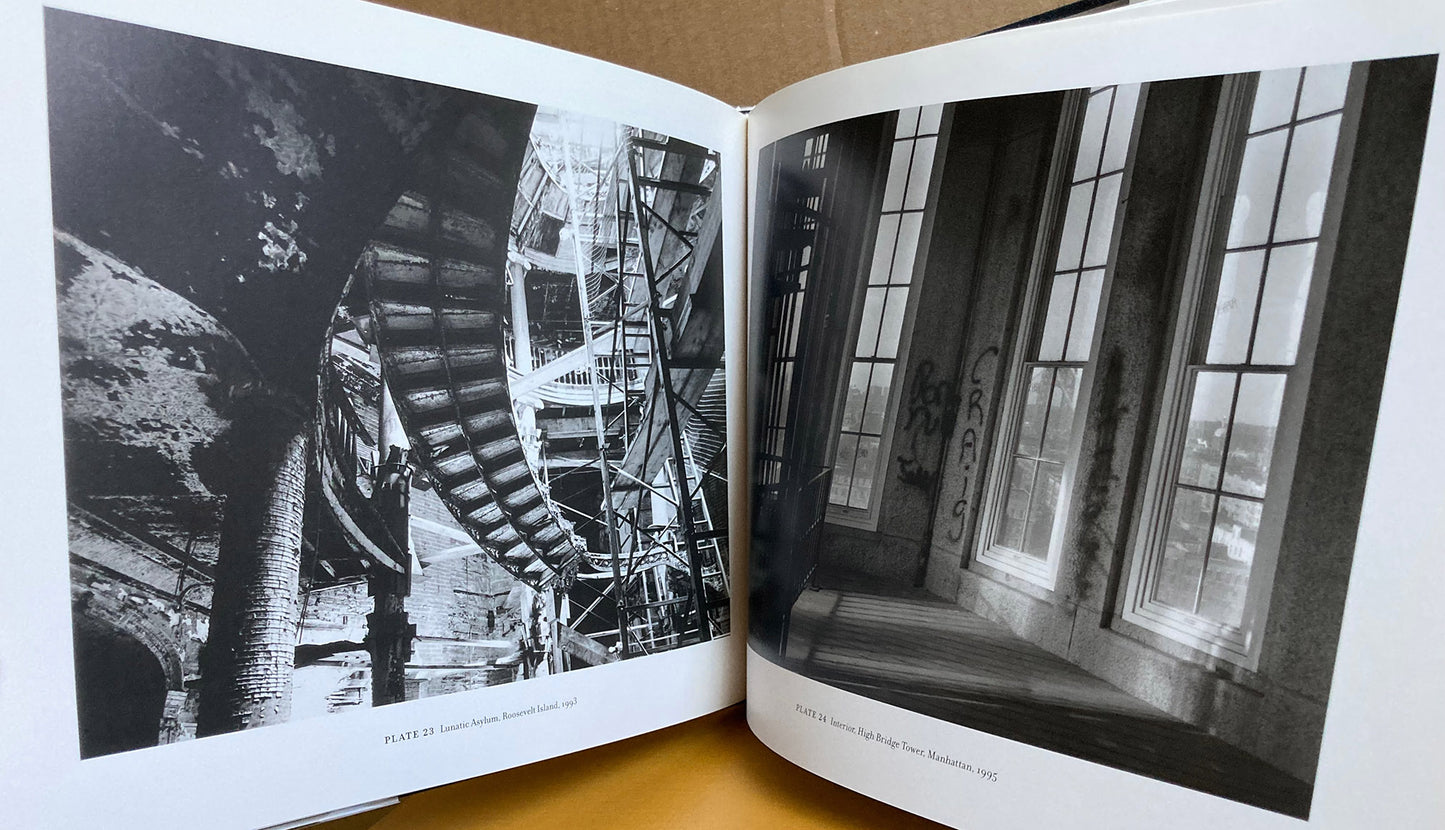
Johns Hopkins, 1998. Fine hardcover with fine protected dust jacket. First edition, second printing, SIGNED on preliminary title page. 52 full page black-and-white photographs of turbines, tunnels, bridge supports and other infrastructure subjects, some taken underground. Introduction by Thomas H. Garver. 92 pages. Uncommon SIGNED. Summary:
Invisible New York: The Hidden Infrastructure of the City by Stanley Greenberg is a photographic exploration of New York City’s unseen mechanical and structural underpinnings, revealing the essential but largely hidden places and systems that make the city function.
📷 Overview
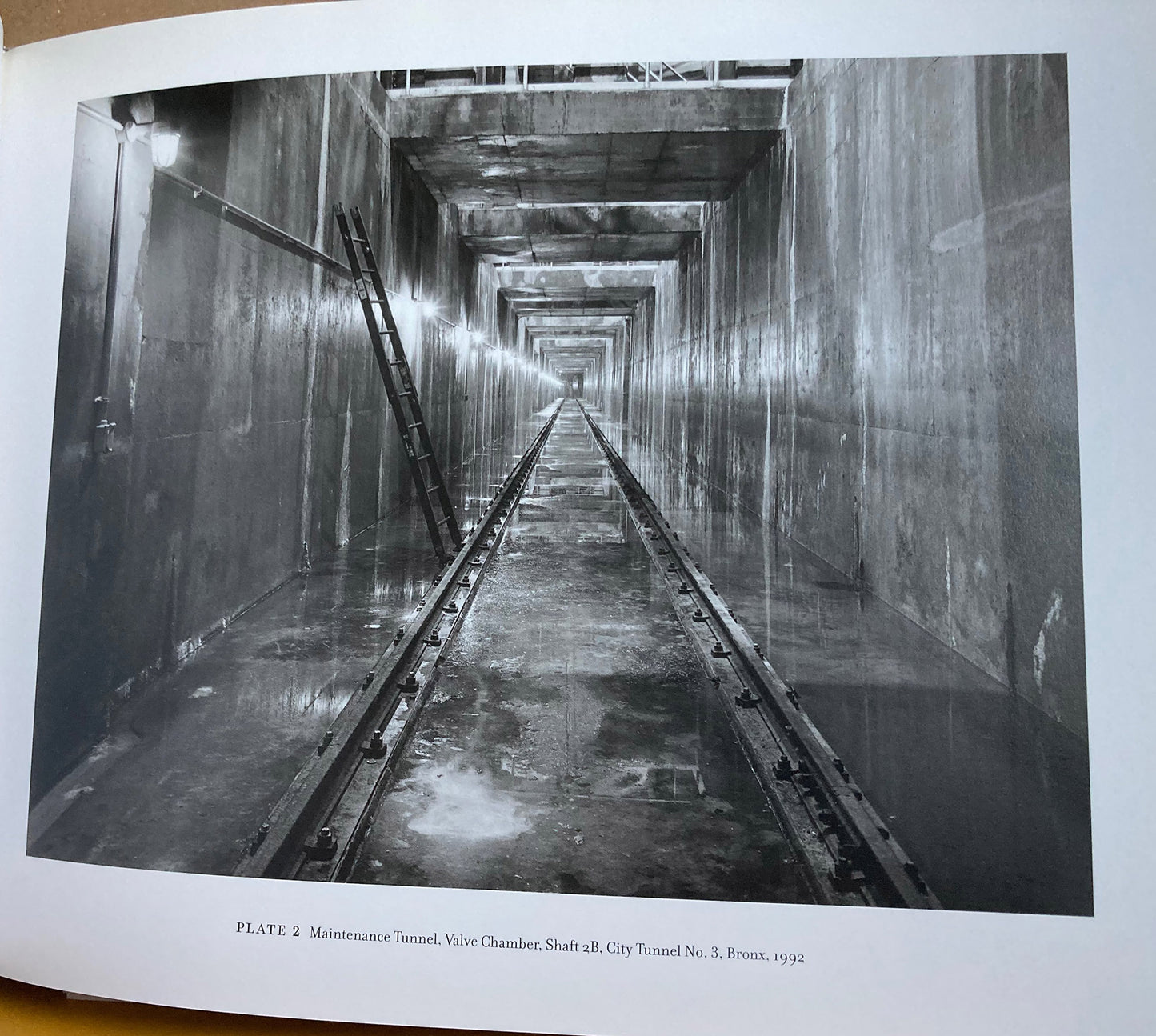
Rather than focusing on skyscrapers, streets, and popular landmarks, this book takes readers beneath the surface of everyday city life to document little-seen spaces, machinery, and architectural features that sustain the metropolis. The images are presented in large-format black-and-white photographs, captured with a view camera using only available light, creating a stark, often poetic view of these sites.
🛠️ What’s Inside
Greenberg’s photographs chronicle hidden infrastructure and industrial remnants across all five boroughs — including massive water tunnel valve chambers, bridge anchorages, power stations, rail yards, subway spaces old and new, fading termini, and sealed military facilities. Many of these places are normally inaccessible to the public or are no longer in use, making the images both a visual record and a reminder of what lies beneath everyday life in the city.
🏙️ Themes and Perspective
-
Functional beauty and decay: The photographs reveal a side of New York that is at once utilitarian and haunting — showing infrastructure that is vital yet unseen, grand yet often falling into disrepair.
-
Historical layers: Through industrial relics and hidden passages, the book illuminates historical and technological evolution within the urban landscape.
-
Urban invisibility: By focusing on what is usually overlooked — from underground tunnels to derelict structures — Greenberg’s work underscores how much of a modern city’s “guts” remains invisible to those who live above it.
🧠 Impact
The result is more than a photo book: it’s a visual commentary on infrastructure, memory, and neglect, prompting reflection on how cities work, what we value, and what we lose when we ignore the foundations of urban life.
In essence, Invisible New York offers a unique and compelling perspective on one of the world’s great cities — revealing the hidden frameworks that support it and highlighting the quiet grandeur and slow decay of the built environment that most people never see.
Stanley Greenberg (b. 1956) is an American fine-art photographer best known for his large-format black-and-white studies of hidden infrastructure, urban architecture, and scientific environments. Born in Brooklyn, New York, Greenberg studied history and political science at Stonybrook University before working for New York City municipal agencies—an experience that ignited his interest in the unseen engineering systems that sustain modern life. Gaining initial acclaim for his 1998 book Invisible New York: The Hidden Infrastructure, he spent years securing rare access to document subterranean aqueducts, abandoned subway tunnels, power stations, and industrial ruins. Greenberg expanded this exploration of complex hidden systems in subsequent monographs, including Waterworks (2003), Architecture under Construction (2010), and Telescopes (2018), which showcased the monumental scale of global astronomical observatories and particle accelerators. A recipient of a Guggenheim Fellowship and a grant from the New York Foundation for the Arts, Greenberg's quiet, geometrically precise photographs are held in major public collections, including the Metropolitan Museum of Art, the Whitney Museum of American Art, and the National Gallery of Art.