
Gary Saretzky Photo Books
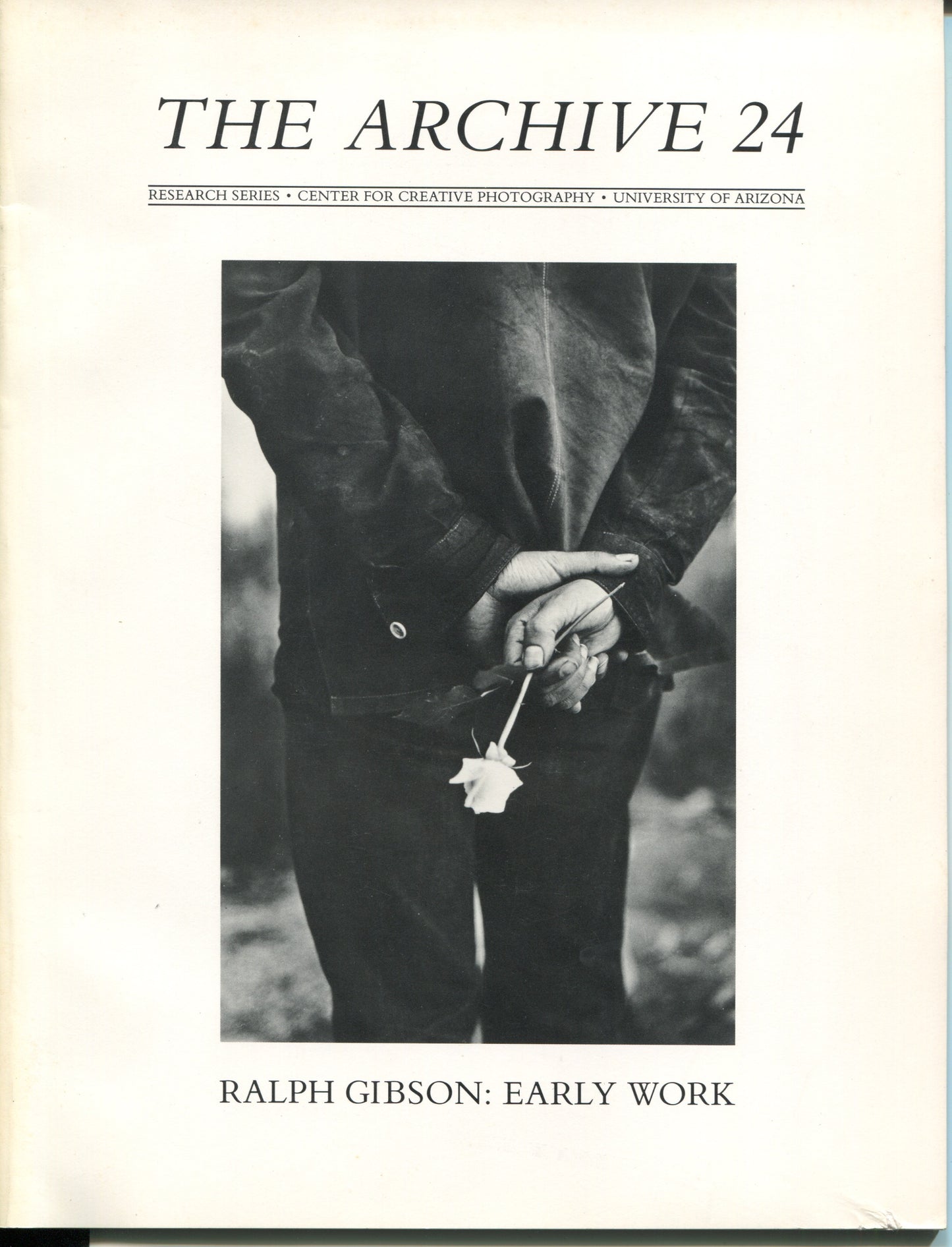
Gibson, Ralph. Ralph Gibson: Early Work. Center for Creative Photography. The Archive 24. Research Series.
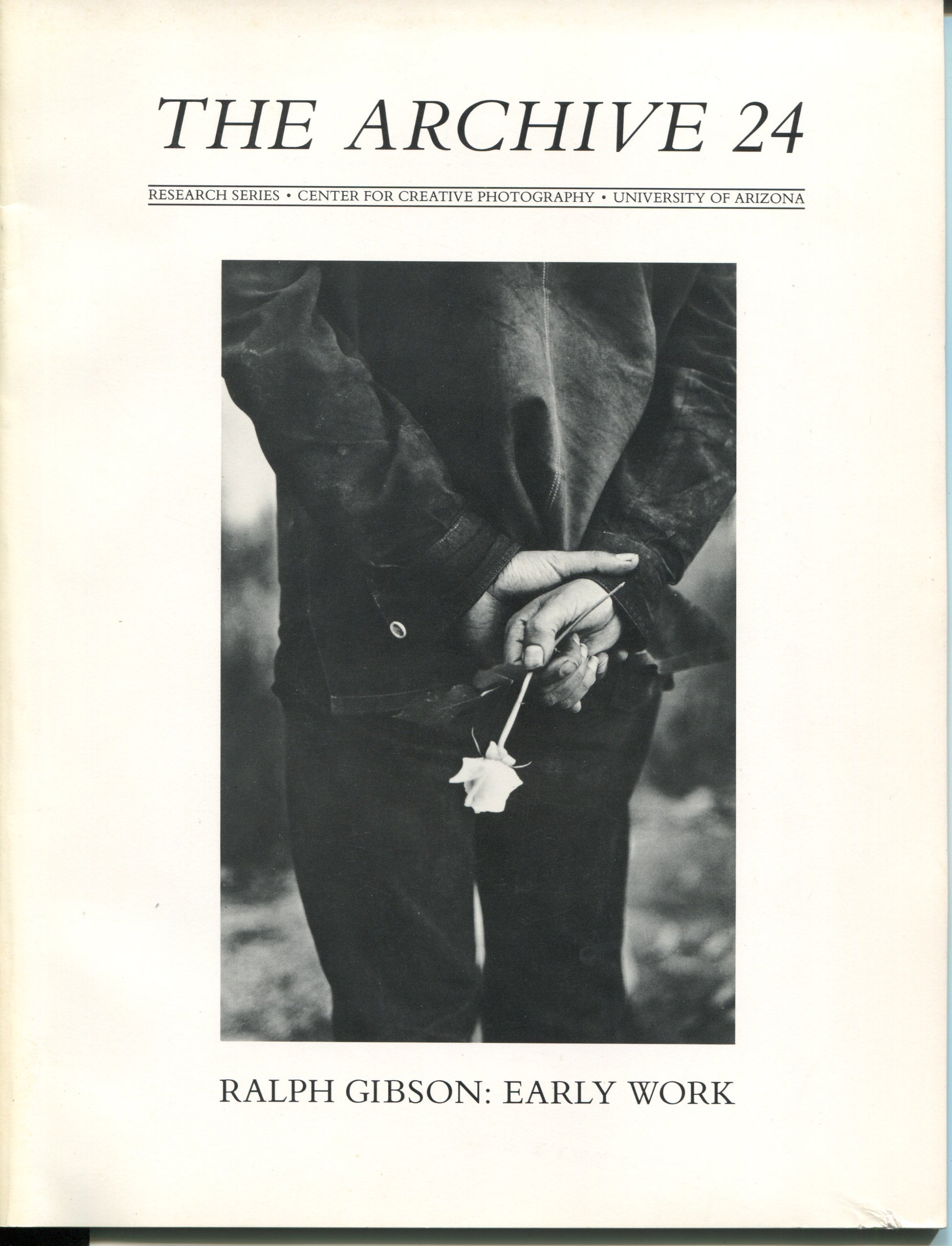
Gibson, Ralph. Ralph Gibson: Early Work. Center for Creative Photography. The Archive 24. Research Series.
Couldn't load pickup availability
University of Arizona, 1987. 54 pages, very good with small spot of wear on bottom edge of front cover, otherwise fine. 30 plates, mostly from 1960 to 1966, by Ralph Gibson with his own text. Volume also includes illustrated essay on Sid Grossman by Amy Rule, including but not limited to a fine portrait of bluesman Sonny Terry. Summary:
Ralph Gibson: Early Work (Center for Creative Photography, The Archive No. 24, Research Series) is a focused retrospective publication that surveys the formative photographs and early creative development of the influential American photographer Ralph Gibson. Issued in 1987 by the Center for Creative Photography at the University of Arizona, this 52-page monograph combines a portfolio of images with contextual texts that document the beginnings of Gibson’s artistic journey.
📸 Purpose and Content
-
Early Artistic Output: The book presents a curated selection of Gibson’s earliest photographs — many in black and white — highlighting his evolving eye and technique from his first pictures in the 1960s through the mid-1970s. These early works prefigure the distinctive visual strategies he would later refine in his more widely known monographs.
-
Portfolio and Plates: Approximately 30 photographic plates are reproduced, offering direct insight into Gibson’s initial exploration of form, composition, street subjects, and conceptual framing. These early images often reflect influences from his time in San Francisco, his documentary roots, and the nascent signs of the surreal, fragmented imagery that would characterize his later oeuvre.
-
Text and Commentary: Accompanying the photographs are critical texts (by Gibson and CCP staff such as James Enyeart and Amy Rule) that position these early works within his broader career and articulate their historical significance. Readers gain context about the photographer’s beginnings, his influences, and the stylistic choices that anticipated his later development.
📖 Why It’s Important
Ralph Gibson: Early Work serves both as an archival resource and as a window into the formative years of one of photography’s most distinctive voices. By concentrating on his early period, the book allows scholars, students, and enthusiasts to trace the origins of Gibson’s aesthetic — from documentary realism toward a more personal, associative visual language that ultimately defined his mature work. The volume plays a dual role as part of the CCP’s mission to document photographic history and as a compelling look at the early evolution of a major 20th-century photographer.
Ralph Gibson (born 1939) is an acclaimed American photographer, publisher, and book artist celebrated for his surreal, minimalist aesthetic and high-contrast black-and-white imagery. Born in Los Angeles, California, he studied photography while serving in the U.S. Navy before refining his technical and artistic skills at the San Francisco Art Institute and as an assistant to legendary photographers Dorothea Lange and Robert Frank in the 1960s. Moving to New York City in 1967, Gibson embraced a formalist style characterized by tight cropping, deep shadows, dreamlike eroticism, and enigmatic fragments of everyday objects and the human form. Frustrated by traditional publishing constraints, he founded Lustrum Press in 1969, debuting with his landmark trilogy of photobooks—The Somnambulist (1970), Deja-Vu (1973), and Days at Sea (1974)—which revolutionized the photobook as an autonomous artistic medium. Honored as a Commandeur de l'Ordre des Arts et des Lettres in France and awarded a Guggenheim Fellowship, Gibson has published over 40 monographs and remains a major force in defining modern photographic surrealism and visual narrative structure.