Gary Saretzky Photo Books
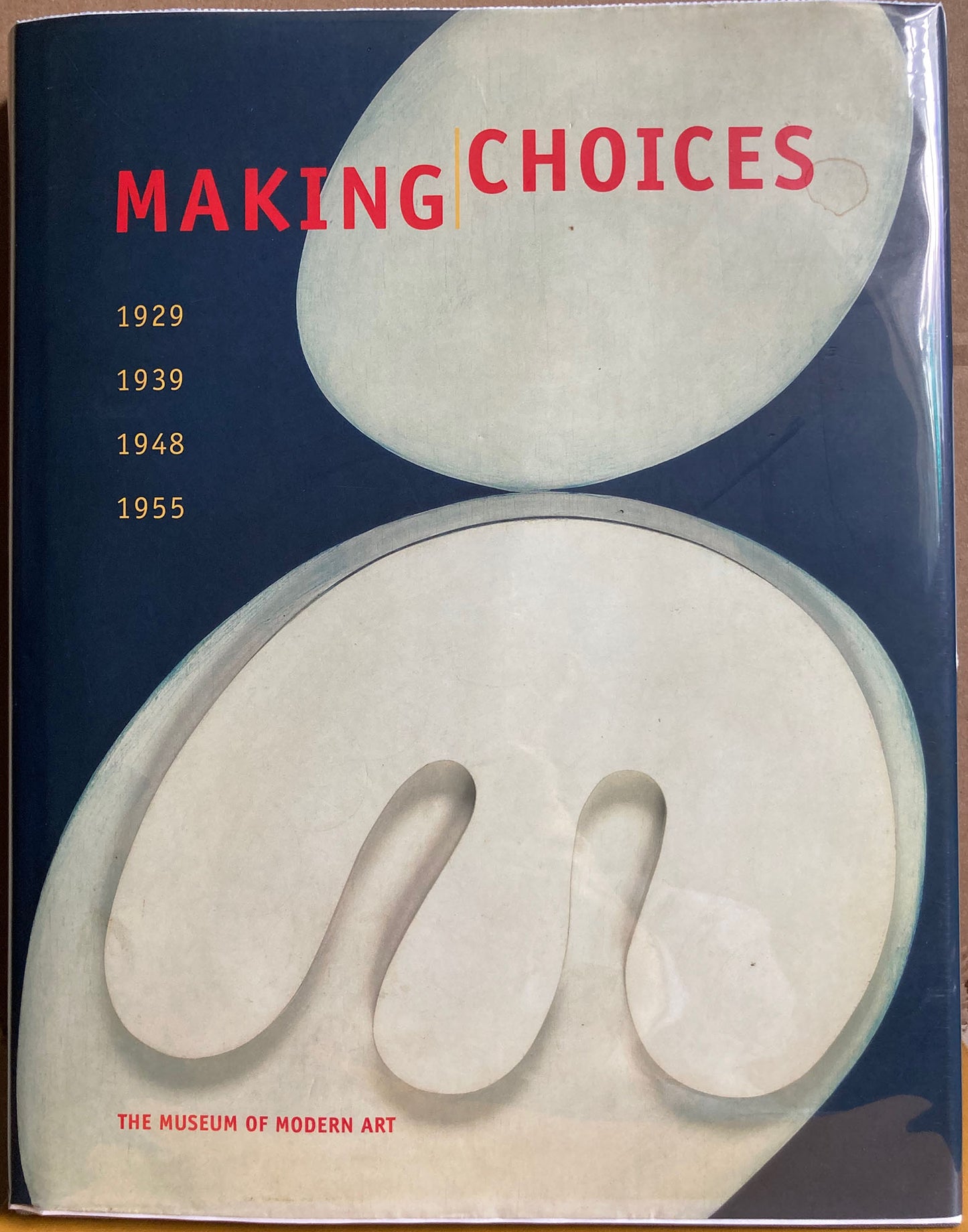
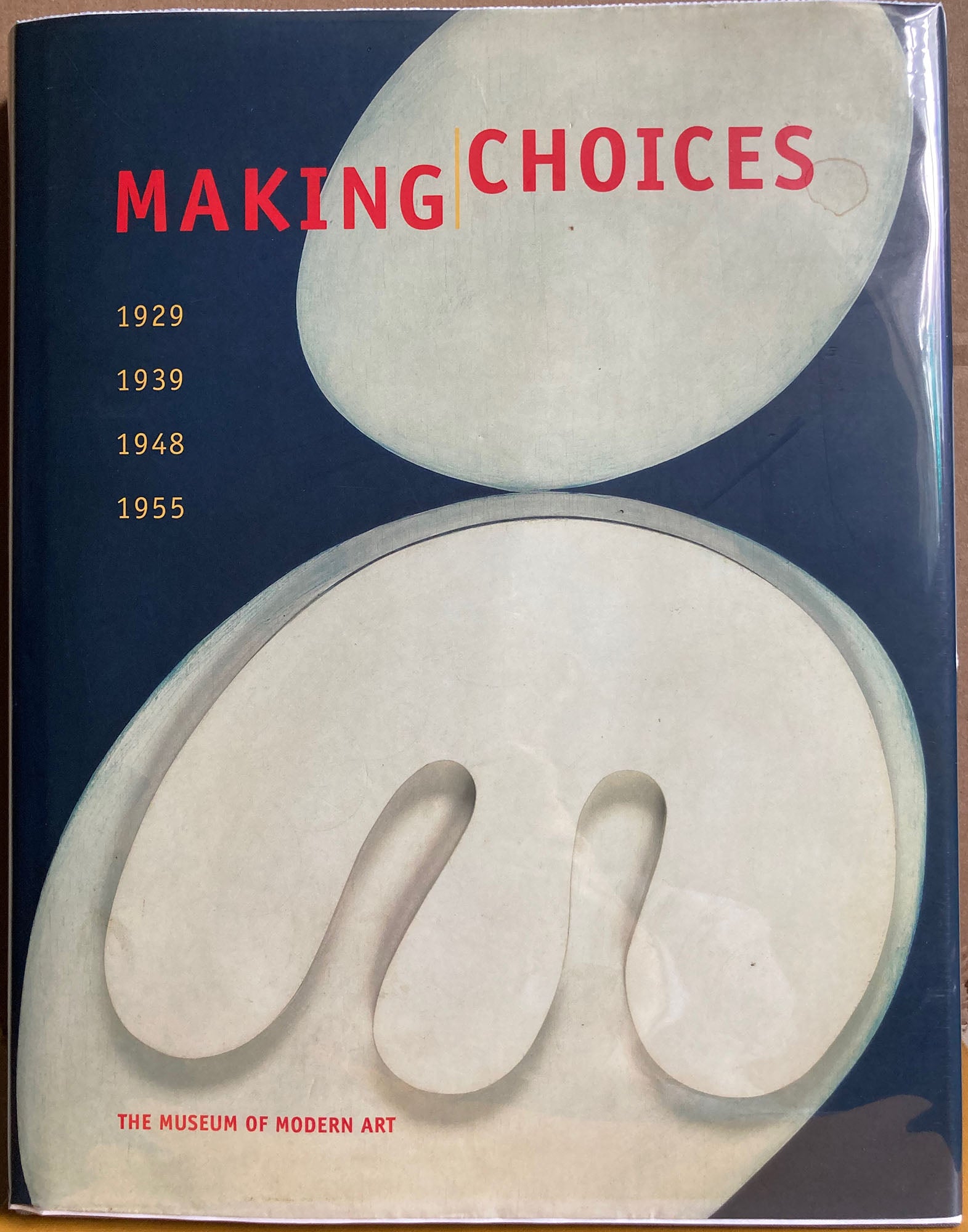
Exhibition. Making Choices: 1929, 1939, 1948, 1955 by Peter Galassi, Robert Storr and Anne Umland.
Exhibition. Making Choices: 1929, 1939, 1948, 1955 by Peter Galassi, Robert Storr and Anne Umland.
Couldn't load pickup availability
Museum of Modern Art/Abrams, 2000. Hardcover, fine in gray cloth with near fine protected dust jacket that has a small spot next to the S in the title, otherwise like new. Presents a range of art, including photography, in each of the four years. Published to coincide with a cycle of 24 exhibitions at the Museum of Modern Art, New York. Photographers include Edward Weston; Man Ray; Walker Evans; Aleksandr Rodchenko; El Lissitsky; August Sander; Laszlo Moholy-Nagy; Josef Albers; Maurice Tabard; Roger Parry; Florence Henri; Erich Salomon; Martin Munkacsi; Tina Modotti; Berenice Abbott; Manuel Alvarez Bravo; Horst P. Horst; Weegee; Dorothea Lange; Bill Brandt; John Vachon; Helen Levitt; Wright Morris; Charles Sheeler; Ralph Steiner; Eugen Wiskovsky; Harold E. Edgerton; Irving Penn; George Platt Lynes; Louis Faurer; George Tames; Harry Callahan; Gordon Parks; W. Eugene Smith; Robert Frank; Philippe Halsman; Edouard Boubat; Ted Croner; Ansel Adams; Garry Winogrand; Minor White; Bill Brandt; Dan Weiner; Ikko; Richard Avedon; Aaron Siskind; Frederick Sommer; William Klein; Robert Doisneau; O. Winston Link; Brassai; Robert Frank, et al. 348 pages. Large, heavy book, requires more than the usual shipping. Summary:
Making Choices: 1929, 1939, 1948, 1955 (2000) is a massive, multi-disciplinary exhibition catalog published by the Museum of Modern Art (MoMA). Edited by Peter Galassi, Robert Storr, and Anne Umland, the book serves as a "staged history" of modernism, focusing on four pivotal years that acted as crossroads for the 20th century’s artistic, political, and social trajectories.
Core Themes and Structural Logic
-
Four Turning Points: The book is organized around four specific years, each representing a unique "climate of choice":
-
1929: The peak of the avant-garde before the Great Depression.
-
1939: The eve of World War II and the tension between art and propaganda.
-
1948: The post-war struggle to find a new language (the birth of Abstract Expressionism).
-
1955: The rise of consumer culture and the "Family of Man" era.
-
-
The Rejection of "Lineage": Rather than showing art as a straight line of progress, the authors present it as a series of competing options. It highlights how artists like Picasso, Walker Evans, and Pollock were making radical choices in response to a world in upheaval.
-
Photography as a Catalyst: As the Curator of Photography at MoMA, Peter Galassi ensures that the camera is central to this narrative, showing how photographic "truth" competed with and informed painting and sculpture.
Visual and Curatorial Style
-
Juxtaposition: The book is famous for its "dialogues" between different mediums. A sleek, industrial design might be placed next to a surrealist painting to show how the "modern" aesthetic was being defined simultaneously in the factory and the studio.
-
The "MoMA Style": The catalog uses high-fidelity reproductions to document not just the art, but the philosophical framework that MoMA used to define "Modernity" for the American public.