Gary Saretzky Photo Books
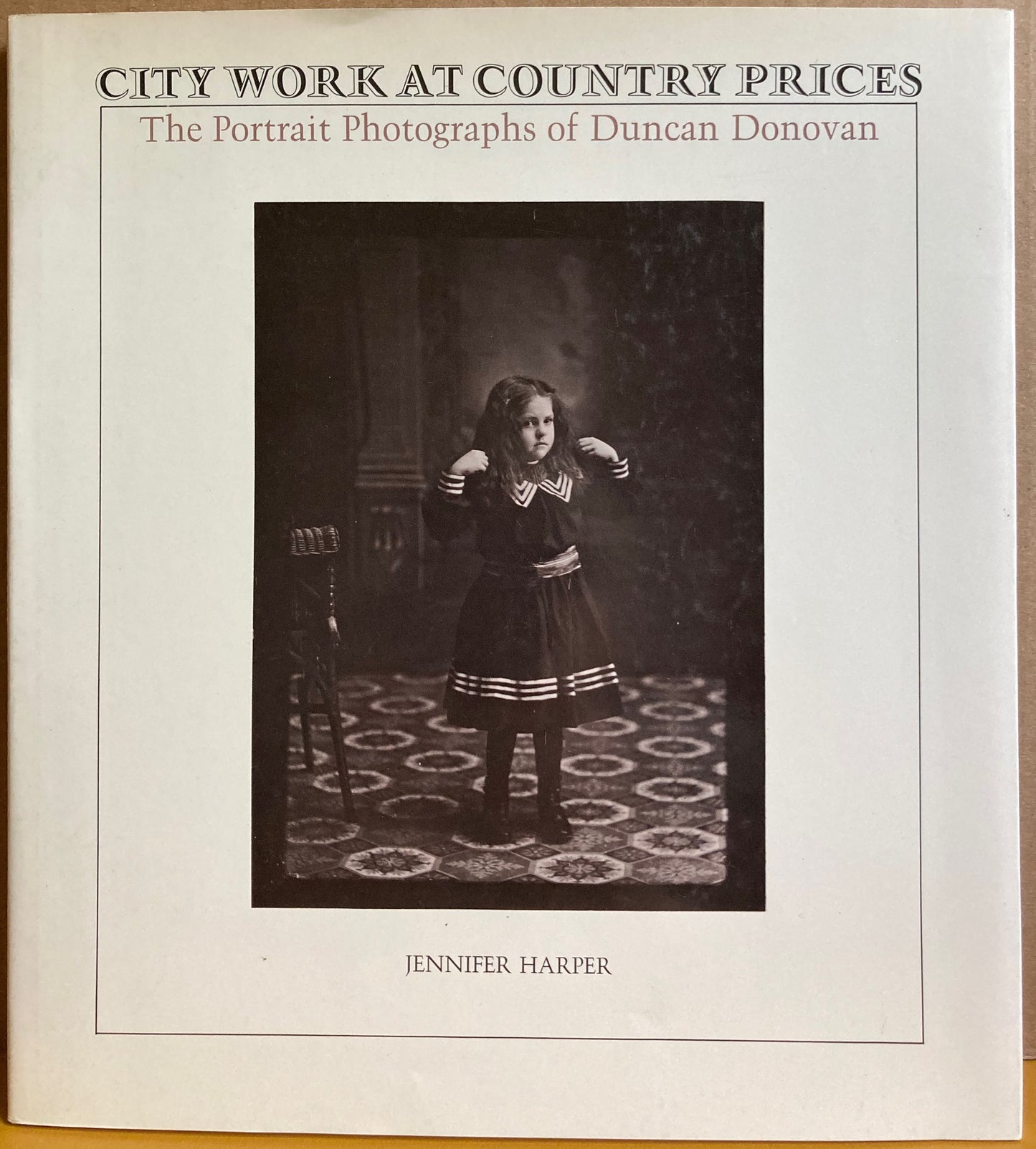
Donovan, Duncan. City Work at Country Prices. The Portrait Photographs of Duncan Donovan by Jennifer Harper.
Donovan, Duncan. City Work at Country Prices. The Portrait Photographs of Duncan Donovan by Jennifer Harper.
Couldn't load pickup availability
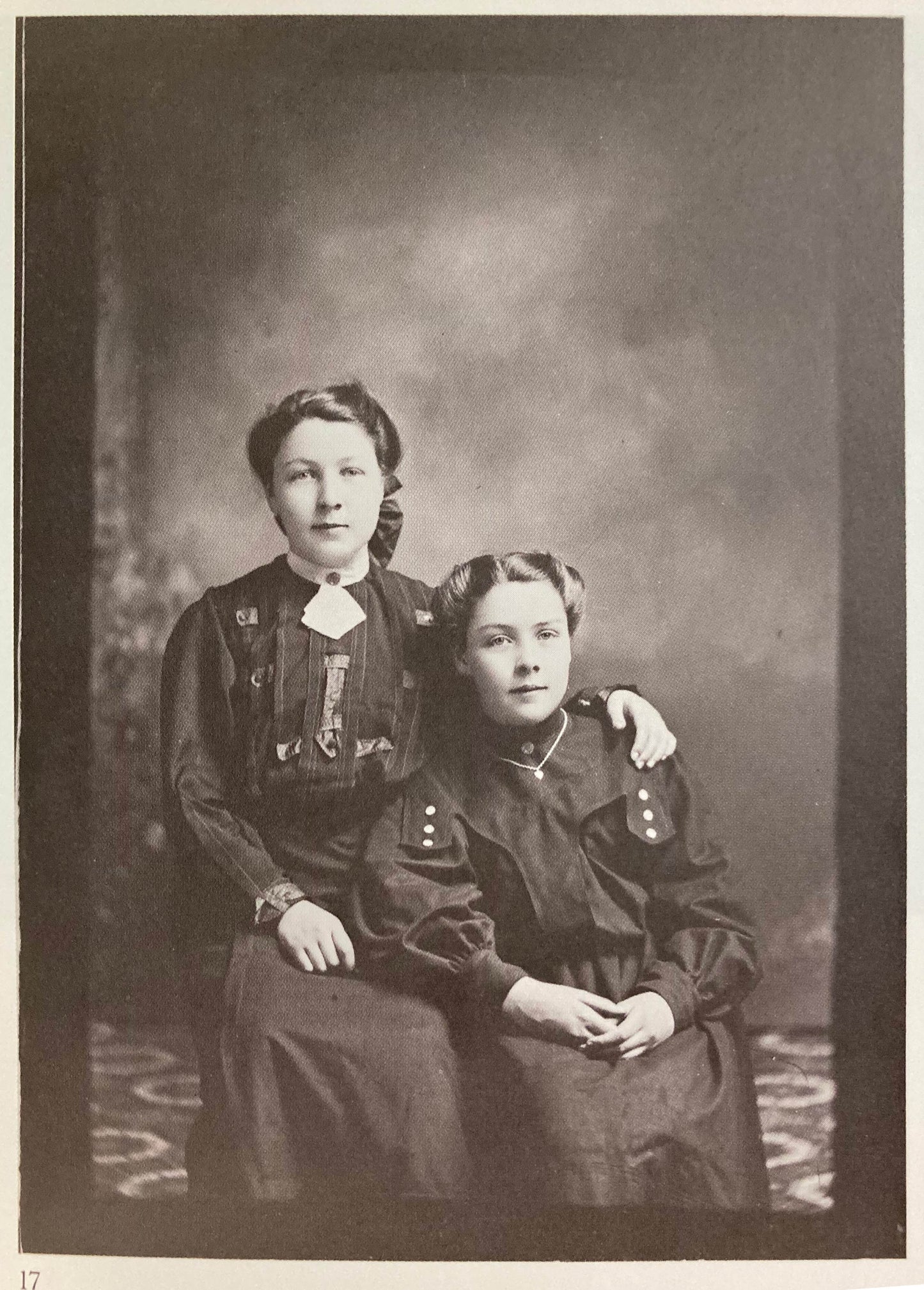
Addison House, 1977. Wraps with dust jacket, fine/near fine. 64 pages. Duncan Donovan (1857–1933) was a portrait and outdoor photographer from the 1890s to 1924 in Alexandria, Glengarry County, Ontario, Canada. The appealing portraits in this book are arranged by age, from childhood to old age and closing with some postmortem images, reproduced from his glass plate negatives at the Archives of Ontario and the Glengarry Historical Society. Summary:
City Work at Country Prices: The Portrait Photographs of Duncan Donovan (1993), by Jennifer Harper, is a meticulously researched tribute to a prolific but once-forgotten itinerant photographer. The book serves as both a biography of Duncan Donovan (1857–1933) and a vital social history of the rural communities surrounding Alexandria and the Glengarry district of Ontario at the turn of the century.
Core Themes and Content
-
The Traveling Studio: The title, City Work at Country Prices, was Donovan’s actual marketing slogan. It promised his rural clients the same sophisticated "Extra Finish" and high-end aesthetics found in the prestigious studios of Montreal or Toronto, but at a price point accessible to farmers and laborers.
-
A Community Ledger: Between 1895 and 1925, Donovan captured thousands of glass-plate negatives. Harper curates these to show the "everyman" of Ontario—families in their Sunday best, laborers in their work clothes, and the rare, intimate moments of rural domestic life.
-
The Transition of an Era: Donovan’s career spanned the shift from the horse-and-buggy era to the dawn of the automobile. His photos document the arrival of modern machinery into the static, pastoral landscape of the 19th century.
Visual and Technical Significance
-
The Glass-Plate Legacy: Harper emphasizes the technical clarity of Donovan’s original 5x7 and 8x10 glass negatives. Despite working in improvised studios—often using blankets as backdrops in barn doorways—Donovan achieved a tonal richness and sharp detail that rivaled his urban contemporaries.
-
Unvarnished Portraiture: Donovan’s subjects often possess a startling, direct gaze. There is a "raw finish" to his work that captures the grit and character of the Canadian pioneer spirit.
- Duncan Donovan (1857–1933) was a Canadian commercial and portrait photographer based in Alexandria, Glengarry County, Ontario, whose extensive body of work captured the social fabric and transition to modernity of rural Eastern Ontario. Starting his career as an itinerant tintype photographer traveling between local fairs and public events in the late 19th century, Donovan established a permanent studio in Alexandria in the late 1890s that he operated for over four decades. Chronicling ceremonial and everyday life from birth to death for local Scottish and French families, his studio portraits were noted for their striking immediacy, vivid composition, and technical proficiency with glass-plate negatives. Following his retirement in 1924, thousands of his original glass plates were preserved, leading to a major revival of his work in the late 1970s through exhibitions at the Art Gallery of Ontario and the 1977 Oxford University Press monograph City Work at Country Prices: The Portrait Photographs of Duncan Donovan.