Gary Saretzky Photo Books
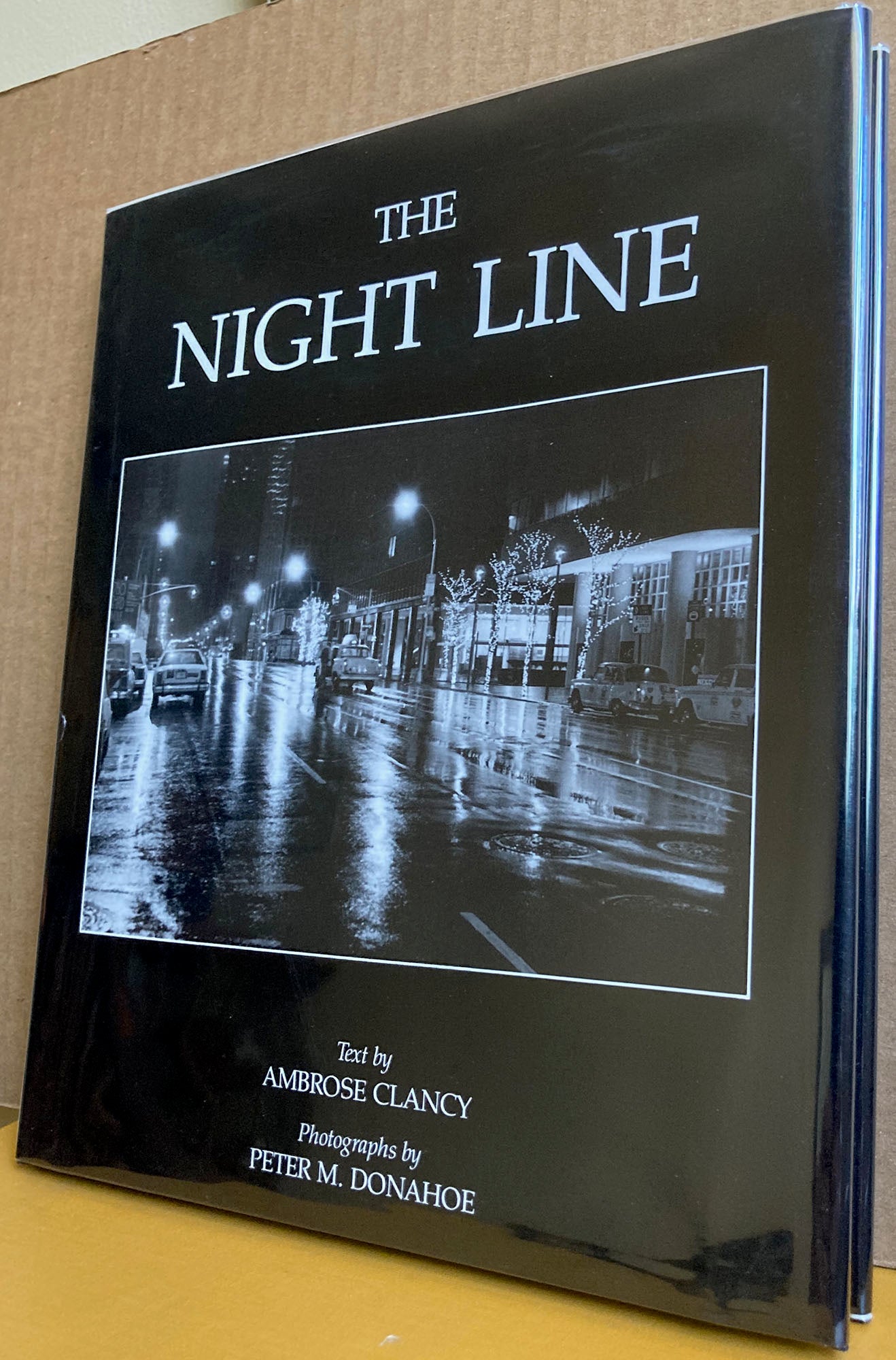
Donoghue, Peter M. The Night Line: A Memoir of Work by Ambrose Clancy.
Donoghue, Peter M. The Night Line: A Memoir of Work by Ambrose Clancy.
Couldn't load pickup availability
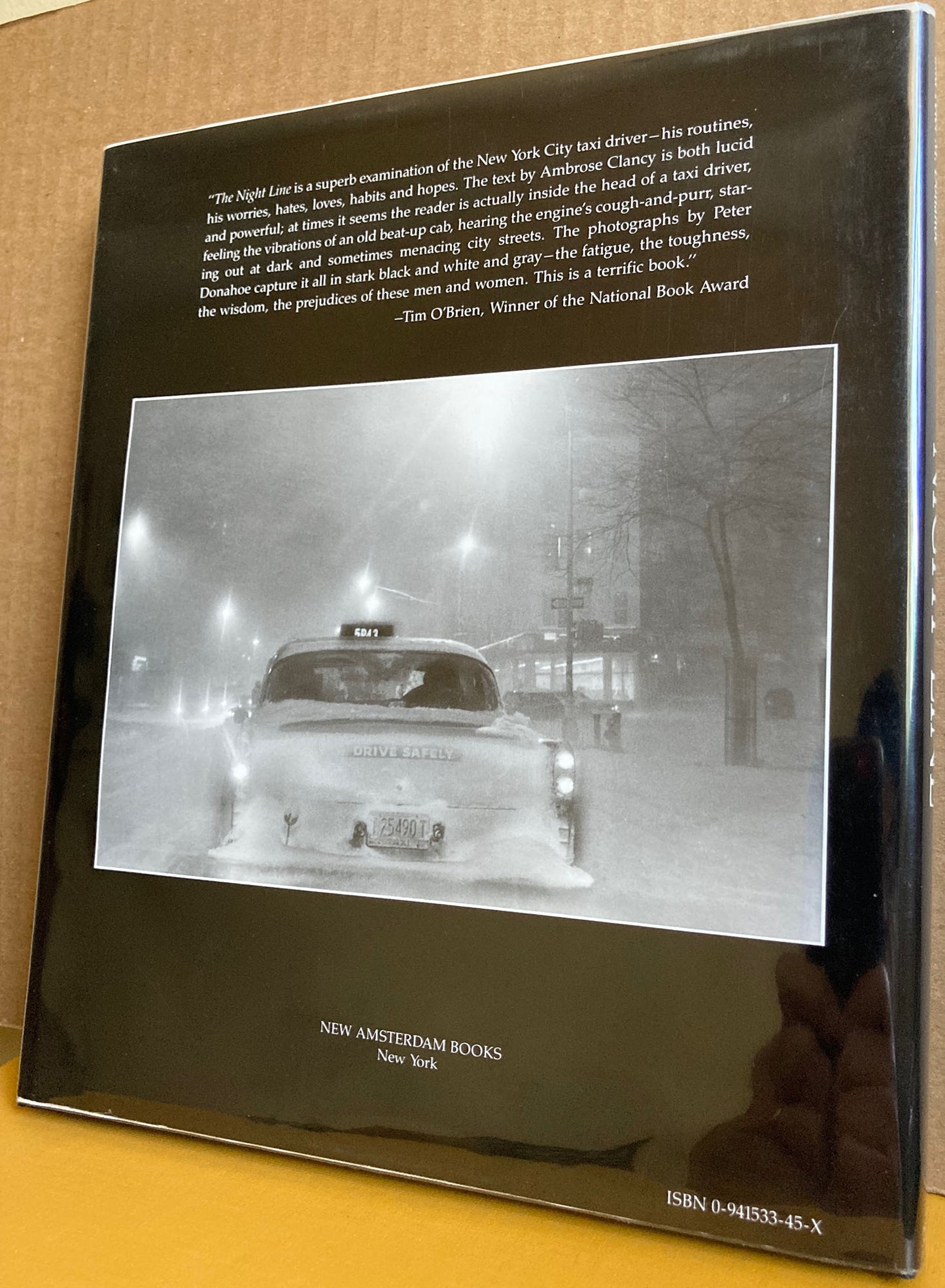
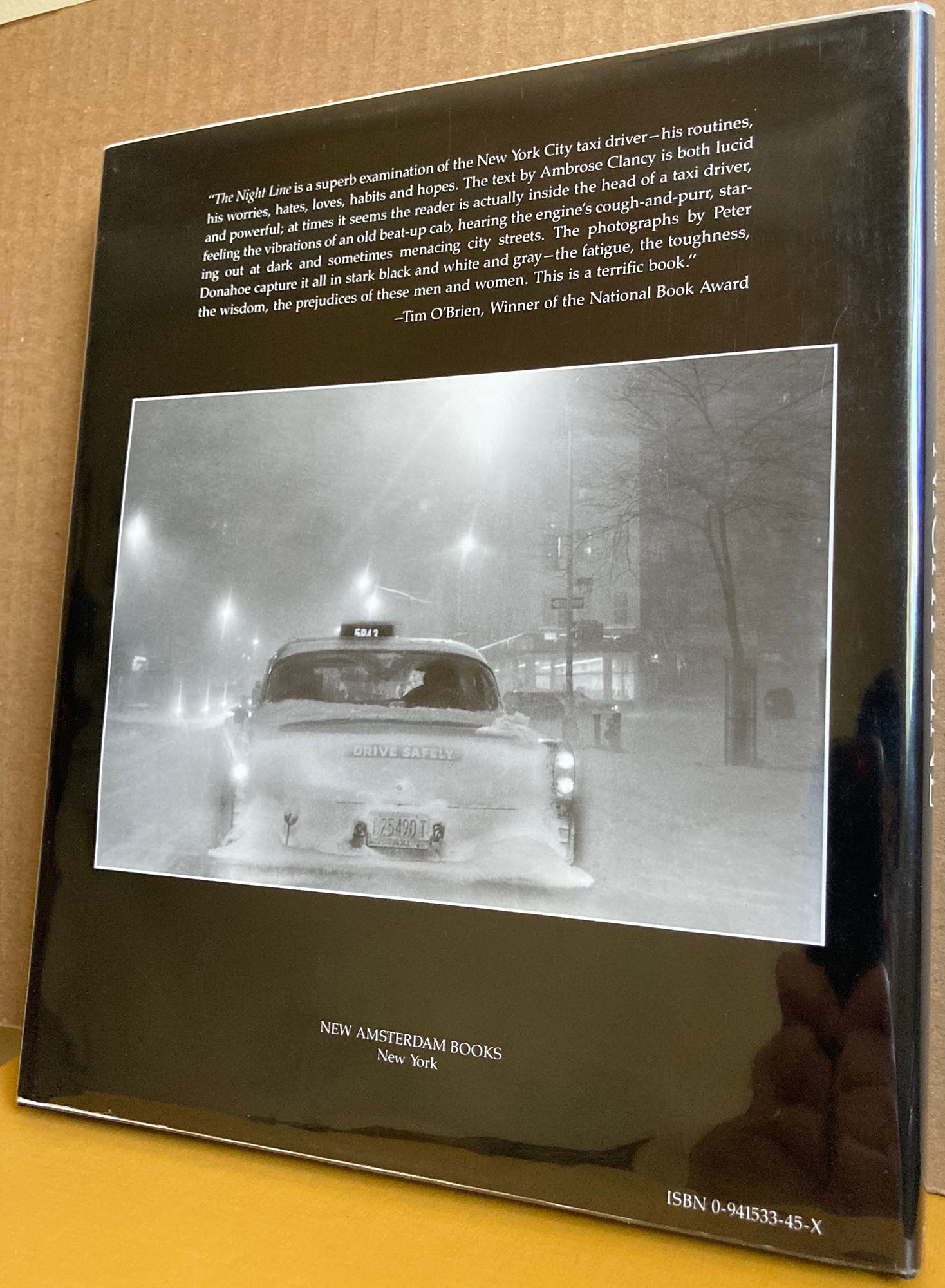
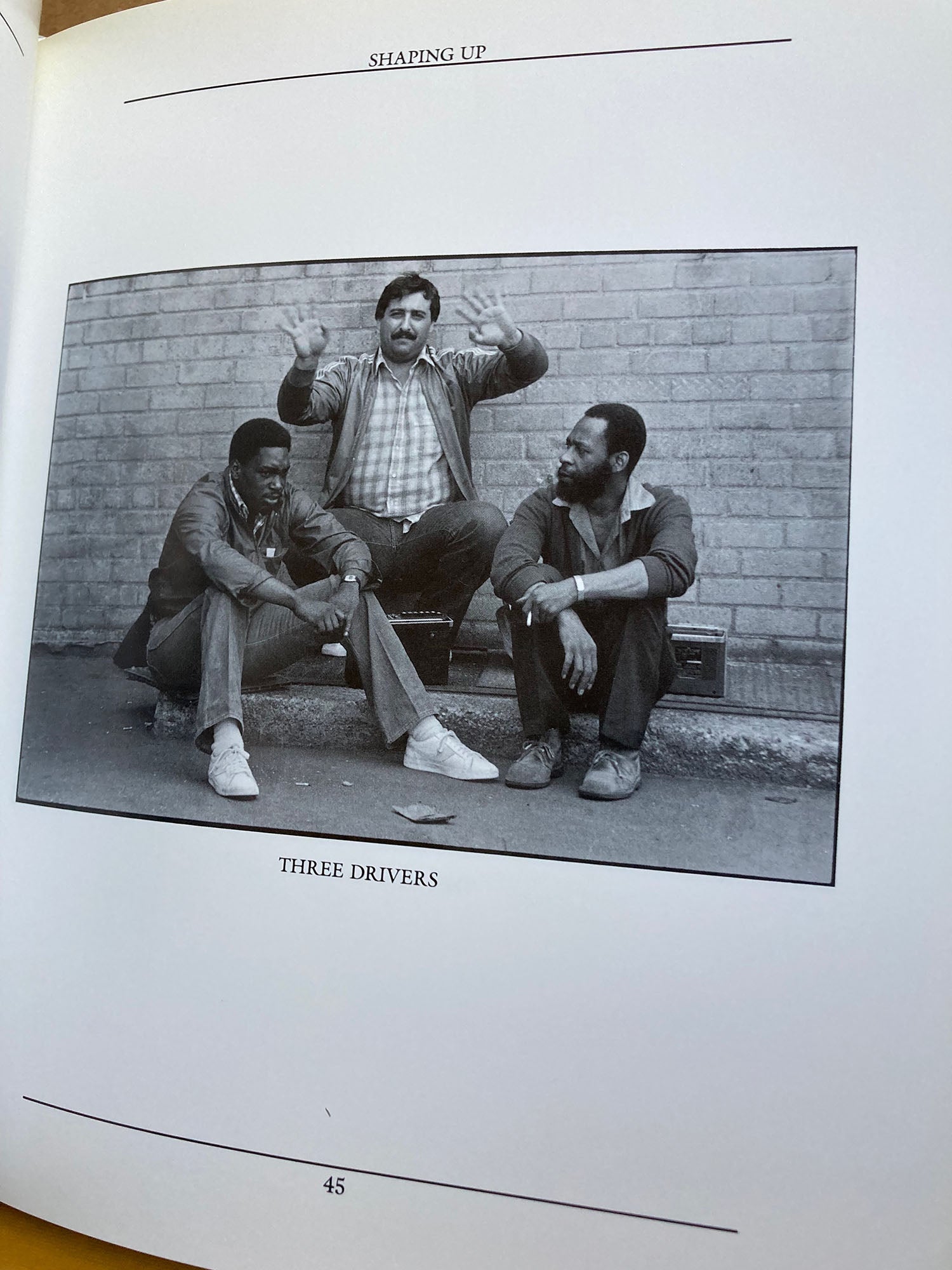
Photographs by Peter M. Donahue. New Amsterdam Books, 1990. Hardcover with protected dust jacket. One small ding on front of protected dust jacket near spine, otherwise fine/fine. Story of one night's work. Both author and photographer were professional cab drivers. Photos were exhibited at the City Museum of New York. 127 pages. Summary:
The Night Line: A Memoir of Work (1990) is a collaborative chronicle by writer Ambrose Clancy and photographer Peter M. Donahoe that provides a gritty, unvarnished look at the world of night-shift taxi driving in New York City.
Core Themes and Content
The memoir is divided into two distinct but complementary halves:
-
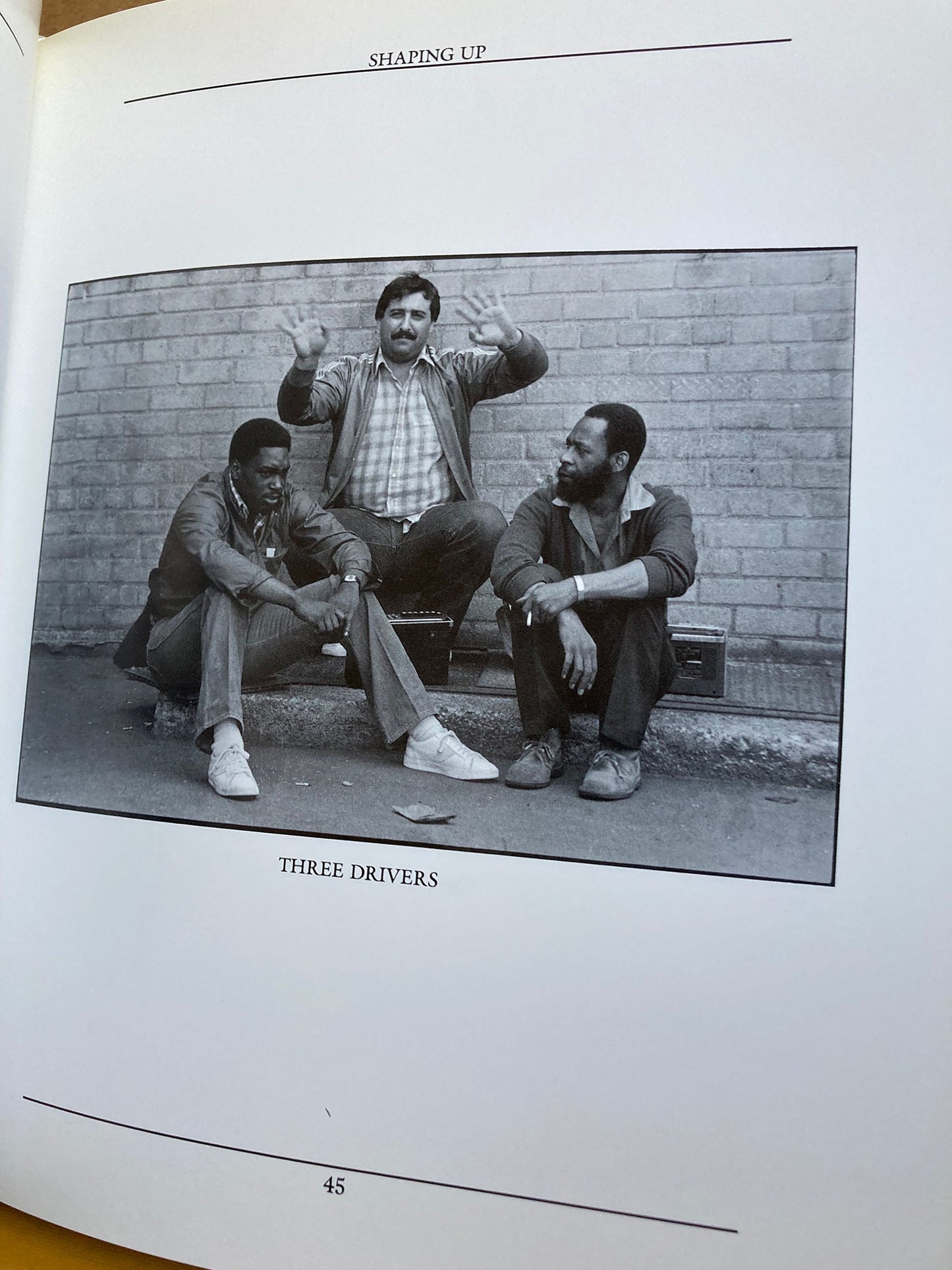
The Narrative (Ambrose Clancy): Clancy, a novelist and journalist who drove a cab to support his writing career, recounts the physical and psychological toll of the "night line." He describes the "shape-up" at the taxi garage, where drivers wait hours just to be assigned a vehicle, and the subsequent descent into the city's nocturnal underbelly. His prose captures the tension of deciding which fares to pick up and the "intimate human dramas" that unfold in the backseat—ranging from junkies and sex workers to lonely, "nickel-tipping" passengers.
-
The Visuals (Peter M. Donahoe): The second half of the book features harsh, high-contrast black-and-white photographs taken by Donahoe, who was also a professional cab driver. These images serve as a visual documentary of the city’s "ugly nocturnal face" and the weary, careworn expressions of the drivers who navigate it.
Key Takeaways
-
The "Belly of the Beast": The book is frequently described as a view from the "belly of the beast," avoiding the romanticized "talkative cabbie" trope in favor of a darker reality involving danger, filth, and the struggle to make a living.
-
A Portrait of 1980s New York: Published in 1990 but reflecting work from the late 70s and 80s, it captures a specific era of New York City history characterized by urban decay and a high-stakes street environment.
-
Professionalism vs. Survival: Clancy highlights the divide between "college kids" working summer shifts and the "professionals" for whom the taxi is a lifelong, grueling livelihood.
Historical and Cultural Context
The photographs from the book were significant enough to be exhibited at the Museum of the City of New York, highlighting the work's status as both a personal memoir and a piece of social history. Clancy later went on to become the editor of the Shelter Island Reporter, but The Night Line remains a seminal "work memoir" documenting the invisible labor of the city's night-shift drivers.
Peter M. Donahoe is an American fine art and street photographer known for his intimate exploration of human connection, historical architecture, and urban working-class life. After studying at the Pratt Institute, Donahoe gained early prominence in the 1970s and 1980s shooting street photography in New York City while working as a nighttime taxi driver. His candid black-and-white images capturing the era's raw urban landscape were later compiled in his monograph The Night Line and acquired by the Museum of the City of New York. Following decades of exhibiting in Manhattan and Brooklyn galleries, Donahoe relocated to the Hudson Valley, where he radically shifted his artistic methodology by abandoning traditional lensed cameras in favor of custom pinhole photography. Utilizing extended exposures, cooperative intent, and intuitive composition without a viewfinder, his work centers on vernacular architecture—such as historic barns and farmsteads—alongside evocative portraits and figurative sculptures that examine themes of memory, monumentality, and memorialization as counterweights to human loss.