Gary Saretzky Photo Books
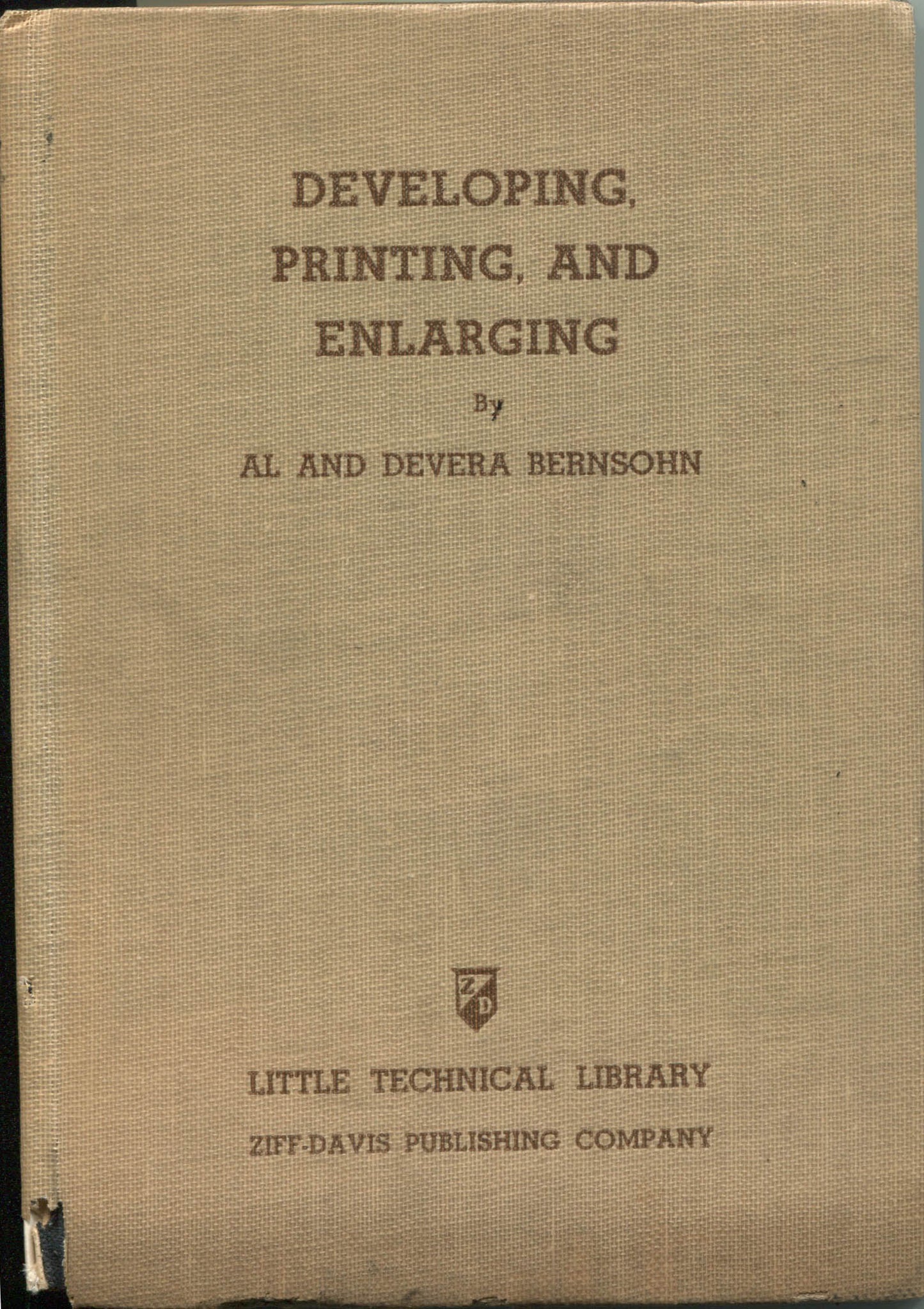
Developing, Printing, and Enlarging. Little Technical Library No. 2 by E.E. Draper and N. Harkness.
Developing, Printing, and Enlarging. Little Technical Library No. 2 by E.E. Draper and N. Harkness.
Couldn't load pickup availability
Ziff-Davis, 1939. 17th printing. Hardcover in cloth, good with chip at base of spine and wear and darkening of cover along edges. Good intro for analog photography. 93 pages, illustrated. Summary:
Published in 1939 as part of the popular Little Technical Library series by Ziff-Davis, Developing, Printing, and Enlarging is a foundational instructional manual written by Al Bernsohn (often credited to series contributors E.E. Draper and Norris Harkness). It was designed to guide the burgeoning "hobbyist" class of the late 1930s through the essential chemistry and mechanics of the home darkroom.
Core Focus & Objective
The book aims to demystify the "black box" of the darkroom, advocating for the idea that a photographer’s work is only half-finished once the shutter is pressed. It provides a comprehensive, step-by-step workflow for transforming raw film into finished, exhibition-quality prints.
Key Technical Content
-
Negative Development: Detailed instructions on the chemical stages of development—developing, stopping, fixing, and washing—with a focus on temperature control and agitation.
-
Contact Printing: Guidance on creating "same-size" prints from negatives, which was a standard practice for many amateur photographers of the era.
-
The Enlarging Process: A major focus on using the enlarger to create larger prints, including advice on paper selection (surfaces and contrasts) and exposure timing.
-
Darkroom Setup: Practical tips on converting a kitchen or bathroom into a temporary "light-tight" workspace and a list of essential equipment (trays, timers, and chemicals).
Style and Approach
-
Accessibility: True to the "Little Technical Library" mission, the tone is encouraging and strictly "plain English," avoiding overly dense scientific jargon in favor of practical results.
-
Illustrations: The book features numerous diagrams and instructional photographs that show exactly how to handle film and paper to avoid common errors like scratches or chemical stains.
Historical Significance
This volume captures the era of the "Miniature Camera" revolution. As more people began using 35mm film, the need for enlarging (rather than just contact printing) became essential. It remains a fascinating historical artifact that documents the standardized "best practices" of the analog darkroom just before World War II.