Gary Saretzky Photo Books
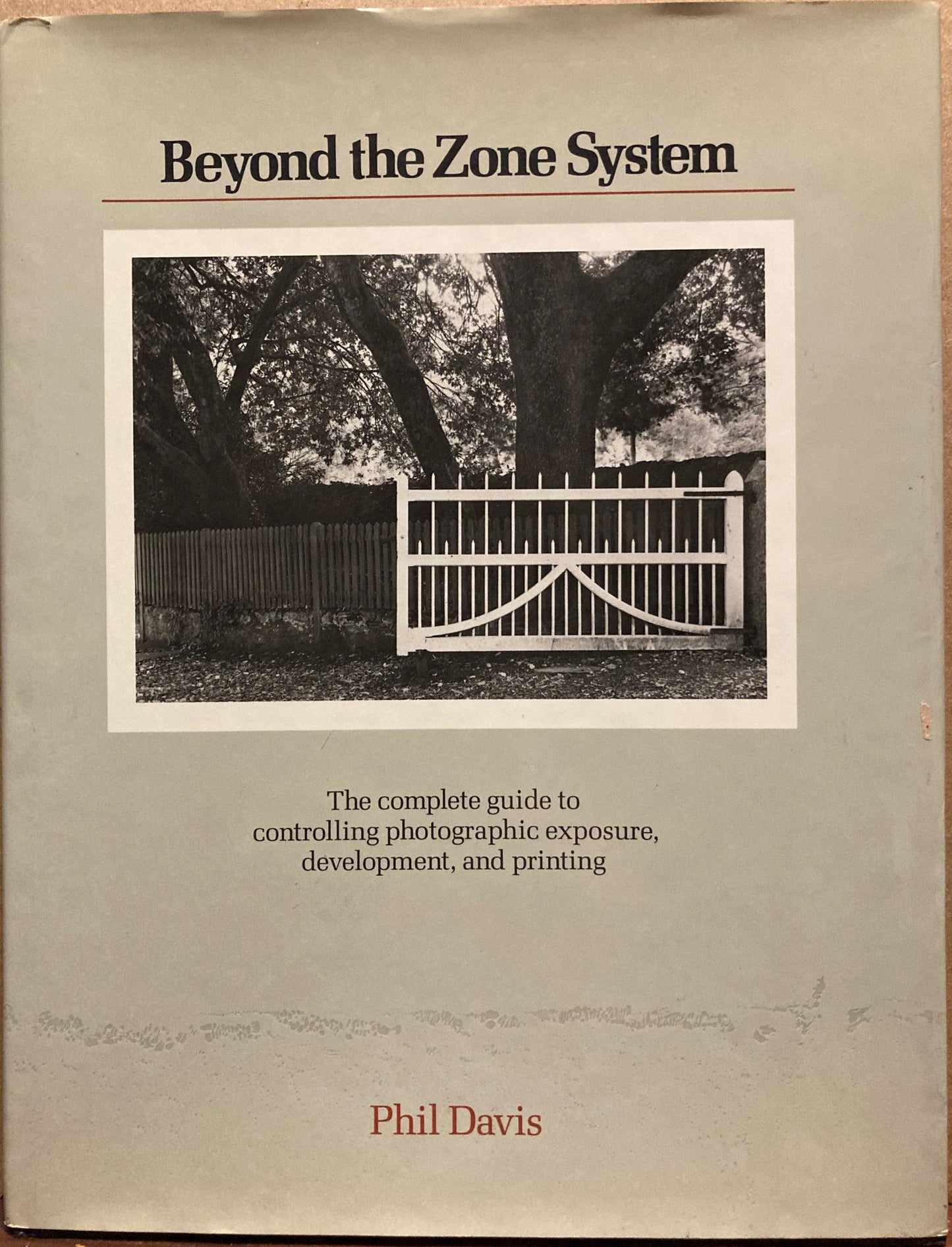
Davis, Phil. Beyond the Zone System by Phil Davis. With Workbook.
Davis, Phil. Beyond the Zone System by Phil Davis. With Workbook.
Couldn't load pickup availability
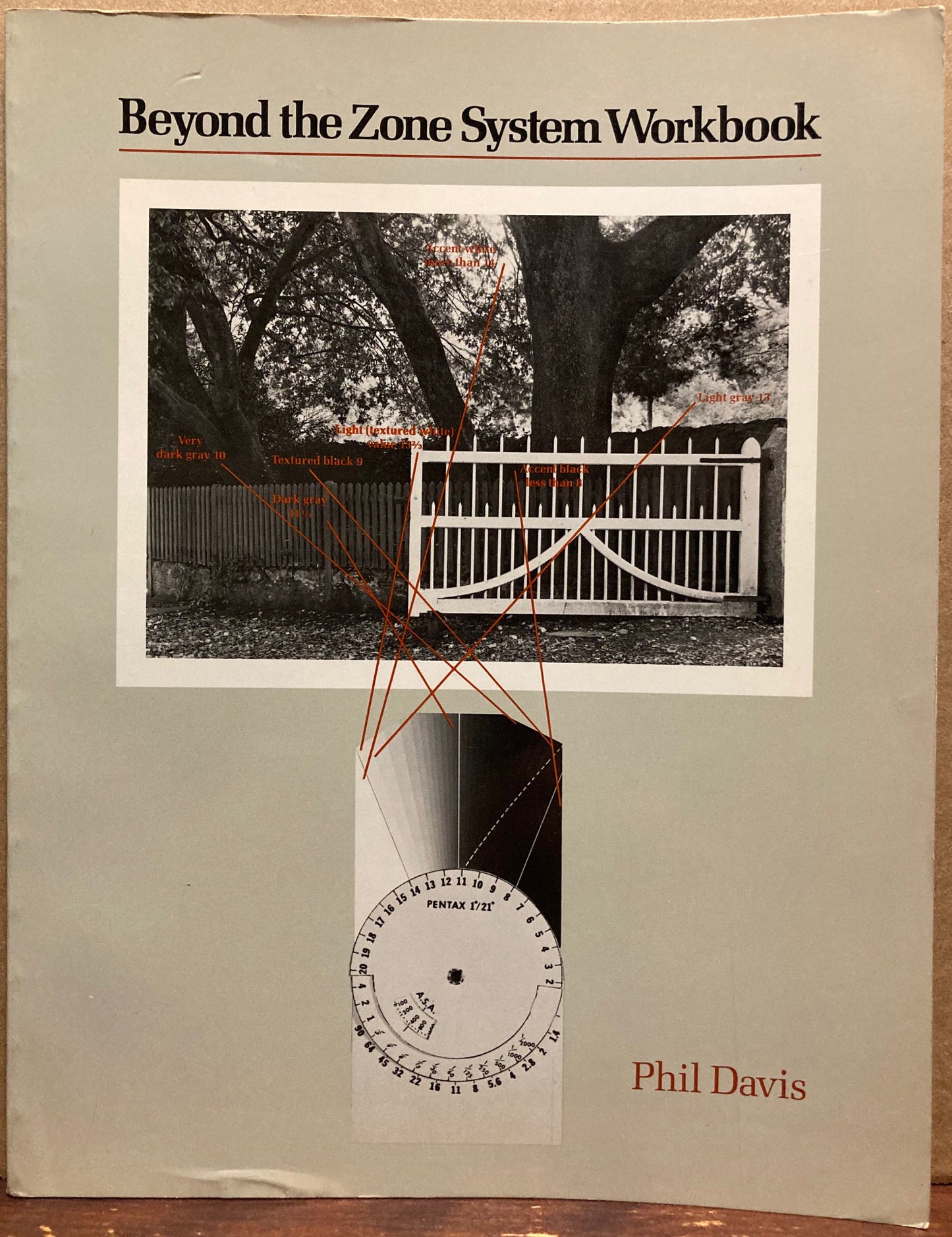
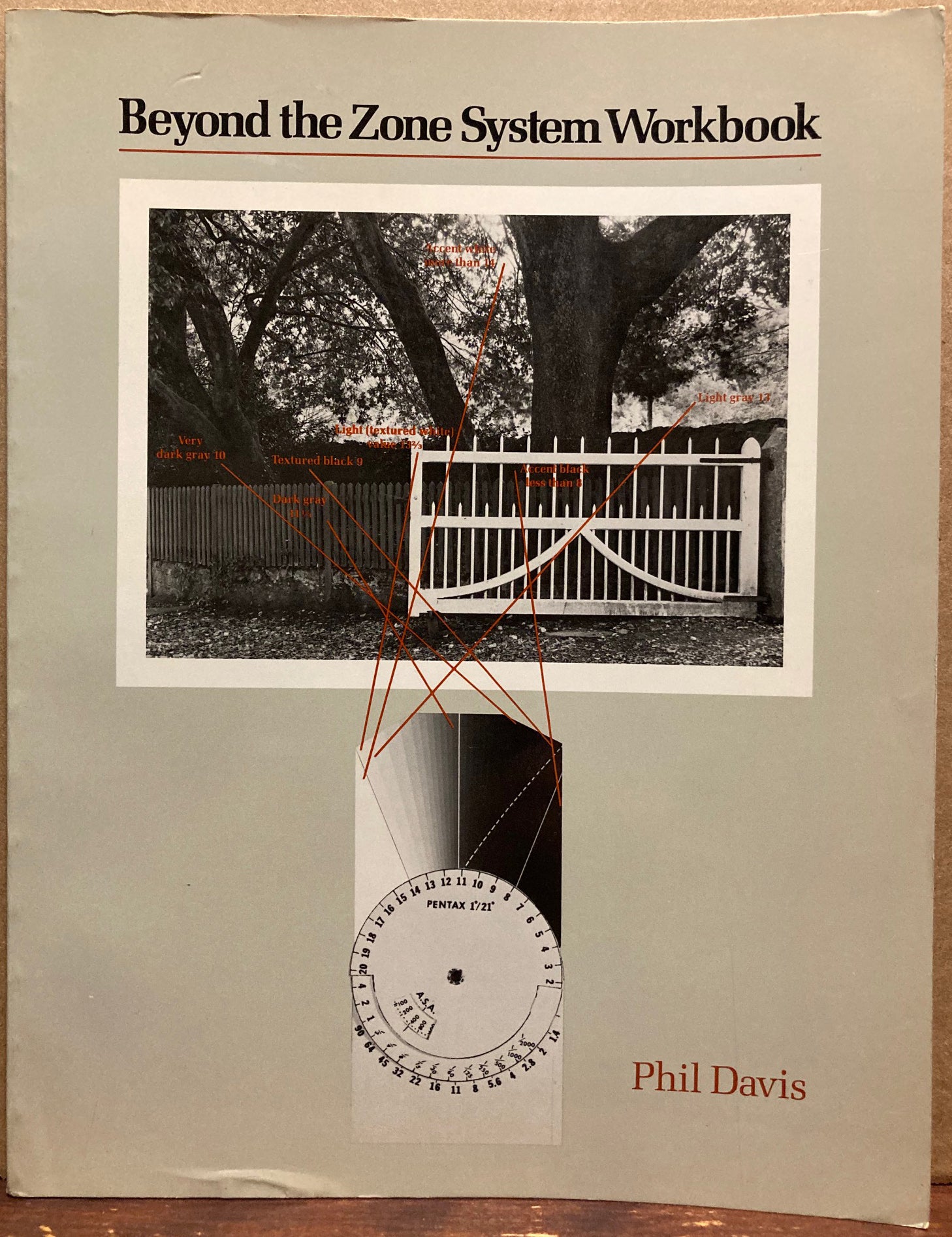
Curtin & London, 1981, 1st ed., 2nd printing, hard cover with near fine dust jacket), sold with Beyond the Zone System Workbook, Curtin & London, 1981, 1st printing, wraps, VG+ with slight bump bottom of front cover. [In readily understandable language, illustrations, and diagrams, Davis explains how to get perfect negatives through senistometry, including how to read and interpret film curves, zone system theory and practice, how to run your own zone tests, etc. The workbook includes instructions on how to convert a light meter into a densitometer, as well as testing paper and film and making a "wonder wheel" of gray scales to use as a guide during photography. Very useful for serious analog photographers.] Two volumes. (Photo is a stock image.) Summary:
Beyond the Zone System by Phil Davis (first published in 1981) is a seminal technical manual that modernized and expanded upon Ansel Adams’ original Zone System. While Adams’ system provided a visual shorthand for exposure and development, Davis introduced a more rigorous, scientific approach based on sensitometry—the precise measurement of how photographic film and paper respond to light.
The Core Philosophy
Davis argued that the traditional Zone System relied too heavily on subjective "eyeballing" and inconsistent testing. His "beyond" approach advocated for:
-
The Characteristic Curve: Understanding the specific -shaped curve of film response to determine exactly where shadow detail is lost and highlights are blown.
-
Incident Light Metering: A shift toward measuring the light falling on the subject rather than just the light reflected off it, aiming for more predictable negatives.
-
Standardization: Eliminating variables by creating personalized "working kits" of film and developer combinations.
The Workbook and Practical Application
The accompanying Workbook is a vital component of the text, designed to move the photographer from theory to field-tested data. It includes:
-
Step-by-Step Testing: Procedures for determining your personal "Minimum Useful Density" and "Normal" development times.
-
Plots and Graphs: Instructions on how to plot film tests on semi-logarithmic graph paper to visualize the relationship between exposure and density.
-
The "Plotter": In later editions, Davis included computer software (and physical wheels in earlier ones) to help photographers calculate exposure and development without complex manual math.
Key Concepts
-
Predictability: The goal is to produce a "perfect" negative that fits the scale of the printing paper every single time, minimizing time spent struggling in the darkroom.
-
System Integration: Davis treats the camera, film, developer, and paper as a single, unified system rather than isolated steps.
-
Scientific Literacy: The book demystifies technical terms like flare factor, gradient, and density range, making them accessible to serious fine-art photographers.
Historical Significance
Phil Davis's work is considered the "gold standard" for large-format and black-and-white photographers who demand total control over their medium. It transitioned the craft from an intuitive art into a disciplined science, ensuring that the photographer’s pre-visualized image was backed by empirical data.