
Gary Saretzky Photo Books
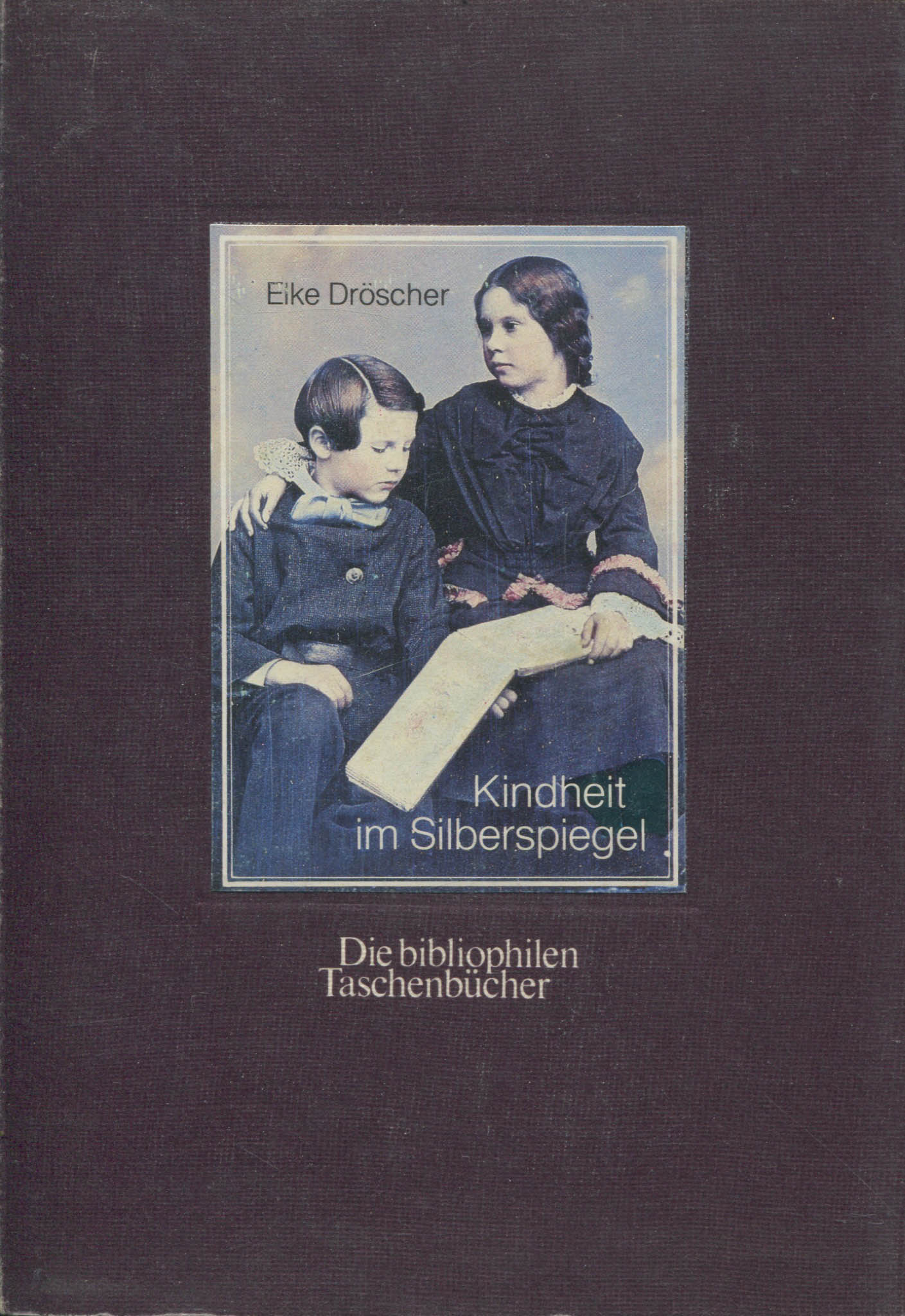
Daguerreotypes. Kindheit im Silberspiegel, Daguerreotypien (Childhood in the Silver Mirror, Daguerreotypes) by Eike Dröscher.
Daguerreotypes. Kindheit im Silberspiegel, Daguerreotypien (Childhood in the Silver Mirror, Daguerreotypes) by Eike Dröscher.
Couldn't load pickup availability
Harenburg (Dortmund, Germany), 1983. Wraps, fine with custom-made polyester jacket. Daguerreotypes of children, many of them with hand applied color, in color reproductions. Includes 80 daguerreotypes plus enlarged photos of selected ones. A delightful collection. Text in German. Summary:
Kindheit im Silberspiegel (1991), by the German collector and historian Eike Dröscher, is an exquisite study of 19th-century childhood as captured through the lens of the daguerreotype. The book serves as both a cultural history of youth in the Biedermeier and Romantic eras and a technical appreciation of the first commercially successful photographic process—the "silver mirror" that gave the book its title.
Core Themes and Cultural Narrative
-
The "Silver Mirror" Perspective: The title refers to the highly polished, silver-plated copper sheets used for daguerreotypes. Dröscher explores how this specific medium—with its mirrored surface and staggering detail—created a unique, almost spectral intimacy between the 19th-century viewer and the child.
-
The Social Construction of Childhood: The book documents the shift in how children were perceived. Moving away from the "miniature adult" aesthetic of earlier centuries, these portraits show children as distinct emotional beings, often posed with toys, pets, or in states of "staged" innocence.
-
The Portrait as Relic: Because daguerreotypes were unique objects (no negatives existed), Dröscher emphasizes their role as "precious icons." For many families, these were the only visual records of their children, often serving as poignant mementos in an era of high child mortality.
Visual and Technical Style
-
The Technical "Finish": Dröscher provides deep insight into the German daguerreotype tradition, which was noted for its technical "purity" and clarity. He highlights the work of early masters who navigated the long exposure times required to keep a restless child still—often using hidden "posing stands" or the steadying hands of mothers.
-
Hand-Tinting and Ornamentation: The volume showcases many plates that were delicately hand-colored (adding a "blush" to cheeks or gold to buttons) and housed in elaborate leather cases or "jewelry" frames, emphasizing the photograph as a luxury mechanical object.
