Gary Saretzky Photo Books
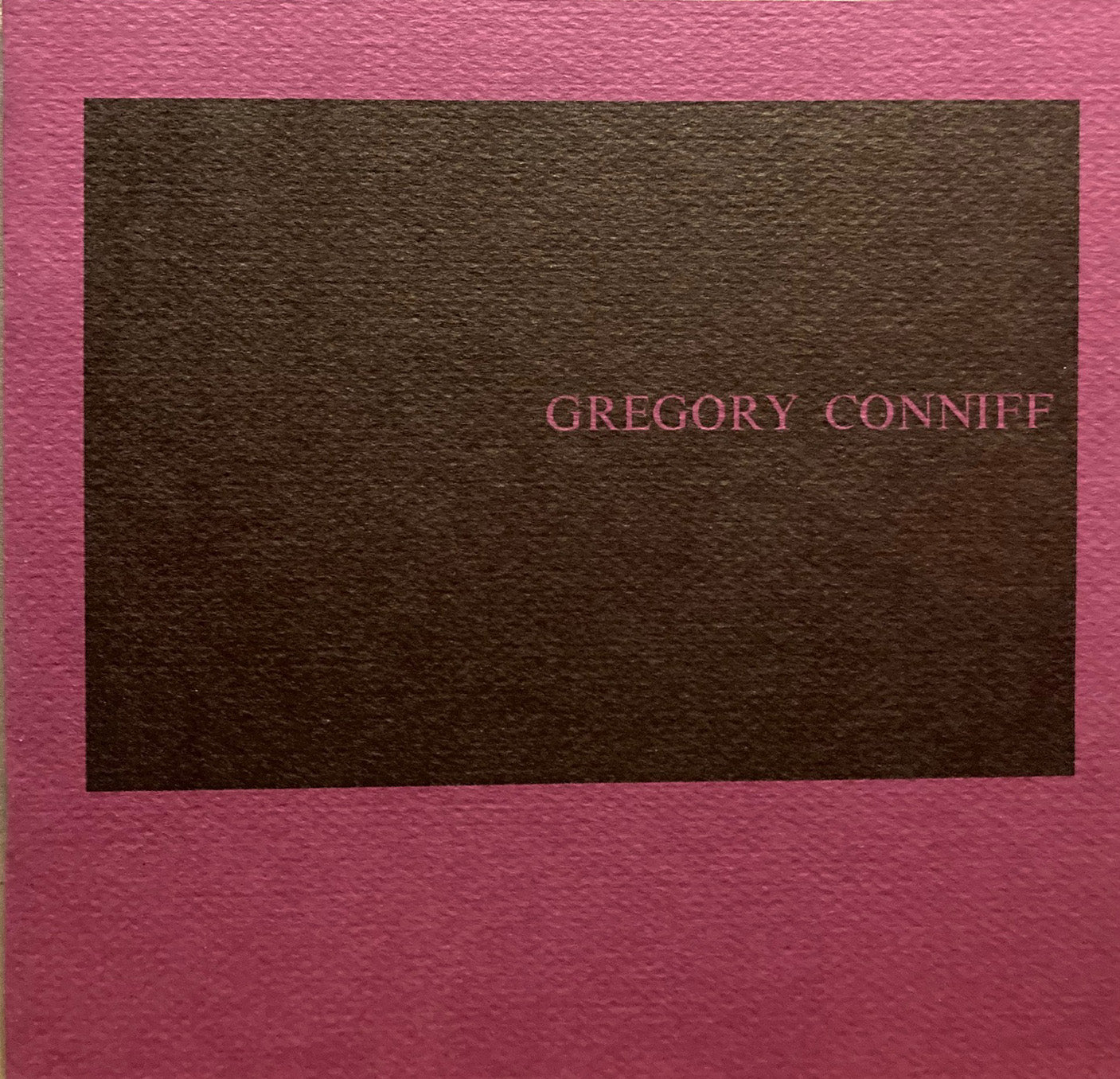
Conniff, Gregory. Gregory Conniff. December 19, 1979 - February 3, 1980.
Conniff, Gregory. Gregory Conniff. December 19, 1979 - February 3, 1980.
Couldn't load pickup availability
Corcoran Gallery of Art, 1979. Essay by Jane Livingston. [Photographs of Madison, Wisconsin; Monmouth Beach, New Jersey; et al.]. Stapled magenta wraps, fine, 20 pages, 12 black-and-white illustrations, including portrait of and biographical information about the photographer, first (and only) edition of 1,500 copies. Summary:
This slim but significant exhibition catalog was published by the Corcoran Gallery of Art to accompany Gregory Conniff’s solo show in the winter of 1979–1980. It represents a key moment in the "New Topographics" era, focusing on the sophisticated, quiet beauty of the American vernacular landscape.
Artistic Vision: The Intelligence of Sight
Gregory Conniff, a lawyer-turned-photographer, is celebrated for his intellectual and formalist approach to everyday scenery. The exhibition showcased his ability to transform mundane subjects—backyards, fences, and sidewalks—into complex visual puzzles.
-
The "An-Aesthetic" Subject: Conniff’s work avoids the "grand" landscapes of the West. Instead, he focuses on the mid-western and eastern suburban environments, finding structural perfection in the intersection of telephone wires, wooden lattices, and domestic foliage.
-
Formal Rigor: The photographs are characterized by a "deep focus" and a flattened perspective. He uses the frame to organize space with mathematical precision, often playing with how vertical and horizontal lines (like porch railings or trees) divide the image.
Key Themes of the Exhibition
-
The Private Landscape: Unlike urban street photography, Conniff’s Corcoran show highlighted the quiet spaces between houses—the "non-places" that people inhabit but rarely truly see.
-
The Human Presence through Absence: While people are rarely the subjects of his frames, their presence is felt everywhere through the architecture, the gardening, and the way the land has been subdivided.
-
Light and Texture: Working primarily in black and white, Conniff uses the "even" light of overcast days or the geometric shadows of mid-day sun to emphasize texture—the peeling paint of a clapboard house or the tangled branches of a winter hedge.
Significance
At the time of the Corcoran exhibition, the photography world was shifting away from the romanticism of Ansel Adams toward a more objective, "straight" documentation of the man-altered landscape.
This catalog is a foundational document for those studying Late 20th Century American Realism. It solidified Conniff’s reputation as a photographer who didn't need a dramatic subject to create a dramatic image; rather, he relied on the "intelligence of the eye" to reveal the inherent order of the world.
"The photographs are about the act of looking... the way the world fits together when you stop to pay attention to its edges." — Critical summary of Conniff's philosophy.
