Gary Saretzky Photo Books
Burden, Shirley. I Wonder Why... Photographs and text by Shirley Burden.
Burden, Shirley. I Wonder Why... Photographs and text by Shirley Burden.
Couldn't load pickup availability
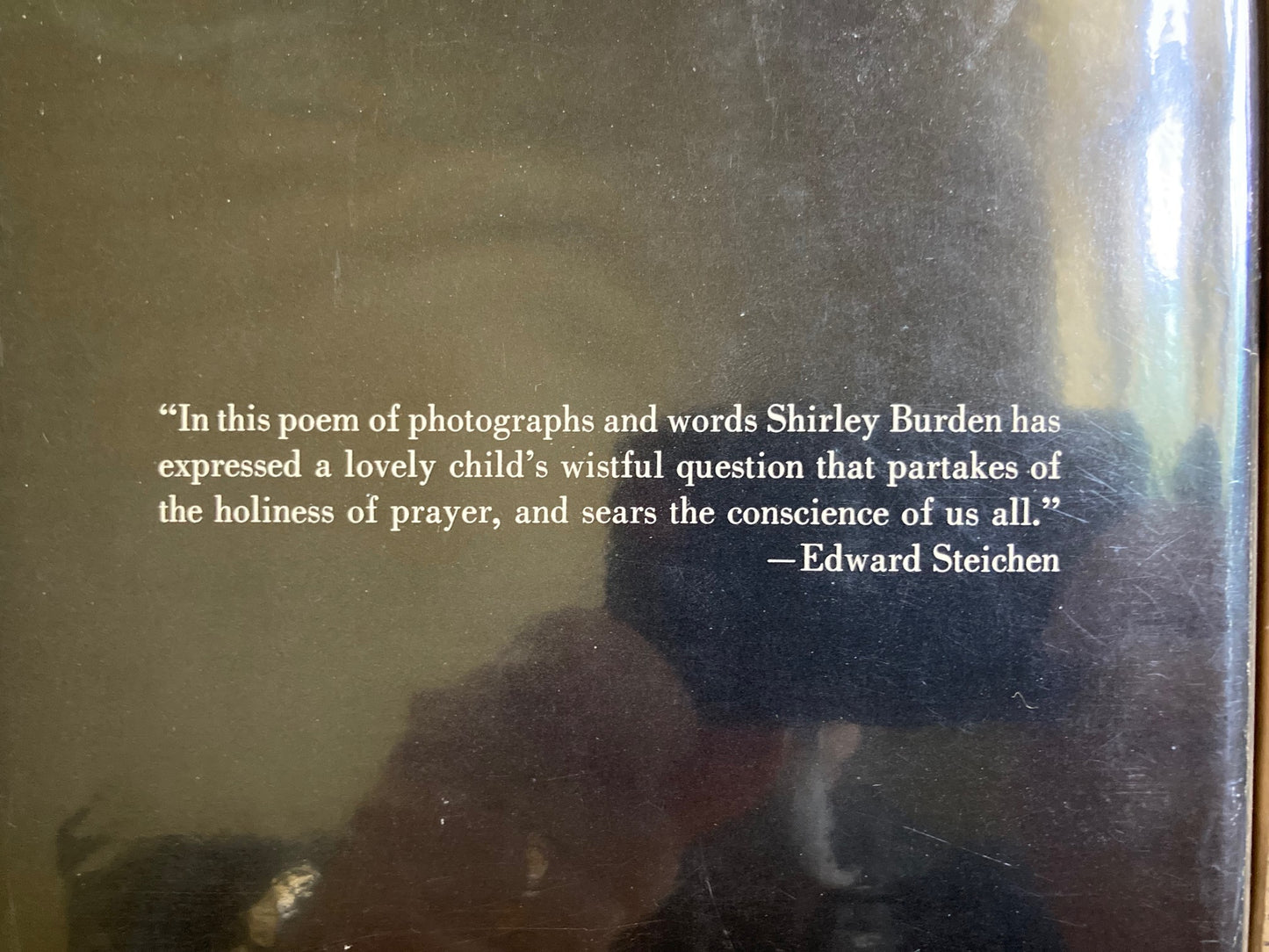
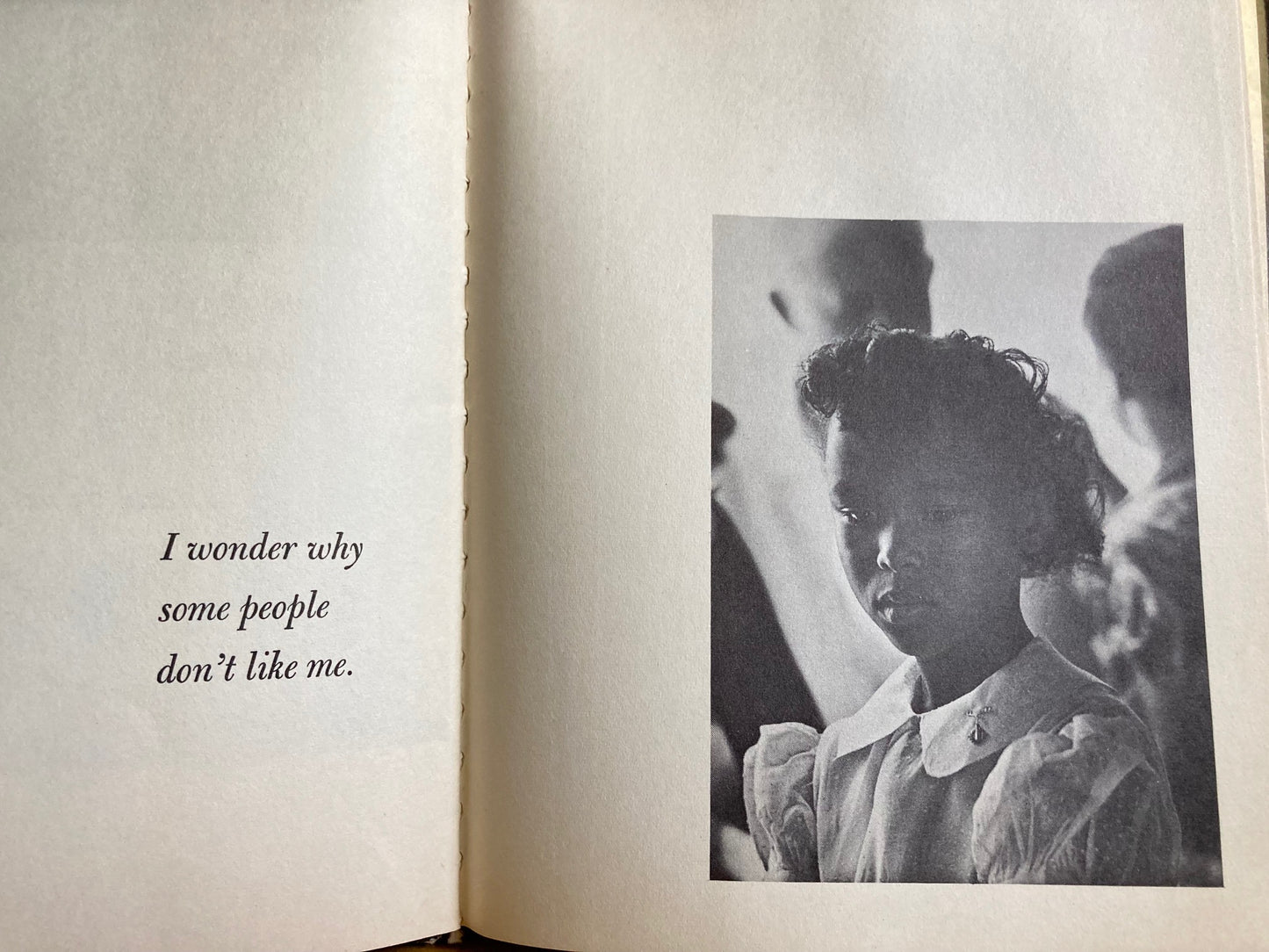
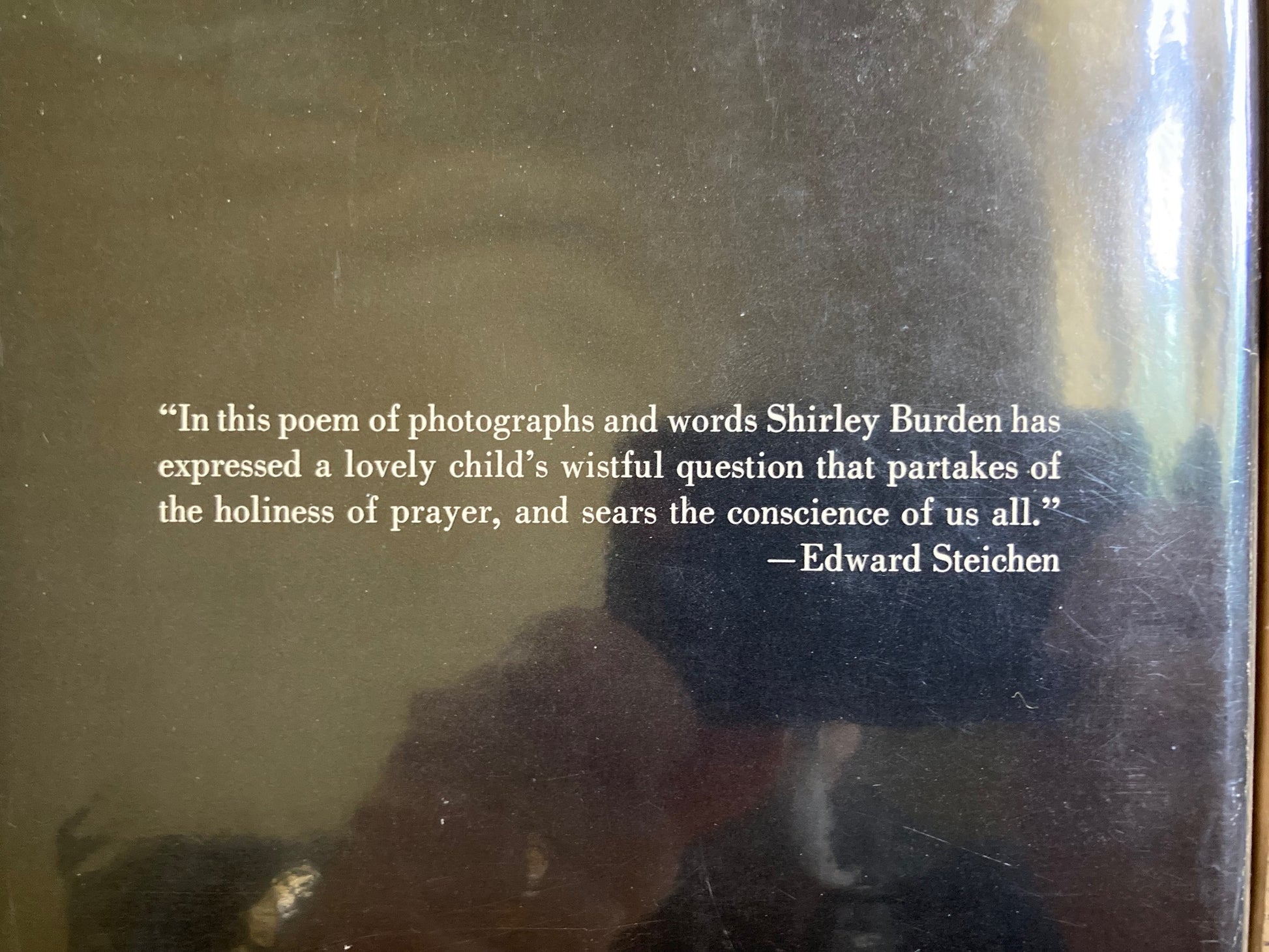
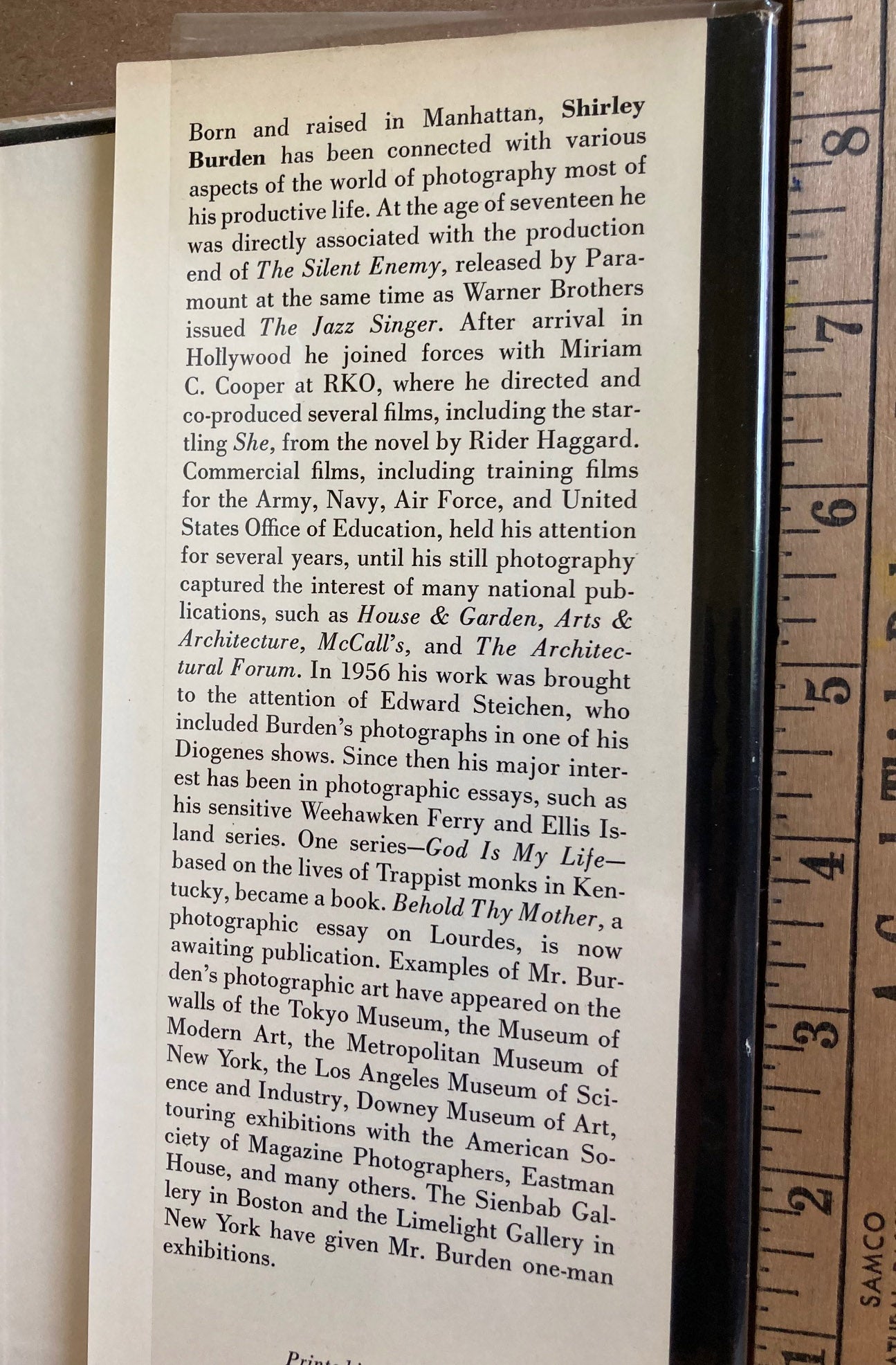
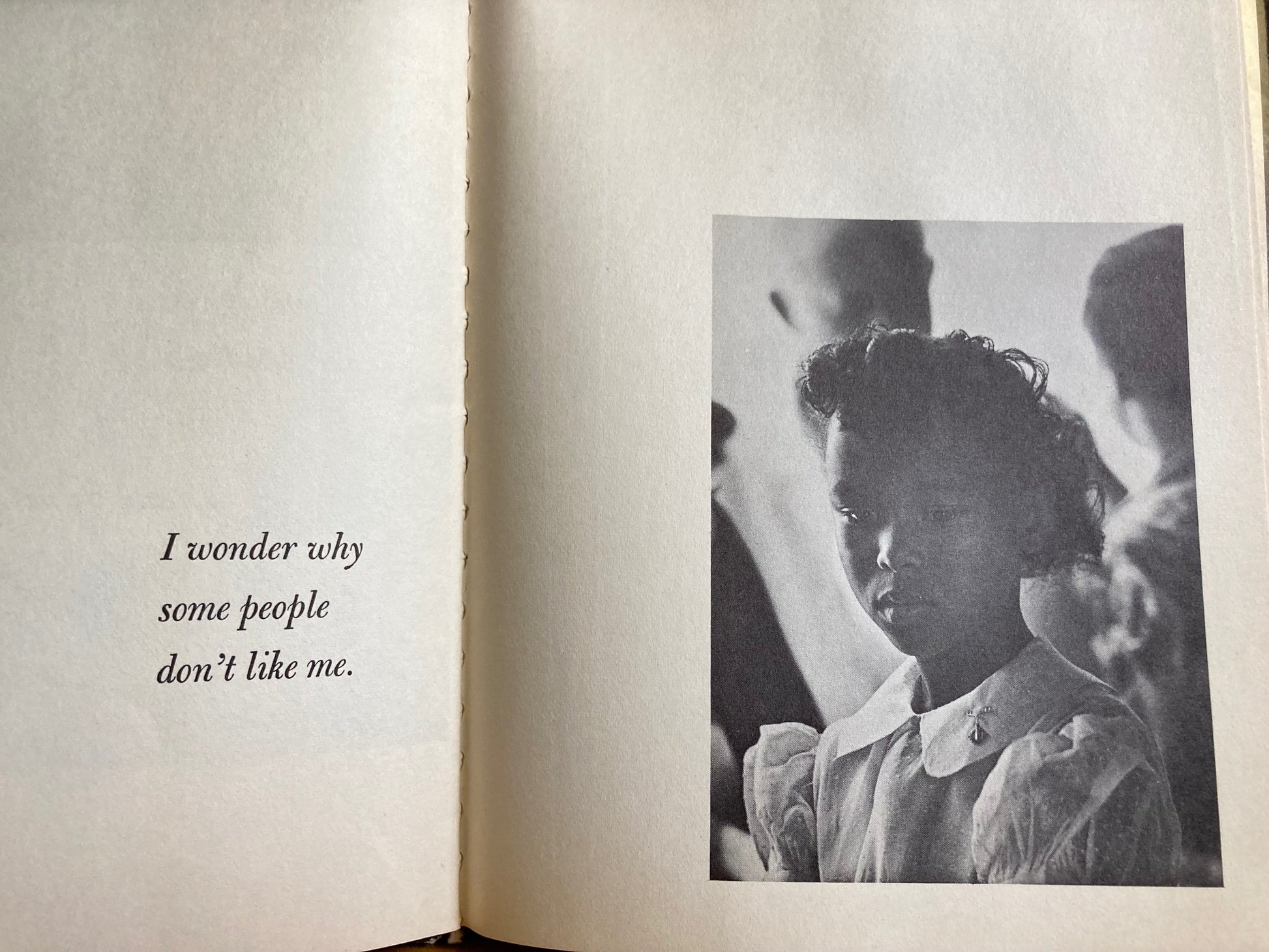
Doubleday, 1963. Hardcover in illustrated boards, very good plus, with very good protected dust jacket. In much better condition than usually found. A poetic series of photographs, with text from the point of view of an African American girl who likes what most people do, such as the clouds, sun shining on the water, puppies, Christmas with snow, etc. but wonders why some people do not like her. As explained by Edward Steichen in the quote on the back cover, this book constitutes a strong statement against racism and is appropriate for all ages of readers. Photographer and filmmaker Shirley Burden had a substantial career in both motion pictures and photography. See his bio on the dust jacket flap included in the pictures below of the book. He was closely associated with and a substantial supporter of Aperture. Summary:
I Wonder Why... (1963) is a powerful, minimalist photo-essay by Shirley Burden that serves as a landmark of mid-century "Humanist Photography." Through a rhythmic interplay of brief, poetic text and evocative imagery, the book explores the painful disconnect between the universal beauty of the world and the arbitrary prejudices of society, as seen through the eyes of a young African American girl.
Core Themes and Narrative
-
The Innocence of Appreciation: The narrative is structured as a list of things the young protagonist "likes": rain on a roof, the smell of freshly cut grass, the feeling of new shoes, and the "quiet" of a church. It establishes a universal human baseline of sensory joy.
-
The Sudden Contrast: The book concludes with a devastatingly simple question that gives the title its meaning: "I wonder why some people don't like me?" This shift transforms the book from a gentle poem into a sharp critique of racial prejudice.
-
Universal Humanism: Burden uses the "Common Denominator" of childhood to bridge the gap between the viewer and the subject. He argues that the "finish" of a human soul is identical, regardless of the "finish" of their skin.
Visual and Technical Notes, Bio
-
The "Luminous" Finish: Consistent with Burden’s spiritual style, the photographs possess a soft, glowing quality. He uses a wide tonal range—from the deep, rich blacks of the girl’s hair to the brilliant whites of a summer sky—to create a "High-Performance" emotional resonance.
-
Candid Simplicity: The style is unposed and intimate. By using a small-format camera, Burden captures the girl's expressions, ensuring the images feel like genuine memories rather than staged commercial shots.
- Shirley Carter Burden (1908–1989) was an influential American photographer, author, and patron of the arts known for his contemplative visual studies and steadfast support of fine art photography. Born into the prominent Vanderbilt family in New York City, Burden initially worked in the motion picture industry—collaborating with figures like Edward Steichen and radio producer film projects—before turning to documentary fine art photography in the 1940s. Studying under Minor White, he developed a quiet, intimate style focused on architectural heritage, religious sites, and social landscapes, producing notable photographic books such as God Is My Life (1960) and I Wonder Why (1963). Beyond his own creative output, Burden made enduring institutional contributions as a longtime trustee of the Museum of Modern Art (MoMA), chairman of its Photography Committee, and a generous benefactor to the Aperture Foundation, helping establish photography as a recognized fine art medium in 20th-century America.