Gary Saretzky Photo Books
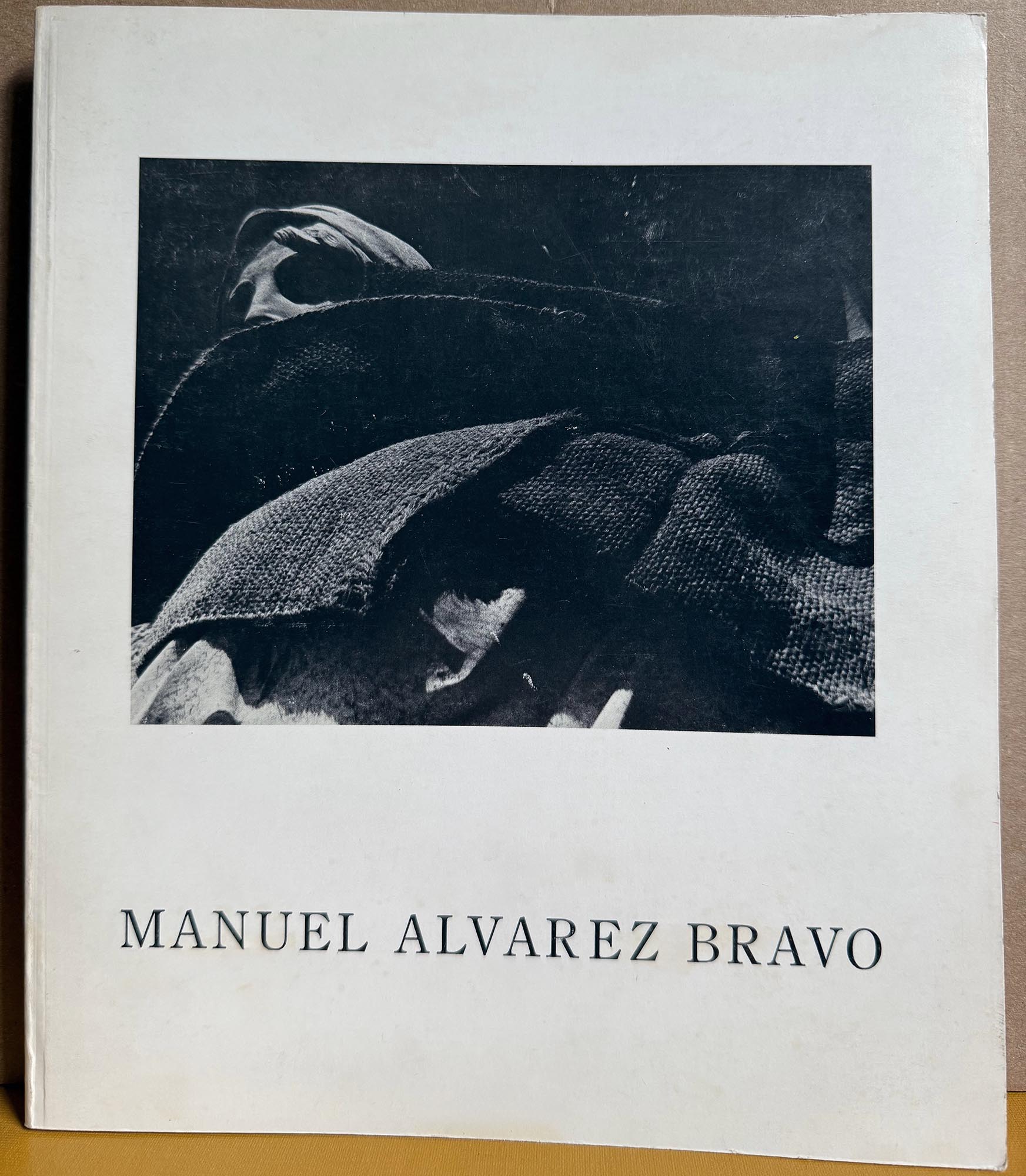
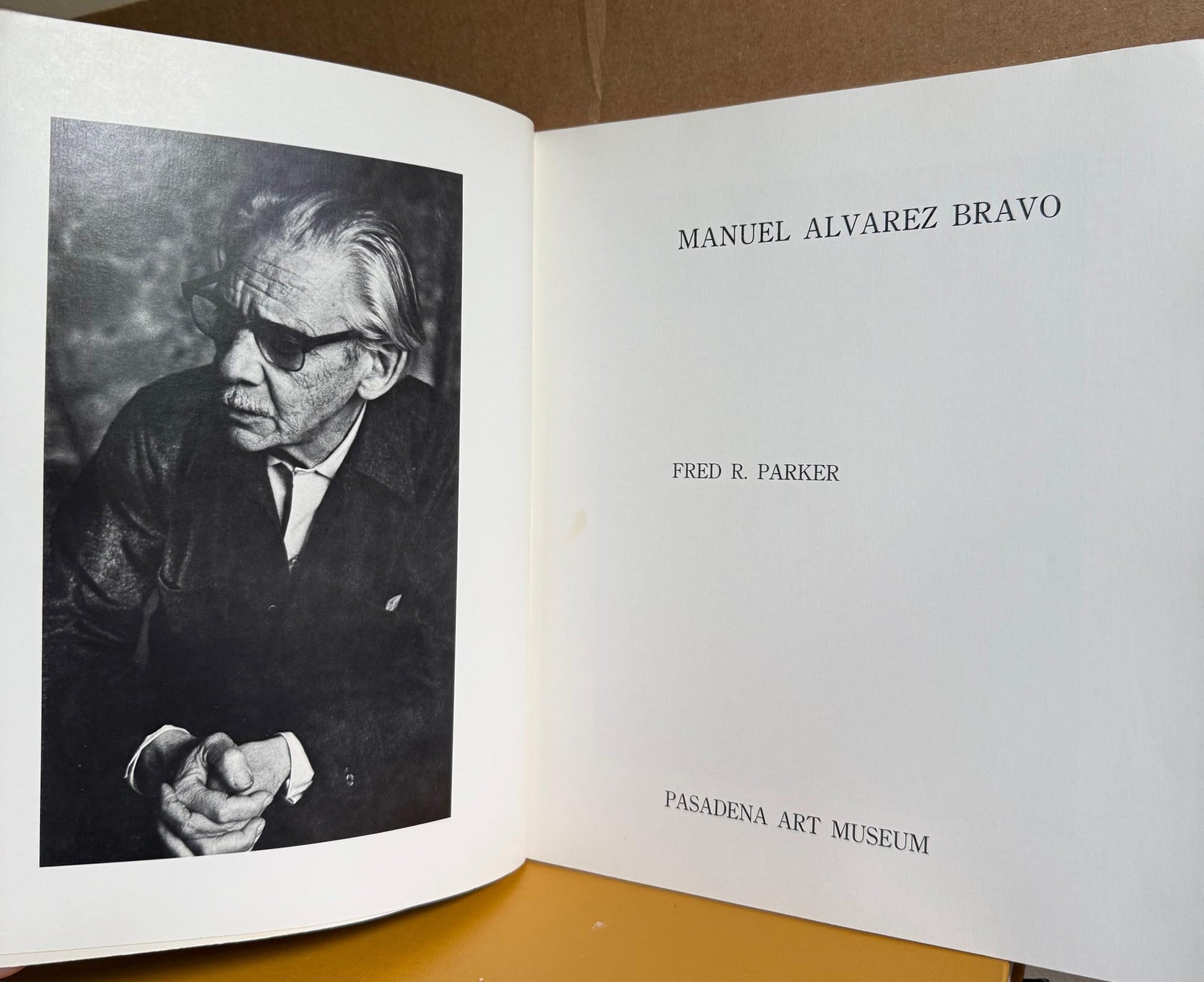
Bravo, Manuel Alvarez. Manuel Alvarez Bravo by Fred R. Parker.
Bravo, Manuel Alvarez. Manuel Alvarez Bravo by Fred R. Parker.
Couldn't load pickup availability
Exhibition catalog in wraps, very good with minor evidence of use, for a show that ran May 4 through June 20, 1971, at the Pasadena Art Museum and then traveled to The Museum of Modern Art (NewYork) and the George Eastman House. Includes exhibition check list of 66 works, 33 of which are reproduced in the catalog, chronology of Bravo’s life and career, bibliography, and list of exhibitions and awards. Excellent reproduction quality of photos. Summary:
The 1971 exhibition catalog Manuel Álvarez Bravo, written by Fred R. Parker, offers an early and authoritative overview of the career of one of Mexico’s most important photographers. Published at a moment when Álvarez Bravo was gaining broader international recognition, the catalog situates his work within both Mexican cultural history and the wider development of twentieth-century photography.
Parker’s text traces Álvarez Bravo’s artistic evolution from the 1920s onward, emphasizing his ability to merge modernist photographic principles with distinctly Mexican subjects and sensibilities. The catalog highlights key themes in his work, including everyday street life, popular culture, political symbolism, and the poetic resonance of ordinary objects and scenes. Rather than treating Mexico as an exotic subject, Álvarez Bravo is presented as a photographer who approached his environment with quiet intelligence, irony, and emotional restraint.
The images reproduced in the catalog demonstrate Álvarez Bravo’s subtle visual language. His photographs often balance realism with ambiguity, inviting interpretation rather than delivering explicit meaning. Parker discusses how Álvarez Bravo employed light, composition, and timing to suggest metaphor and narrative, aligning his work with surrealist ideas while remaining grounded in lived experience. The catalog also addresses his relationships with artists and intellectuals such as Diego Rivera, Frida Kahlo, and André Breton, noting how these connections shaped—but never overshadowed—his independent vision.
Overall, the catalog presents Manuel Álvarez Bravo as a foundational figure in modern photography. Parker emphasizes his lasting significance as an artist who helped define a uniquely Mexican photographic voice while contributing to international modernism. The 1971 exhibition catalog positions Álvarez Bravo not only as a documentarian of Mexican life, but as a poet of the camera whose work continues to influence photographers worldwide.
Manuel Álvarez Bravo (1902–2002) was a pioneering Mexican photographer widely recognized as a key figure in 20th-century Latin American art for his poetic, dreamlike imagery that fused modernism with Mexican cultural identity. Largely self-taught, he began photographing in the 1920s amidst the creative ferment of the post-revolutionary Mexican Renaissance, forming close ties with figures like Tina Modotti, Edward Weston, and Diego Rivera. His signature visual language avoided overt political drama in favor of quiet, mysterious, and deeply symbolic moments of daily life—masterfully balancing sharp light and shadow with themes of death, religion, indigenous heritage, and surrealism. Championed by Surrealist leader André Breton and featured in major international exhibitions, Álvarez Bravo spent over seven decades mentoring generations of artists, co-founding publishing houses, and building a photographic legacy that earned him the Hasselblad Award (1984) and established him as the spiritual father of modern Mexican photography.

