Gary Saretzky Photo Books
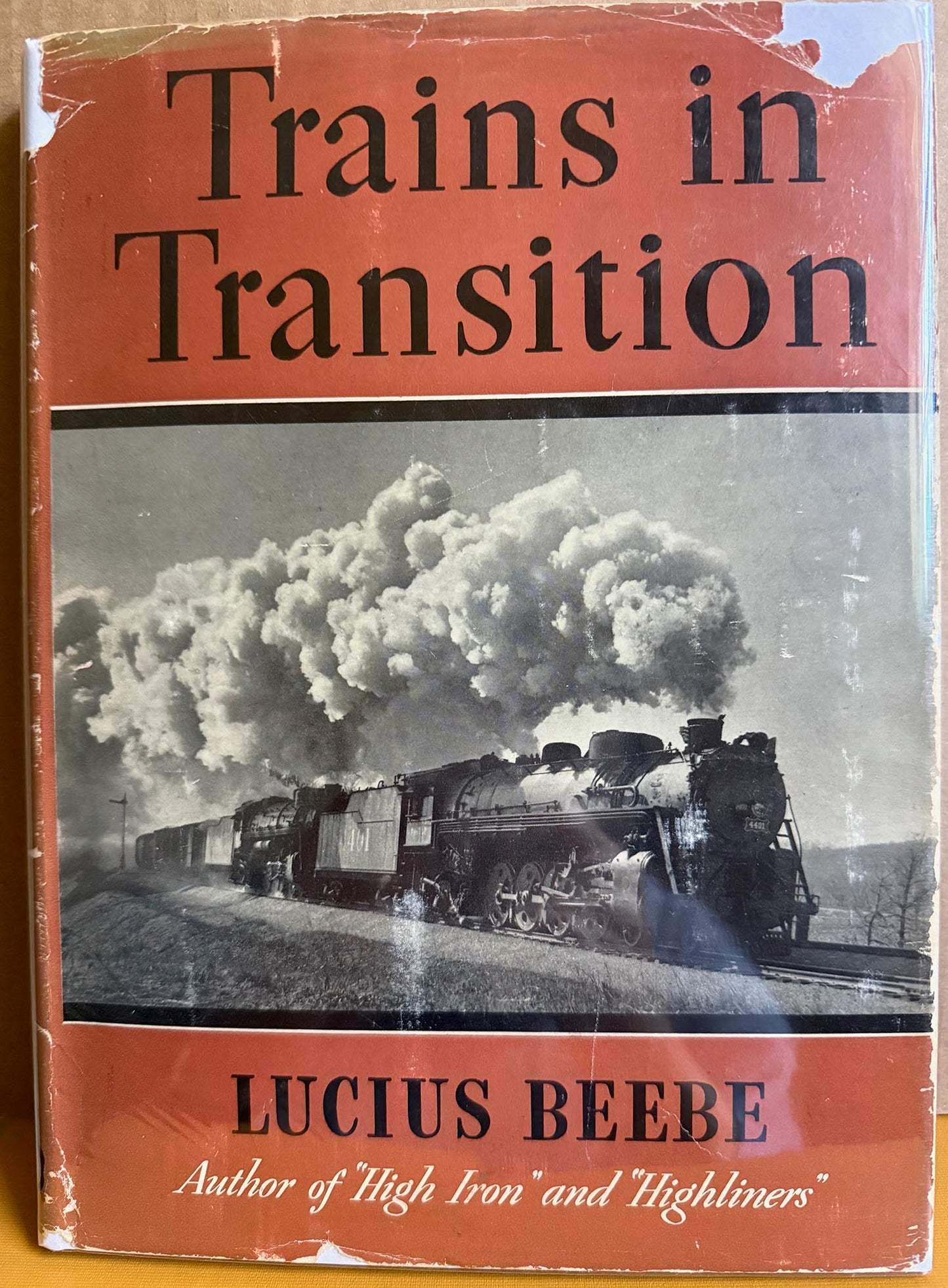
Beebe, Lucius. Trains in Transition by Lucius Beebe.
Beebe, Lucius. Trains in Transition by Lucius Beebe.
Couldn't load pickup availability
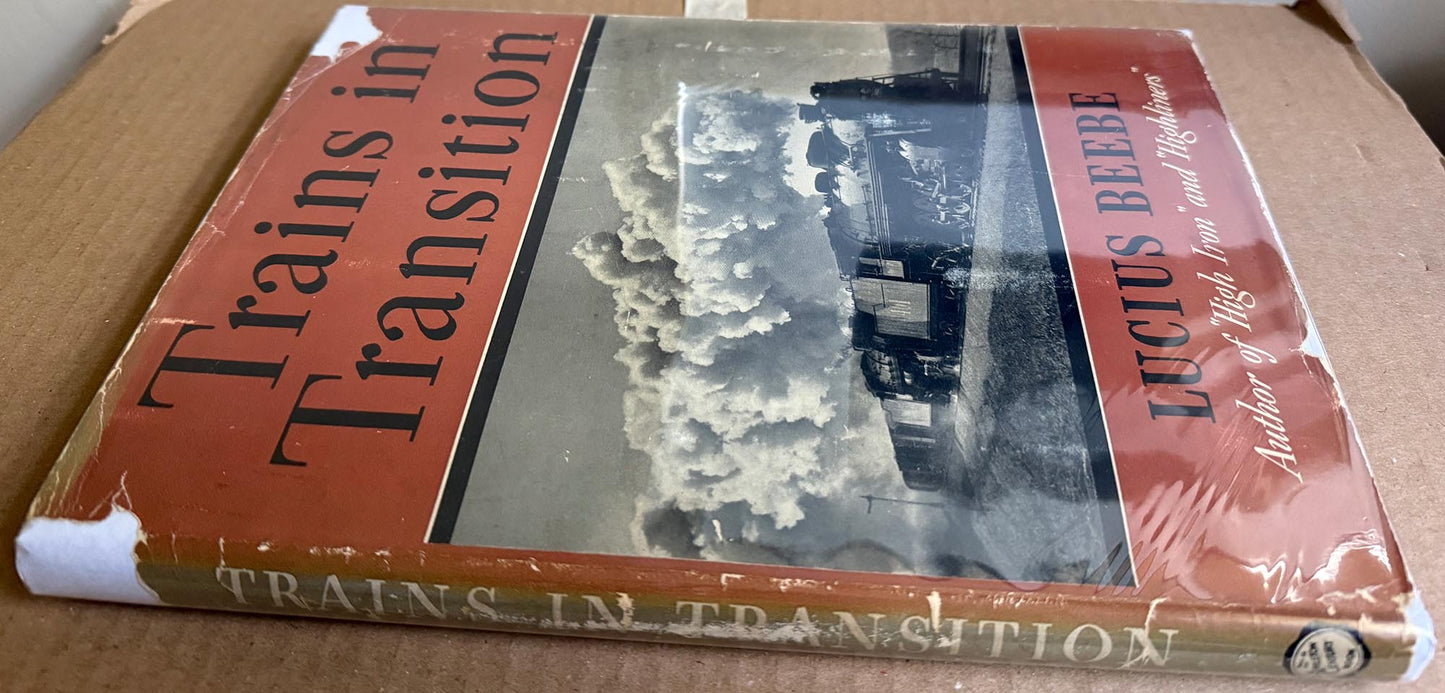
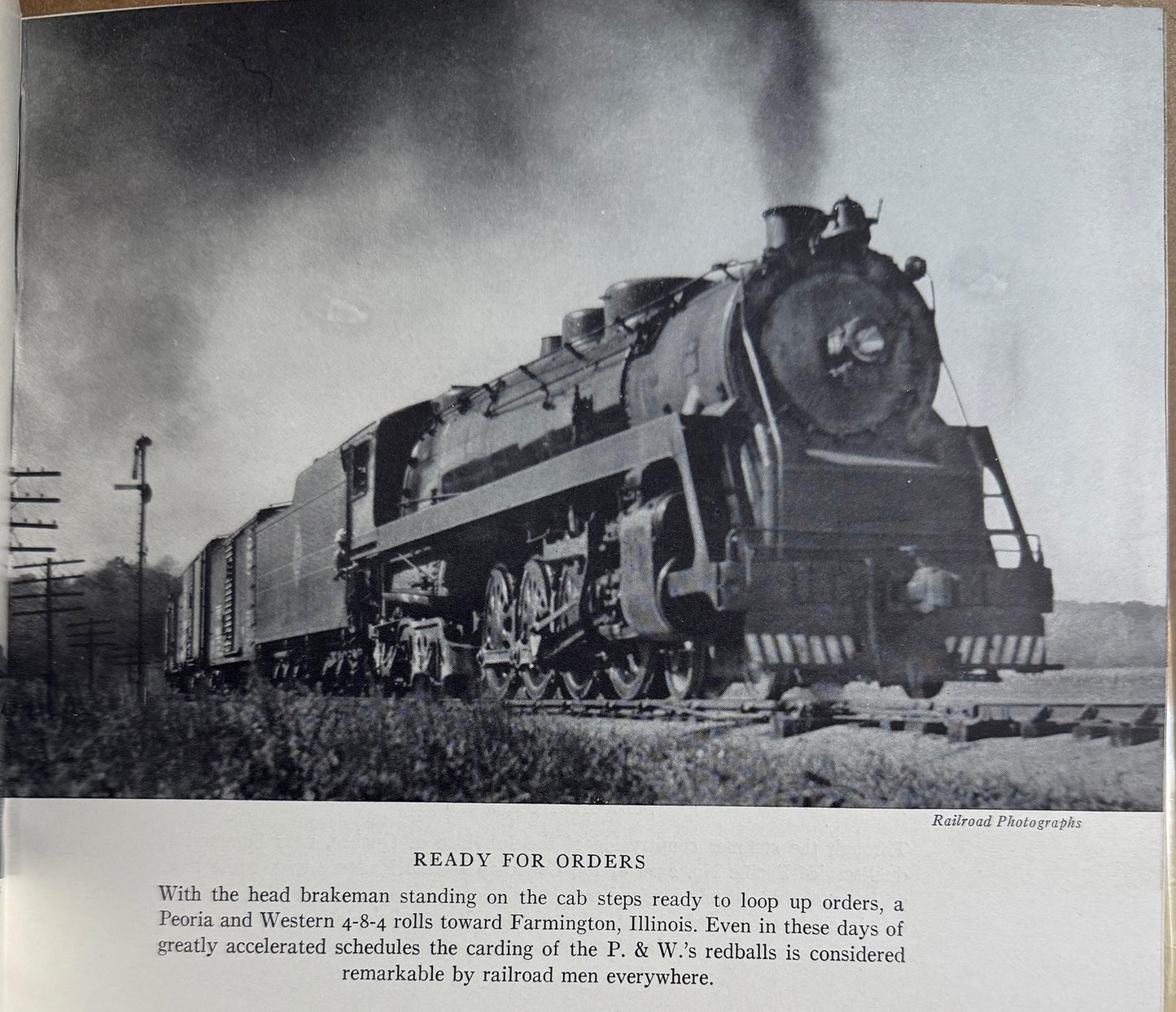
D. Appleton-Century, 1942. Hardcover with chipped protected dust jacket that is faded on spine (see photos). Later reprinted by Bonanza. Fine photographs in black and white of railroads and trains by Lucius Beebe, also the creator of other books on similar subjects. 210 pages, profusely illustrated with photos of both diesel and steam locomotives pulling railroad cars, with informative text. Uncommon in this first edition, especially with dust jacket. Summary:
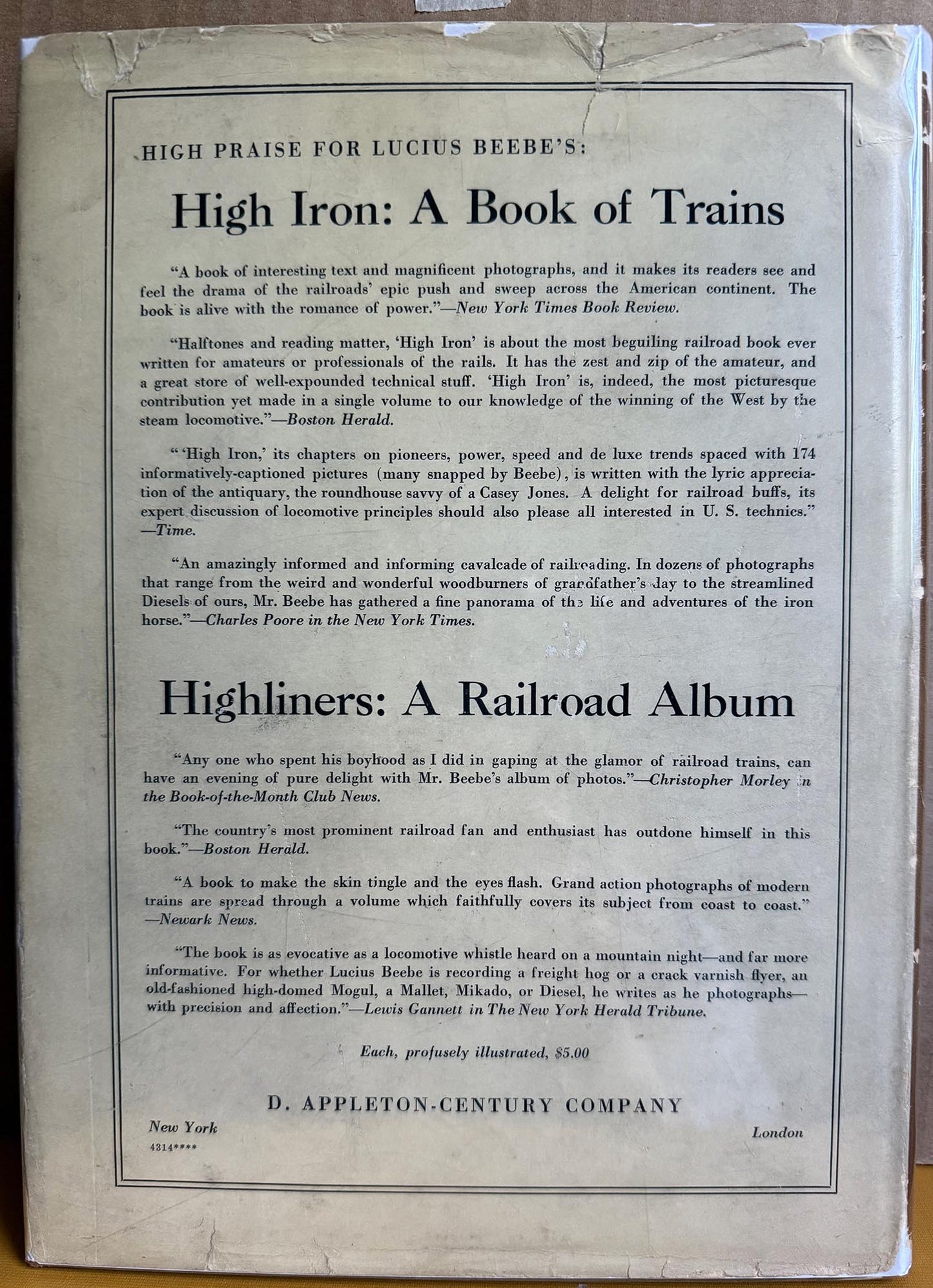
Trains in Transition is a richly illustrated railroad history and photography book by railroad enthusiast and author Lucius Beebe, celebrating a pivotal era in American railroading. It forms part of Beebe’s influential trilogy of photo‑prose books on railroads—alongside High Iron: A Book of Trains and Highliners: A Railroad Album—that helped define the railroad picture book genre in the mid‑20th century.
The book captures the dramatic transformation of railroad technology, operations, and culture as steam locomotives and traditional railroad practices began to give way to newer developments, notably diesel‑electric power and streamlined trains. Through more than 170 black‑and‑white photographs (many taken by Beebe himself), the narrative documents both the romantic heritage of steam and the modern innovations reshaping the industry in the late 1930s and early 1940s.
Beebe’s engaging prose blends history, technical observation, and personal passion, creating a rich portrait of the railroads in flux. He highlights not only the machines themselves—locomotives, rolling stock, and passenger trains—but also the culture of rail travel and the networks that linked the nation. Well‑composed captions and essays contextualize the imagery, offering readers insight into the changing face of American railroading.
Part historical survey, part visual celebration, Trains in Transition remains valued by railroad enthusiasts and historians alike for its documentation of a transformative period in transportation history and Beebe’s lyrical approach to the subject.
Lucius Morris Beebe (1902–1966) was an flamboyant American author, photojournalist, syndicated columnist, and railroad historian who became a pioneering figure in mid-20th-century train photography. Born to a prosperous Boston-area family, he attended both Harvard and Yale before embarking on a long career in journalism, notably writing the "This New York" column for the New York Herald Tribune—where he was credited with popularizing the term "Café Society"—and later publishing Nevada's Territorial Enterprise. Striking a stark contrast to his dapper persona as a Manhattan bon vivant, Beebe shed his formal attire to travel the country documenting North America's rapidly vanishing steam locomotives and narrow-gauge lines. Alongside his life partner and co-author, photographer Charles Clegg, Beebe toured in lavish private railroad cars and co-wrote over 30 books, popularizing trackside photography as both a fine art and a serious historical record of American industrial heritage.