Gary Saretzky Photo Books
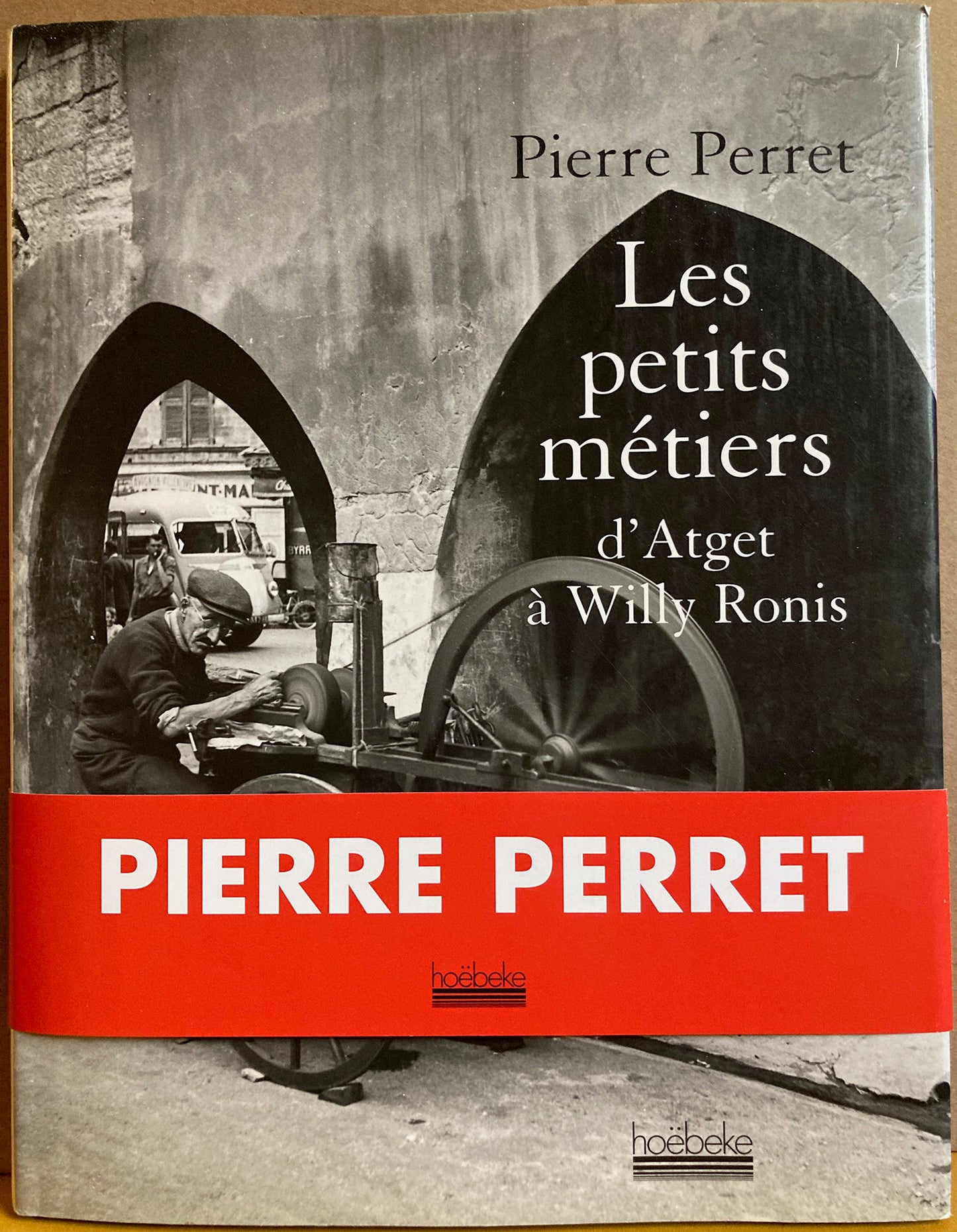
Atget, et al. Les Petits Métiers d’Atget á Willy Ronis by Pierre Perret.
Atget, et al. Les Petits Métiers d’Atget á Willy Ronis by Pierre Perret.
Couldn't load pickup availability
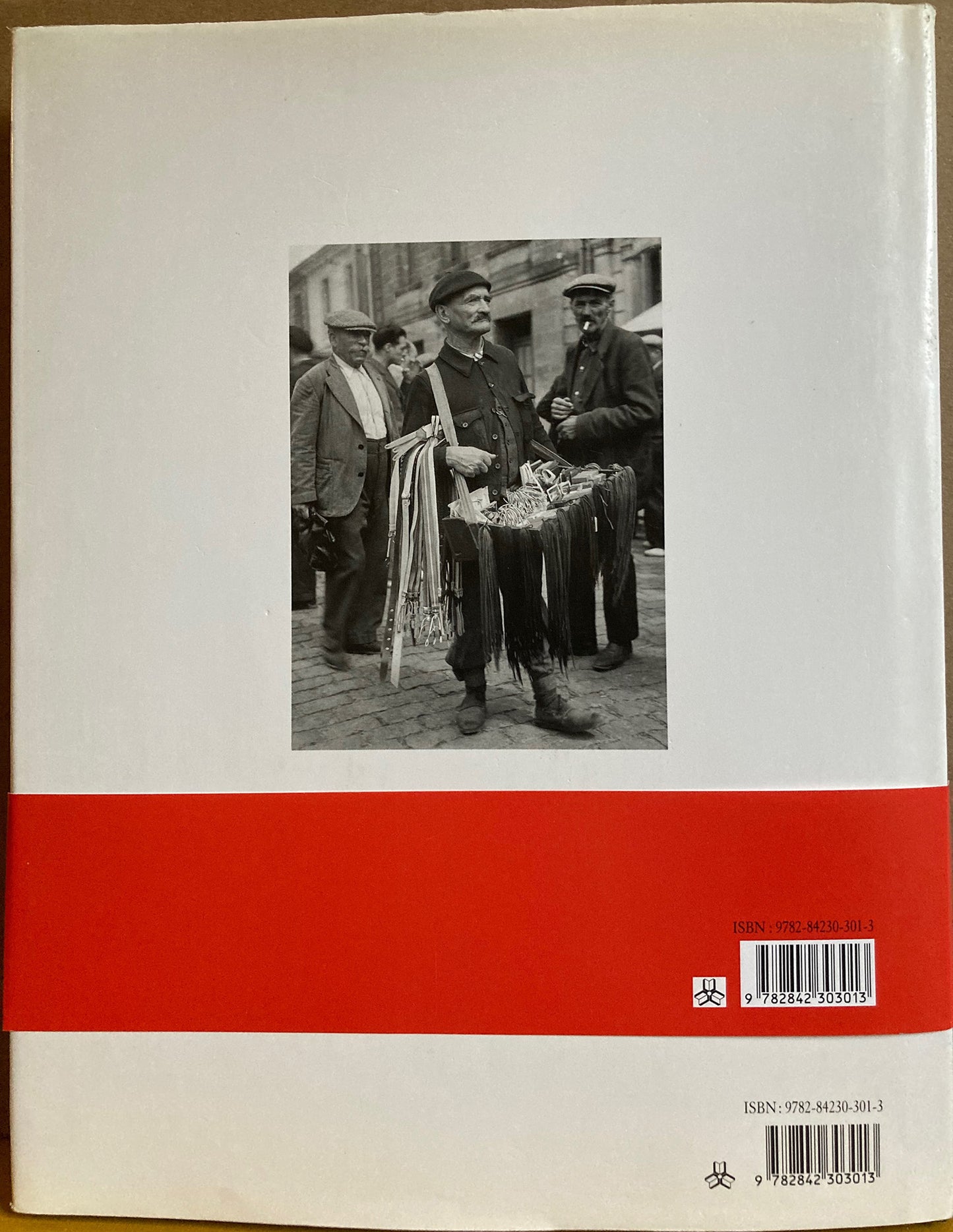
Hoëbeke, 2007. Photographs of small trades by Eugene Atget, George Dudgeon, Roger Schall, Willy Ronis, Jean Dieuzaide, Edouard Boubat, Robert Doisneau, Germaine Krull, et al. Examples of street vendors include people selling flowers, baskets, ice cream, wine, and others. Also photos of a lamplighter, basket weaver, woman shoe shiner, street musicians, and other people who make a living on the street, from around 1900 to the 1950s in France. Hardcover in gray cloth with dust jacket and belly band. Gift inscription inside cover. Dust jacket with new protector has shallow indentations, mostly from writing. Still an attractive cover. Printed in Italy. Text in French. 120 pages. Summary:
Les Petits Métiers d’Atget à Willy Ronis (2007), with text by the French singer-songwriter Pierre Perret, is a nostalgic and social-historical survey of the "small trades" that once animated the streets of Paris. The book serves as a visual bridge between two eras of photography, moving from the obsessive, systematic documentation of Eugène Atget at the turn of the century to the empathetic, "humanist" snapshots of Willy Ronis and his contemporaries in the mid-20th century.
Core Themes and Narrative
-
The Vanishing Street: The book documents the "Petits Métiers"—the itinerant vendors, knife grinders, ragpickers, and flower sellers—who formed the backbone of Parisian street life before the age of the supermarket and mass industrialization.
-
From Record to Romance: Perret’s curation highlights a shift in perspective. It begins with Atget’s "straight" records of a disappearing city (often devoid of people) and moves toward the post-war "Humanist" school, where photographers like Ronis captured the warmth, struggle, and dignity of the working class.
-
A Eulogy for the Livelihood: The text and images collectively mourn the loss of the "public artisan." It portrays these trades not just as jobs, but as the social connective tissue that made Paris feel like a village rather than a machine.
Visual and Technical Notes
-
The "Forensic" vs. The "Lyrical": The early photographs (Atget) possess high detail, long exposures, and a clinical detachment. The later images (Ronis) introduce a "Kinetic, Grainy Finish," celebrating the blur of a moving hand or the soft light of a rainy morning.
-
The Texture of the Trade: The collection emphasizes the workers’ tools—the wooden carts, the worn leather aprons, and the metallic sheen of the street-vendor's wares—rendering the physical reality of labor with profound clarity.
- Eugène Atget (1857–1927), born Jean-Eugène-Auguste Atget, was a French documentary photographer celebrated as a founding father of modern street and urban architectural photography. Born in Libourne and raised near Bordeaux, Atget initially pursued a career as a traveling actor before turning to painting and ultimately adopting photography in his late thirties. Operating from a modest studio in Paris, he described his work simply as creating "documents for artists," systematically recording the architecture, street trades, courtyards, shopfronts, and historic details of "Old Paris" (Vieux Paris) as it faced rapid modernization under Baron Haussmann's urban overhauls. Carrying a heavy, large-format wooden view camera with glass albumen plates, Atget produced thousands of quiet, lyrically atmospheric prints characterized by subtle vignetting, soft reflections in glass, and empty early-morning streets. Though he worked in relative obscurity selling prints to architects, painters, and municipal archives, his haunting compositions were discovered late in his life by Surrealists like Man Ray and Berenice Abbott. Following Atget's death in 1927, Abbott championed his vast archive and brought it to international acclaim, cementing his reputation as a visionary artisan who bridged 19th-century topographical documentation and 20th-century modernist art.