Gary Saretzky Photo Books
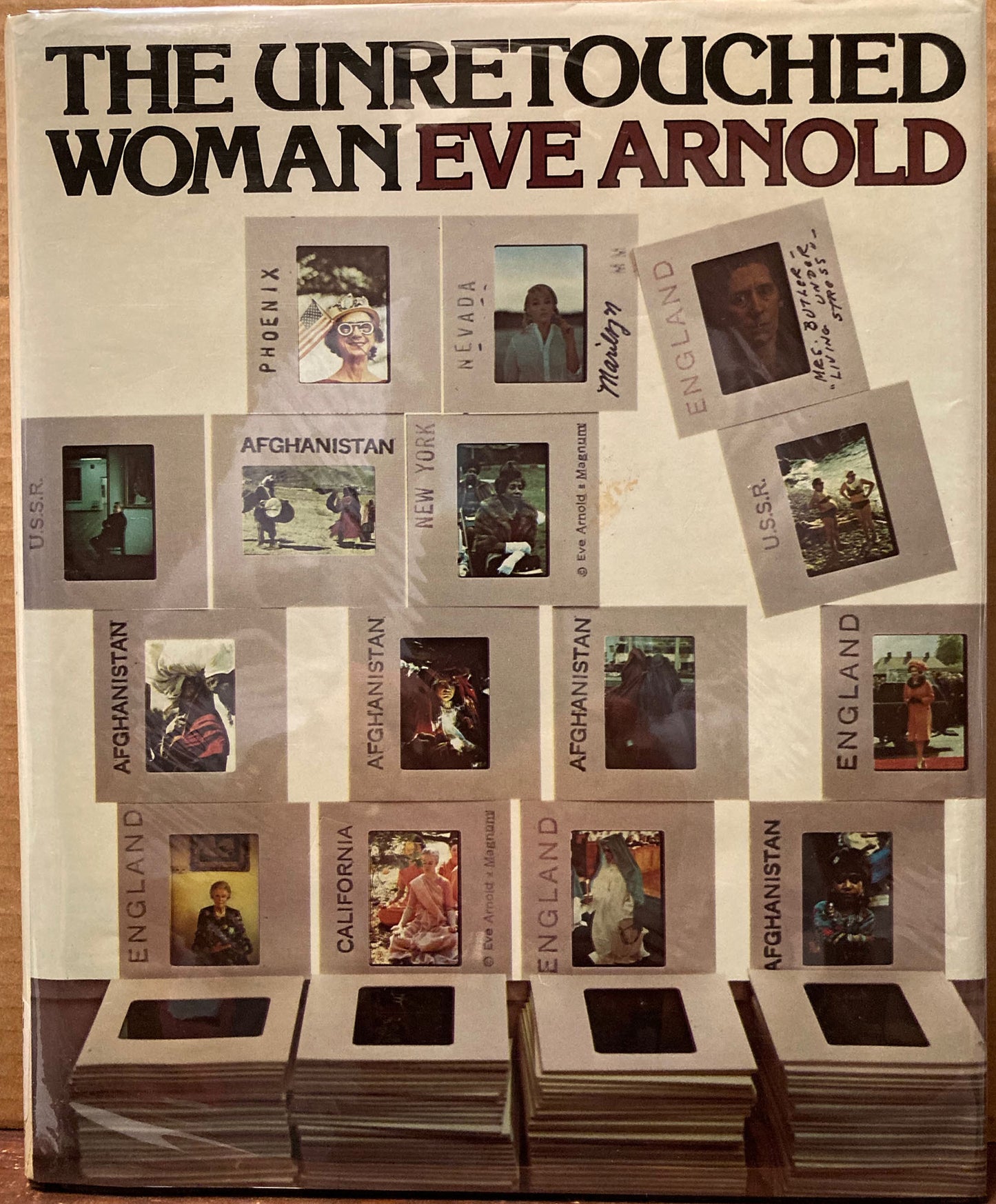
Arnold, Eve. The Unretouched Woman by Eve Arnold.
Arnold, Eve. The Unretouched Woman by Eve Arnold.
Couldn't load pickup availability
Knopf, 1976. Stated first edition, hardcover, ex-library with spine label, new dust jacket protector, card pocket removed leaving scuffs on rear flyleaf, traces of removed tape that held old protector, rear hinge starting to pull away but text block still firmly attached. As Eve Arnold writes in the introduction, “This is a book about how it feels to be a woman, seen through the eyes and the camera of one woman— images unretouched and for the most part unposed, and unembellished. After sections on portraits of women around the world and America, Arnold presents chapters on Joan Crawford; Marilyn Monroe; Great Britain; Nuns; Spain; Caribbean; Soviet Union; South Africa; and Veiled Women in Afghanistan, Abu Dhabi, Dubai, Egypt and Muscat Oman. Eve Arnold (1912-2012) was an American who studied photography in 1947 with Alexey Brodovitch. Ten years later she became the first female member of Magnum Photos, the photographers cooperative, and went on assignments worldwide. Summary:
The Unretouched Woman (1976) is a groundbreaking and deeply personal collection by Eve Arnold, the first woman to be admitted to the prestigious Magnum Photos agency. The book is a visual manifesto that rejects the artificial "perfection" of the fashion industry in favor of capturing women as they truly are, across a vast spectrum of social, economic, and cultural backgrounds.
Core Themes and Artistic Philosophy
-
Beauty in Reality: Arnold’s central premise was that a woman is most beautiful when she is unposed and "unretouched." She captured her subjects in natural light, often in moments of fatigue, reflection, or intense labor, deliberately avoiding the airbrushing techniques common in mid-century media.
-
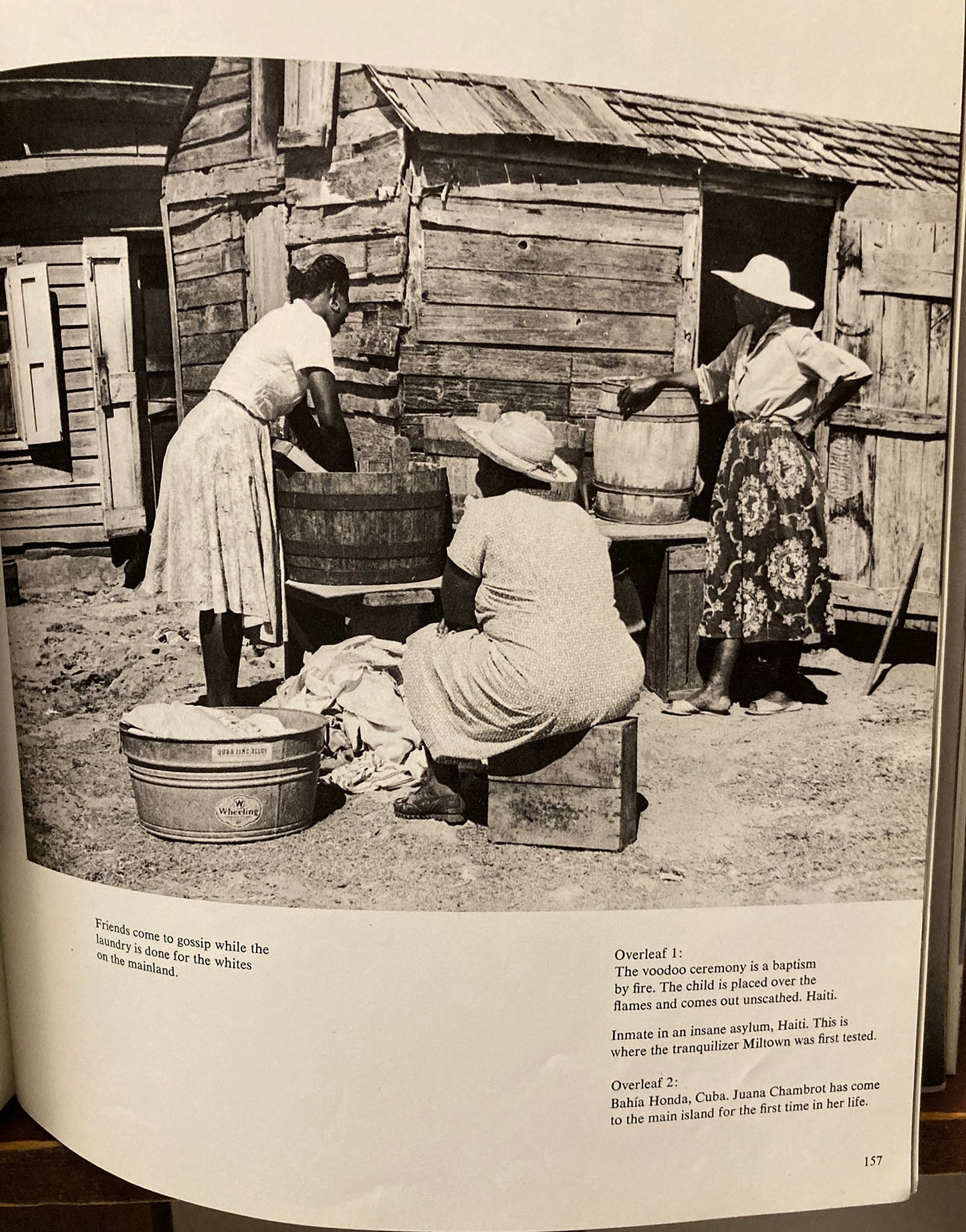
The Global Female Experience: The book is remarkably diverse for its time. Arnold traveled from the luxury of Hollywood sets to the nomadic camps of Afghanistan, the harems of the Middle East, and the impoverished "Black Belt" of the American South.
-
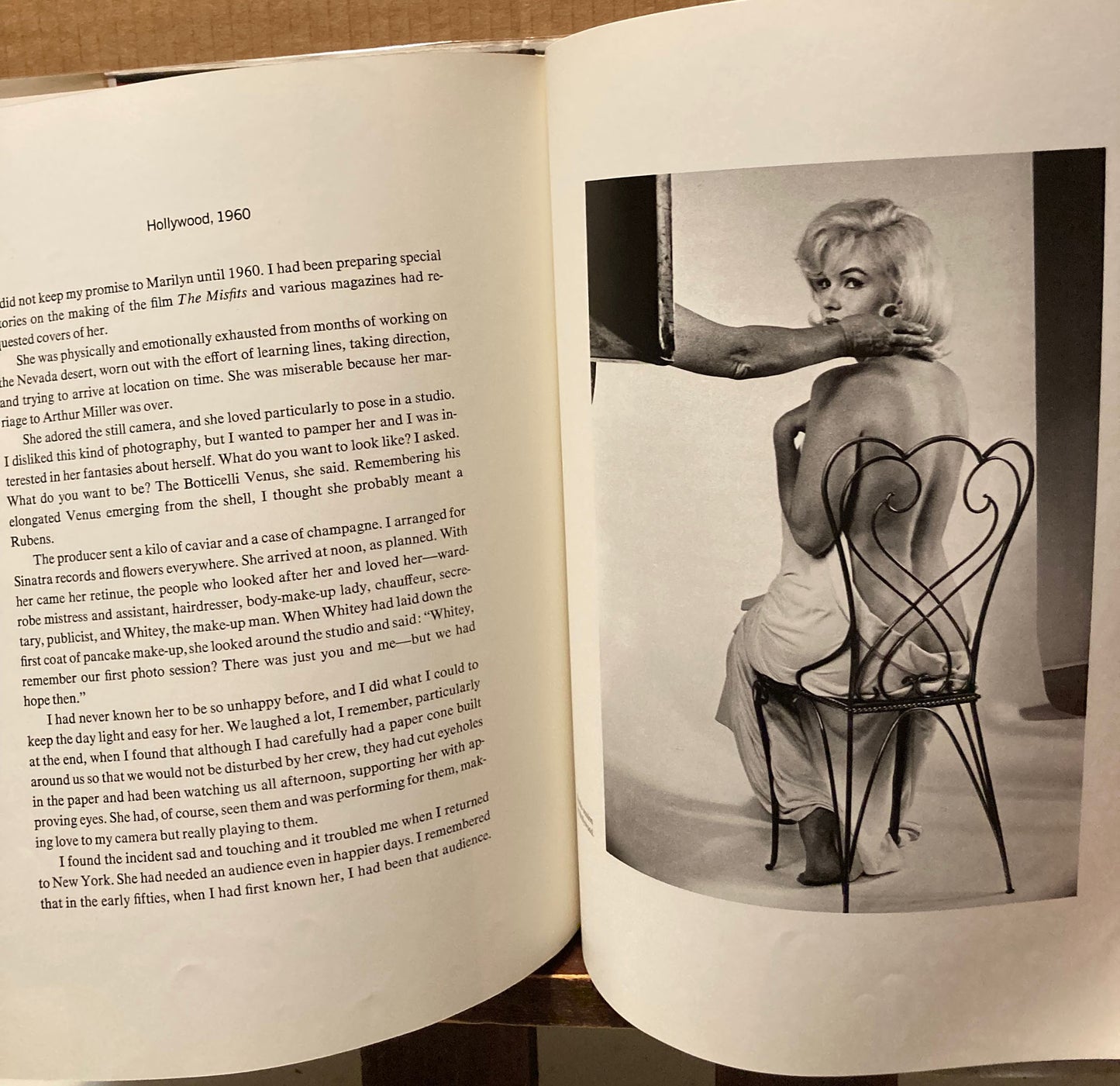
Celebrity vs. Commonality: A highlight of the book is Arnold’s intimate, candid portraits of Marilyn Monroe and Joan Crawford. By showing these icons in vulnerable, "unpolished" moments, Arnold places them on the same human plane as the anonymous working women featured throughout the rest of the volume.
Visual Style and Impact
-
The "Invisible" Photographer: Arnold was known for her ability to blend into her surroundings, allowing her subjects to forget the camera. This resulted in a grainy, immediate style that feels like a shared confidence between the photographer and the subject.
-
Feminist Document: Published during the height of second-wave feminism, the book served as a powerful counter-narrative to the "idealized woman" of advertising, asserting that aging, struggle, and authentic emotion were the true markers of female identity.
- Eve Arnold (1912–2012) was a pioneering American photojournalist who broke barriers in a male-dominated field to become the first female full member of the prestigious Magnum Photos agency in 1957. Born to Russian-Jewish immigrant parents in Philadelphia, Arnold began pursuing photography in the late 1940s while studying under Alexei Brodovitch at the New School for Social Research. Renowned for her candid, empathetic, and unposed approach, she moved effortlessly between intimate portraits of cultural icons—most famously her decade-long collaboration with Marilyn Monroe, as well as portraits of Malcolm X, Joan Crawford, and Queen Elizabeth II—and compelling, socially conscious photojournalism documenting migrant workers, Civil Rights protests, and everyday life in China, Russia, and South Africa. Preferring available light and building deep rapport with her subjects, Arnold produced an extraordinary body of work spanning over six decades, publishing numerous acclaimed photobooks and solidifying her status as one of the 20th century’s most influential visual storytellers.