Gary Saretzky Photo Books
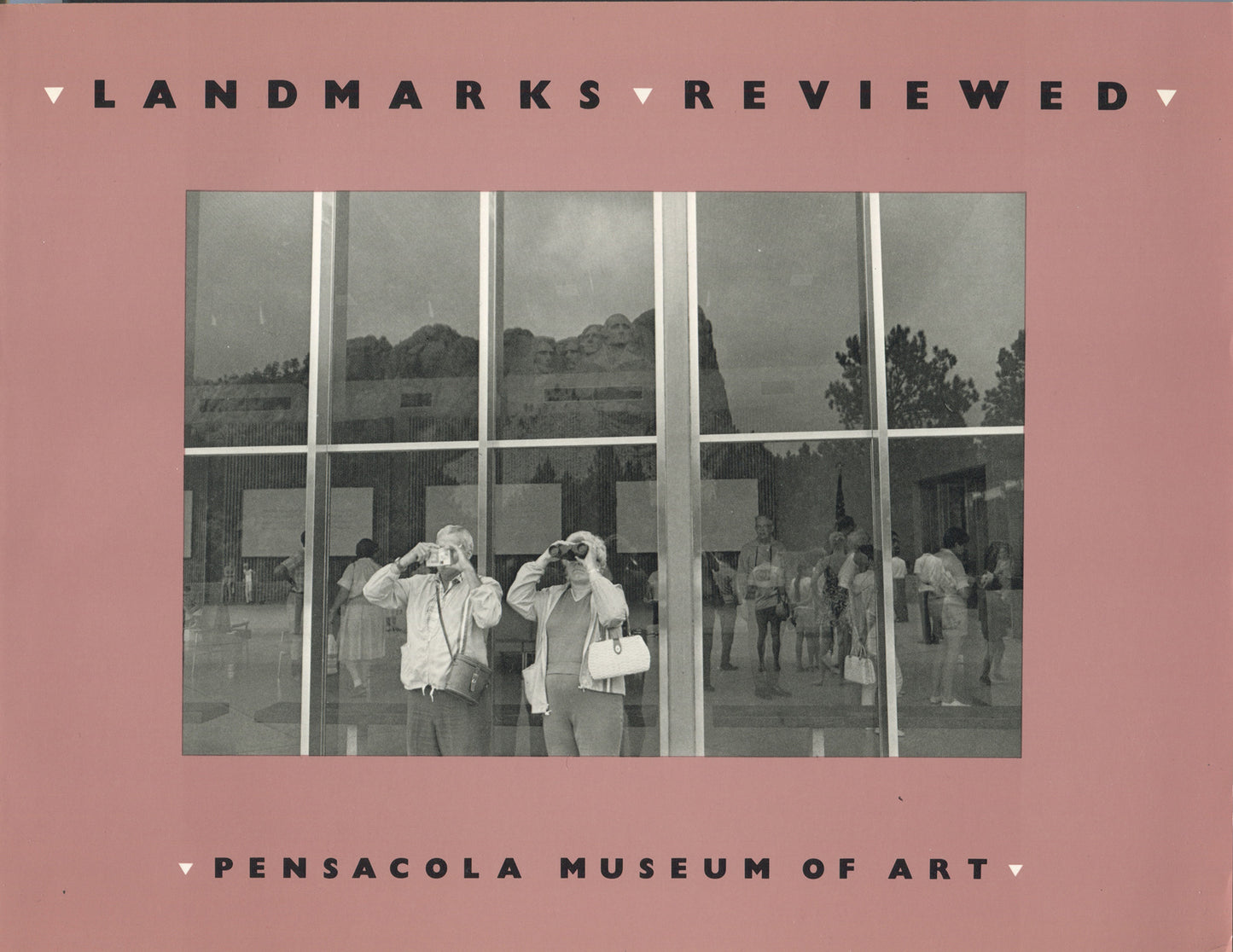
Architecture. Landmarks Reviewed: Contemporary Photographs of American Buildings, Structures, and Natural Forms. Exhibition, March 11 - April 30, 1983.
Architecture. Landmarks Reviewed: Contemporary Photographs of American Buildings, Structures, and Natural Forms. Exhibition, March 11 - April 30, 1983.
Couldn't load pickup availability
By Barry M. Winiker and Mary H. Takach (preface). Pensacola Museum of Art, 1983. Wraps, near fine with small crimp at bottom right corner of front cover. 48 pages. Not issued with ISBN number. Photographers: Lee Friedlander (cover); Hiroshi Sugimoto; Nicholas Nixon; Roger Minick; Jerry Dantzic; Barbara Crane; Richard Nickel; Bob Thall; William Clift; Ezra Stoller; Jim Dow; Joel Meyerowitz; Richard Pare; Joel Meyerowitz; Jewel Stern; Evelyn Hofer; Harry Wilks; and Jill Freedman. Summary:
Landmarks Reviewed: Contemporary Photographs of American Buildings, Structures, and Natural Forms (1983) is a vital exhibition catalog published by the Pensacola Museum of Art. It serves as a rigorous survey of how the "Landmark" was redefined in post-modern photography. Moving away from the romanticized, monumental views of the past, the exhibition gathered works that scrutinized the American landscape through a lens of social, industrial, and architectural realism.
Core Themes and Narrative
-
The "Ordinary" Landmark: The exhibition challenged the traditional definition of a "landmark." Instead of focusing solely on national monuments, the photographers documented grain elevators, suburban sprawl, abandoned factories, and roadside vernacular, arguing that these "utilitarian" structures are the true markers of American identity.
-
Man vs. Nature: A central tension in the collection is the physical "mark" humans leave on the natural world. The images often depict the "Natural Form" not as a pristine wilderness, but as a space constantly being reshaped, fenced in, or reinterpreted by industrial needs.
-
The "New Topographics" Influence: The curated selection heavily reflects the "New Topographics" movement—a style characterized by a "deadpan" or objective view of the landscape, stripping away the pictorial drama to reveal the raw structural truth of the environment.
Visual and Technical Scope
-
Structural Precision: The photography is characterized by a "Forensic Finish." Whether documenting a concrete dam or a Victorian house, the artists utilize large-format clarity to emphasize geometry, texture, and the relationship between the structure and its site.
-
The "Cold" Aesthetic: The catalog highlights a move toward a "cool" observational style. The lighting is often flat or overcast, avoiding the "theatrical" shadows of earlier eras to ensure that the "Landmark" itself—rather than the photographer's mood—is the primary subject.