Gary Saretzky Photo Books
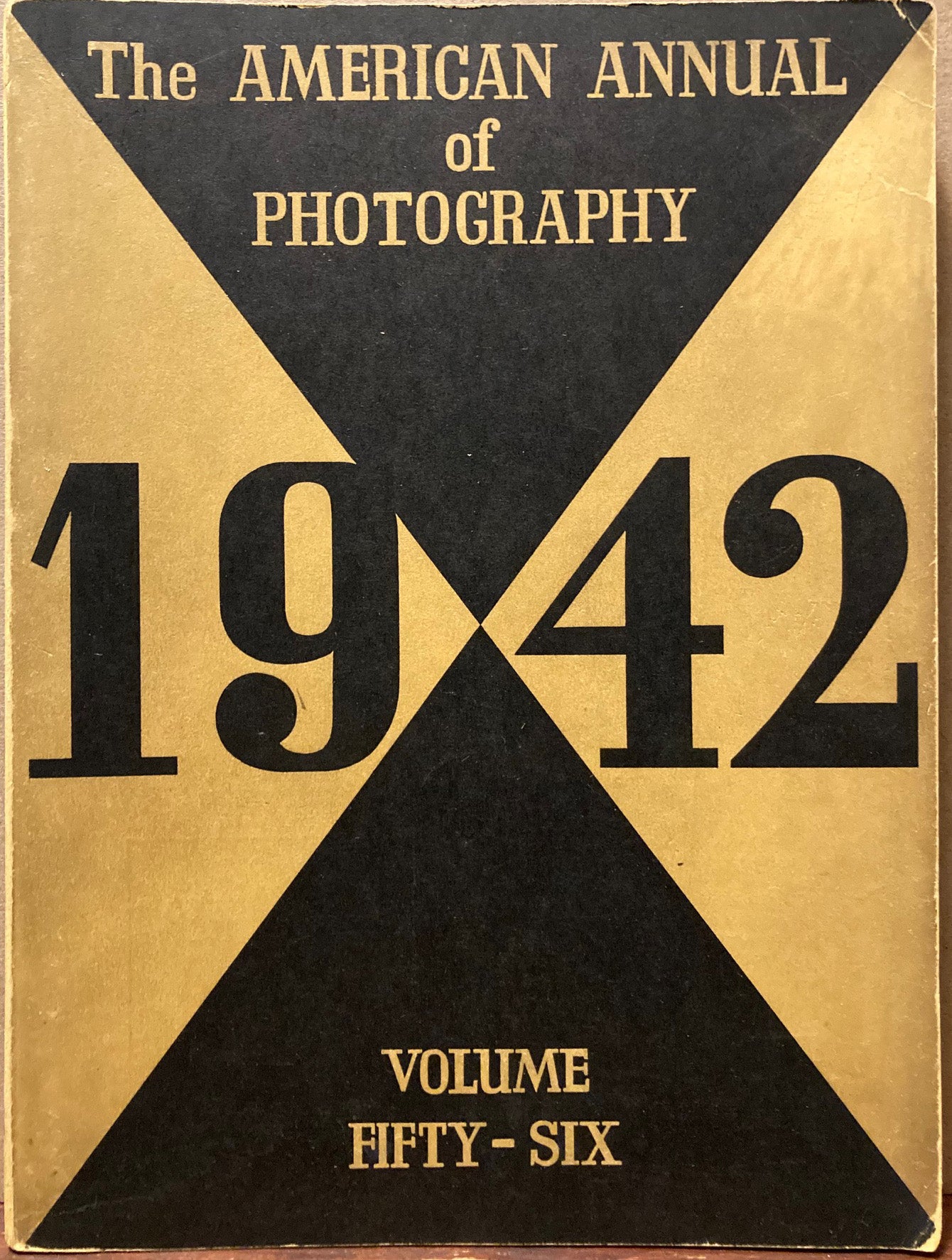
Annuals. American Annual of Photography 1942. Volume 56.
Annuals. American Annual of Photography 1942. Volume 56.
Couldn't load pickup availability
American Photographic Publishing Co., 1941. Wraps, near very good with moderate cover wear. Articles include “My Aims and Methods,” by Julian Smith; Modern Trends in Pictorial Photography,” by Paul L. Anderson; “The Paper Negative,” by Adolf Fassbender; “Color Photography,” by Joseph S. Friedman; et al. Additional pictorial illustrations by Eleanor Parke Custis, Frank R. Fraprie, Harvey J. Phillips (the grandfather of artist Fernanda D'Agostino, and many others. Summary:
The American Annual of Photography 1942 (Volume 56) serves as a critical historical time capsule, capturing the transition of American photography from the height of the Pictorialist tradition to the dawn of more modern, structured approaches. Edited by Frank R. Fraprie and Franklin I. Jordan, this volume is a blend of technical instruction, aesthetic debate, and a massive curated gallery of contemporary work.
Key Essays and Theoretical Contributions
The 1942 volume is notable for its collection of essays by some of the most prominent photographic educators and practitioners of the era:
-
"My Aims and Methods" by Julian Smith: A deep dive into the philosophy of the renowned Australian portraitist. Smith emphasizes the psychological connection between photographer and sitter, advocating for a mastery of light that reveals character rather than just physical features.
-
"Modern Trends in Pictorial Photography" by Paul L. Anderson: A foundational text for understanding the aesthetic tensions of the early 1940s. Anderson explores the persistence of Pictorialism—an approach that favors painterly, romanticized imagery—while acknowledging the encroaching "Straight Photography" and modernist movements.
-
"The Paper Negative" by Adolf Fassbender: A technical masterclass from a giant of the "salon" style. Fassbender provides detailed instructions on using paper negatives to allow for extensive manual retouching and artistic manipulation, a hallmark of high-art photography at the time.
-
"Color Photography" by Joseph S. Friedman: A forward-looking technical summary of color processes. In 1942, color was still a complex and chemically demanding frontier; Friedman discusses the evolving science of dyes and emulsions that would eventually lead to the medium's dominance.
Pictorial Illustrations and Artistry
The "Annual" was famous for its extensive plate section, which featured a high-quality "Who's Who" of salon photography. This volume includes notable work by:
-
Eleanor Parke Custis: Known for her atmospheric, travel-oriented Pictorialism.
-
Frank R. Fraprie: The editor himself, whose work often exemplified the conservative, classicist "Boston School" style.
-
Harvey J. Phillips: Representing the pinnacle of mid-century technical precision.
The illustrations are presented as a curated exhibition, often accompanied by "Who's Who in Pictorial Photography," a ranking of the most successful exhibition photographers of the previous year.
Historical Context
Published just as the United States was entering World War II, Volume 56 reflects a world on the brink of change. While the content focuses heavily on the "Fine Art" of photography (salons, technical perfection, and romantic landscapes), the looming war would soon shift the American photographic landscape toward the raw, urgent realism of war correspondence and documentary work seen in magazines like LIFE.
Summary Takeaway
The American Annual of Photography 1942 is the definitive record of the "Old Guard" of American photography. It is a treasure trove for historians interested in the craft-heavy, manipulative techniques of the Pictorialists and provides a snapshot of the last great era of "Salon" dominance before the mid-20th-century shift toward Modernism and photojournalism.