Gary Saretzky Photo Books
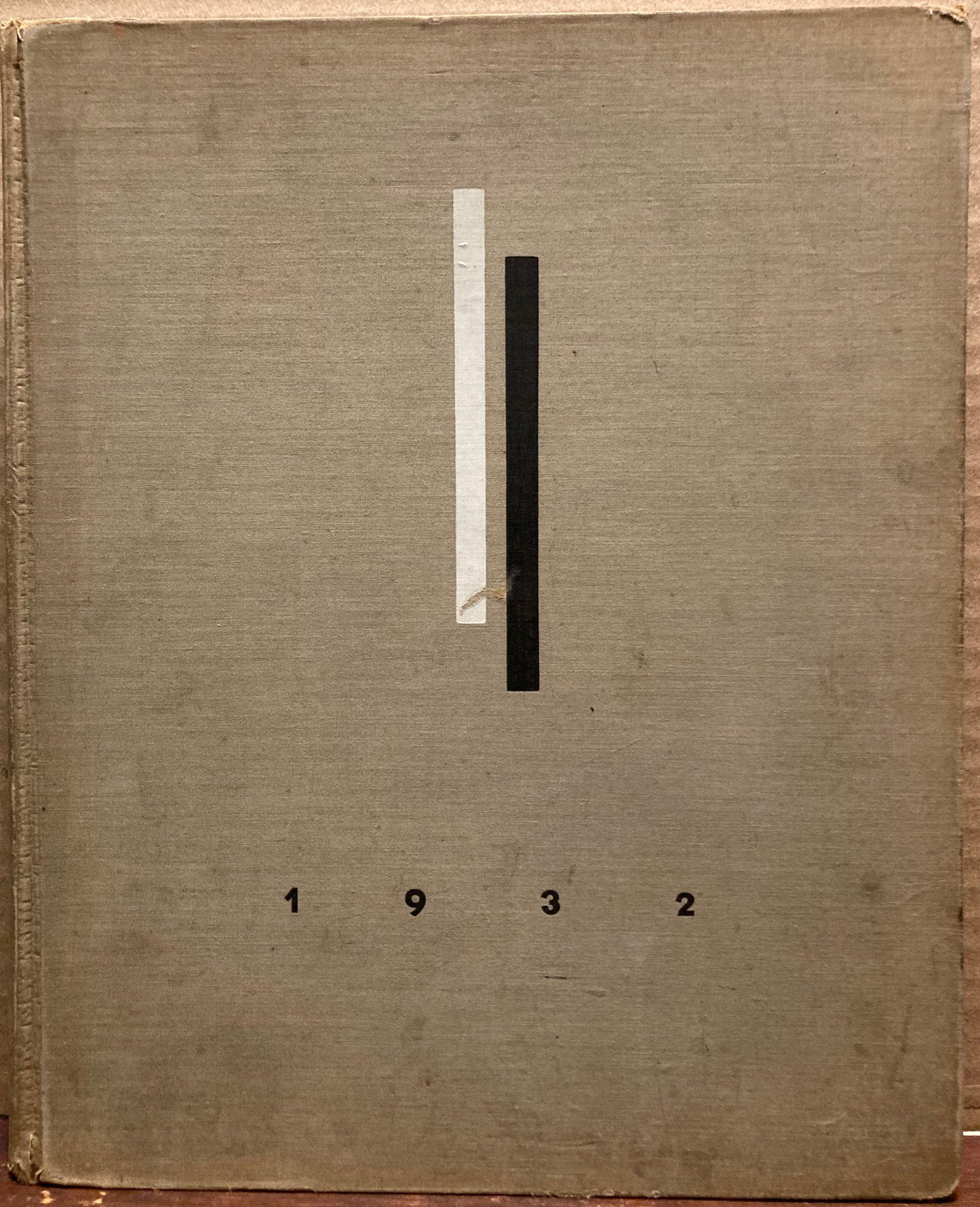
Annuals. Das Deutsche Lichtbild, 1932.
Annuals. Das Deutsche Lichtbild, 1932.
Couldn't load pickup availability
Fair copy of the German photo annual with exterior wear and missing 7 leaves with 14 illustrations. Illustrations present include Bill Brandt; Ludwig F. Clauss; Adalbert Defner; Alfred Eisenstaedt; Hugo Erfurth; Joachim Fuss; Robert M. Gerstmann; Heinz Hajek-Halke; Elsbeth M. Heddenhausen; Walter Hege; Ferdinand Hodek; Ewald Hoinkis, E.O. Hoppe; Martin Hurlimann; Ewald Israel; Otto Junge; Franz Kogl; Erika Kreplin; Heinrich Kuhn; Elli Marcus; Martin Munkacsi; Friedrich Schiller; Friedrich Seidenstucker; Paul Unger; Paul Wolff; and others. List of photographers in back with technical data. Ads for Rolleiflex, Agfa Brovira, Primarette, Persenso Film by Perutz, Rodenstock Imagon, Ergo-Braun paper, Thagee camera; Zeiss. Essays in German by Heinrich Kuhn (former member of the Photo-Secession), et al. Special pictorial section with photographs of skiing. A flawed copy but still more than 200 pages. Summary:
Published in Berlin during the final years of the Weimar Republic, Das Deutsche Lichtbild 1932 (The German Photograph) is a seminal yearbook that captures the apex of European modernist photography. This edition is a masterpiece of high-quality printing, showcasing the transition from the soft-focus Pictorialism of the past to the sharp, industrial, and social-realist styles that defined the pre-war era.
A Convergence of Styles
The 1932 volume is unique for its inclusion of diverse photographic philosophies, featuring both established masters and the "New Vision" (Neues Sehen) avant-garde:
-
Pioneers of Photojournalism: The annual features Alfred Eisenstaedt and Martin Munkacsi, who were revolutionizing the field with candid, action-oriented shots made possible by the Leica camera.
-
Master Portraitists: Hugo Erfurth and E.O. Hoppé provide psychological depth through their meticulous lighting, while Heinrich Kühn represents the enduring (though fading) tradition of high-art Pictorialism.
-
Modernist Innovation: Figures like Heinz Hajek-Halke and Paul Wolff (the "father of the 35mm") demonstrate the era's fascination with macro photography, sharp angles, and the technical precision of the small-format camera.
-
Social and Urban Documentation: Contributions from Bill Brandt and Friedrich Seidenstücker highlight the human condition in the city, ranging from gritty realism to whimsical street life.
Key Technical & Editorial Themes
Beyond the gallery, the 1932 Annual served as a theoretical guide for the German photographic community:
-
The Leica Revolution: The book heavily promotes the aesthetics of the "miniature camera," proving that the 35mm frame could produce gallery-quality prints.
-
Science and Nature: Extensive sections are dedicated to botanical and microscopic studies by photographers like Paul Unger, reflecting the "New Objectivity" (Neue Sachlichkeit) movement’s obsession with the hidden structures of nature.
-
The Theory of "Lichtbild": Through essays (often including those by Ludwig F. Clauss), the book explores the cultural and racial theories of vision prevalent in Germany at the time, providing a complex look at the intersection of art and emerging national ideologies.
Notable Contributors
The list of illustrators reads as a "Who’s Who" of 20th-century photography:
-
Architecture: Walter Hege and Martin Hürlimann’s monumental studies of cathedrals and landscapes.
-
The Avant-Garde: Ewald Hoinkis and Joachim Fuss’s experiments with form and light.
-
Composition: Adalbert Defner’s atmospheric Alpine landscapes.
Historical Context: Published just one year before the Nazi party rose to power, Das Deutsche Lichtbild 1932 represents the last gasp of the free, cosmopolitan German photography scene before many of its contributors (including Munkacsi and Eisenstaedt) were forced into exile.