Gary Saretzky Photo Books
Krims, Les. Making Chicken Soup by Les Krims. Signed.
Krims, Les. Making Chicken Soup by Les Krims. Signed.
Couldn't load pickup availability
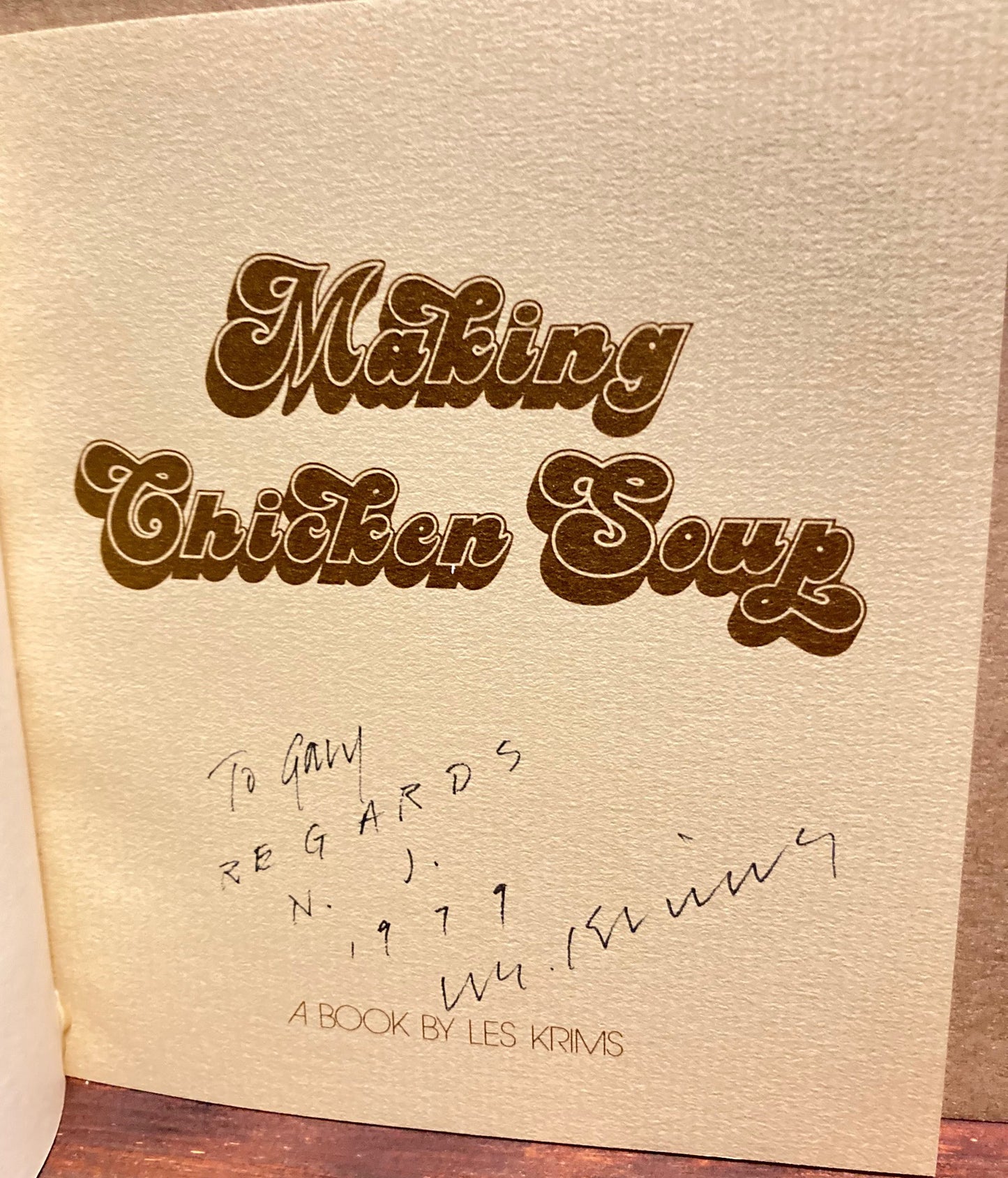
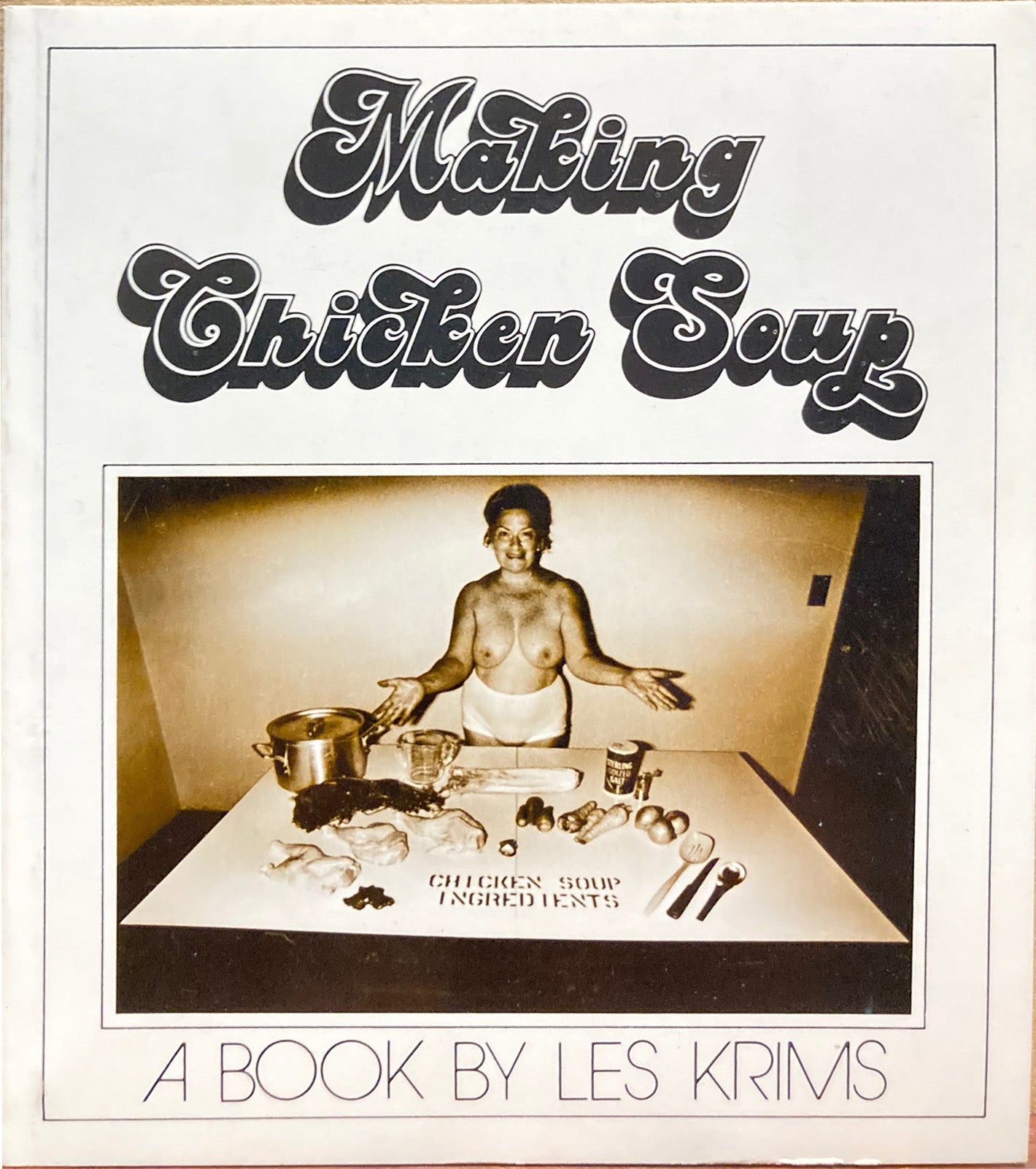
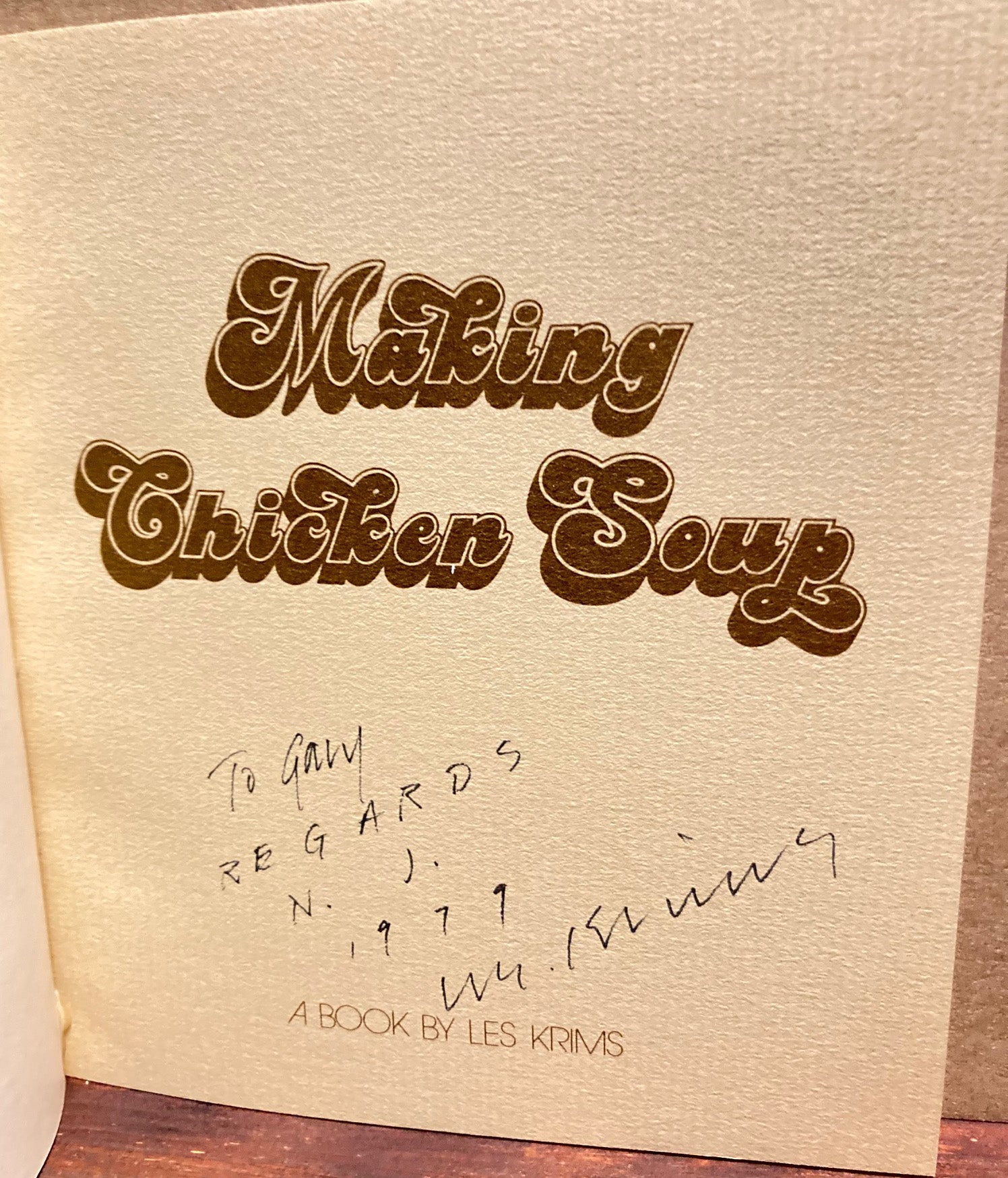
Humpy Press, 1972. Distributed by Light Impressions. First edition. Small softcover book with 28 sepia plates depicting Krims' mother Sally Krims, wearing only underpants, demonstrating how to make chicken soup. Includes recipes for Kreplach and Matzo Balls and reproduction of a hand-written letter from Sally to her son Les about chicken soup dated May 5, 1970. With custom-made polyester jacket. Listed in Martin Parr, The Photobook, Volume 2, page 22. SIGNED and inscribed by Les Krims to photographer Gary Saretzky at Light Gallery, NYC, in 1979. Fine. Summary:
Making Chicken Soup: A Book by Les Krims (published in 1972 by Humpy Press) is an influential and highly unorthodox 62-page photographic artist's book created by American conceptual photographer Les Krims. Defying straightforward classification, the pocket-sized, square volume presents itself simultaneously as a legitimate Jewish culinary guide and a subversive piece of postmodern performance art, pushing the boundaries of what could be considered acceptable subject matter in 1970s photography.
Core Themes and Content
-
The Satirical Recipe Format: The structural framework of the book is modeled after a traditional, instructional cookbook. It features three authentic, step-by-step recipes provided by the artist's mother, Arlene Krims: a classic chicken broth, kreplach (dumplings), and matzo balls.
-
The Absurdist Presentation: The book's defining, provocative element is its series of 28 high-contrast, black-and-white photographs showing Mrs. Krims demonstrating the cooking steps entirely topless. Krims uses this bizarre juxtaposition to satirize the dry, procedural nature of documentary photojournalism and the sterile, instructional layout of conventional lifestyle magazines.
-
A Commentary on Maternal Devotion: The book closes with a humorous, heartwarming personal letter from "Mom" to her son, dated May 5, 1970. In the note, she admonishes him for looking unhealthy the last time she saw him, offers her soup as the ultimate remedy, and leaves him with the quintessential maternal reminder: "I know you're a famous photographer now... but remember, you'll never be too famous to eat chicken soup."
-
Subverting the Photographic Establishment: By staging his own mother in a state of casual, domestic nudity while executing an ordinary chore, Krims deliberately challenged the academic seriousness of the fine art photography world. The project functions as an early, confrontational exploration of taboo, domestic performance, and the boundaries between an artist's private family life and public exhibition.
Through its radical blend of deadpan humor, genuine familial affection, and conceptual boundary-pushing, Making Chicken Soup cemented Les Krims' reputation as a premier provocateur of 20th-century photography, transforming a simple culinary comfort into a profound critique of artistic conventions.
Les Krims (born 1943) is an influential and highly provocative American conceptual photographer and educator celebrated for his subversive, satirically staged imagery that aggressively challenges the boundaries of social taboos, political correctness, and the academic seriousness of the photographic establishment. Born in New York City, Krims studied art at The Cooper Union and earned his MFA from Pratt Institute before embarking on a prolific, decades-long teaching career as a professor of photography at the Buffalo State University (SUNY Buffalo). Emerging in the late 1960s and 1970s alongside a generation of artists who rejected traditional documentary "straight" photography, Krims pioneered the "fabricated to be photographed" movement, meticulously directing absurd, darkly humorous, and often confrontational tableaus in front of his lens. His highly controversial artist's books, such as The Little People of America, The Deerslayers, and Making Chicken Soup, utilize deadpan humor, nudity, and transgressive cultural juxtapositions to satirize media sensationalism, middle-class domesticity, and structural stereotypes. By actively questioning the absolute objective truth of the photographic medium and embracing the role of the artistic provocateur, Krims cemented his legacy as a foundational pioneer of postmodern staged photography whose work continues to spark intense debate regarding censorship, taste, and the limits of artistic expression.