Gary Saretzky Photo Books
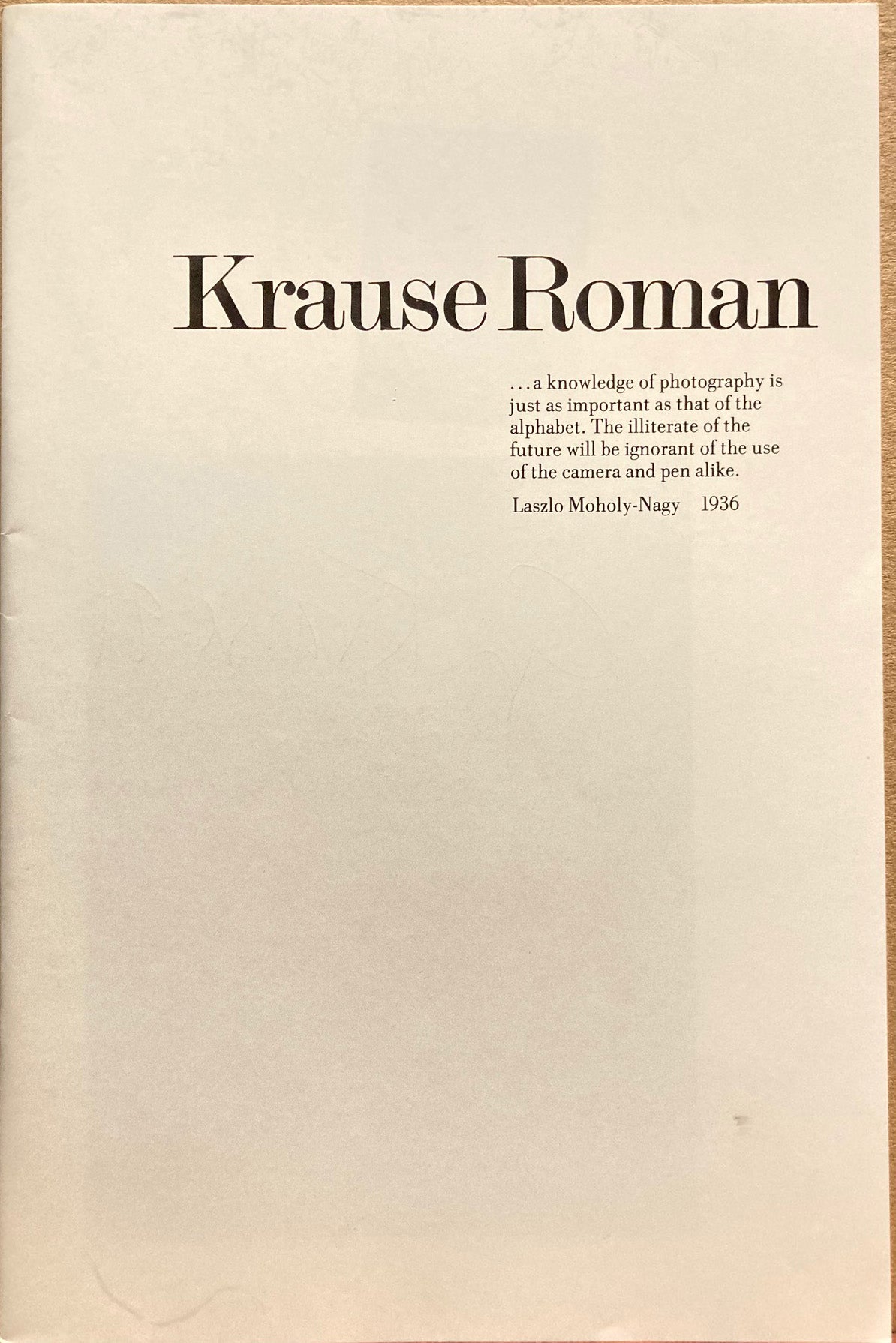
Krause, George. Krause Roman by George Krause. Signed.
Krause, George. Krause Roman by George Krause. Signed.
Couldn't load pickup availability
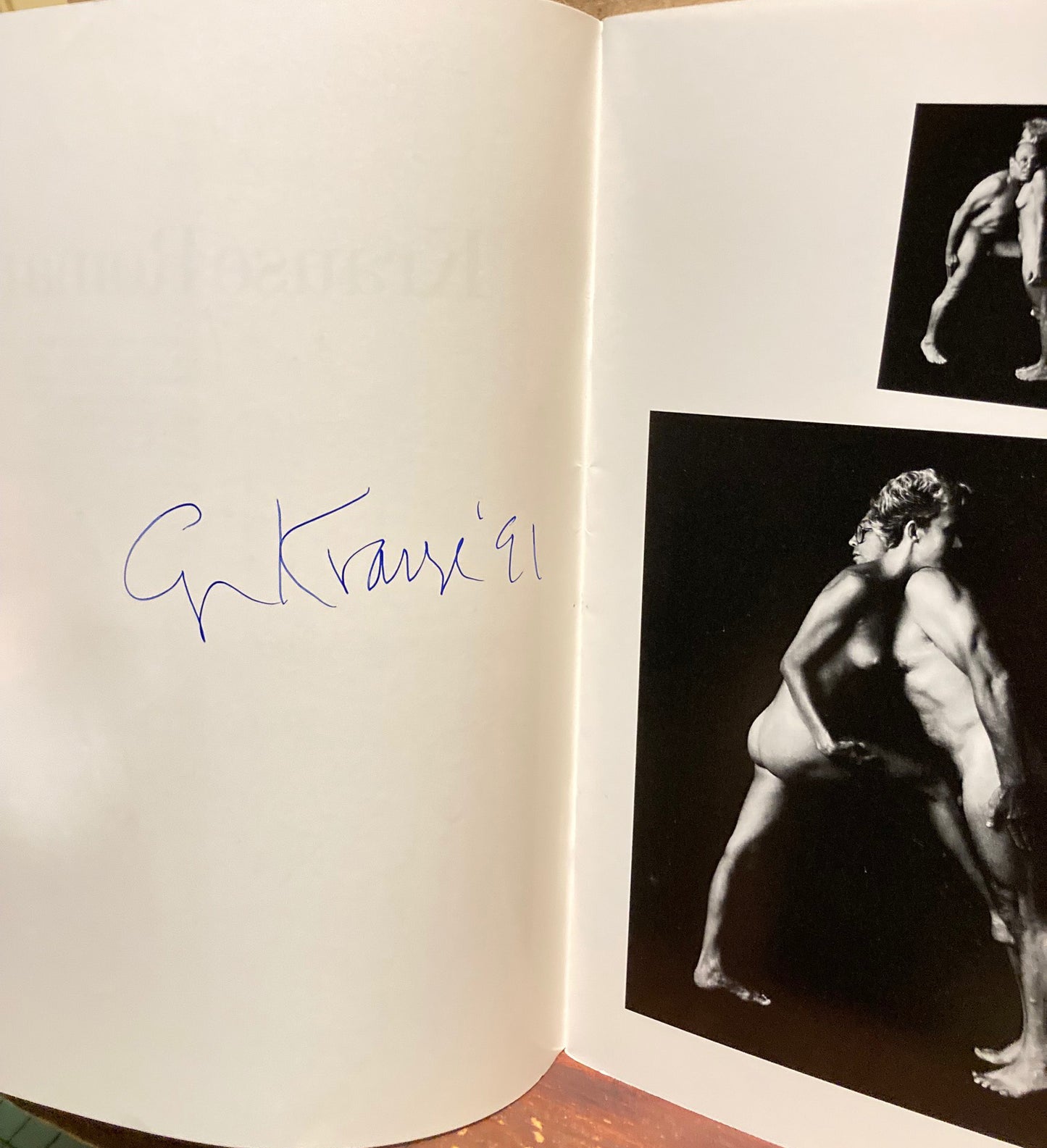
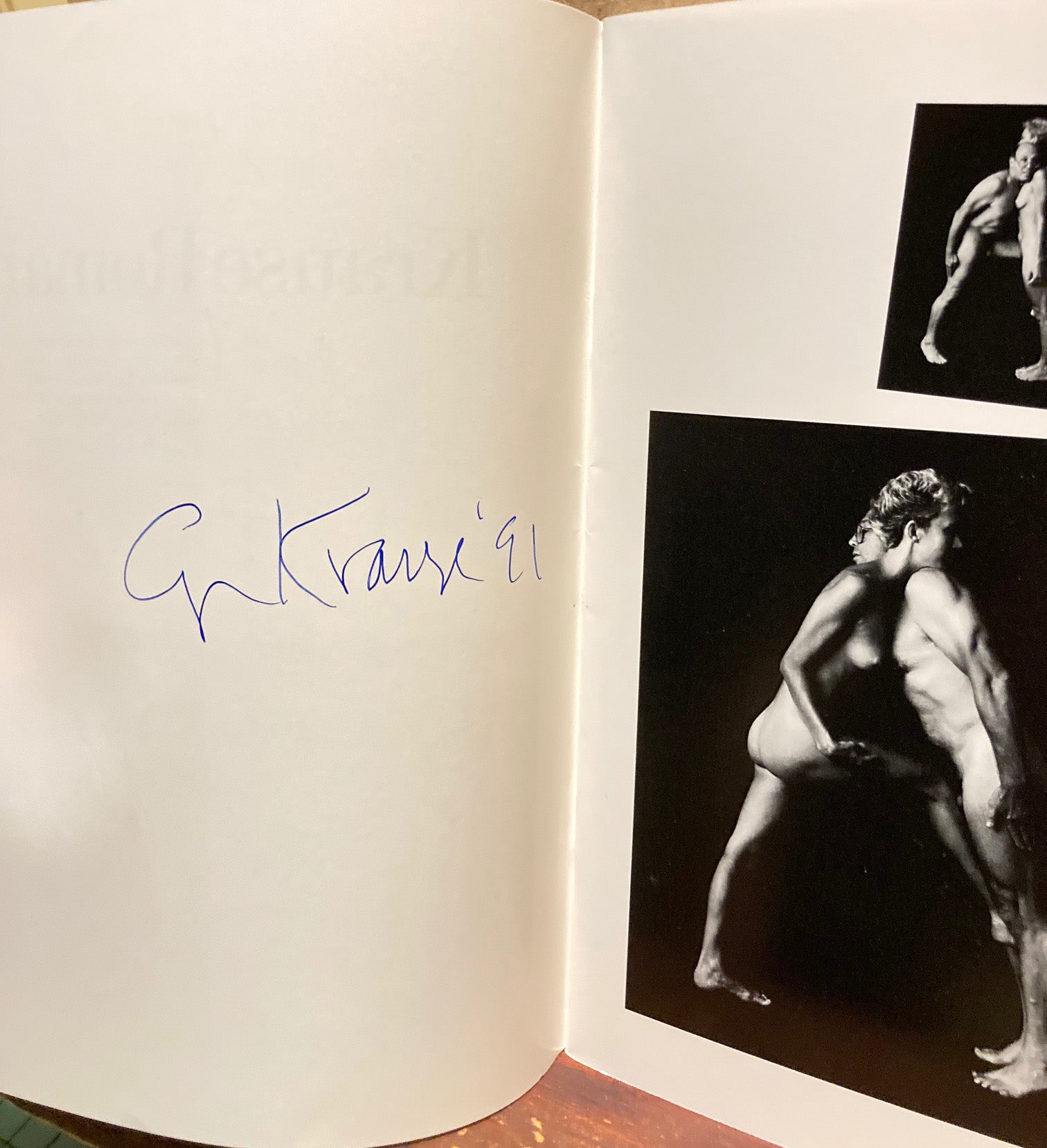
Houston, TX: Harris Gallery, 1991. Text by Mark Power. First edition. Softcover. [Black-and-white nude photographs of Krause, wearing only his eyeglasses, and a nude female model, forming all the letters in the alphabet.] Wraps, fine. SIGNED by Krause on the verso of the front cover. With a custom-made polyester jacket. Scarce, with only 1 copy listed in OCLC. Summary:
Krause Roman (published in 1991 by the Harris Gallery in Houston, Texas) is a highly rare and conceptually audacious photographic artist's booklet conceived by acclaimed American photographer George Krause. Featuring a critical afterword by photographer and writer Mark Power, this unconventional, limited-edition publication strips away traditional photographic narratives to explore the playful, graphic possibilities of the human form, acting as a bridge between performance art and typographic design.
Core Themes and Content
-
A Human Typography: The structural premise of the booklet is a literal and visual realization of a typeface. Across its pages, Krause arranges high-contrast, black-and-white studio photographs featuring himself—wearing nothing but his signature eyeglasses—and a nude female model contorting, intertwining, and posing their bodies to physically construct all 26 letters of the Latin alphabet.
-
The Irony of the Title: The title Krause Roman functions as a multi-layered pun. It mimics standard typography nomenclature (such as "Times New Roman" or "Garfield Roman") while simultaneously paying homage to Krause’s prestigious history as the first-ever photographer to be awarded the coveted Prix de Rome from the American Academy in Rome.
-
Subverting the Traditional Nude: Rather than framing the nude figure through a lens of classical eroticism or serene landscape topography, Krause approaches the body with a deadpan, graphic sensibilities. By inserting his own bespectacled, unclothed body into the compositions alongside his model, he breaks the traditional, detached boundary between the photographer and the subject, infusing the conceptual exercise with an underlying sense of humor and performance.
-
Graphic Contrast and Form: Visually, the publication highlights Krause’s masterful command of silver gelatin printing. The bodies are captured against a stark, absolute background, emphasizing the crisp geometry, negative space, and anatomical limits required to bend the human frame into legible textual characters.
By transforming the human body into a functional, expressive alphabet, Krause Roman stands as a brilliant, witty testament to George Krause’s willingness to push beyond the boundaries of straight documentary photography into the realms of surrealism, concrete poetry, and postmodern performance art.
George Krause (born 1937) is a distinguished American photographer and educator celebrated for his haunting, surreal, and deeply spiritual imagery that explores themes of mortality, faith, and the mysteries of the human condition. Born in Philadelphia, Krause studied at the Philadelphia College of Art before embarking on a career that would earn him significant critical acclaim, including becoming the first photographer to receive both a Prix de Rome (1976) and a Fulbright Fellowship, alongside two Guggenheim Fellowships. Over his decades-long career, which included establishing the photography program at the University of Houston where he taught for over twenty years, Krause rejected traditional, straightforward documentary styles in favor of a highly stylized, darkroom-refined approach. His iconic series—such as Qui Tollis, which captures the haunting imagery of cemetery statuary, and Saints and Martyrs, which documents intense religious expressions—utilize dramatic high-contrast lighting and rich textures to elevate mundane or morbid subjects into timeless, psychological archetypes. Through his masterfully crafted silver gelatin prints and boundary-pushing artists' books, Krause has secured a legacy as a foundational figure in American fine art photography, renowned for his ability to uncover a sense of beautiful disquiet hidden just beneath the surface of reality.