Gary Saretzky Photo Books
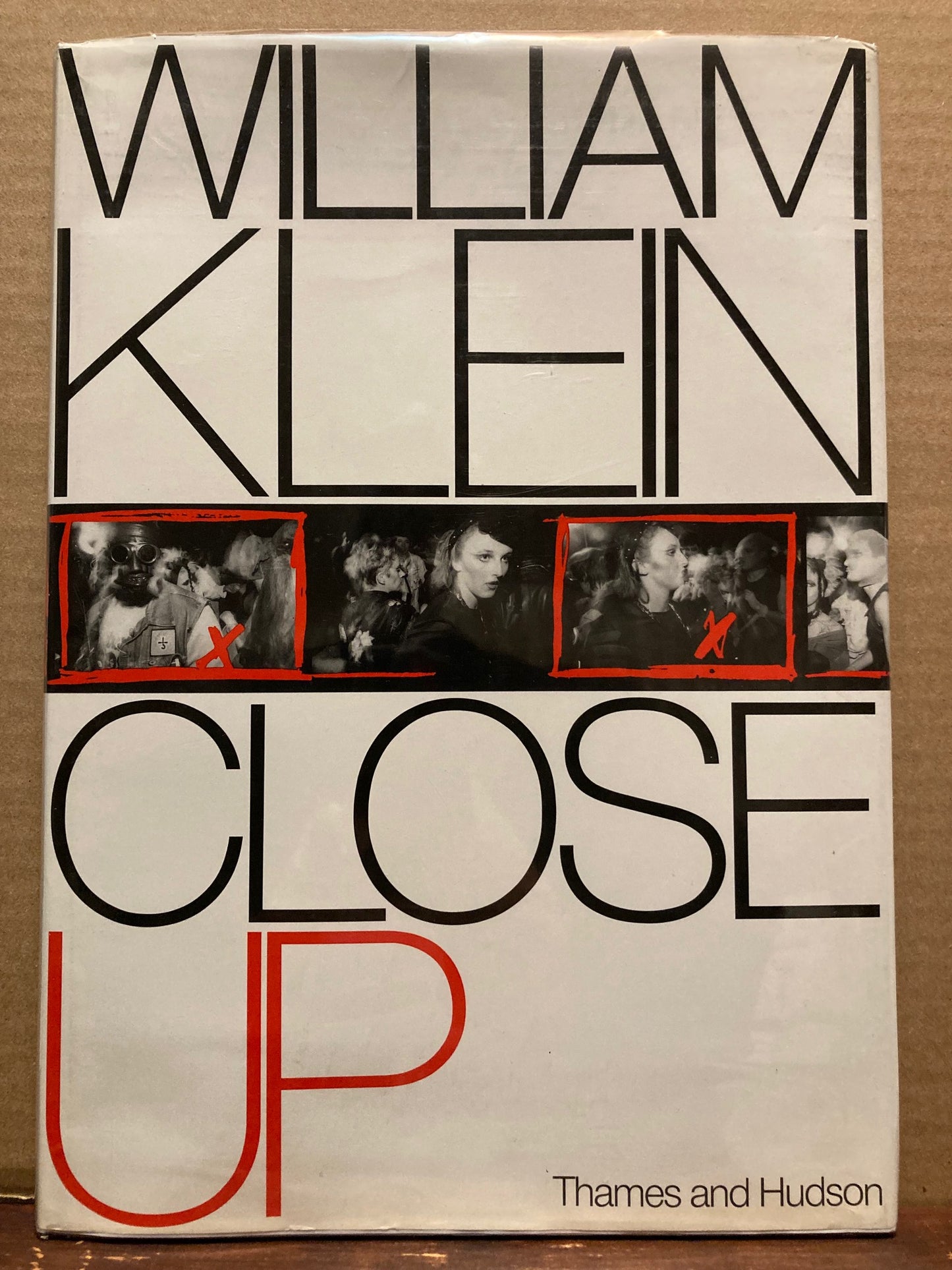
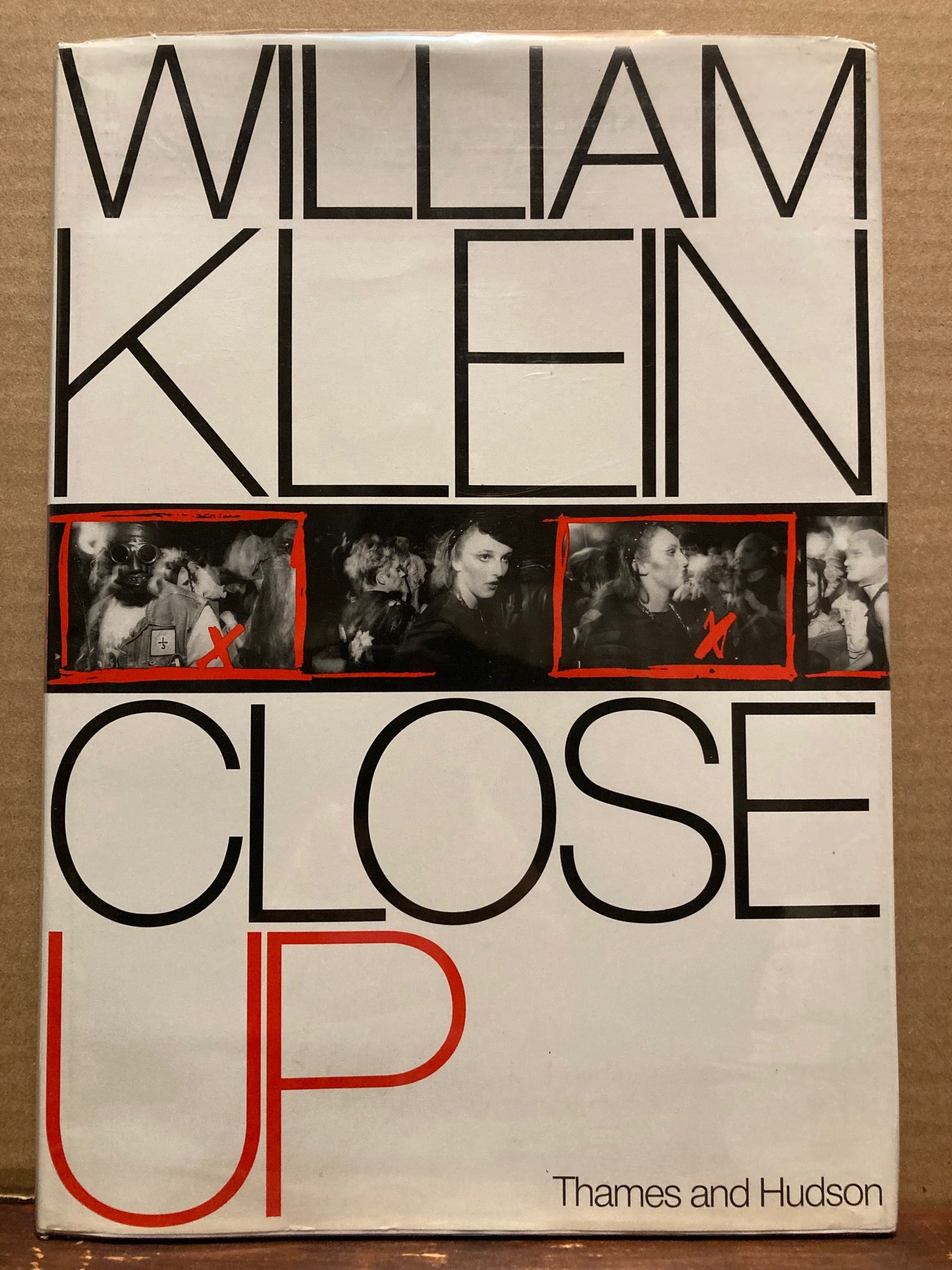
Klein, William. Close Up by William Klein.
Klein, William. Close Up by William Klein.
Couldn't load pickup availability
Thames and Hudson, 1989. 1st edition. Hardcover with protected dust jacket. [A brilliant collection of Klein's close-ups from shoots in Paris, New York, Atlanta Democratic Convention, Tokyo, Moscow, Ypres, Hollywood, et al. with his commentary. Mostly photos, very well printed, of unidentified people but a few celebrities appear like Muhammad Ali in Zaire, Ingrid Bergman, President Mitterand in Paris, the Pope at Lourdes, and Jesse Jackson in Atlanta.] Very good with wear at top of dust jacket spine, binding is bumped bottom right. Signature of previous owner on preliminary title page. Summary:
Close Up (published in 1989 by Thames and Hudson) is a powerful, 176-page photographic monograph by acclaimed American-born French photographer, filmmaker, and painter William Klein. Serving as a dynamic "diary-family album" spanning several decades, the oversized book marks a dramatic return to photography for Klein after over a decade focused heavily on filmmaking, reinforcing his status as a pioneer who radically disrupted the traditional boundaries of documentary and street photography.
Core Themes and Content
-
The Anti-Photographic Manifesto: The book acts as a visual rejection of mid-century photography's prevailing myths—namely, the standard of objective non-intervention championed by figures like Henri Cartier-Bresson. Klein famously summarized his aggressive methodology for the book by stating: "I photograph what I see in front of me, I move in close to see better and use a wide-angle lens to get as much as possible in the frame."
-
The In-Your-Face Wide-Angle Technique: Structurally, the monograph consists of 80 full-bleed, double-page duotone spreads. By pairing an ultra-close physical proximity with a wide-angle lens, Klein forces incredible amounts of chaotic visual information into each frame. The resulting style embraces intentional grain, extreme distortion, deep high-contrast shadows, and blurred motion, pulling the viewer into the scene as an active, breathless participant rather than a passive observer.
-
A Cultural Arena of Public Spectacle: The photographs cross global boundaries to capture high-energy, crowded public events where mass media, politics, and celebrity collide. Klein provides an unvarnished, point-blank look at massive global milestones and cultural forces, including Muhammad Ali’s historic victory in Zaire, the Pope at Lourdes, the chaotic floor of the 1988 Democratic National Convention in Atlanta, packed Rolling Stones concerts, and Sumo wrestlers in Tokyo.
-
Staging and Spatial Intrusion: Unlike typical street photographers who try to remain invisible, Klein leans directly into his own presence. His subjects frequently stare straight into the lens, react to his intrusion, or perform for the camera. This deliberate friction highlights how public figures and ordinary citizens alike manipulate their own images in a media-saturated, consumer-oriented society.
By condensing decades of raw global energy into a series of massive, confrontational double-page spreads, Close Upserves as a defining testament to William Klein's experimental style, illustrating how subverting formal photographic "rules" can capture a deeper, more visceral human truth.
William Klein (1926–2022) was an influential American-French photographer, filmmaker, and painter who fundamentally revolutionized post-war visual culture by injecting the grit of the streets into the worlds of high fashion and documentary art. Born in New York City, Klein initially pursued sociology at the City College of New York before serving in the U.S. Army during World War II; he subsequently settled in Paris, where he studied abstract painting under the legendary modernist Fernand Léger. This avant-garde foundation profoundly shaped his self-taught approach to the camera, which he began utilizing in the early 1950s to "loot the streets" with an uncompromising, confrontational style. Recruited by Vogue art director Alexander Liberman in 1954, Klein brought a radical, kinetic energy to fashion photography, pulling models out of traditional studio setups and placing them amidst chaotic urban crowds using wide-angle lenses, intentional motion blur, and high-contrast grain. Simultaneously, his subversive street photography culminated in a series of landmark, raw photographic "diaries" of major global cities, most notably his 1956 masterpiece Life is Good & Good for You in New York, which won the prestigious Prix Nadar despite being initially rejected by American publishers for its unapologetically seedy and chaotic depiction of Manhattan. In the late 1950s, Klein expanded his visionary eye into cinema, directing over thirty avant-garde commercials, highly influential documentaries—such as Muhammad Ali: The Greatest—and celebrated satirical feature films like Who Are You, Polly Maggoo?. Honored with a Lifetime Achievement Infinity Award from the International Center of Photography and ranked among the most influential photographers of the 20th century, Klein’s defiant, rule-breaking masterpieces are permanently preserved in institutions such as the Museum of Modern Art (MoMA), the Centre Pompidou, and the Metropolitan Museum of Art.