Gary Saretzky Photo Books
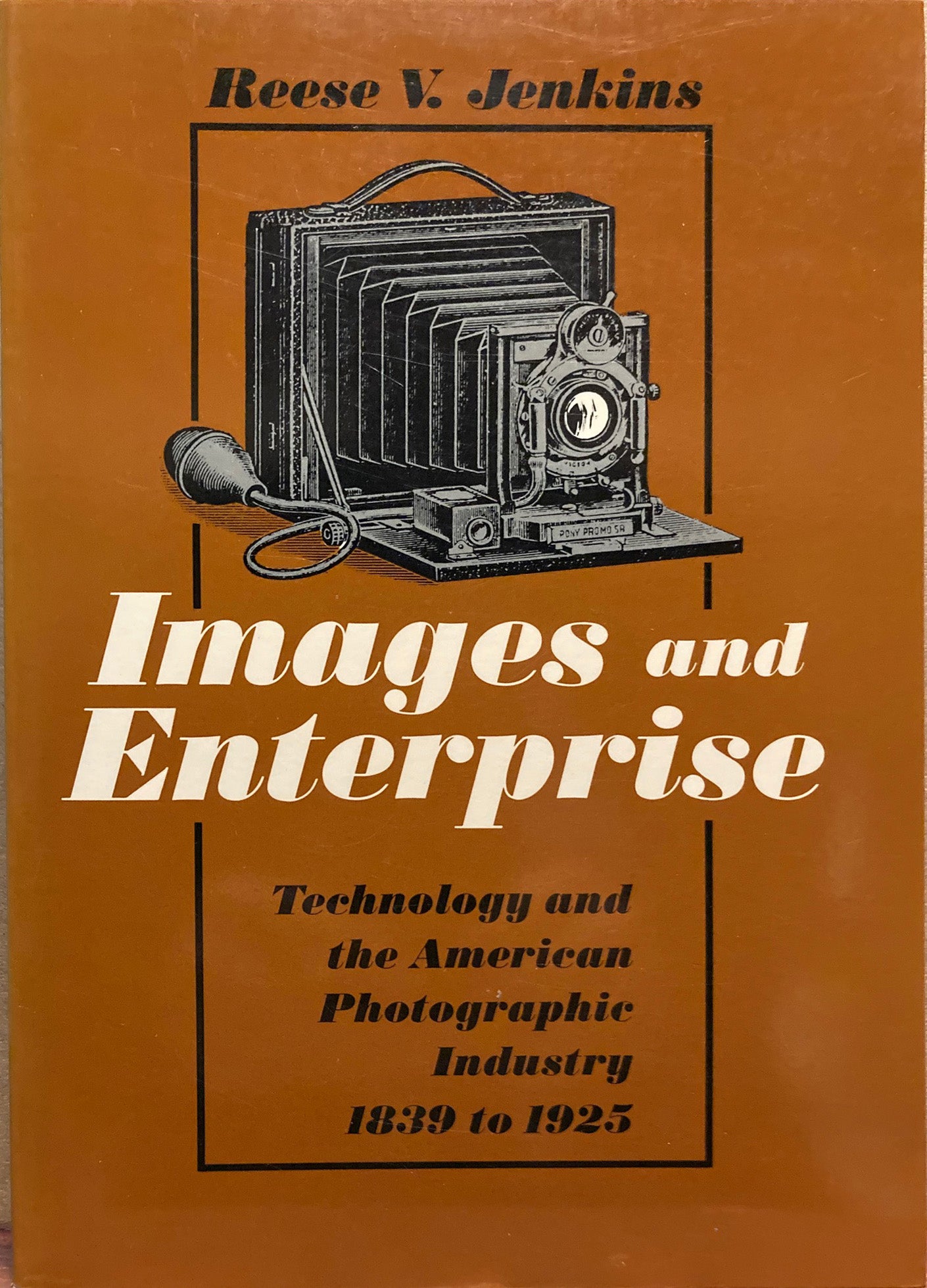
History of Photography. Images and Enterprise: Technology and the American Photographic Industry, 1839-1925 by Reese V. Jenkins.
History of Photography. Images and Enterprise: Technology and the American Photographic Industry, 1839-1925 by Reese V. Jenkins.
Couldn't load pickup availability
Baltimore: Johns Hopkins, 1975, 1987. [Arguably the best history of the photography business during the years covered, including the large firms of E. & H.T. Anthony and Eastman Kodak , as well as many other companies such as Scovill and ANSCO. Includes many informative tables with statistics on sales of cameras, film, and other photographic goods. Jenkins, a professor of history at Rutgers University, analyzes in detail the invention of roll film and the lawsuit involving the patent of Hannibal Goodwin.] Stiff illustrated wraps, VG+ with small signature of previous owner on front flyleaf. Summary:
Images and Enterprise: Technology and the American Photographic Industry, 1839–1925 by Reese V. Jenkins is a definitive business and technological history that charts how photography transformed from a niche, chemically complex craft into a massive, mass-market corporate industry.
The book details how the intersection of scientific innovation, corporate strategy, and changing social demands shaped the American photographic market through distinct eras:
-
The Early Craft Era: Jenkins tracks the industry's origins from the invention of the daguerreotype through the development of wet and dry plate processes. During this time, photography was decentralized and dominated by professional artisans who possessed specialized chemical knowledge.
-
The Kodak Revolution & Mass Amateur Market: A central focus of the book is George Eastman’s introduction of the Kodak system. By replacing heavy glass plates with flexible roll film and handling the processing for the consumer ("You press the button, we do the rest"), Eastman transformed a technical trade into a popular hobby for everyday amateurs.
-
Corporate Consolidation & Research: Jenkins examines how Eastman Kodak built an oligopolistic dominance by vertically integrating production, aggressively buying out competitors, and establishing institutionalized industrial research labs. This corporate evolution allowed the industry to develop reliable film manufacturing on a massive scale.
-
The Rise of Motion Pictures: The final section illustrates how the photographic industry's maturation laid the crucial technical groundwork for the birth and rapid expansion of cinematography, cementing film as both a major commercial enterprise and a primary driver of modern mass media.
